
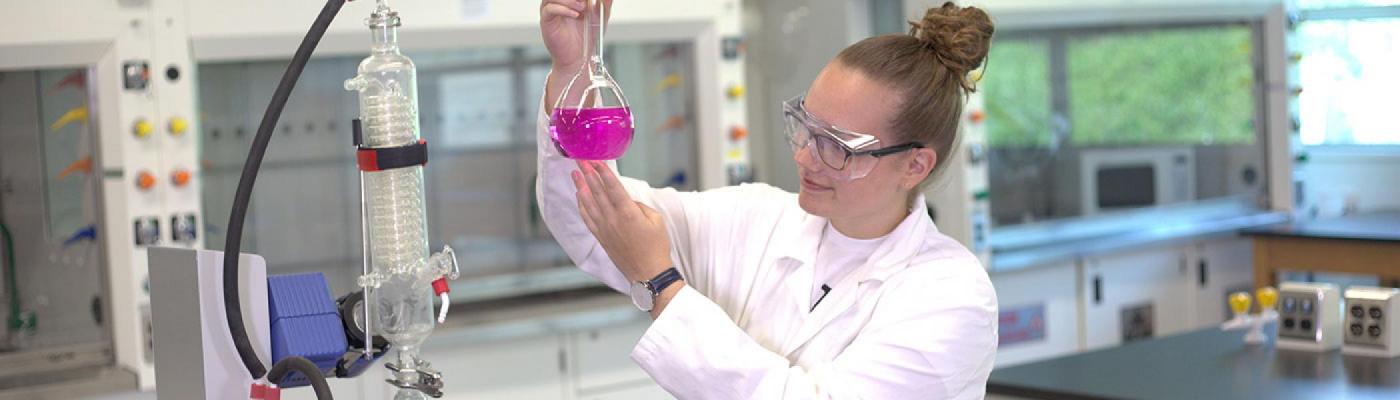
The use of potentially pathogenic organisms (bacteria, viruses, fungi, parasites, protozoa, biotoxins etc...) and potentially biohazardous material (blood, mammalian cell lines) may have a negative impact on an individuals health, or if released, on the community or environment at large. Biohazardous agents are defined as potentially pathogenic organisms which may affect humans, animals, aquatic organisms and plant and plant pests. In Canada work with these types of organisms are regulated by the Public Health Agency of Canada and the Canadian Food Inspection Agency
Trent University recognizes that the use of these organisms needs to be done in a safe and secure fashion while still advancing our scientific knowledge. Trent University maintains a Pathogen and Toxin License with the Public Health Agency of Canada and with the Canadian Food Inspection Agency. The Tri-Council Memorandum of Understanding with the University relating to biohazardous research funded by the three federal granting agencies (CIHR, NSERC, and SSHRC) requires compliance with all applicable legislation and regulations, which includes the Canadian Biosafety Standards (CBS). In addition, the University has adopted the CBS (ed. 2) , whether or not the work is externally funded and whether or not the sponsoring agency requires such certification. As such, the University has a policy on working with biohazardous material.
Please read the policy prior to planning your project.
Trent University Biosafety Work Permit Policy»
Biosafety Program
In order to meet the requirements of working with Biohazardous
The Biosafety Program consists of:
»Biosafety Work Permit Refer to the Biosafety Work Permit Policy above
»Biosafety Course and Training: Blackboard and VIP will link you to the Public Health Agency of Canada (PHAC) training portal. Open the folder "Laboratory Biosafety and Biosecurity" for available training modules. Your supervisor should advise which modules apply to your work. If you are unsure, contact Angela Sikma for assistance.
»Working with Human and Terrestrial Animal Pathogens: Contact Angela Sikma for assistance
»Working with Aquatic Pathogens and Plant Pests: Contact Angela Sikma for assistance
»Purchasing Biohazardous Material: Contact Angela Sikma for assistance
»Autoclave Validation and Verification SOP
Biosafety Work Permit
A biosafety work permit is required for all work with biohazardous materials as defined in the Policy.
How to Apply for a Biosafety Work Permit for Research with Human, Animal, Aquatic Animal and Plant Pathogens or Pests
- Ensure all personnel (including the PI and lab personnel involved in the work) complete the Biosafety Training on VIP or Blackboard under the Science Safety Program Course.
- Complete and Application for a Biosafety Work Permit
- Login to MyTrent Portal
- Select Romeo Research Portal
- Choose "Apply New" on the blue bar.
- Choose Biosafety Project Work Permit Application
- Complete the application and submit.
- Upon completion of the application, you should then complete a Self-Assessment Audit Form and submit that to the Biosafety Officer.
The Biosafety Officer will review the application and the Self Assessment with the Science Safety Committee and Perform a Local Risk Assessment (LRA). The permit application will be reviewed with respect to regulatory requirements and the LRA. Once the application and assessment are reviewed, the BSO can issue a Biosafety Work Permit which will contain conditions under which the work may proceed. Principal Investigators are required to follow the conditions in the Work Permit and any other relevant regulations (Human Pathogen and Toxins Regulations (HPTR), the Canadian Biosafety Standards and/or any Canadian Food Inspection Agency rules and regulations which may apply)
Biosafety Program Manual
The Biosafety Program Manual outlines the entire Biosafety Program and contains information on:
Pathogen Risk Groups
Risk Assessments
Lab Containment Levels
Work Procedures
Disinfection and Decontamination
Biohazardous Waste Disposal
as well as other useful information related to Biosafety. (see below to download the manual)
The Biosafety Course is based on the Biosafety Program Manual and the Canadian Biosafety Standards and Guidelines.
Biosafety Program Manual» ( MS WORD file)
Biohazardous Materials Lab Door Poster» ( to be used by all labs designated as CL2)
Biohazardous Freezer Storage sign (to be used on all Freezers containing RG 2 material)
Biosafety Self Assessment Audit Form
Biosafety Training
Formal training is required for everyone wishing to work with biohazardous material. The Biosafety Course is offered as an online course. It is available on Blackboard under the Science Safety Program Course, Biosafety Training module. It may be available through VIP in the near future as well for employees. Undergraduate Students will need to access it through Blackboard only. For instructions on how to find the course in Blackboard, see the Training section on the Science Safety Program Webpages.
Working with Human and Terrestrial Animal Pathogens
Working with Human and Terrestrial Animal Pathogens are governed by the following Acts, Regulations and Standards.
»Human Pathogens and Toxins Act. (HPTA)
»Human Pathogens and Toxins Regulations(HPTR).
»Health of Animals Regulations (HAR)
»Canadian Biosafety Standards (CBS ed.3). **
»Canadian Biosafety Handbook (HTML version)
Working with Aquatic Pathogens and Plant Pests
Work with aquatic pathogens and plant pathogens and pests (insects) require complying with different regulations and guidelines than human and terrestrial animal pathogens. While similar in scope these regulations and guidelines are different than then Canadian Biosafety Standards. In addition, working with Plant Pests can be more complicated as there may be geographical restrictions.
Personnel who wish to work with Aquatic Pathogens or Plant pathogens and pests should read the following documentation from the CFIA.
Aquatic Animal Pathogens:
»Containment Standards for Facilities Handling Aquatic Animal Pathogens
Plant Pathogens and Pests:
»The Containment Standards for Facilities Handling Plant Pests
Principle investigators and any personnel involved in research with these materials should read the appropriate documentation to ensure that they are familiar with the regulatory requirements outlined in these documents.
Purchasing and Importing Biohazardous Material
The acquisition and/or importation of Human, Terrestrial Animal, Aquatic Animal pathogens and Plant Pests requires the possession of a valid work permit, the signature of the BSO and may require additional documentation from Federal Agencies. Contact the BSO for more information
Other Resources
Public Health Agency of Canada (PHAC) Office of Laboratory Security
Canadian Food Inspection Agency Office of Biohazard Containment and Safety (OBCS)
Pathogen Safety Data sheets and Risk Assessments (PHAC)
Canadian Association of Biosafety CABS
American Biological Safety Association ABSA
For questions on the Biosafety Program contact the BSO
Angela Sikma
Office: ESB A 203
Phone: (705) 748 1011 Ext. 6253
Email: angelasikma@trentu.ca