
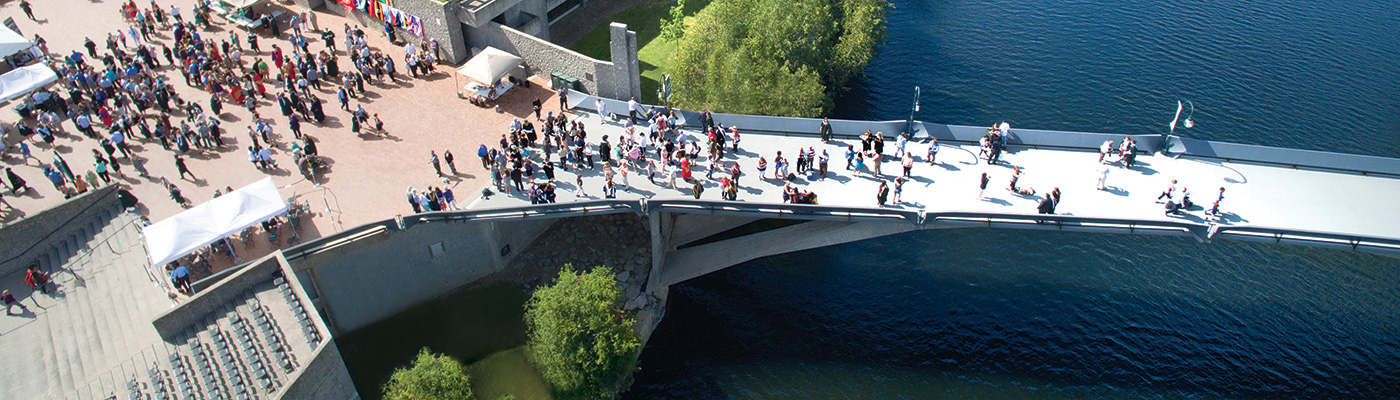
Below is a collection of completed Impact Microgrant projects. Explore how project participants have brought their ideas to life and created meaningful change across campus and the community.
Digital Guardians: Safe and Savvy Senior
Project Participant: Joh Magok
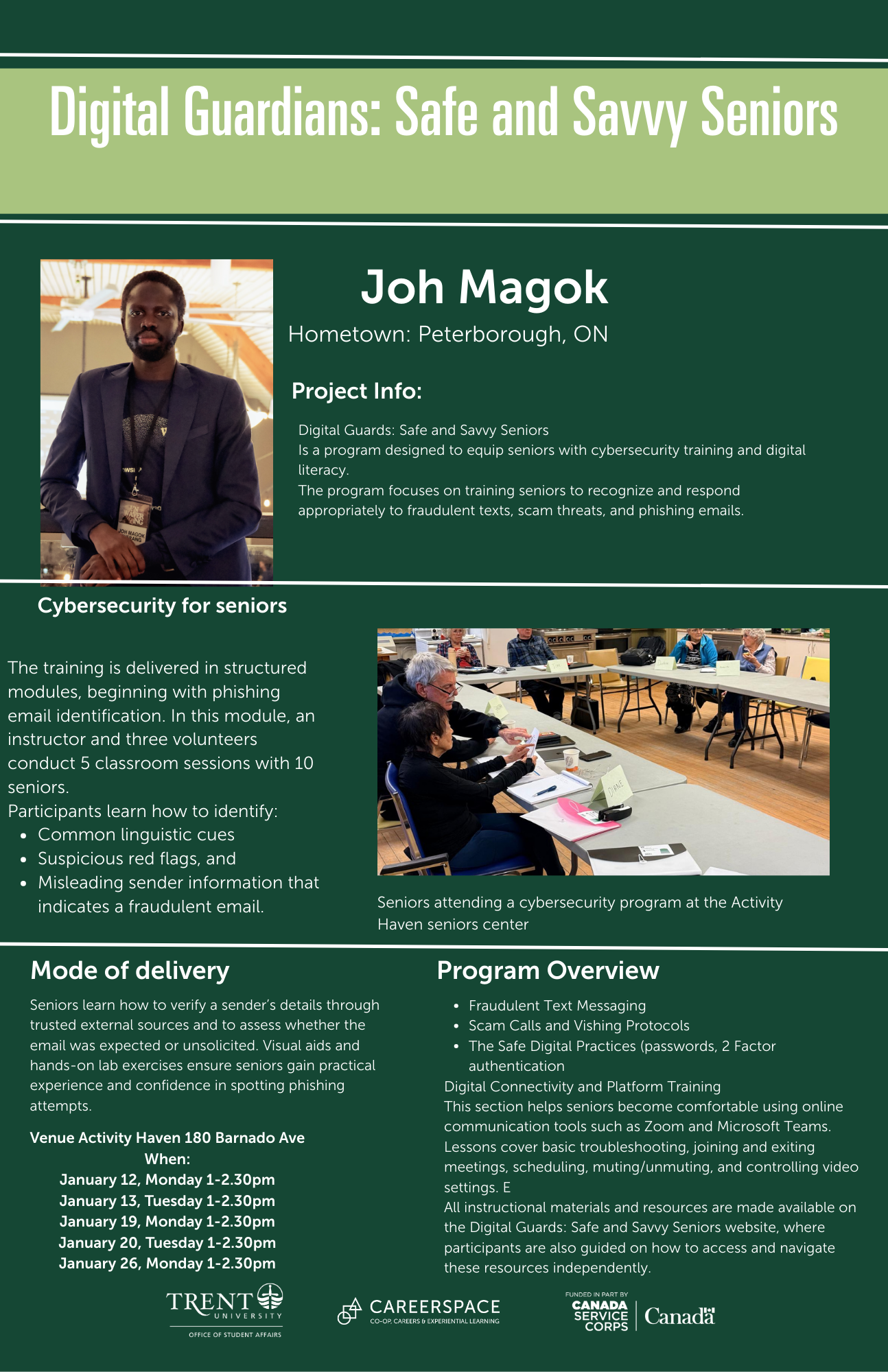
This project focuses on increasing digital safety and confidence among older adults through hands-on cybersecurity education. By offering structured training sessions on identifying phishing attempts, recognizing fraudulent messages, and understanding secure password practices, the project aims to equip participants with practical skills that support safer online engagement. Centering the learning experiences of seniors, the project highlights the value of accessible digital literacy programs and the role they play in fostering independence, security, and connection. The insights gained from this initiative will help strengthen future programming that supports older adults as they navigate an increasingly digital world.
Vernal Pool Research and Education
Project Participant: Jessi Fredrickson Tench
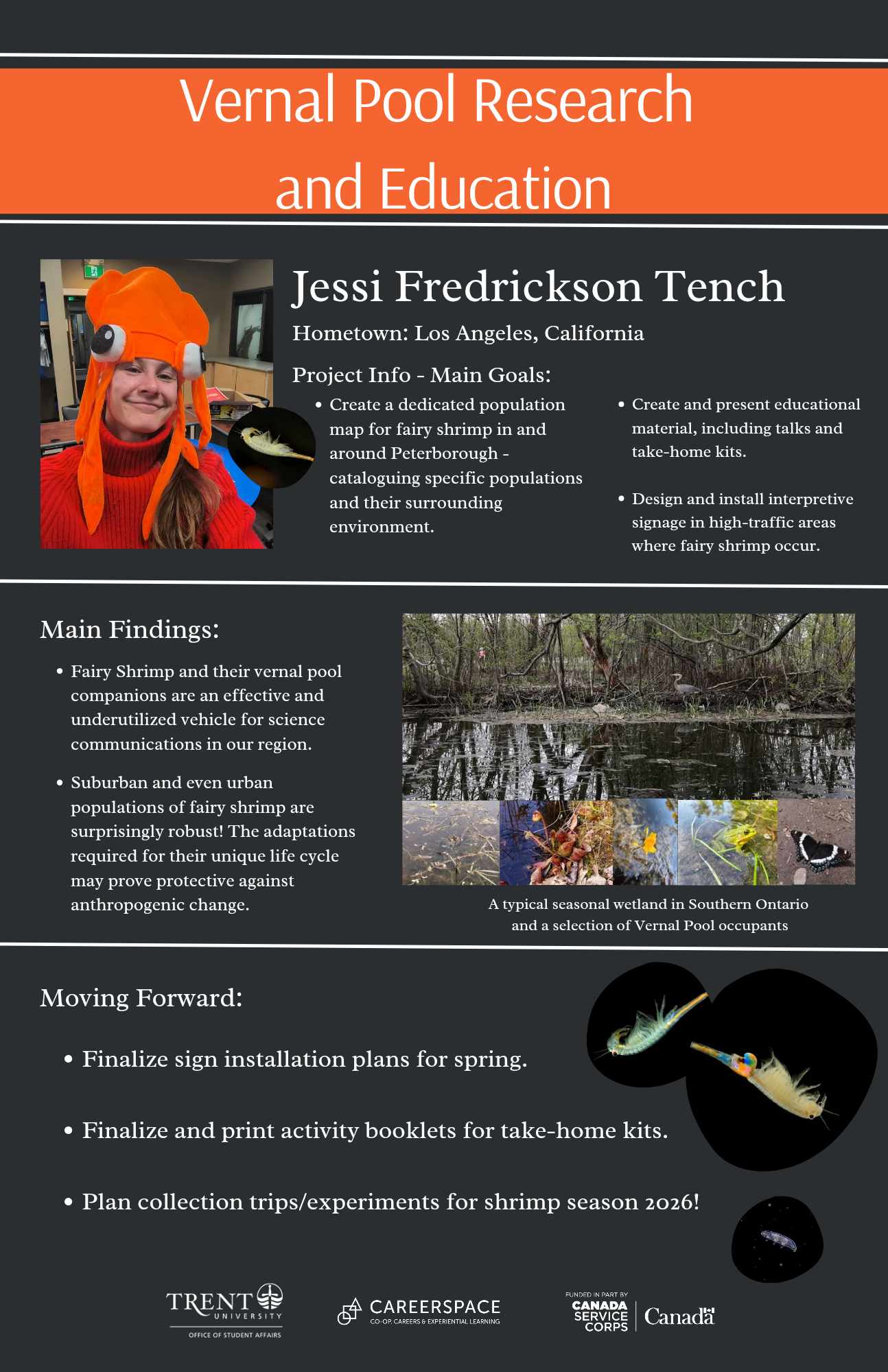
This project explores the ecological importance of vernal pools and the role of fairy shrimp as indicators of ecosystem health. By documenting fairy shrimp populations and mapping their habitats around the Peterborough region, the project aims to deepen understanding of these temporary wetlands and the species that depend on them. Through hands‑on fieldwork, educational materials, and interpretive signage, the project highlights the value of vernal pools as underrecognized yet vital components of local biodiversity. The findings support future conservation and outreach efforts by making vernal pool ecosystems more visible, accessible, and understood within the community.
Aquatic Plant Inventory
Project Participant: Shelby Merante
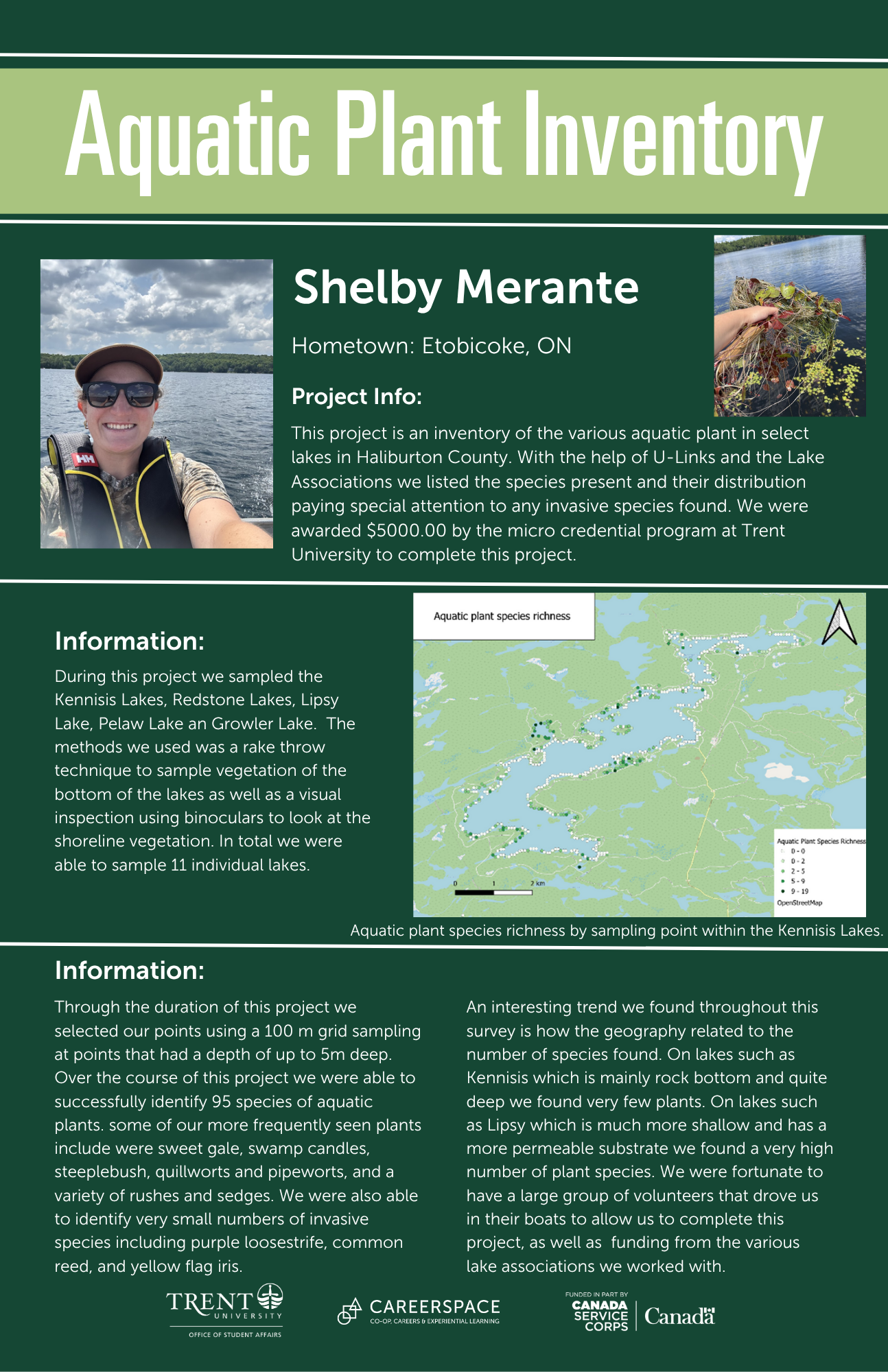
This project highlights Aquatic Plant Inventory, an environmental research initiative designed to document and analyze aquatic plant species across selected lakes in Haliburton County. Using standardized sampling methods and spatial analysis, the project assessed species richness while paying close attention to the presence and distribution of invasive plants. By collecting and cataloguing data from multiple lakes with varying ecological characteristics, the project contributed valuable insights into local freshwater ecosystems and biodiversity patterns. Supported by the Impact Microgrant, the initiative demonstrates the importance of hands‑on environmental research, data‑driven conservation efforts, and student engagement in protecting and understanding aquatic ecosystems.
Hijabi Talks
Project Participant: Hagar Elhelali
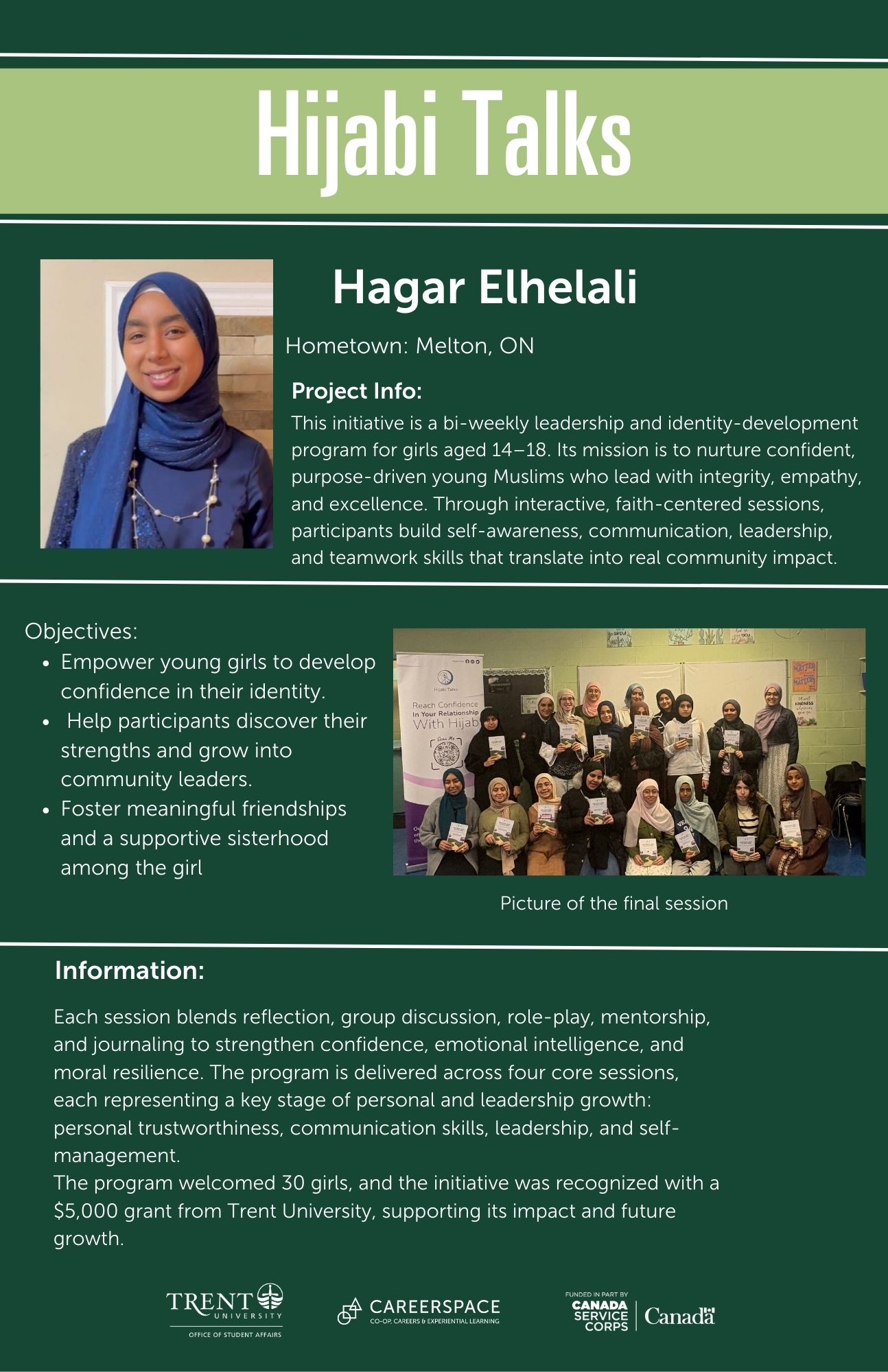
This project highlights the creation of Hijabi Talks, a bi‑weekly leadership and identity‑development program designed to support Muslim girls aged 14 to 18. Developed to address barriers related to confidence, representation, and access to culturally affirming spaces, the program centered personal growth, sisterhood, and community connection. Through facilitated discussions, mentorship, reflection, and interactive activities, participants strengthened communication, leadership, and self‑awareness skills. By fostering a supportive and affirming environment, Hijabi Talks empowered young girls to recognize their strengths, build meaningful relationships, and engage confidently as emerging community leaders. The project emphasizes the importance of culturally responsive, youth‑focused programs that promote belonging and long‑term community impact.
Hack Trent
Project Participant: Batool Kazmi
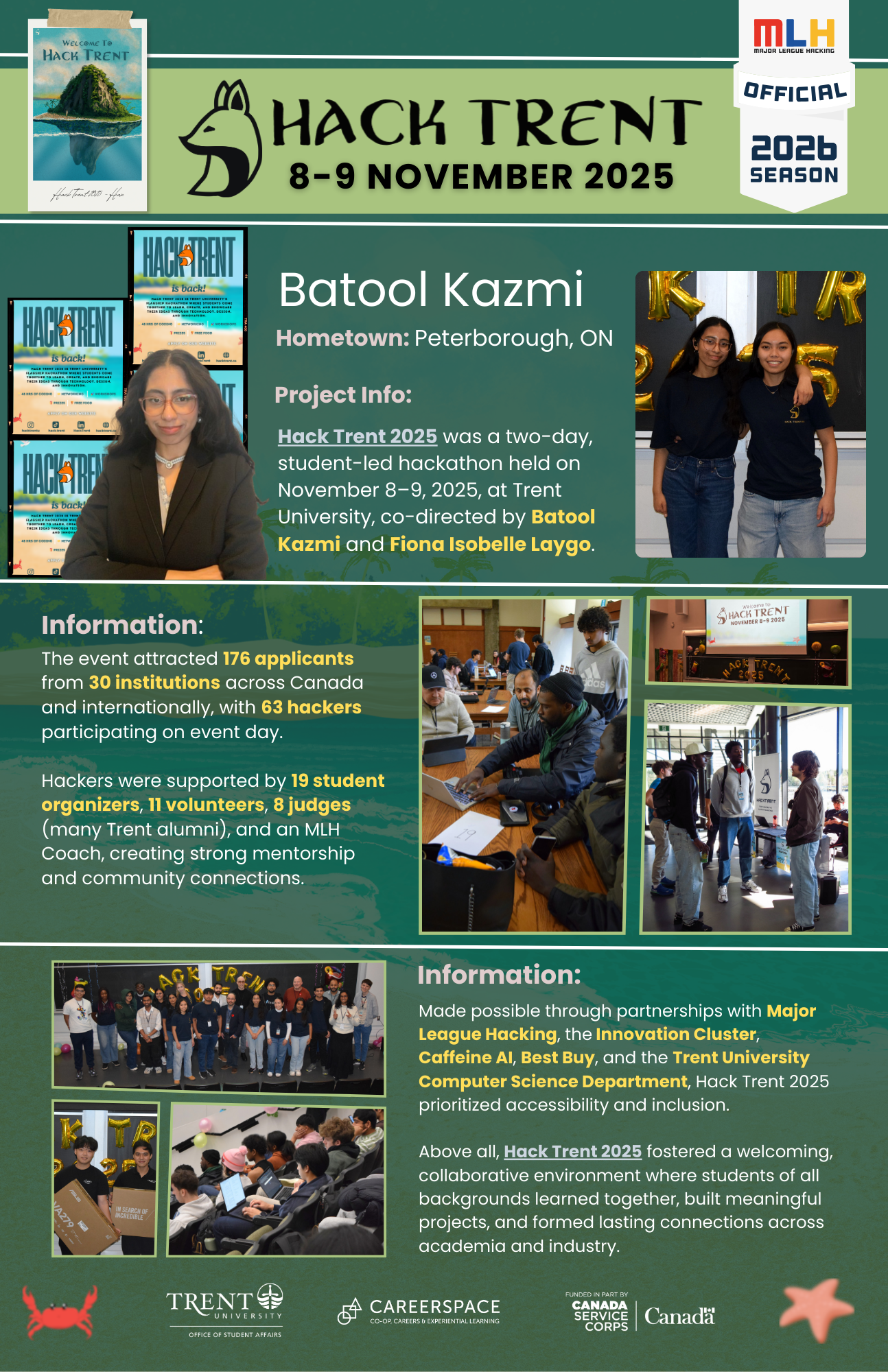
This project highlights the development, coordination, and community impact of Hack Trent 2025, a student-led hackathon designed to bring together emerging technologists from across Canada and around the world. Through collaborative problem-solving, mentorship, and skill‑building workshops, the event created opportunities for participants to innovate, connect, and strengthen their technical abilities. By documenting the event’s outcomes including participation levels, organizational processes, and partnerships, the project demonstrates how student‑driven initiatives can foster inclusive learning environments and meaningful community connections. The insights gained help inform future hackathon planning and support ongoing growth within Trent’s tech community.
Community Fridge Nogojiwanong/Peterborough Marketing and Outreach
Project Participant: Samantha Murphy
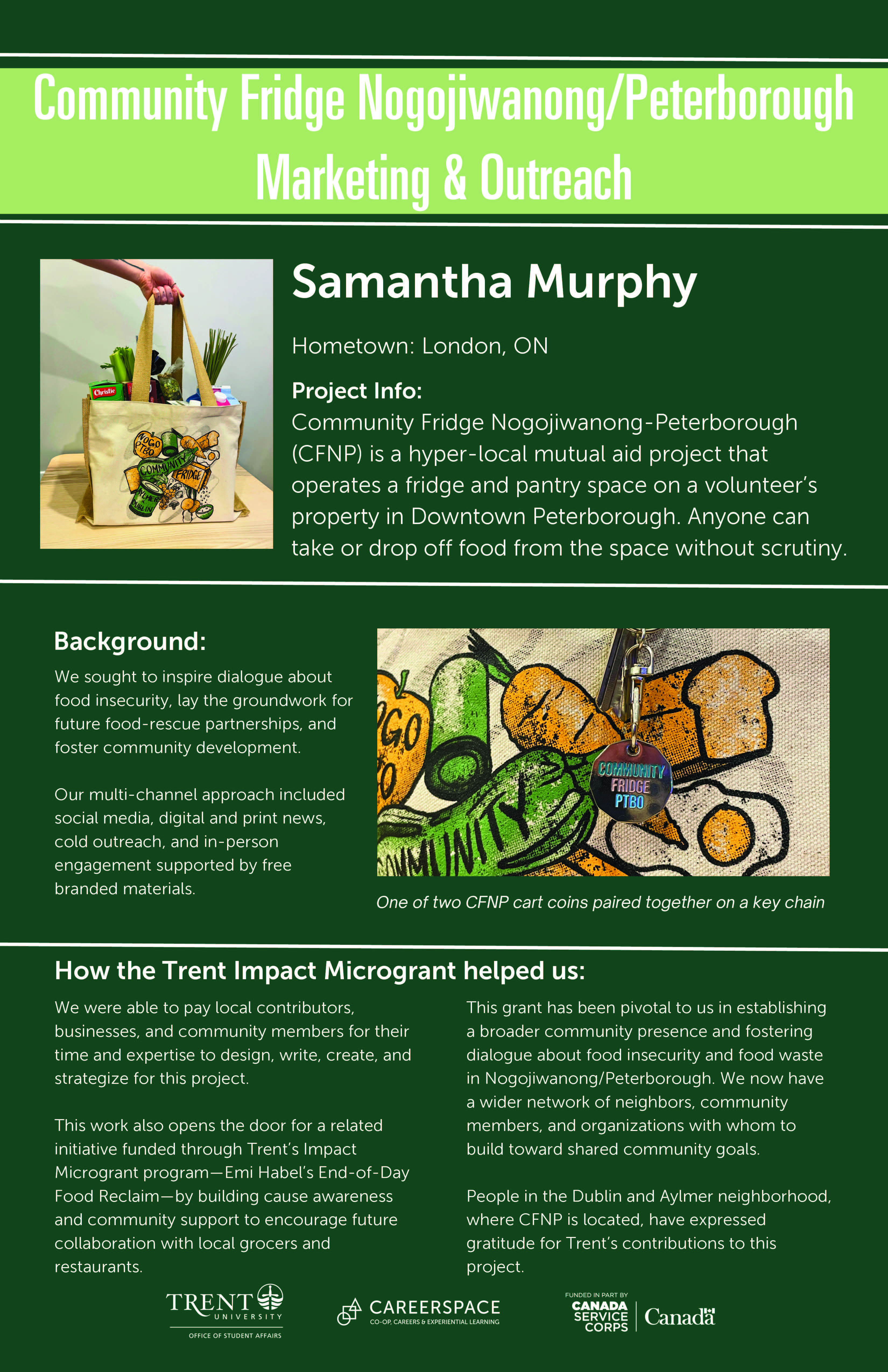
This project focuses on strengthening community outreach, awareness, and engagement for Community Fridge Nogojiwanong/Peterborough, a grassroots mutual aid initiative providing free access to food in downtown Peterborough. Through a multi‑channel marketing approach, including social media content, digital and print materials, branded merchandise, and community‑focused storytelling, the project aims to spark dialogue about food security and build long‑term support for local food‑sharing efforts. By centering the voices and needs of the community, the project highlights what is working well within mutual aid spaces and supports future growth of initiatives that promote accessible, stigma‑free food access.
Indigenous Accessible Raised Garden Bed
Project Participant: Branwyn Lyttle
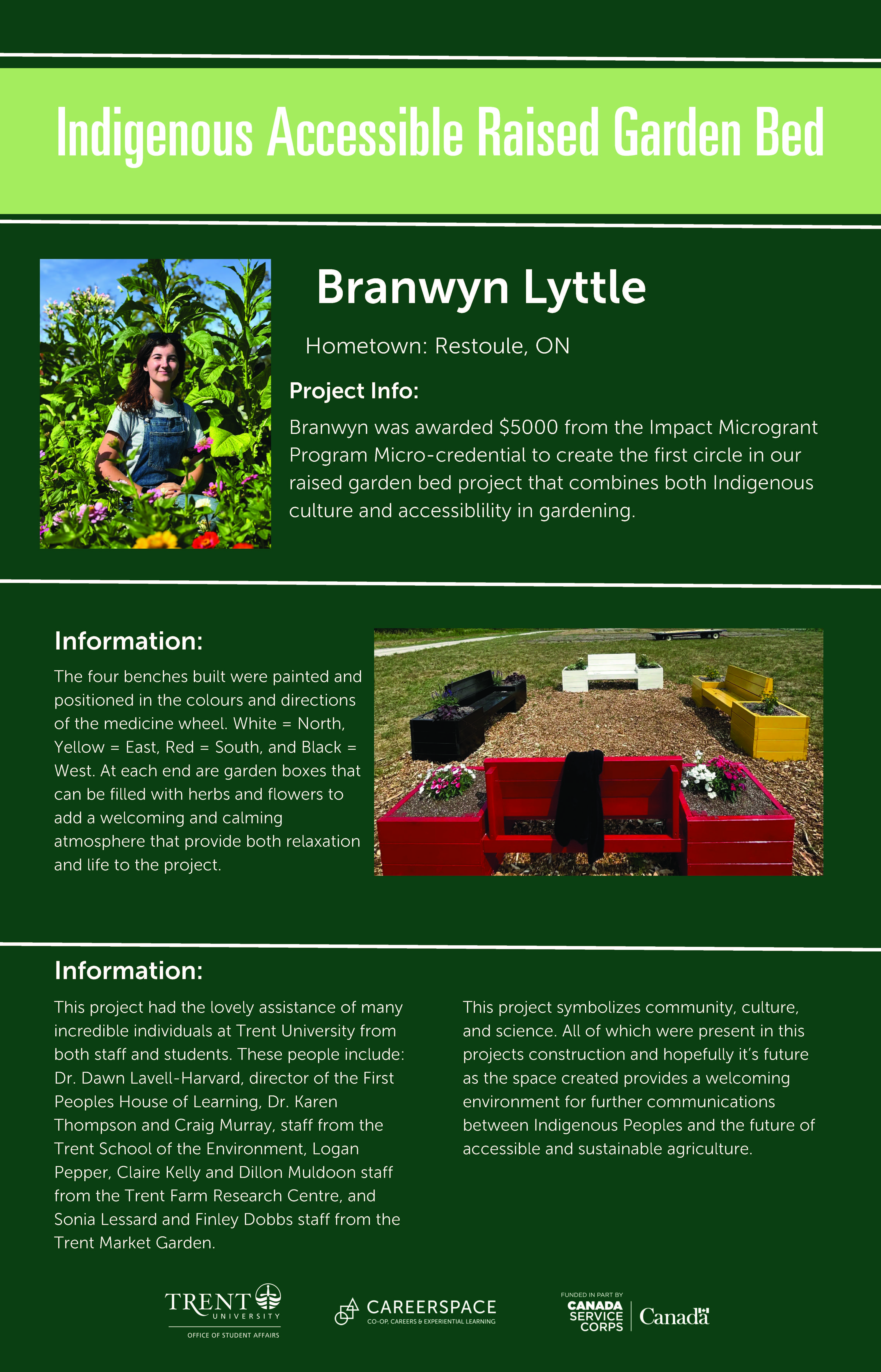
This project focuses on creating an Indigenous informed, accessible raised garden bed that brings together cultural teachings, community connection, and inclusive gardening practices. By designing a space that reflects the traditional directions and colours of the medicine wheel, the project highlights the importance of culturally grounded outdoor environments that are welcoming to all. Through collaboration with knowledge holders, community partners, and accessibility supports, the garden bed model demonstrates how thoughtful design can strengthen relationships, teach land‑based skills, and provide an inclusive space for growing food and learning. The insights gained from this project will guide future work that integrates Indigenous teachings with accessible community gardening initiatives.
The How? Project
Project Participant: Elliot Atherton
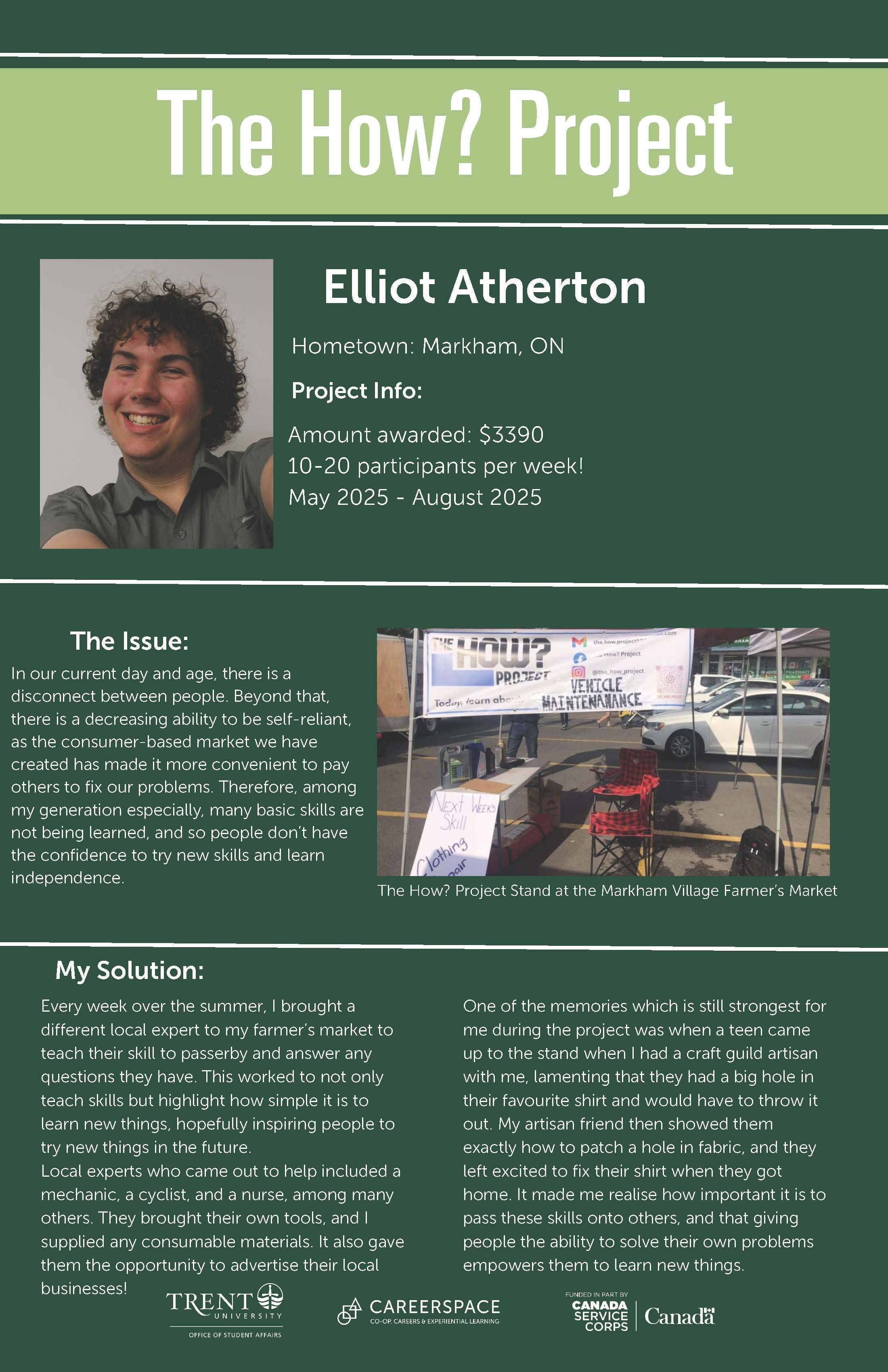
This project explores ways to strengthen community connection, skill‑sharing, and local engagement through a rotating farmers’ market stand designed to bring people together. By creating a space where community members can exchange handmade goods, learn practical skills, and support one another, the project addresses the growing need for opportunities that build self‑reliance and interpersonal connection. Through weekly participation at the Markham Village Farmers’ Market, the project highlights how accessible, community‑based initiatives can foster confidence, creativity, and learning. The insights gained help demonstrate how public market spaces can be used to encourage local collaboration and support emerging entrepreneurs.
this is us
Project Participant: Bhawani Persaud (she/her)
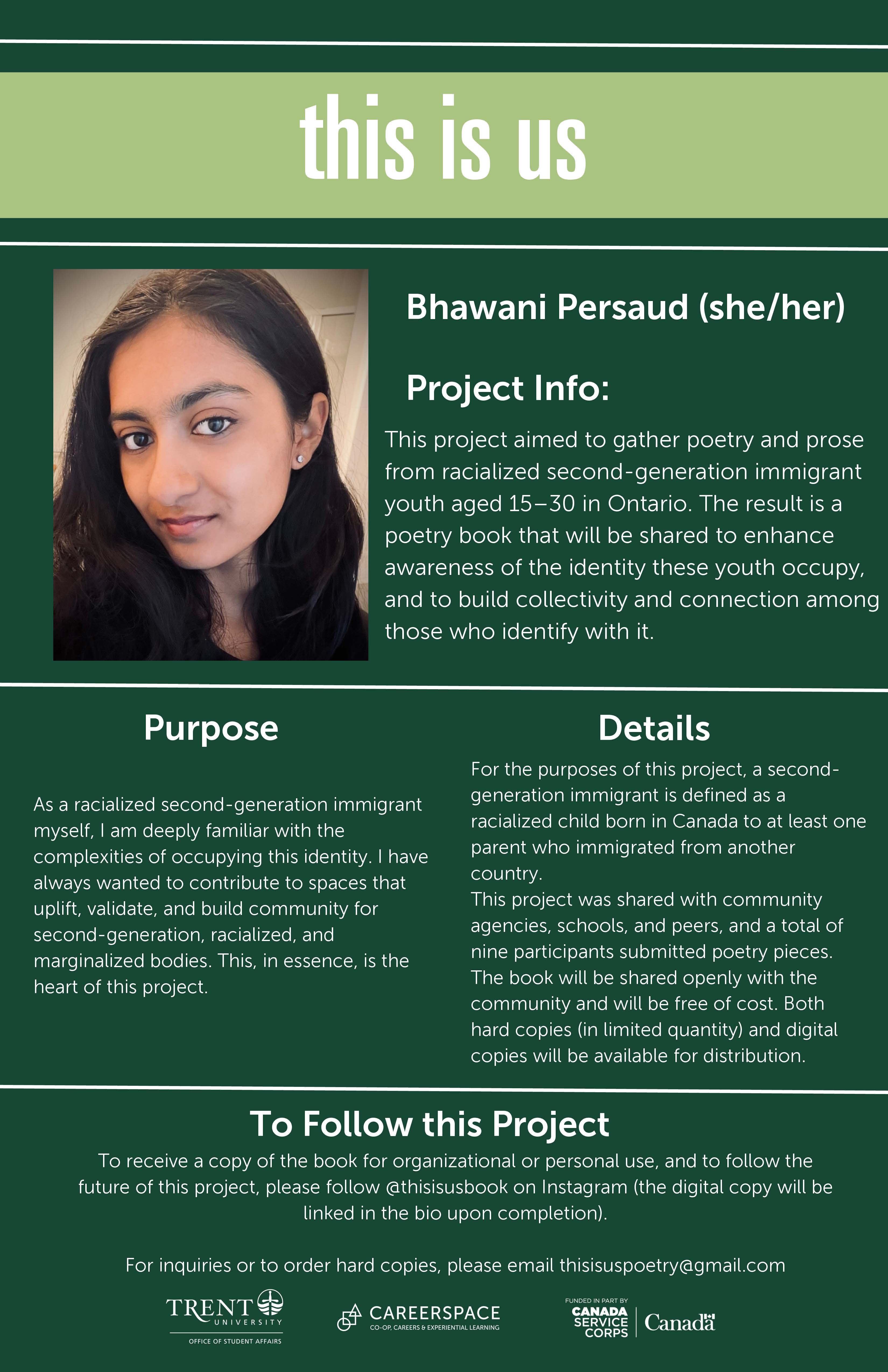
This project brings together poetry and prose from racialized second‑generation immigrant youth across Ontario to explore identity, belonging, and community. By creating a collaborative poetry book titled 'This is Us', the project aims to amplify voices that are often underrepresented, deepen understanding of second‑generation immigrant youth experiences, and foster connection among those who share similar identities. Through community partnerships, writing contributions, and public distribution, the project highlights the power of storytelling as a tool for visibility, healing, and shared cultural expression. The outcomes will help support future creative initiatives that center marginalized voices and celebrate their narratives.
NextGen DNA
Project Participant: Aminat S Adama
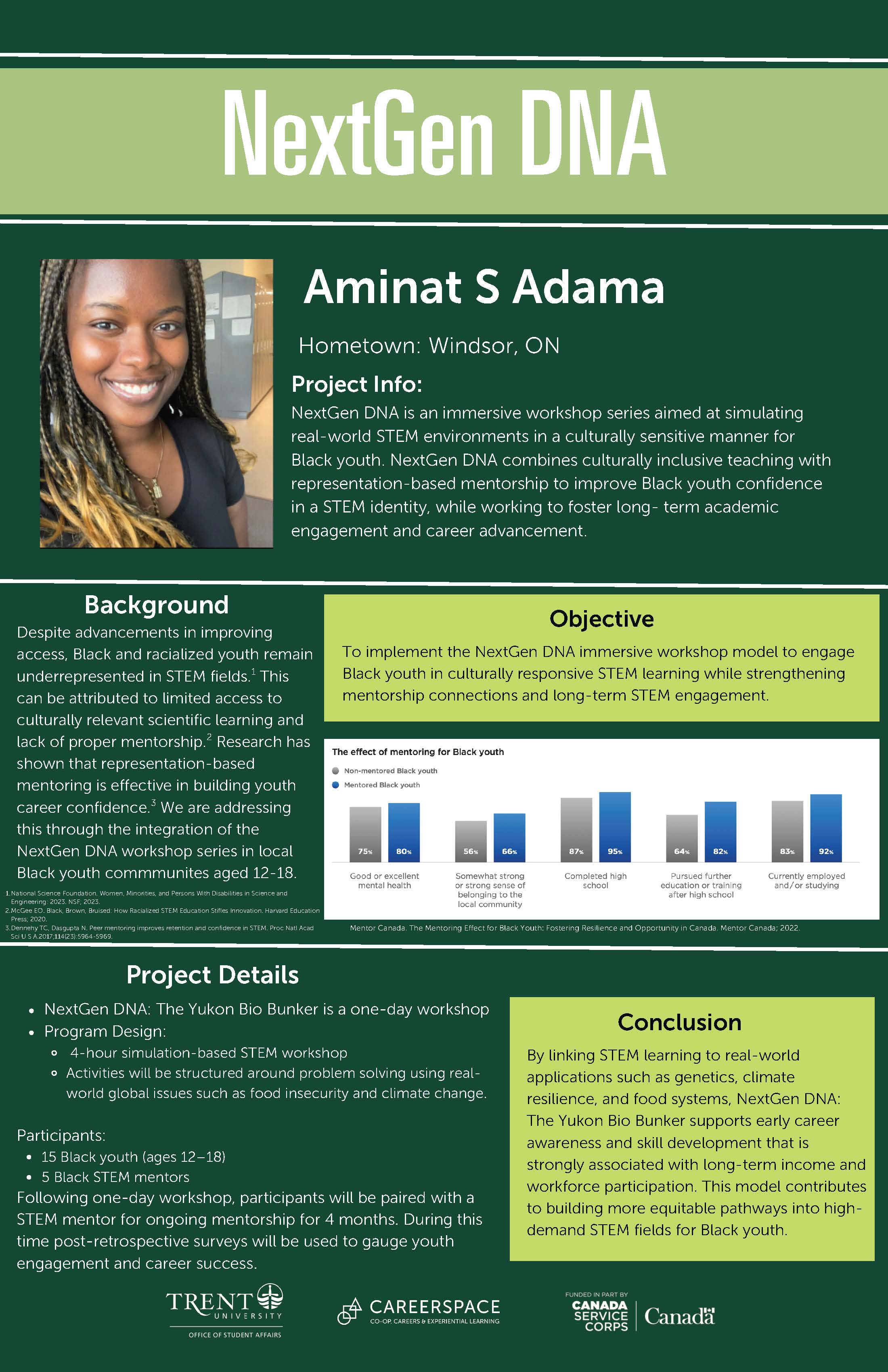
This project focuses on developing and delivering an immersive STEM workshop series designed to support Black youth in building confidence, identity, and long‑term engagement in STEM pathways. By combining culturally responsive teaching with representation‑based mentorship, the project aims to create learning environments where participants feel supported, seen, and equipped to explore real‑world STEM opportunities. Through hands‑on activities, guided instruction, and mentorship connections, the project highlights the impact of inclusive programming on strengthening academic motivation and fostering future career aspirations. Insights from this initiative will help inform accessible, culturally grounded STEM learning models for youth.
Community Meal Events Highlighting Indigenous Knowledges
Project Participant: Angus McBride
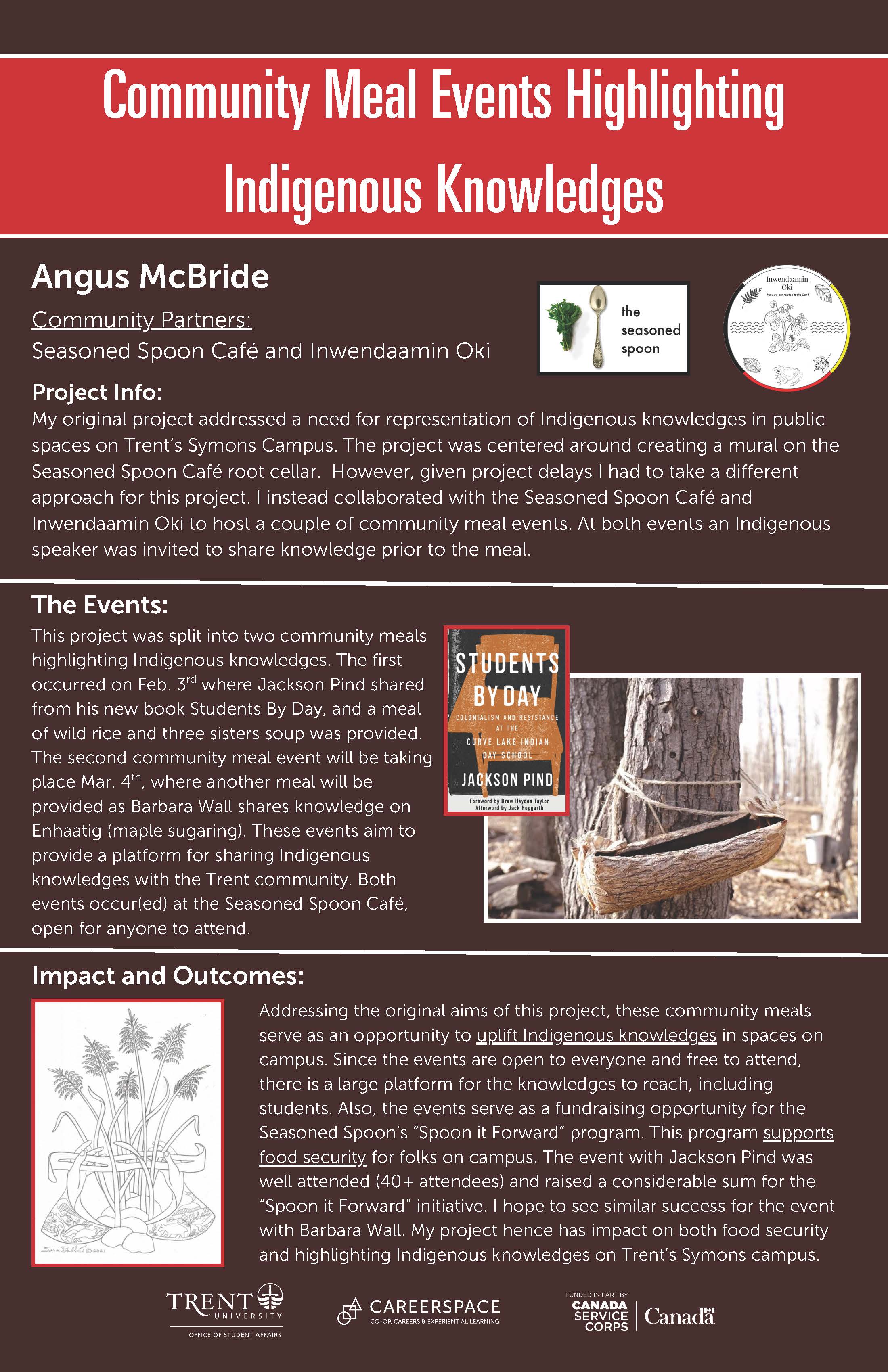
This project highlights a community‑based initiative designed to uplift Indigenous knowledge and create inclusive spaces for learning and connection at Trent University. Developed in partnership with Seasoned Spoon Café and Niwendaamin Oki, the project responded to a need for accessible, public spaces where Indigenous perspectives could be shared through food, conversation, and community gathering. The initiative featured two community meal events that incorporated Indigenous speakers, storytelling, and knowledge‑sharing alongside shared meals. Open to the broader campus community, the events provided meaningful opportunities to engage with Indigenous knowledges, foster dialogue, and strengthen relationships. The project emphasizes the value of community‑centred approaches that combine cultural sharing, accessibility, and collective care in advancing reconciliation and understanding on campus.
Food Sovereignty through Seed Starting
Project Participant: K Flint
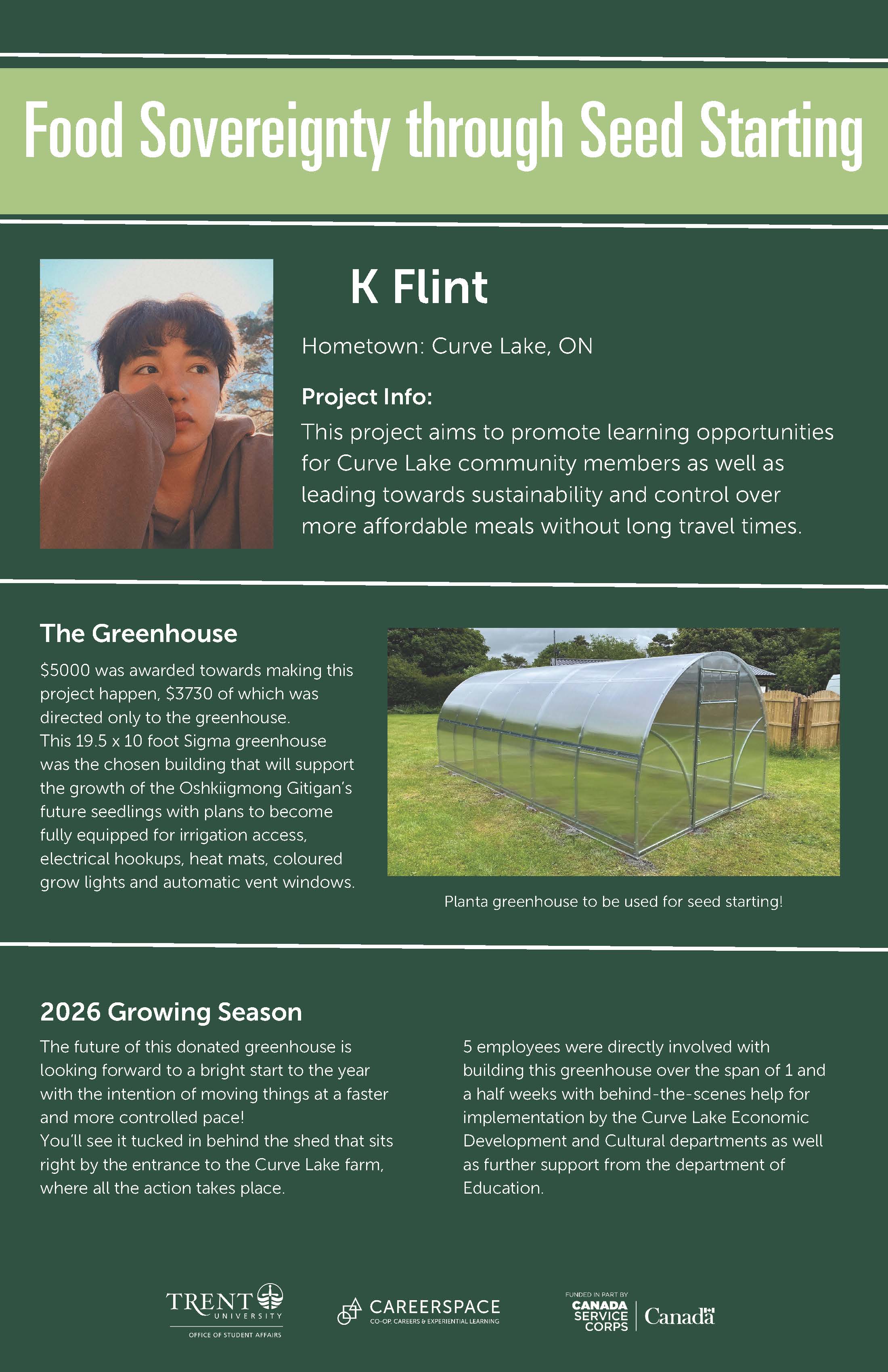
This is a community‑based initiative aimed at increasing access to sustainable food production and local growing knowledge in the Curve Lake community. Developed to reduce barriers related to food affordability, travel, and access to fresh produce, the project focused on building local capacity through hands‑on learning and infrastructure development. Funding supported the construction of a greenhouse dedicated to seed starting, enabling community members to grow seedlings locally and prepare for the growing season in a more accessible and sustainable way. Through collaboration, skill‑building, and long‑term planning, the project supports food sovereignty by strengthening community control over food systems and promoting sustainable, locally rooted food practices.
Nourish To Flourish
Project Participant: Andrea J Sturgis
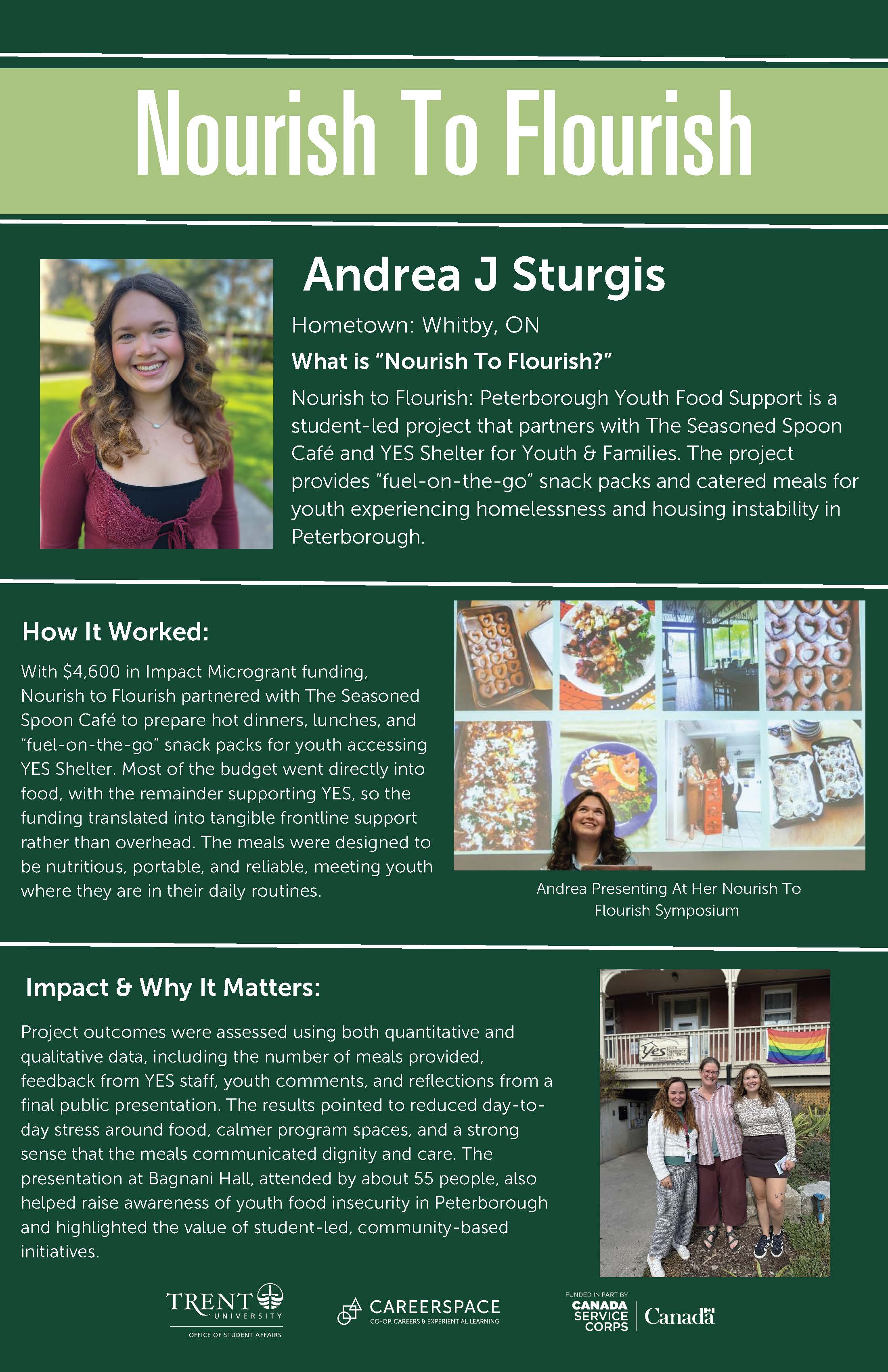
This project supports youth facing homelessness and housing instability by providing nutritious, portable meals and catered community dinners through a partnership between Nourish to Flourish, The Seasoned Spoon Café at Trent University, and YES Shelter for Youth & Families. Using Impact Microgrant funding, the project prepared “fuel‑on‑the‑go” snack packs and hot meals designed to meet youth where they are in their daily routines. By combining accessible food support with relationship‑building, the project emphasizes the role of consistent nourishment, dignity, and care in promoting youth well‑being. The insights gained highlight the value of youth‑led community food initiatives in creating responsive, supportive environments for local young people.
Archie Cares
Project Participant: Jordan Foss Mills
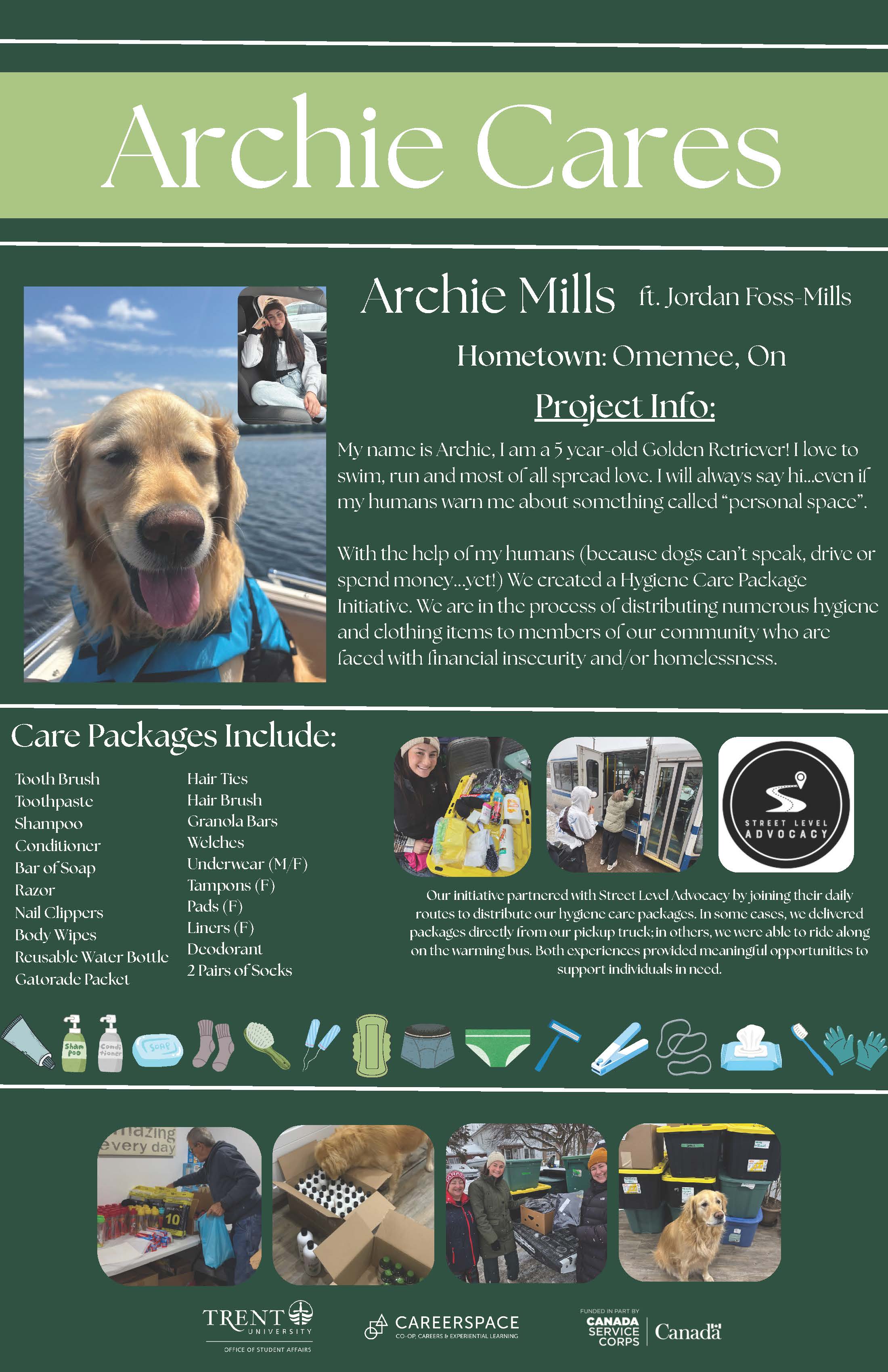
The Archie Cares project focused on supporting individuals facing homelessness and financial insecurity. Developed with compassion and community responsibility at its core, the project involved the creation and distribution of hygiene care packages containing essential personal care items. By responding to immediate, practical needs, the initiative aimed to reduce barriers to dignity, health, and wellbeing for community members. Through hands‑on outreach, volunteer support, and partnership with local advocacy efforts, Archie Cares demonstrates how small‑scale, action‑focused projects can make a meaningful impact and foster empathy, connection, and community care.
Building Youth resilience through sports
Project Participant: Eric Persaud-Meraram
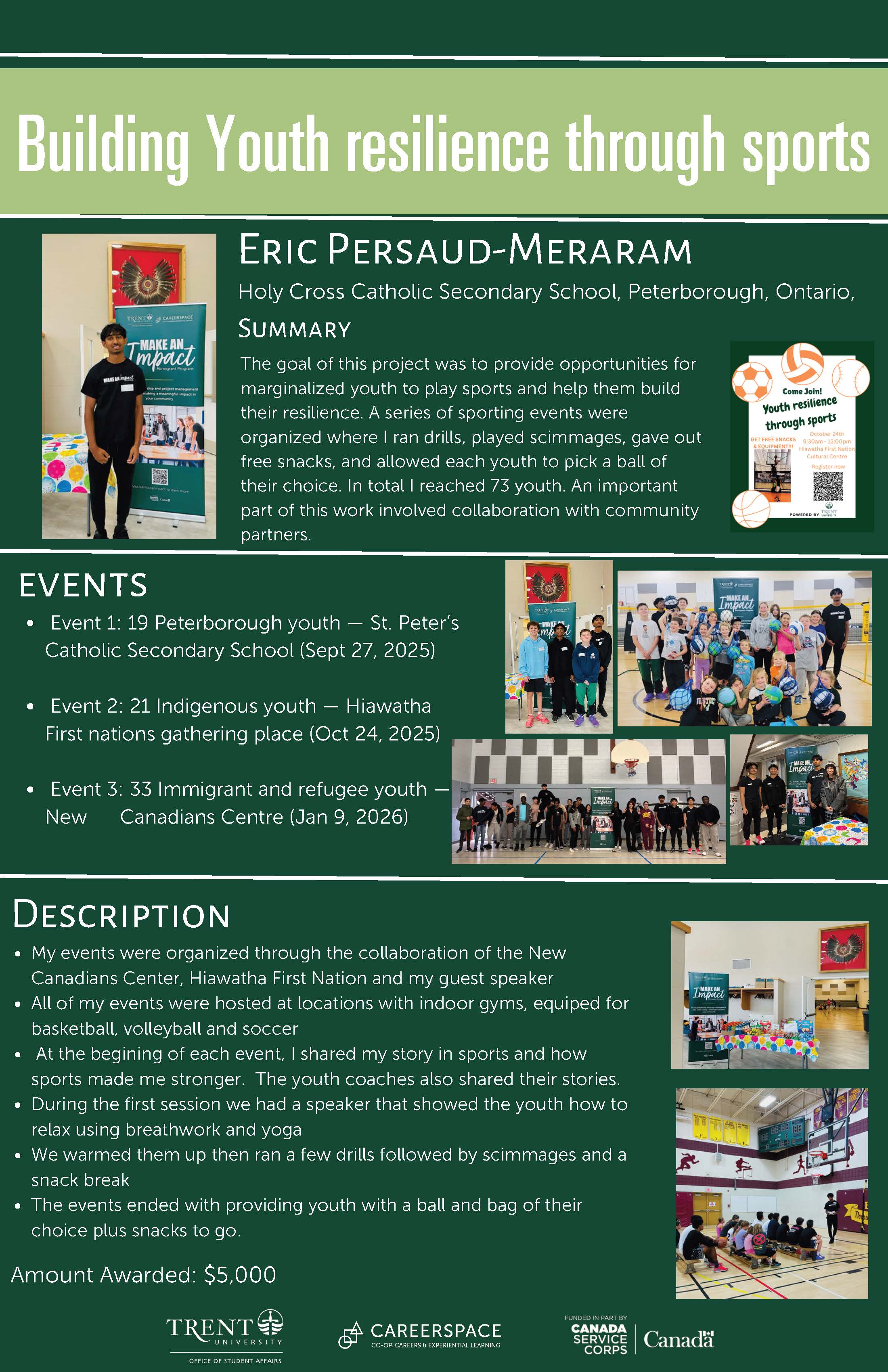
This project focuses on building confidence, connection, and resilience among marginalized youth through accessible sports programming. By organizing a series of community‑based sporting events, the project created opportunities for youth to try new activities, form supportive relationships, and develop new skills in a welcoming environment. Participants were able to learn drills, play scrimmages, receive free snacks, and choose a ball to take home, encouraging ongoing engagement beyond each session. Through collaboration with local partners, the project demonstrates how inclusive recreational programming can strengthen youth well‑being, promote belonging, and foster leadership in diverse communities.
Peterborough and County Gender-Affirming Care Grant
Project Participant: Kaz Ziemba Lee (he/they)
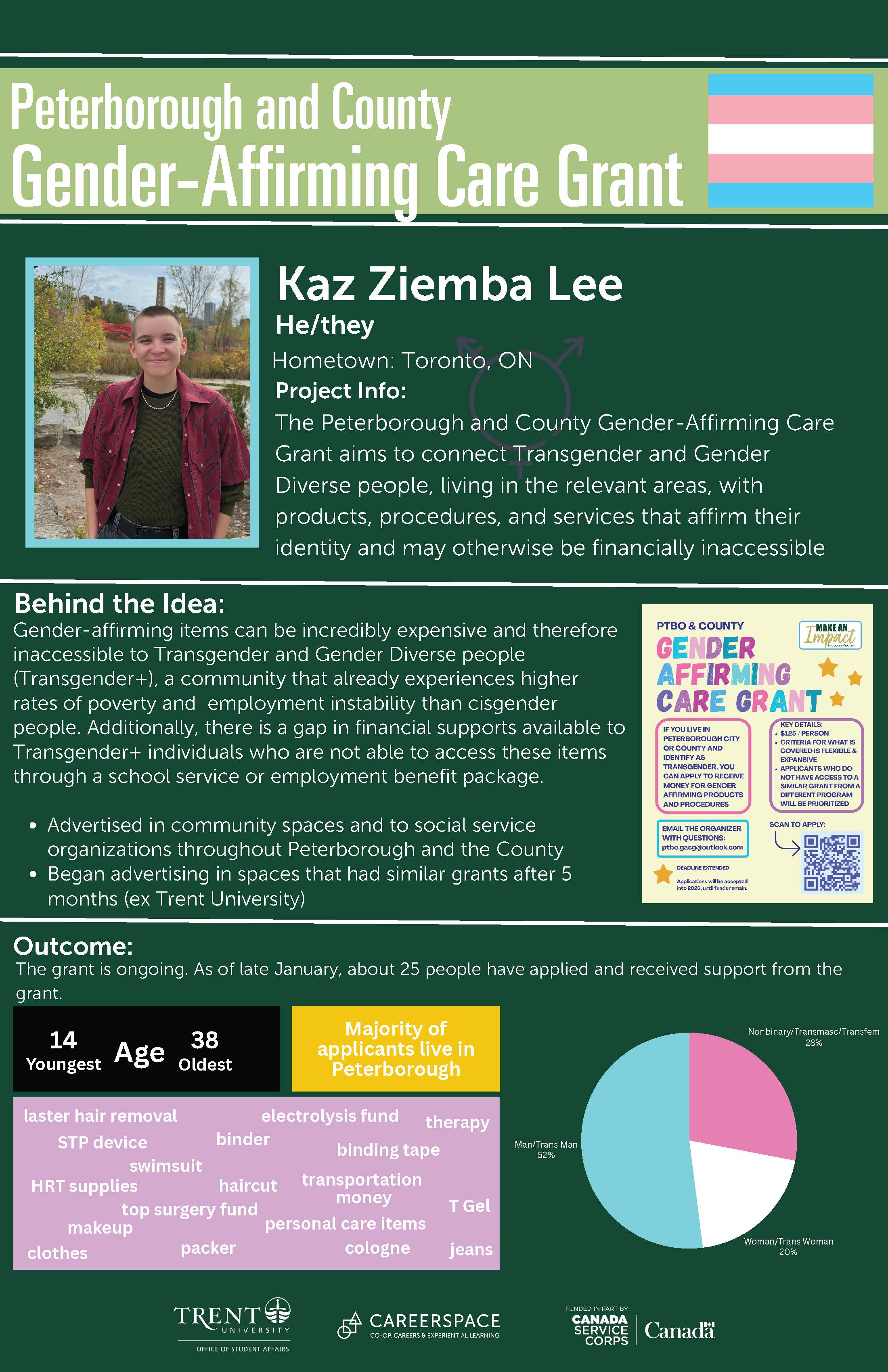
This project focuses on increasing access to gender‑affirming products, procedures, and services for Transgender and Gender Diverse people living in Peterborough and the County. By developing and promoting the Gender‑Affirming Care Grant, the project aims to reduce financial barriers that often prevent individuals from accessing items essential to their well‑being, safety, and identity. Through community outreach, awareness campaigns, and partnerships with local organizations, the initiative highlights the ongoing need for accessible gender‑affirming support. The project’s outcomes will help inform future programs that prioritize dignity, autonomy, and equitable access to care for the Trans and Gender Diverse community. The grant is currently ongoing.
Trans MENstruation & More
Project Participant: Darien Kenny
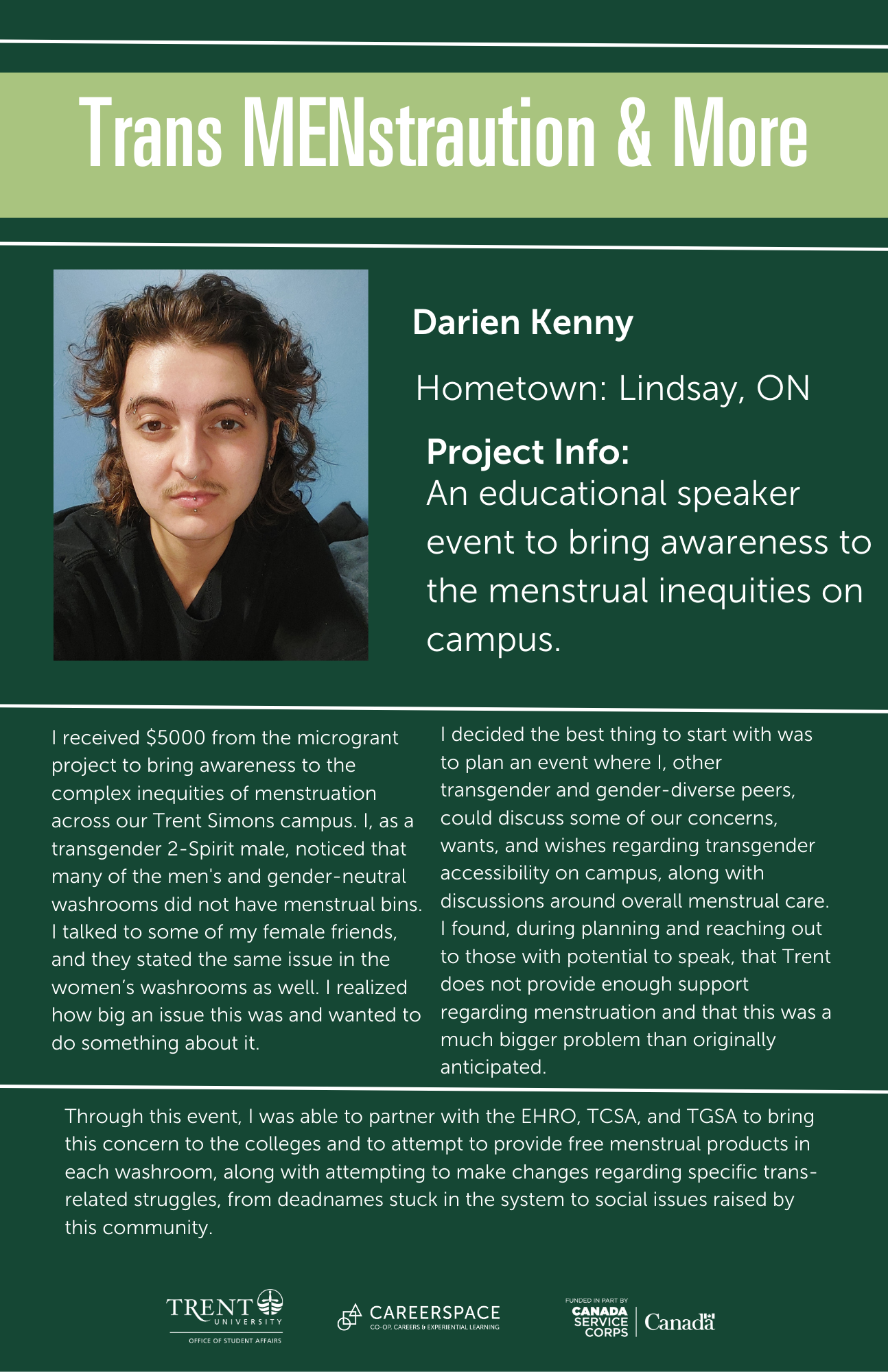
This project highlights Trans MENstruation & More, an educational speaker event created to raise awareness about menstrual inequities affecting transgender and gender‑diverse individuals on campus. Developed in response to gaps in access to menstrual products and inclusive facilities, the project centered trans and gender‑diverse voices through open discussion and community dialogue. By creating a space for shared experiences, learning, and advocacy, the event encouraged greater understanding of how menstrual care, accessibility, and institutional systems intersect with gender identity. Through collaboration with campus equity groups, the project emphasized the importance of inclusive health practices and systemic change to support dignity, access, and wellbeing for all students.
Youth Mental Health Summit
Project Participant: Hope Hutchison
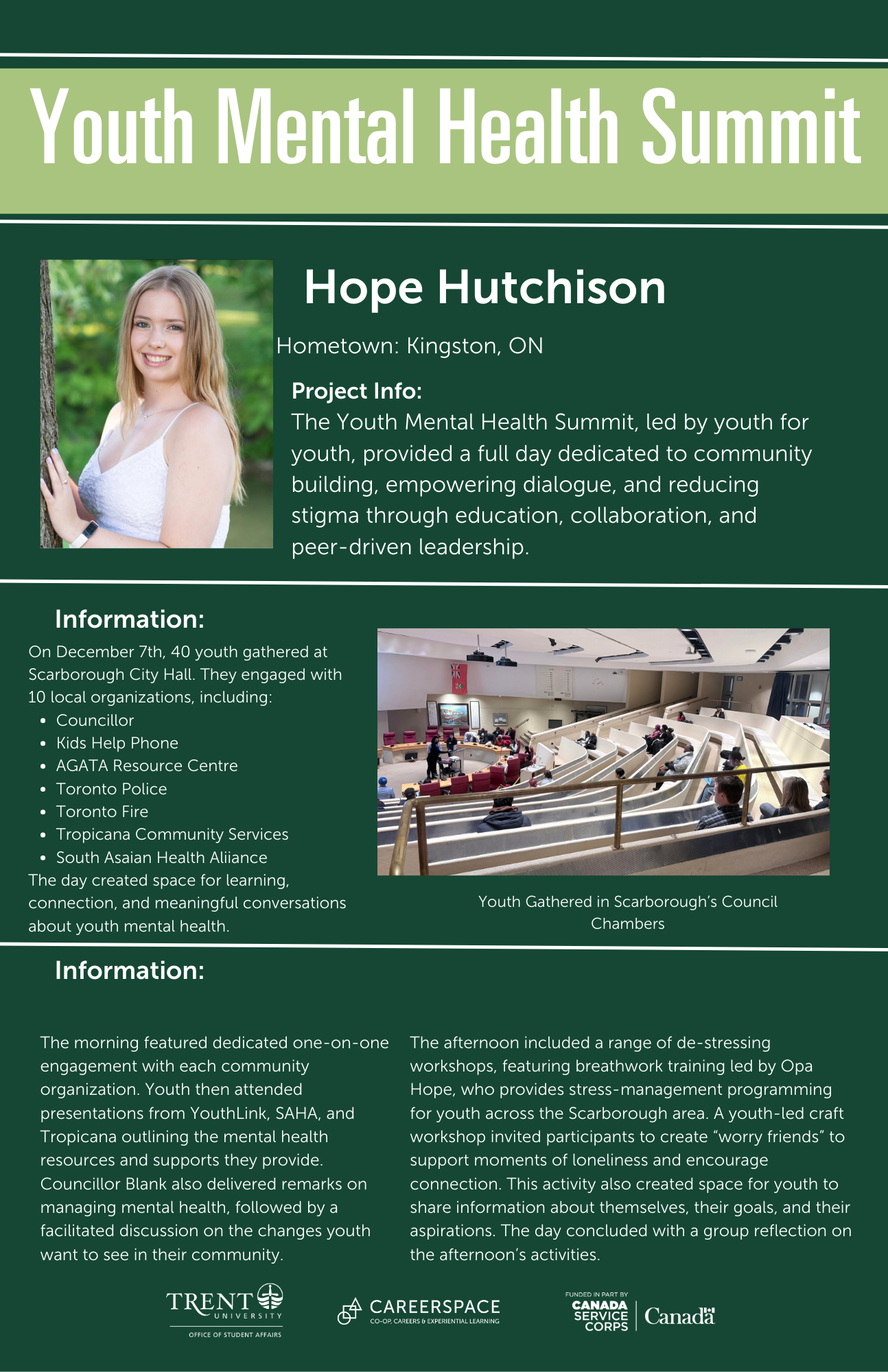
This project highlights the Youth Mental Health Summit, a youth‑led, day‑long event created to foster open dialogue, learning, and connection around mental health. Designed to address stigma and gaps in access to mental health information and supports, the summit brought young people together with local organizations to engage in meaningful discussions, educational presentations, and collaborative activities. Through peer leadership, community partnerships, and interactive workshops, participants were encouraged to share experiences, build resilience, and explore strategies for supporting their own mental well‑being and that of their communities. The project emphasizes the value of youth‑driven initiatives in creating inclusive spaces that promote mental health awareness and strengthen community connections.
Youth Foundation Project
Project Participant: Megan Brillantes
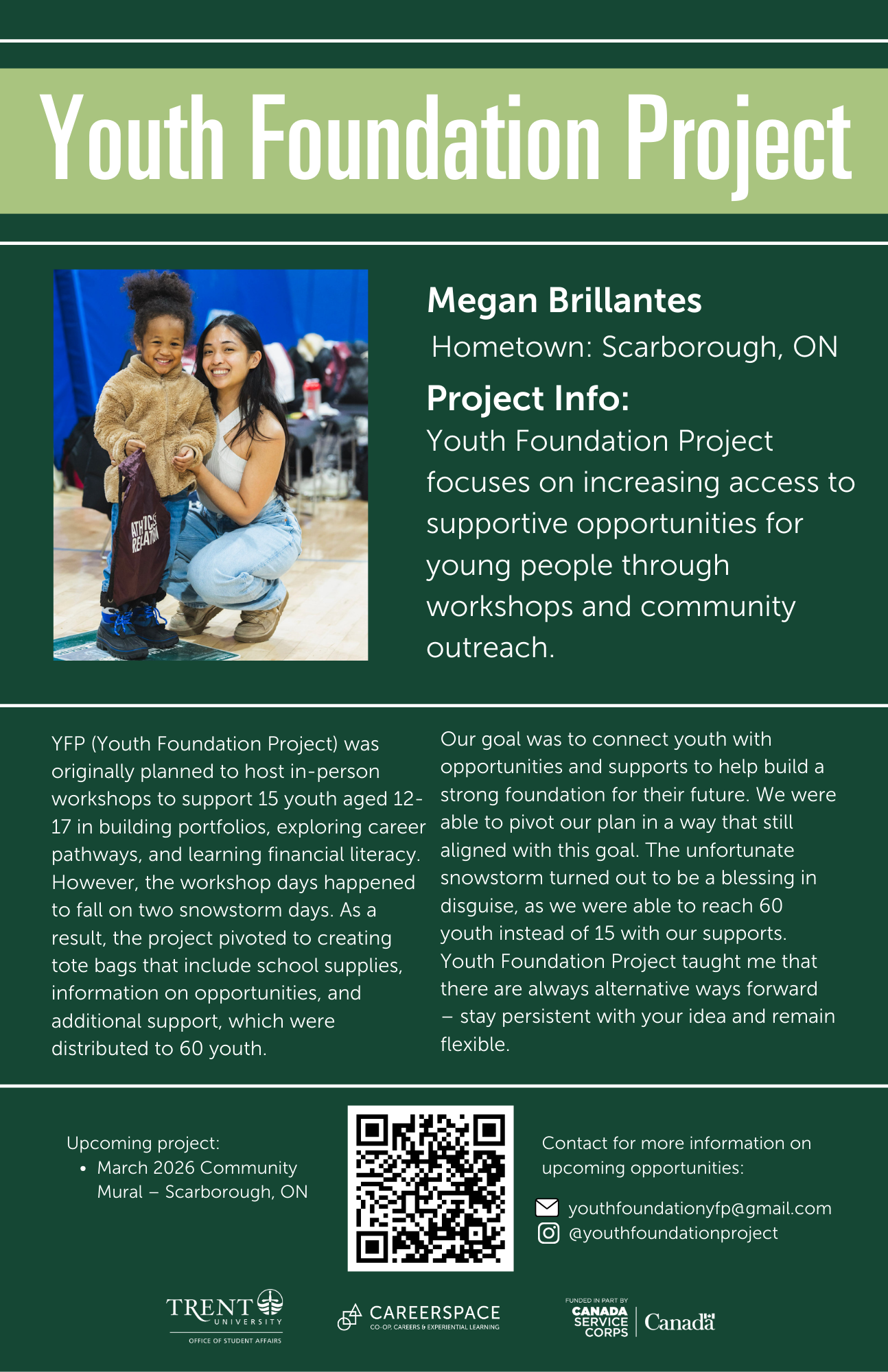
This project highlights the Youth Foundation Project, a community‑focused initiative designed to increase access to supportive opportunities for young people. Originally planned as a series of in‑person workshops focused on youth development, financial literacy, and future‑planning skills, the project adapted in response to weather‑related disruptions. By pivoting to the creation and distribution of resource‑filled tote bags, the initiative ensured continued access to practical supports, information, and community connections for youth. Through outreach and flexibility, the project reached a greater number of participants than initially planned, reinforcing the importance of adaptability, persistence, and youth‑centred approaches in building strong foundations for future success.
TMG Fall Fair
Project Participant: Sonia Lessard
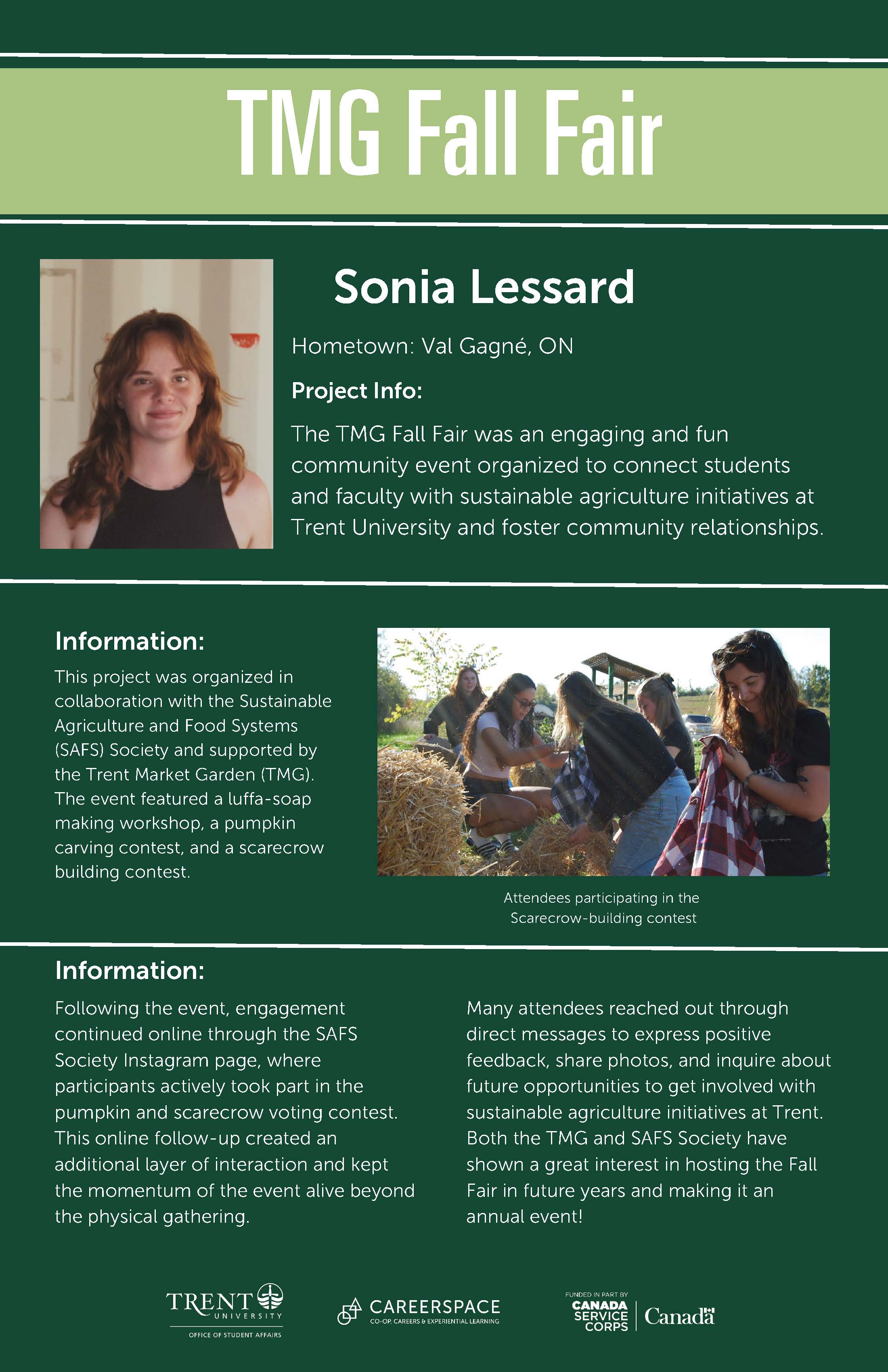
This project highlights the TMG (Trent Market Garden) Fall Fair, an engaging community event designed to connect students and faculty with sustainable agriculture initiatives at Trent University. Through partnerships with the Sustainable Agriculture and Food Systems Society and the Trent Market Garden, the event offered hands‑on activities such as a luffa‑soap making workshop, a pumpkin carving contest, and a scarecrow‑building competition. These activities created opportunities for participants to learn about sustainable food systems, build relationships, and strengthen community involvement. The project demonstrates how interactive, student‑led events can foster environmental awareness, creativity, and long‑term engagement in campus sustainability programming.
Under The Influence: Alcohol Consumption Safety for University Students
Project Participant: Faith Armstrong
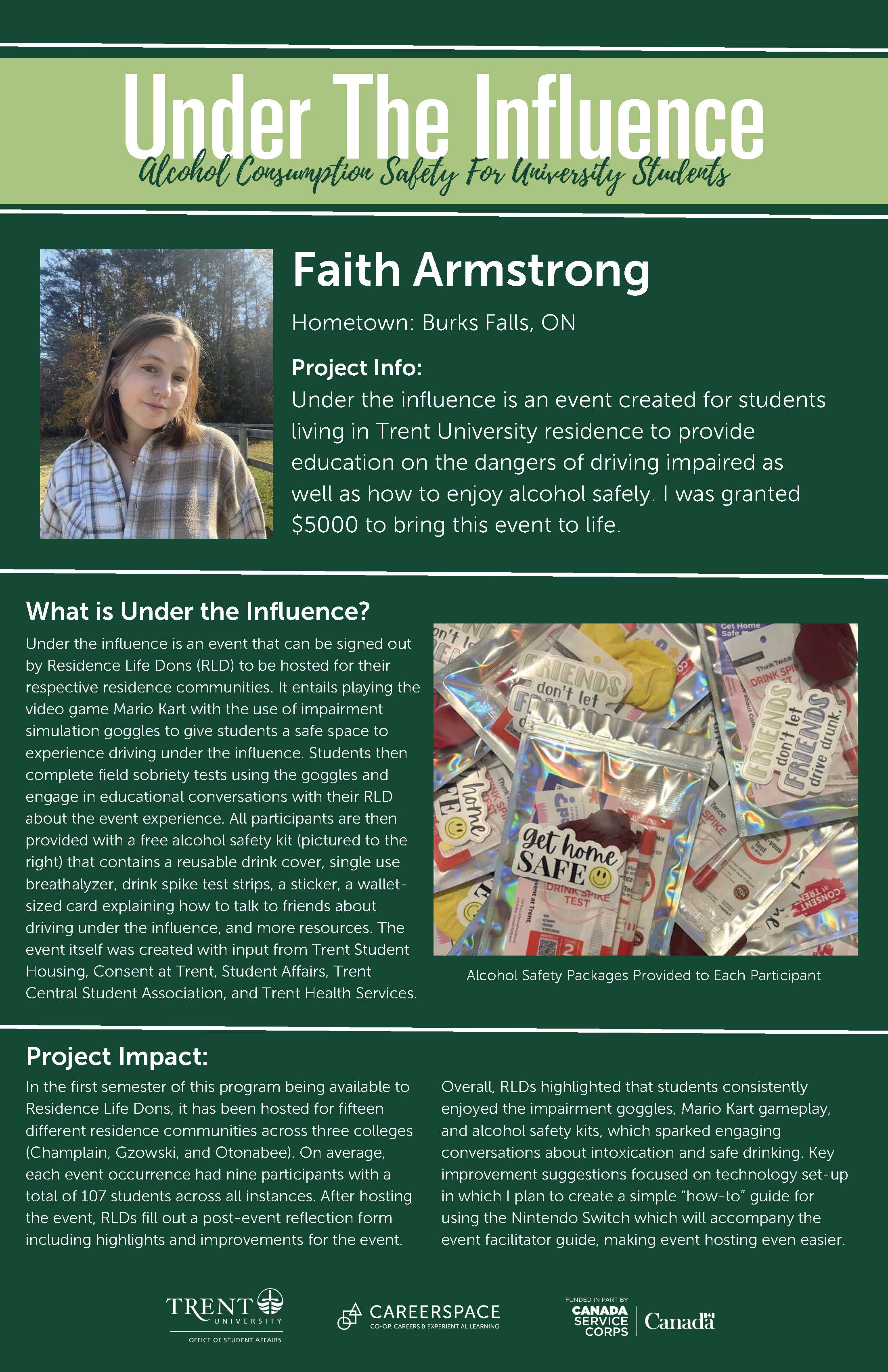
This project provides students living in Trent University residence with practical education on alcohol safety and the risks associated with impaired driving. Through an engaging event series developed in partnership with Residence Life Dons, the project offered interactive stations, safety demonstrations, and accessible resources that helped students learn how to make safer choices when consuming alcohol. By combining hands‑on activities with clear, harm‑reduction messaging, the project aimed to increase students’ confidence in navigating social situations responsibly. The insights gained highlight the importance of peer‑led, residence‑based programming in promoting student wellness and fostering safer campus communities.
The Care Cupboard
Project Participant: Marlee Lunshof
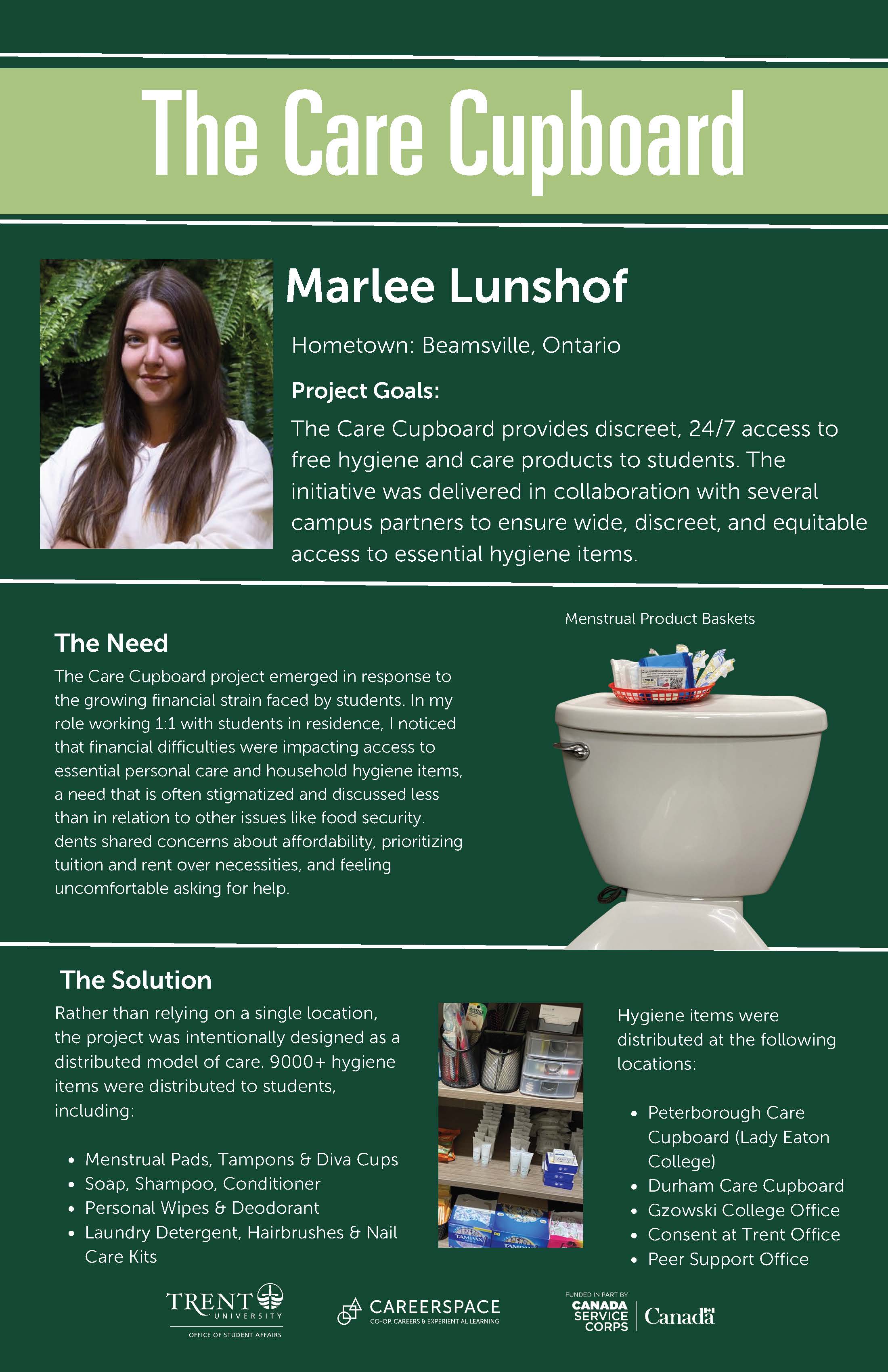
This project addresses the financial barriers students face in accessing essential hygiene products by creating a discreet, 24/7 hygiene‑care resource called The Care Cupboard. Developed in collaboration with multiple campus partners, the initiative provides free, judgment‑free access to items such as menstrual products, shampoo, deodorant, toothpaste, and other personal care supplies. By offering a centralized and private location for these necessities, the project aims to support student well‑being, reduce stigma, and ensure that financial strain does not prevent students from meeting basic hygiene needs. The model emphasizes dignity, accessibility, and community‑supported care.
Where Will Trent Take You?
Project Participant: Margot MacDonell
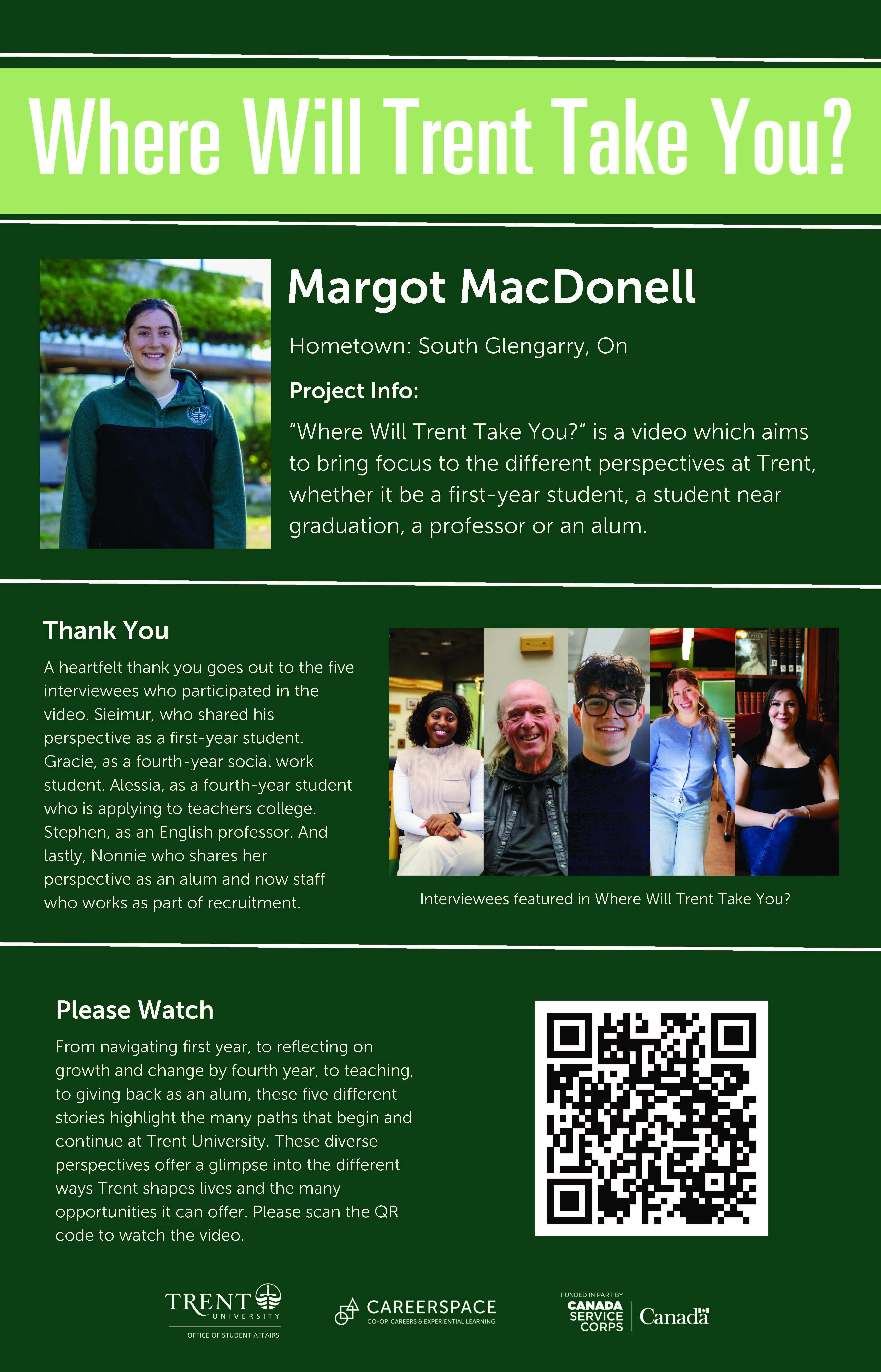
This project highlights the creation of Where Will Trent Take You? a video designed to capture diverse perspectives from the Trent University community. By featuring voices from students at different stages of their academic journey, as well as faculty and alumni, the project aims to showcase the many paths, experiences, and opportunities that Trent offers. Through personal stories and reflections, the video encourages viewers to imagine their own potential futures at Trent while strengthening a sense of belonging and connection. The project demonstrates how storytelling and representation can inspire students and celebrate the vibrancy of the Trent community. You can watch the video here.
Biomedical Illustration
Project Participant: Michayla Lewis
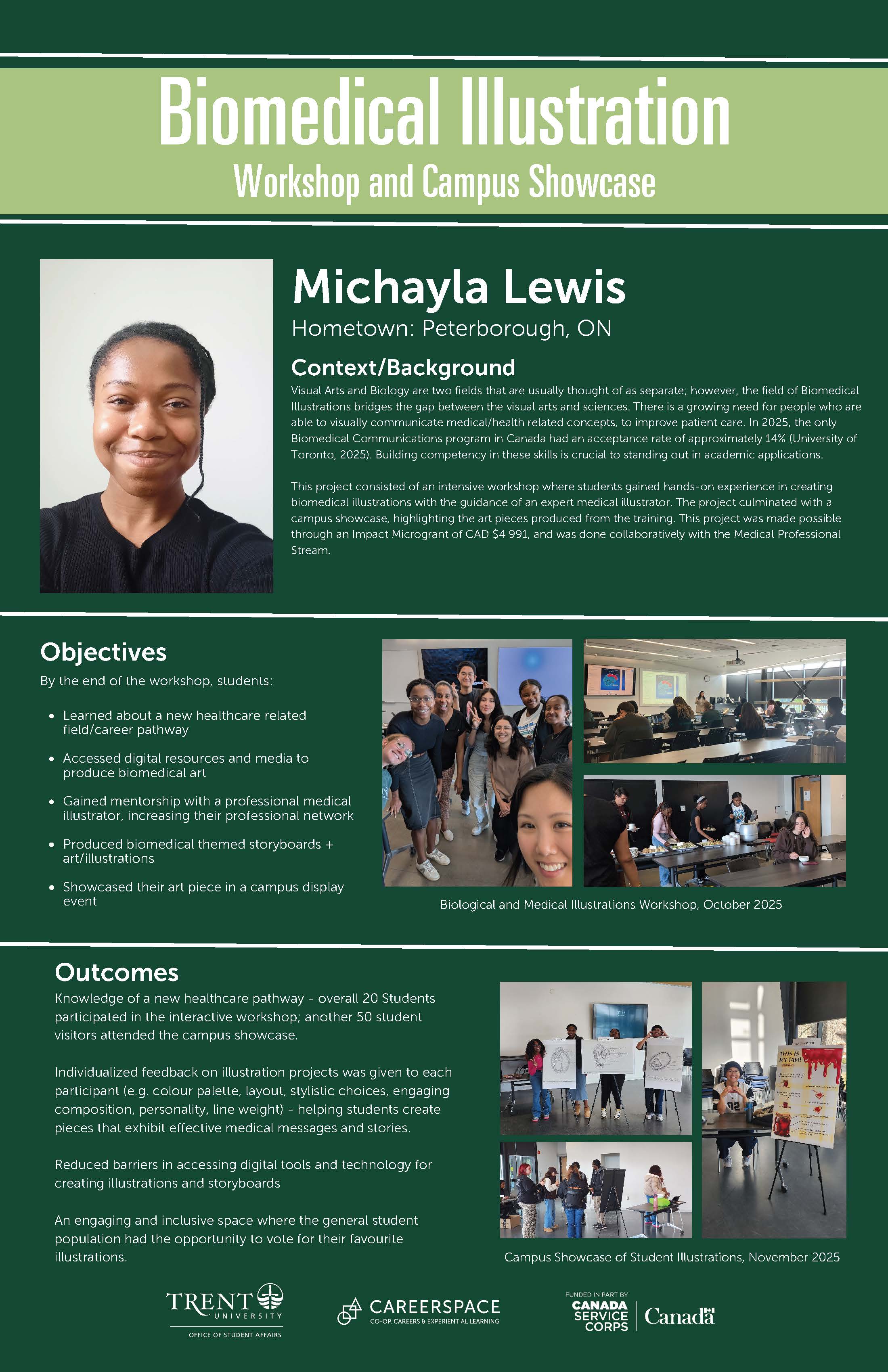
This project showcases the development and delivery of a biomedical illustration workshop and campus showcase designed to introduce students to the field of science and visual arts. Through guided activities, participants learned core techniques such as anatomical observation, gesture drawing, and translating scientific concepts into clear visual formats. The project emphasized the importance of accessible visual communication in healthcare, research, and science education. By culminating in a campus showcase of student work, the initiative highlighted the creative and academic value of biomedical illustration and encouraged broader engagement with scientific art across the university community.
Autobiographical Sketch & Personal Statement Clinic: A Guide for Mastering Medical School Applications
Project Participant: Sofia Gesualdo
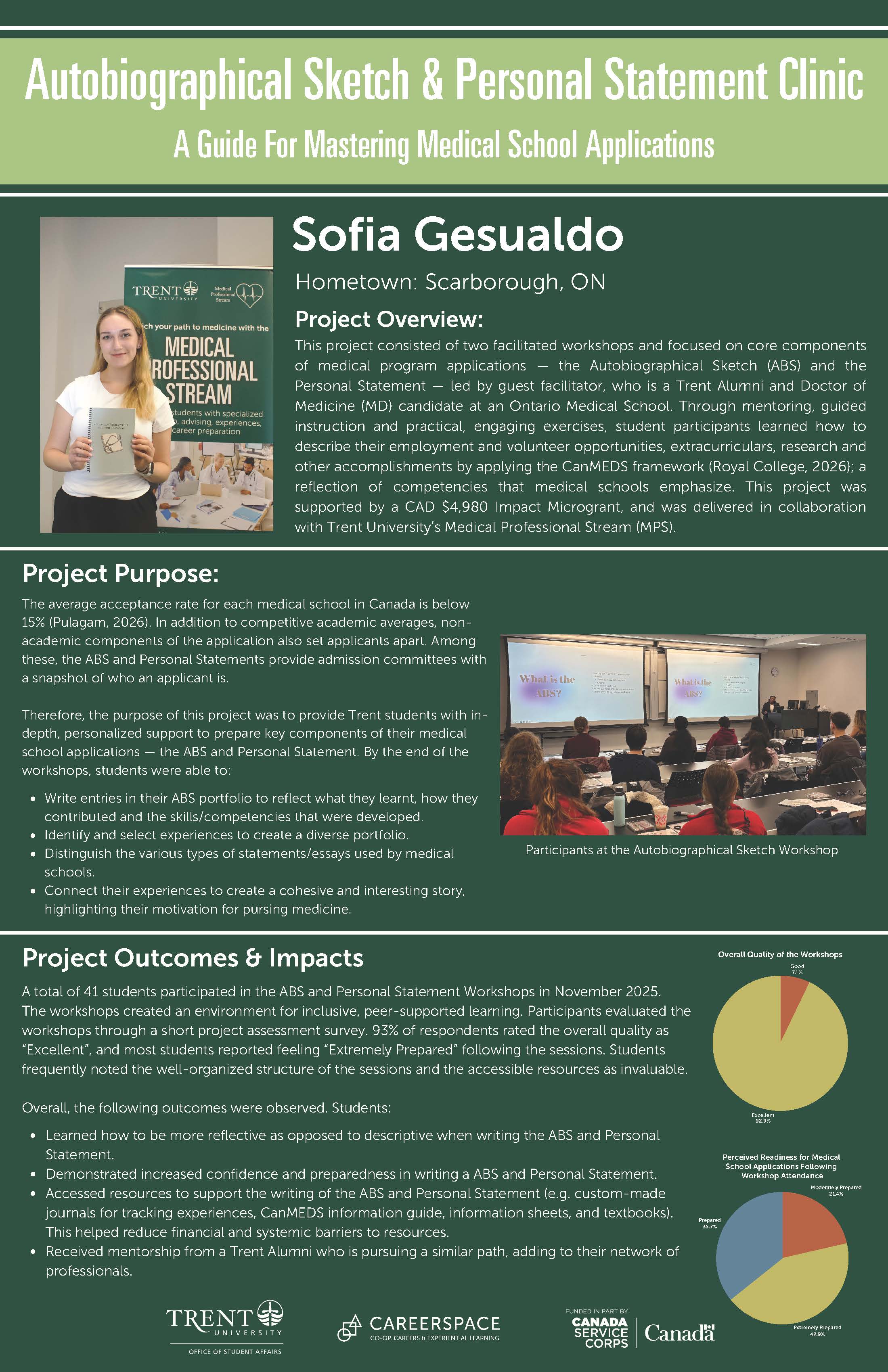
This project supported students preparing medical school applications by delivering a clinic focused on writing autobiographical sketches and personal statements. Through targeted workshops, participants learned how to effectively highlight their experiences, articulate motivations for pursuing medicine, and structure application materials with clarity and impact. The sessions also provided individualized guidance, examples, and strategies based on current medical school admissions expectations. By combining practical instruction with peer connection and supportive resources, the project helped students gain confidence in presenting their stories authentically and competitively. The outcomes demonstrate the value of accessible, student‑focused preparation programs in strengthening pathways to medical education.
MCAT Bootcamp
Project Participant: Stéphanie Danbrook
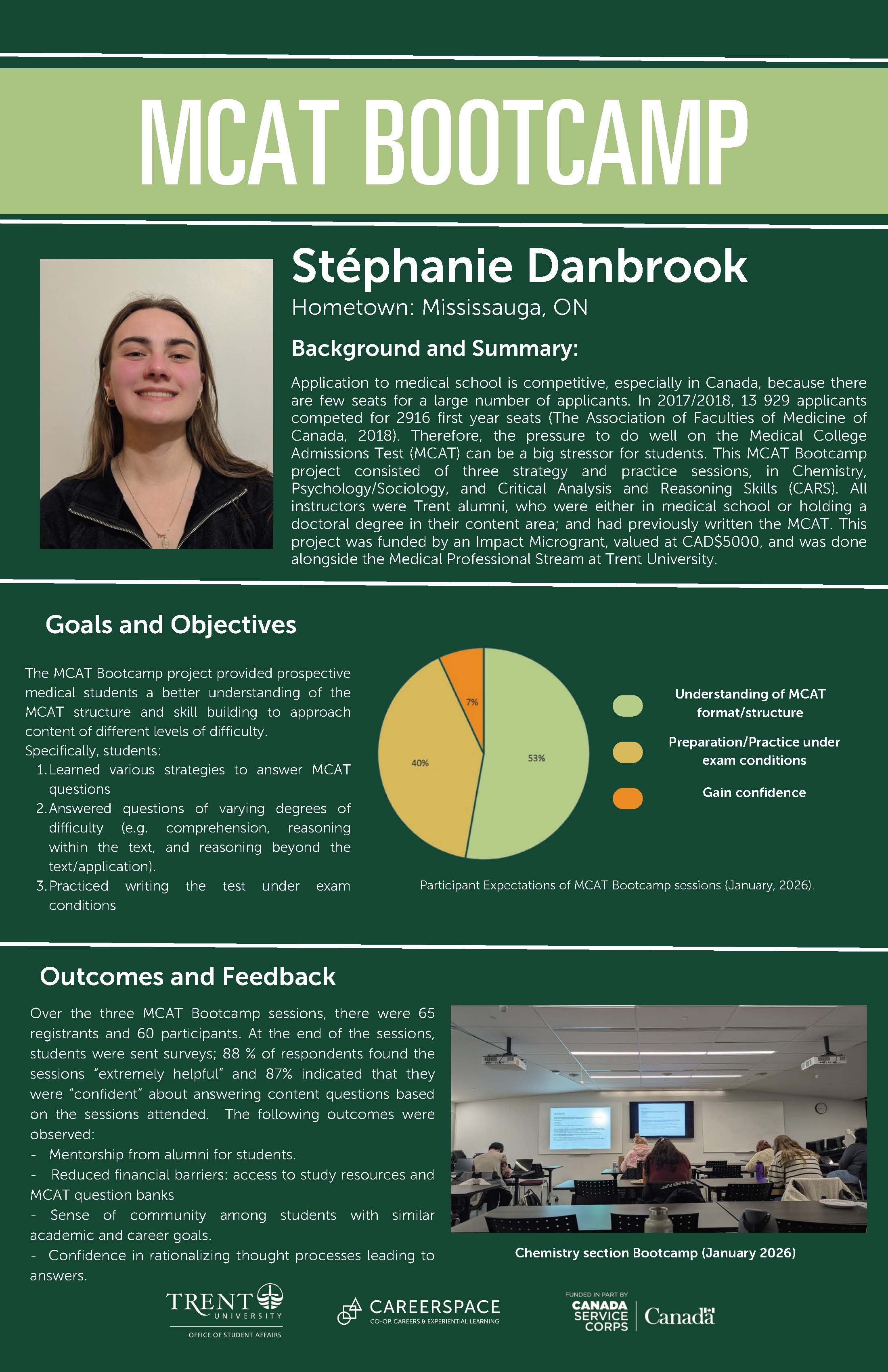
This project supported students preparing for medical school by delivering an intensive MCAT Bootcamp focused on foundational science content, test‑taking strategies, and confidence‑building under exam‑like conditions. Through structured sessions led by an experienced instructor, participants reviewed key MCAT topics, engaged in practice questions, and learned methods for approaching complex problems effectively. The program aimed to reduce barriers by providing accessible preparation and fostering a supportive peer learning environment. Outcomes from the sessions demonstrate improved understanding of MCAT formats, increased preparedness, and stronger confidence among participants pursuing competitive medical school pathways.
Aging Safely: Lunch and Learn Series
Project Participant: Meleah George
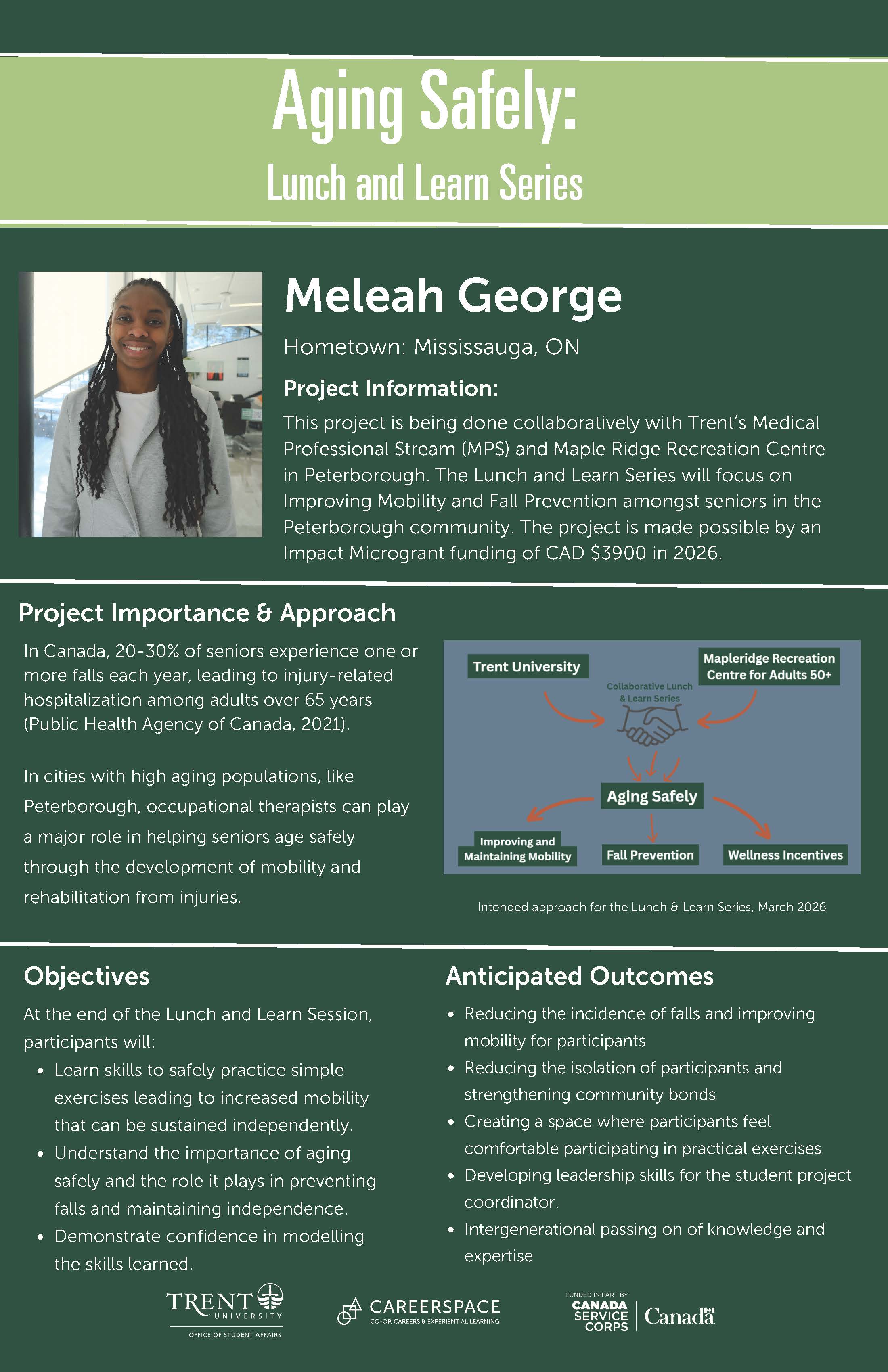
This project highlights Aging Safely: Lunch and Learn Series, a collaborative community initiative designed to support older adults in safely maintaining mobility and independence. Developed in partnership with Trent University’s Medical Professional Stream and Maple Ridge Recreation Centre, the series addressed the increasing risk of falls and mobility‑related injuries among seniors in the Peterborough community. Through educational sessions that combined practical demonstrations with accessible learning, participants gained strategies for fall prevention, safe movement, and maintaining physical confidence in daily life. By centering prevention, empowerment, and community connection, the project emphasizes the importance of proactive, intergenerational approaches to senior wellness and healthy aging.
Med-Prep Interview Workshop
Project Participant: Manjusri Paulraj Kalaiselvi
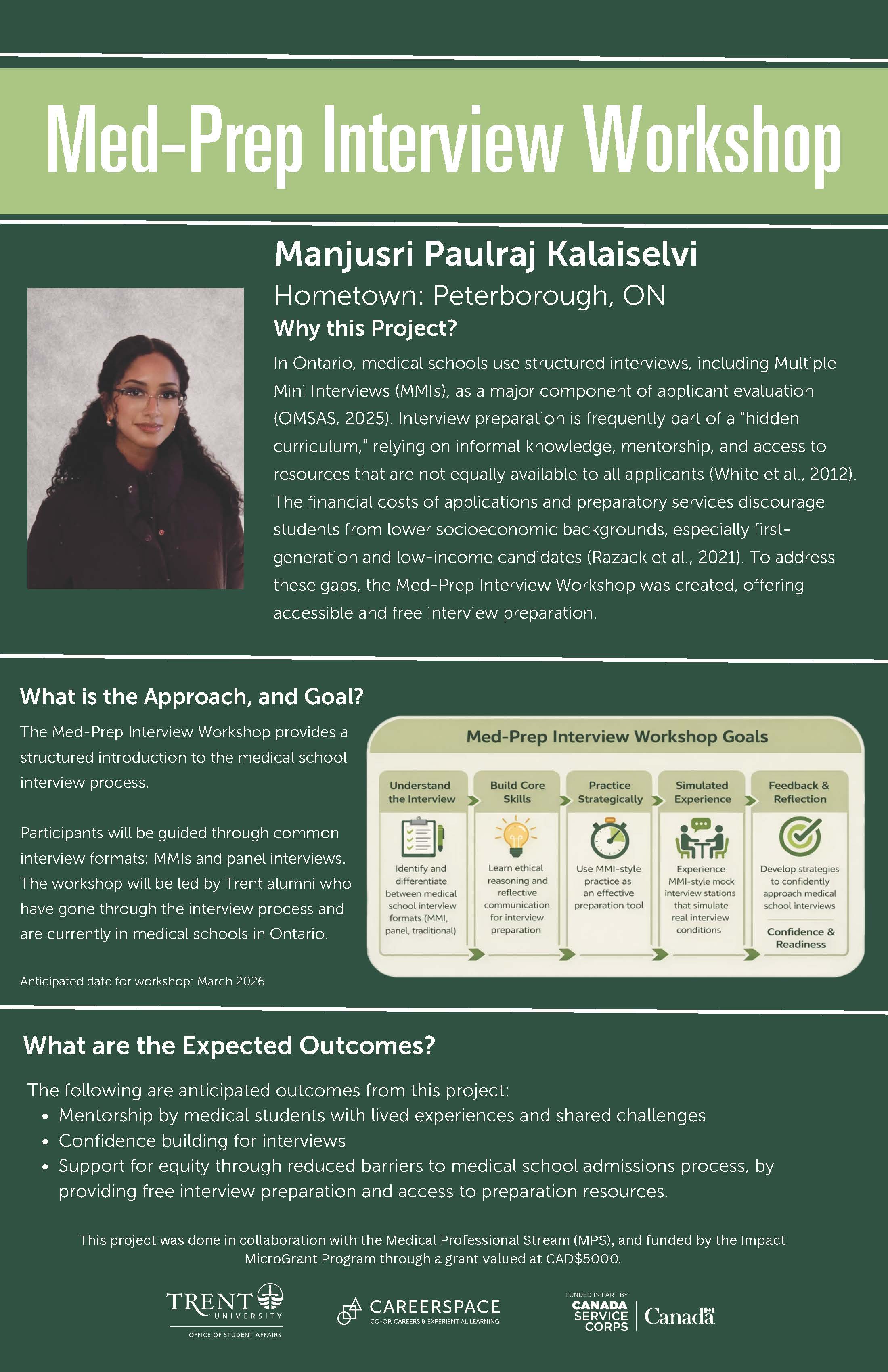
This project highlights the development of the Med‑Prep Interview Workshop, a free, structured program designed to support students preparing for medical school interviews. Created in response to barriers such as limited access to preparation resources, financial constraints, and lack of mentorship, the workshop focused on building confidence and interview skills through guided instruction, practice scenarios, and peer learning. By drawing on lived experiences and common interview formats used by Ontario medical schools, the program offered students practical, accessible preparation in an inclusive and supportive environment. The project underscores the importance of equitable academic supports that reduce systemic barriers and strengthen pathways to professional education.
PEKE: IM Ready - Hands-On Phlebotomy Training Workshop
Project Participants: Chada Wichayasunan & Covenant Ariyo
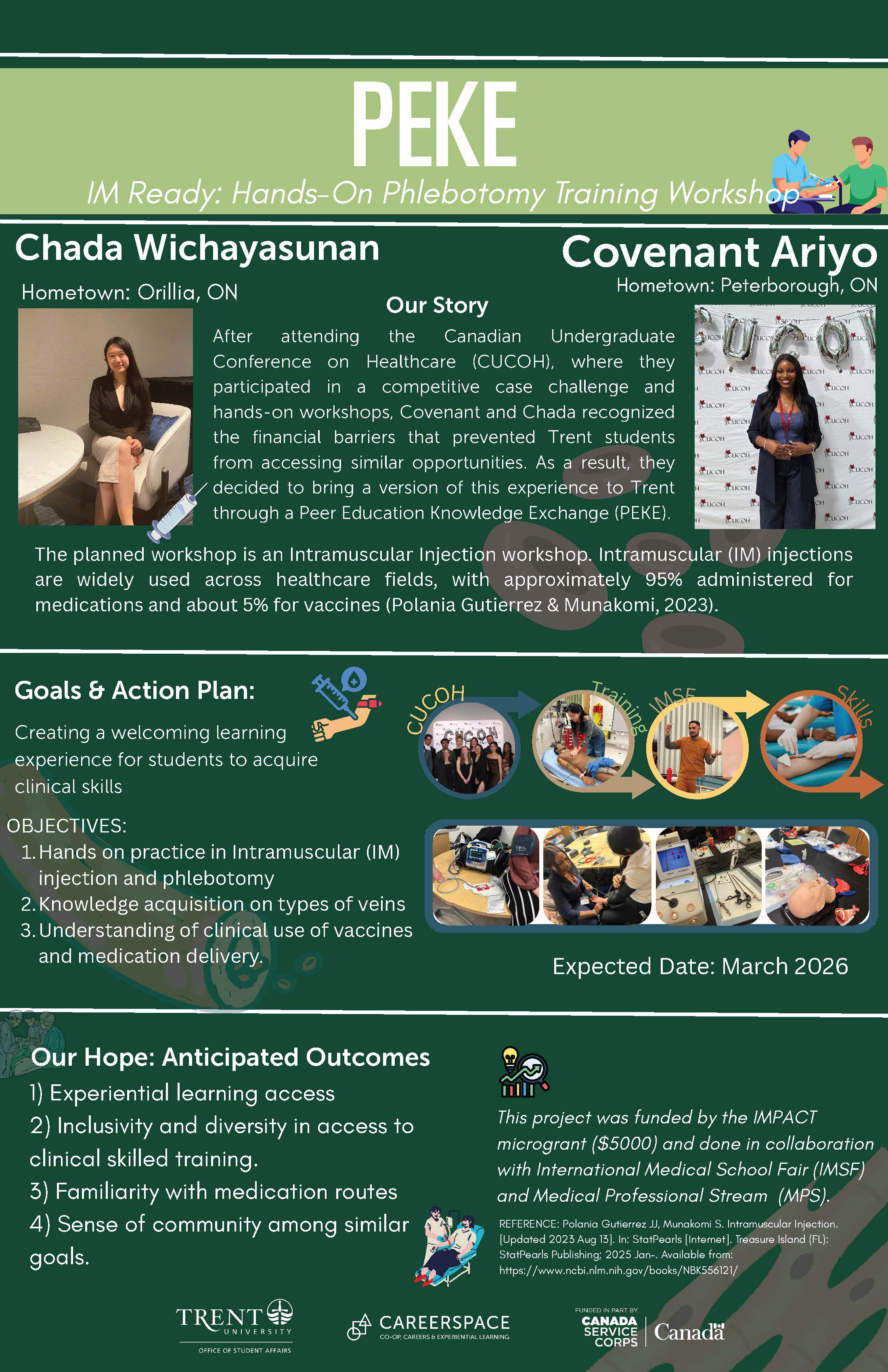
This project highlights PEKE: IM Ready – Hands‑On Phlebotomy Training Workshop, a peer‑led educational initiative designed to increase access to practical clinical skills training for students. Developed in response to financial and systemic barriers that limit opportunities for hands‑on healthcare learning, the workshop brought intramuscular injection and phlebotomy training to the Trent University community. Through the Peer Educational Knowledge Exchange (PEKE), students engaged in experiential learning focused on safe injection practices, vein identification, and the clinical use of vaccines and medications. By fostering an inclusive and supportive learning environment, the project aimed to build confidence, competence, and community among students pursuing healthcare‑related pathways. The initiative underscores the importance of accessible, student‑driven training opportunities in supporting equitable access to clinical education.
The Gayla Queer Prom
Project Participant: Corina Berry
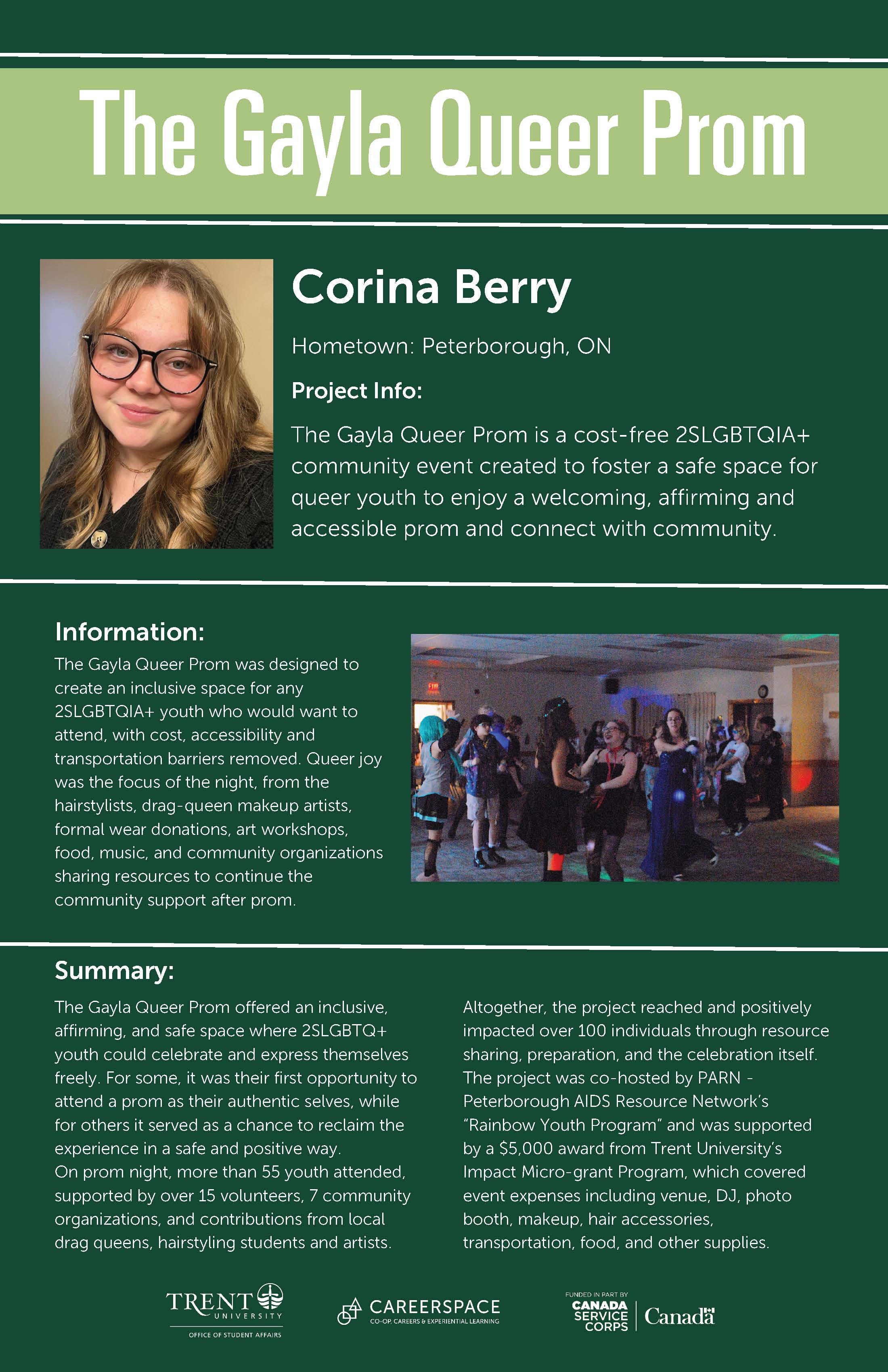
This project celebrates the creation of the Gayla Queer Prom, a cost‑free community event designed to offer 2SLGBTQIA+ youth a welcoming, affirming, and accessible space to enjoy prom. Developed to address barriers such as cost, safety, and social exclusion, the prom centered queer joy through music, dancing, activities, and community care. By partnering with local organizations and volunteers, the event provided a supportive environment where youth could express themselves freely and connect with others. The project highlights the importance of inclusive, youth‑led celebrations that cultivate belonging and strengthen community ties.
A Love Letter to Nogojiwanong
Project Participant: Amal Osman
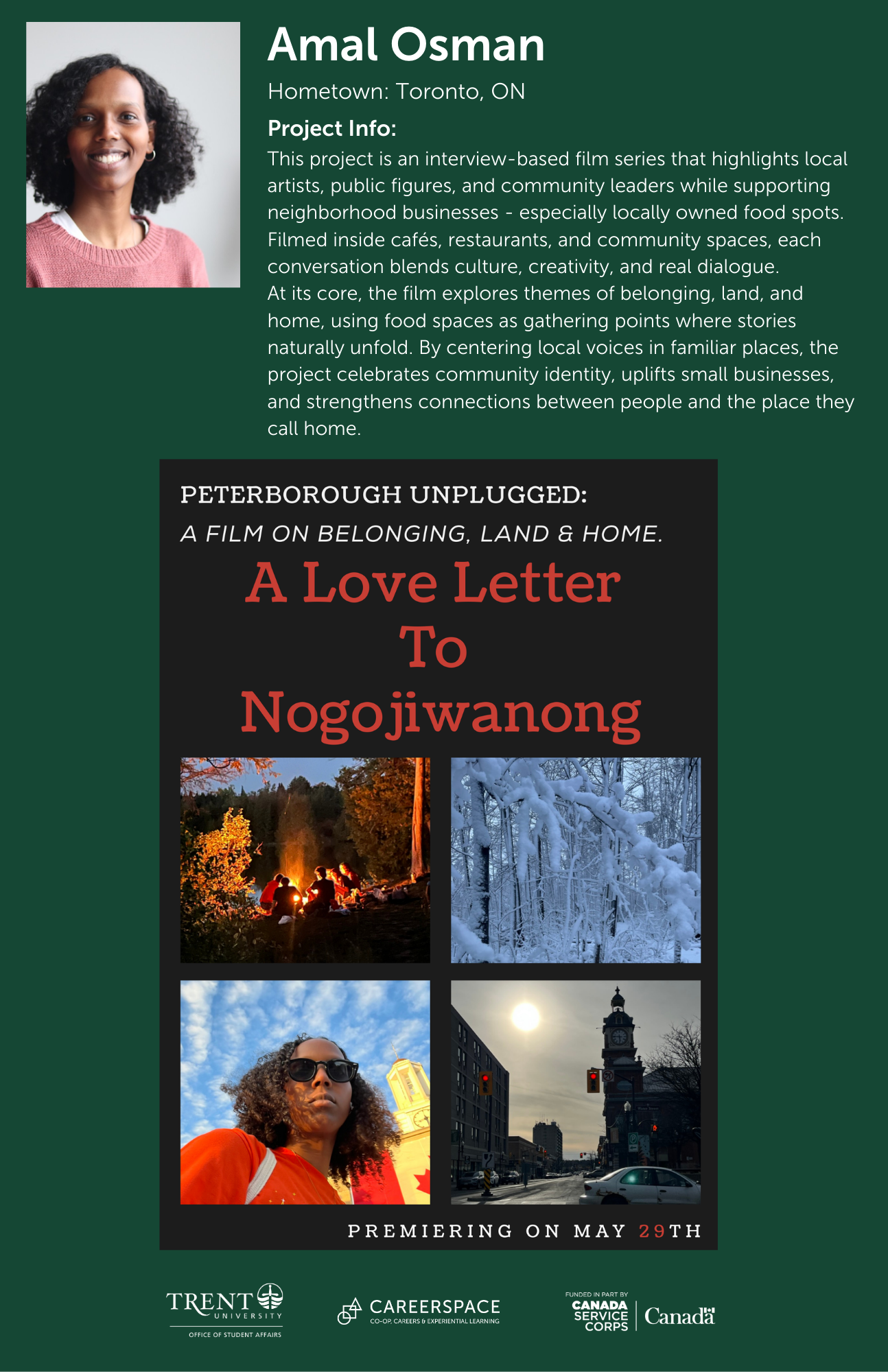
This project, Peterborough Unplugged: A Love Letter to Nogojiwanong, is an interview-based film exploring themes of belonging, land, and home. Through conversations with local artists, public figures, and community leaders, the film highlights the stories that shape Peterborough while uplifting locally owned businesses and gathering spaces. Filmed inside cafés, restaurants, and community spaces, each dialogue blends culture, creativity, and authentic storytelling. By centering local voices in familiar places, the project celebrates community identity and strengthens connections between people and the place they call home. The full interview will be available on May 29th.
Years With You, A New Musical
Project Participant: Samuel Hall
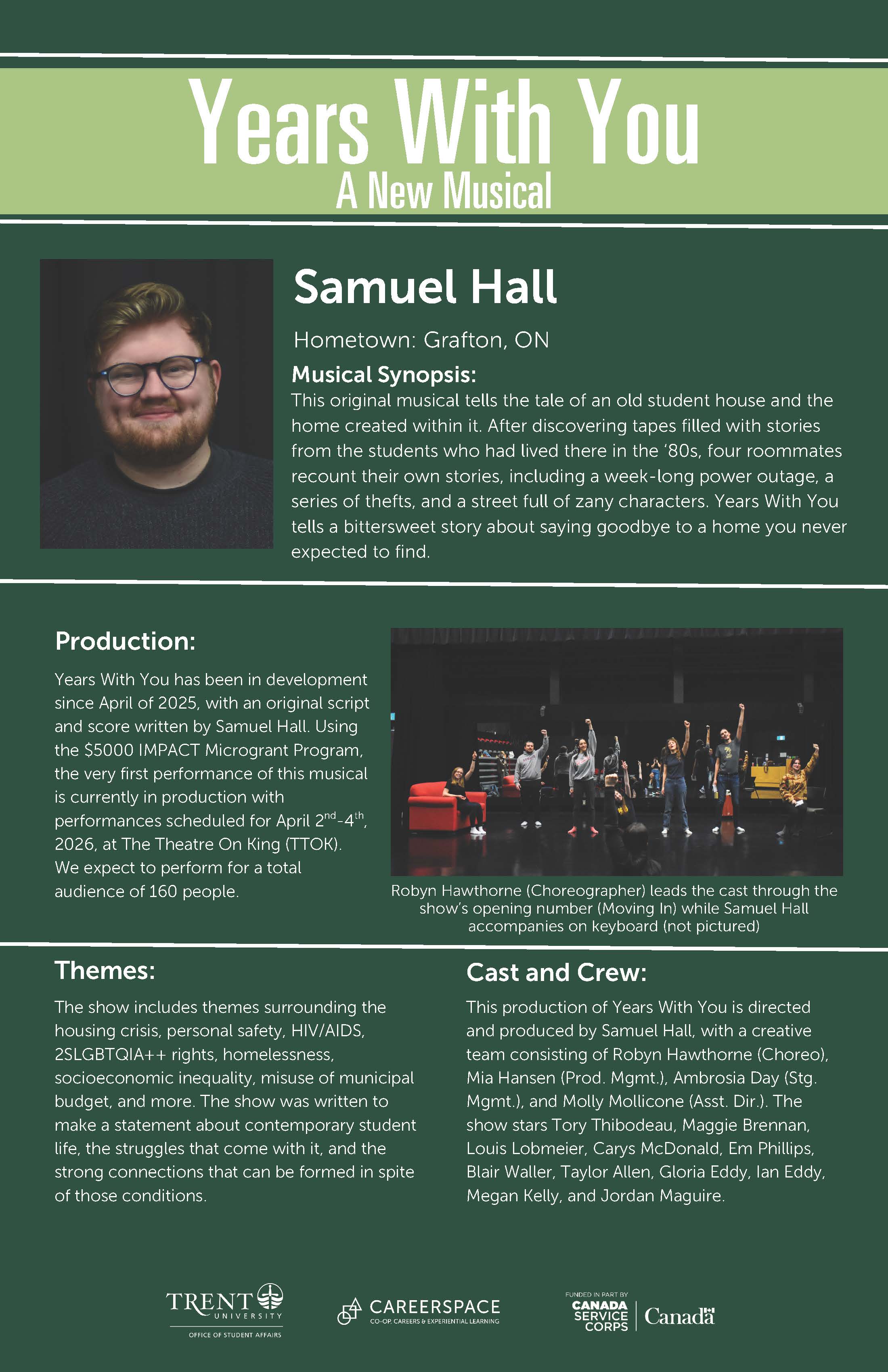
This project highlights Years With You, an original student‑created musical centered on themes of housing, community, and the meaning of home. Developed through scriptwriting, composition, and collaborative performance, the musical tells the story of an old student house and the lives shaped within it, weaving together personal narratives and social commentary. Supported by the Impact Microgrant, the project enabled the advancement of the musical from development to production, creating opportunities for creative collaboration and public performance. By addressing issues such as housing insecurity, affordability, and chosen family, Years With You demonstrates how theatre and storytelling can foster reflection, connection, and empathy while amplifying student voices through original artistic work.
The Search for Peterborough's First Official Drag King, Thing or Queen of Halloween
Project Participant: Madeline Minogue
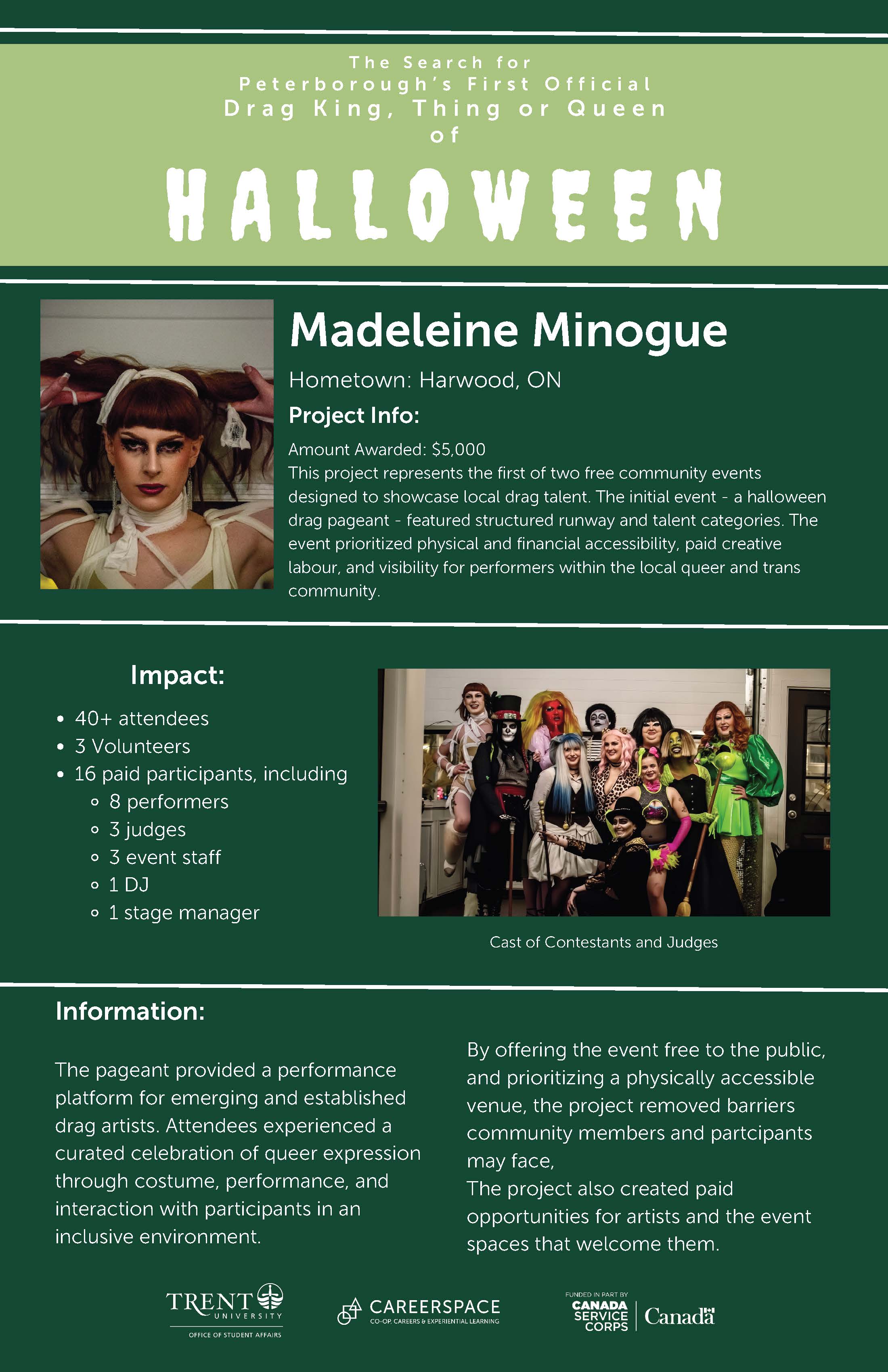
This project highlights a community‑based event created to celebrate drag artistry while increasing access, visibility, and paid opportunities for performers within the local queer and trans community. Designed as a structured drag pageant, the event featured runway presentations and talent categories that emphasized creativity, expression, and performance. By offering the event free to attend and prioritizing a physically accessible venue, the project reduced financial and physical barriers for both performers and audience members. Supported by the Impact Microgrant, the pageant created paid roles for artists and event staff, fostered community connection, and provided an inclusive space for celebration and self‑expression. The project underscores the importance of accessible, artist‑centered events in cultivating belonging and sustaining local queer creative communities.
Cultural Crafting as Community Care
Project Participant: Lyndsy Trahan
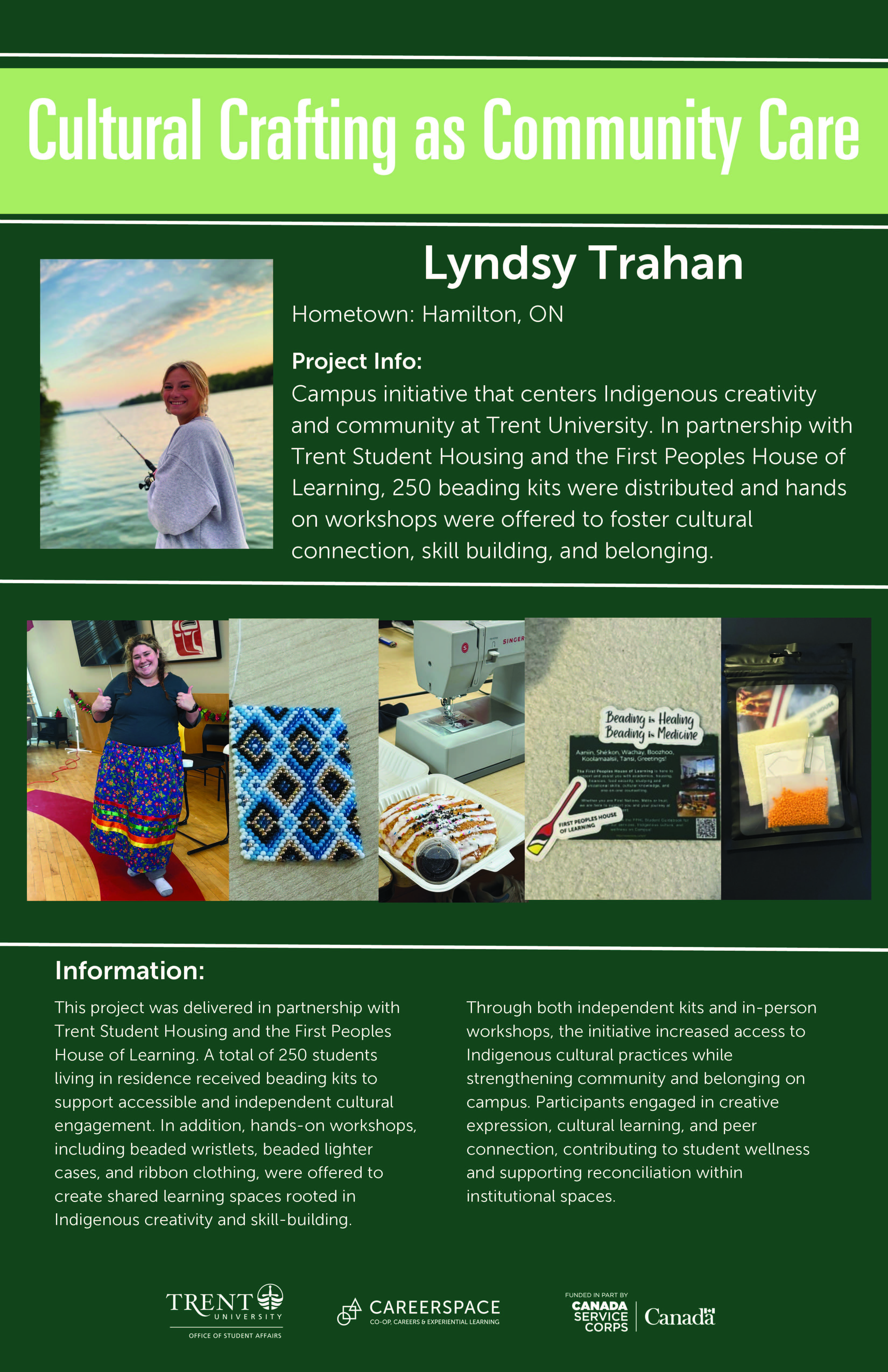
This project highlights Cultural Crafting as Community Care, a campus initiative designed to foster Indigenous creativity, cultural connection, and belonging at Trent University. Developed in partnership with Trent Student Housing and the First Peoples House of Learning, the project addressed barriers to access by distributing beading kits and offering hands‑on workshops for students living in residence. Through independent and facilitated crafting experiences, participants engaged in skill‑building, creative expression, and shared learning rooted in Indigenous traditions. The project emphasizes the role of culturally grounded, creative practices as a form of community care that supports student wellness, strengthens connection, and contributes to reconciliation within institutional spaces.
Who Let the Docks Out
Project Participant: Henry Daigneault
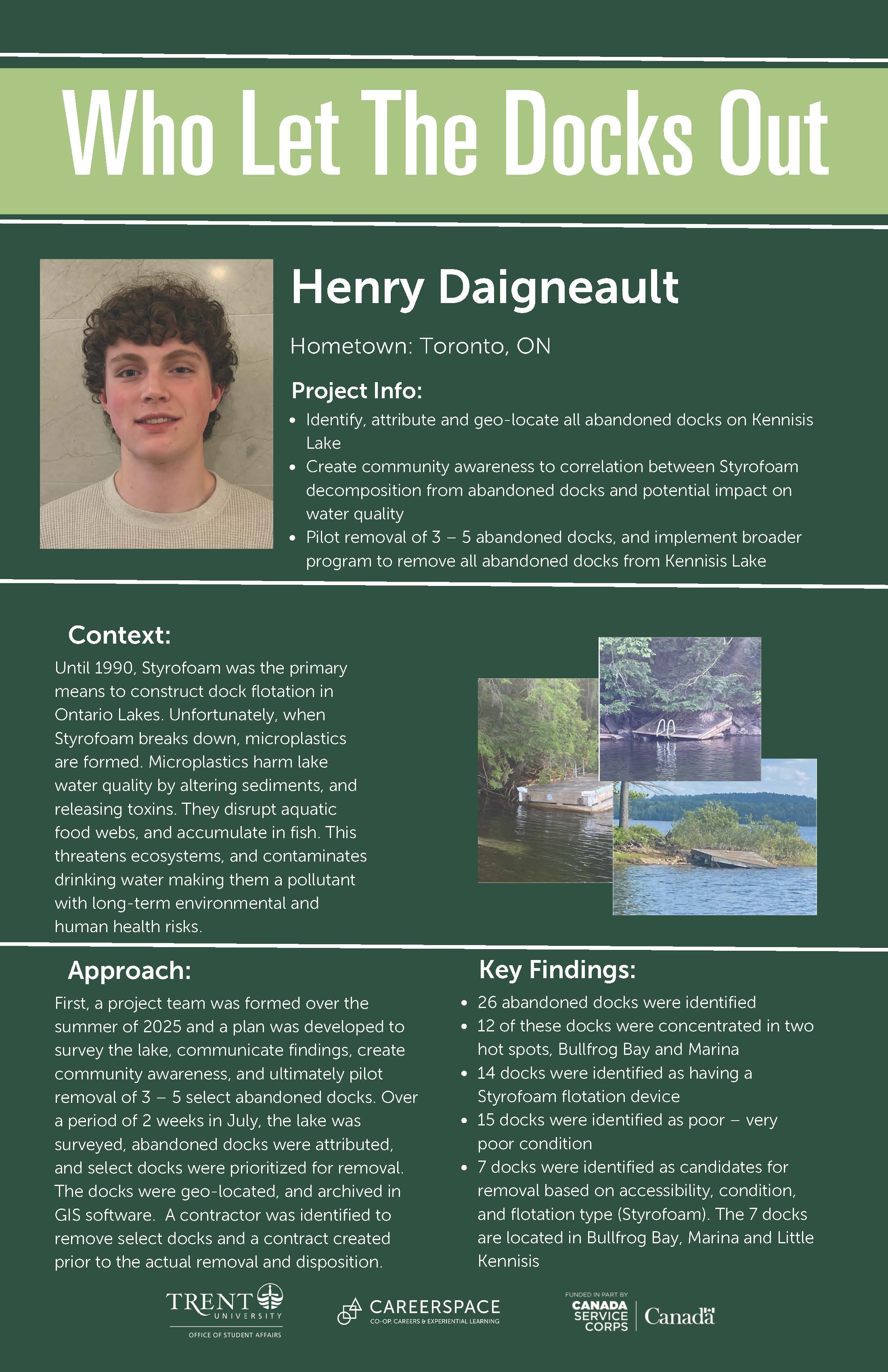
This project highlights Who Let the Docks Out, a student‑led environmental initiative focused on identifying and addressing abandoned docks on Kennisis Lake. Developed in response to growing concerns about Styrofoam degradation and its impact on water quality, aquatic ecosystems, and human health, the project combined research, community outreach, and environmental action. Through surveying, geolocation, and documentation, abandoned docks were identified and prioritized for removal, while findings were shared to raise community awareness about pollution and environmental responsibility. The project demonstrates the importance of local, data‑driven environmental stewardship and community engagement in protecting freshwater ecosystems.
Enhancing Multifaith Rooms
Project Participant: Omnia Gabralla
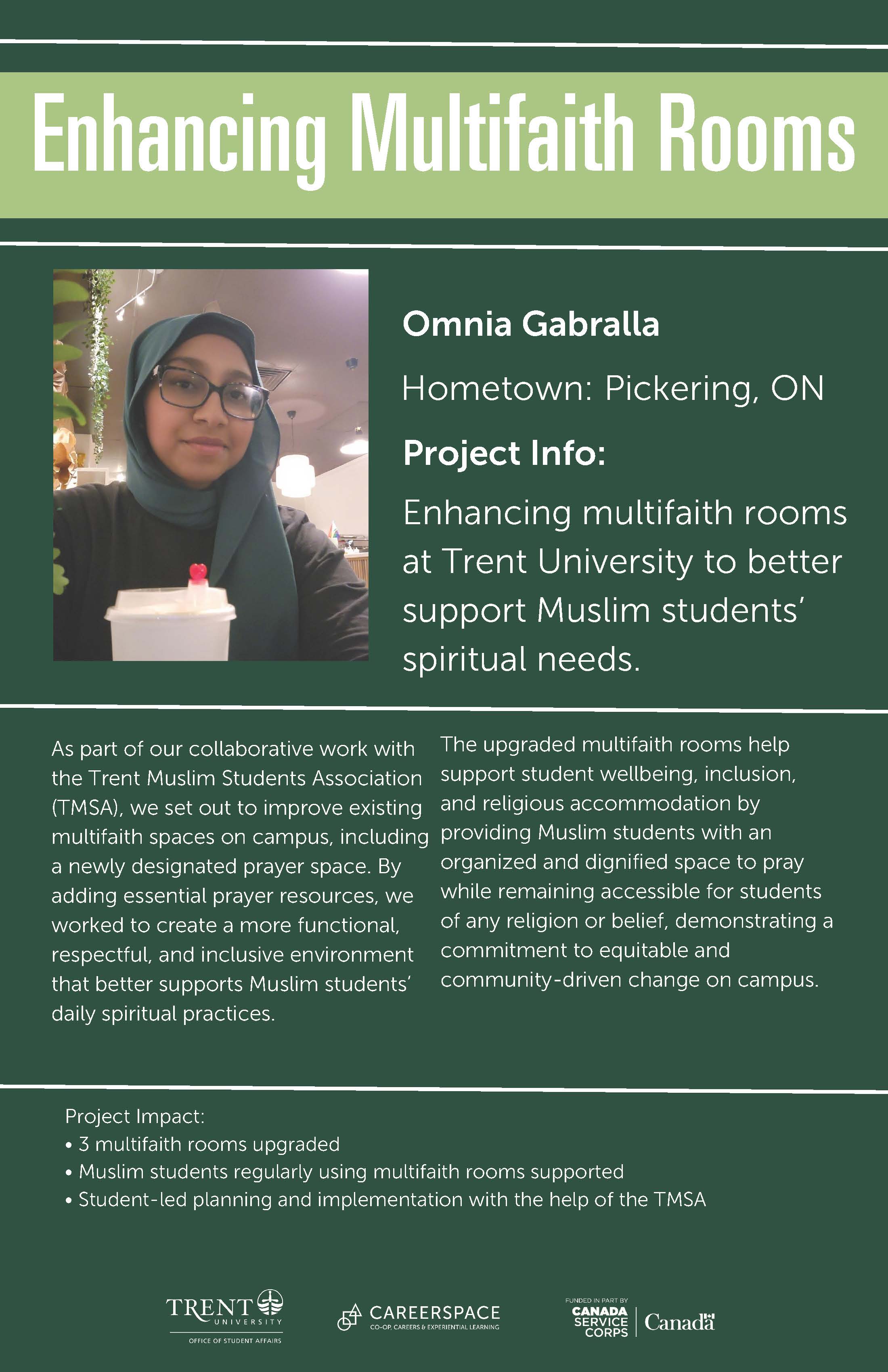
This project highlights aimed at improving multifaith spaces at Trent University to better support Muslim students’ spiritual needs. Developed in collaboration with the Trent Muslim Students’ Association, the project addressed gaps in existing religious accommodations by upgrading rooms to be more functional, respectful, and inclusive of daily prayer practices. Through the addition of essential prayer resources and thoughtful space organization, the initiative created designated environments that support wellbeing, dignity, and accessibility. By balancing the needs of Muslim students with shared use across faiths, the project underscores the importance of community‑driven, equity‑focused improvements that foster inclusion and belonging on campus.
DJ 101 Wellness Workshop
Project Participant: Esther Kambale
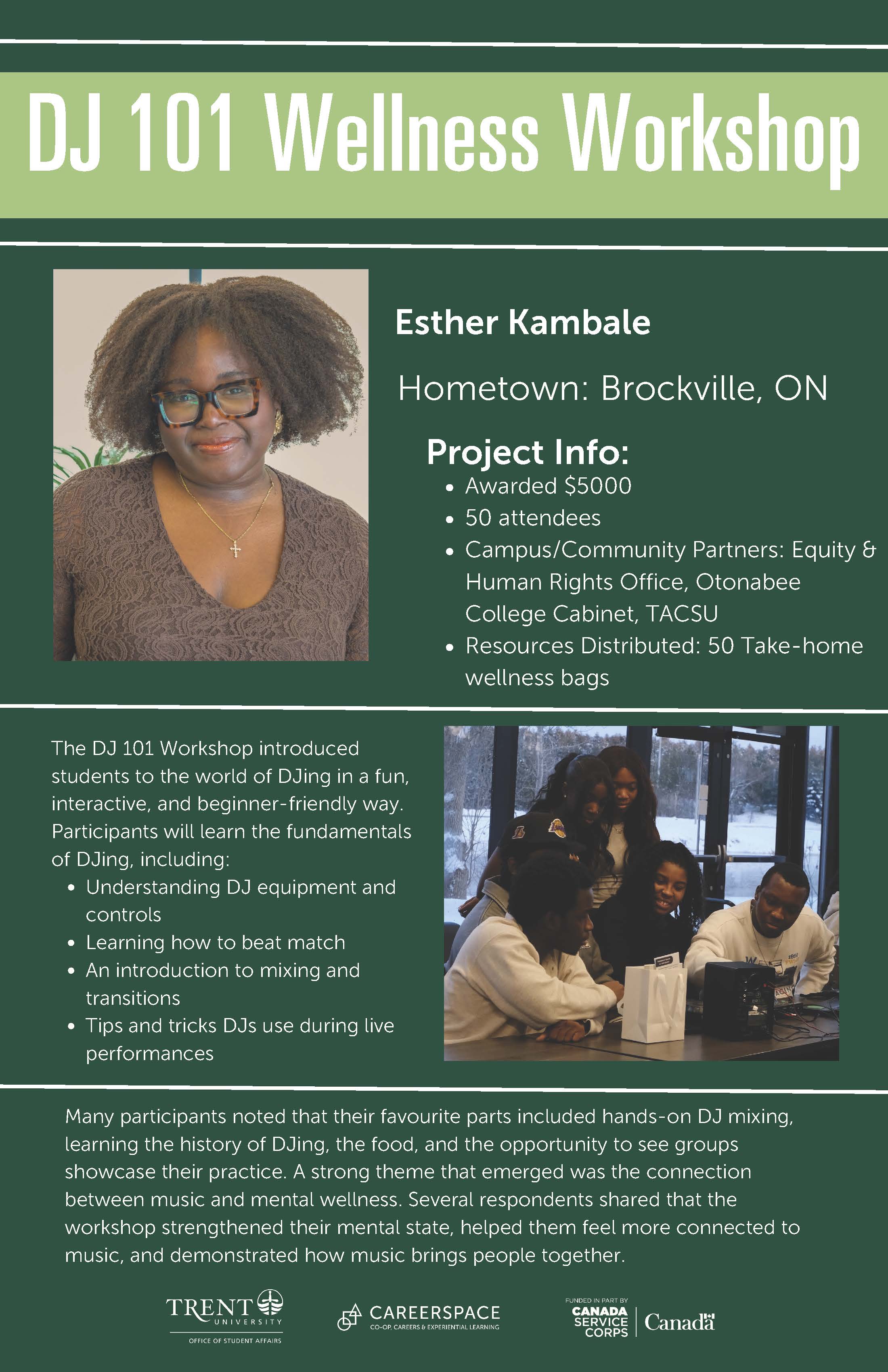
This project highlights the DJ 101 Wellness Workshop, an interactive, beginner‑friendly program designed to introduce students to DJing as a creative tool for wellness and self‑expression. Developed to foster connection, reduce stress, and promote mental well‑being, the workshop combined hands‑on learning with opportunities for collaboration and peer engagement. Participants learned foundational DJ skills, including equipment use, beat matching, and transitions, while exploring the relationship between music, mood, and emotional health. By centering creativity, accessibility, and community, the project demonstrates how arts‑based programming can support student wellness, build confidence, and bring people together through shared creative experiences.
SDG's in Co-op
Project Participant: Breah Beazer-Clarke
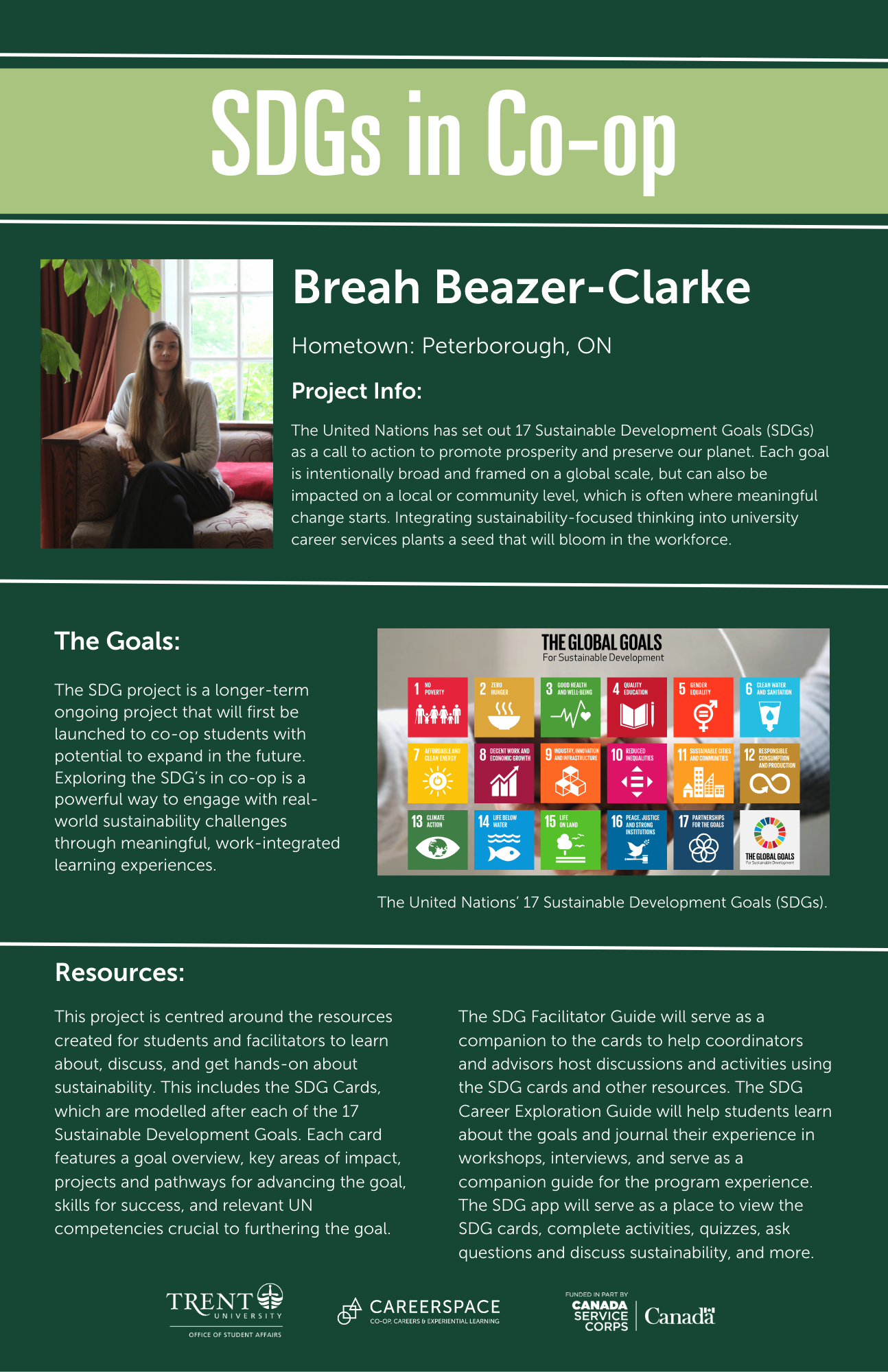
This project highlights SDGs in Co‑op, a sustainability‑focused initiative designed to introduce students to the United Nations’ Sustainable Development Goals through experiential learning and career development. Developed to help students connect global challenges to local and professional contexts, the project integrated sustainability‑focused thinking into co‑op and career services programming. Through interactive workshops, resource tools, and guided reflection, participants explored how their skills, values, and work experiences align with the SDGs. By embedding sustainability into work‑integrated learning, the project demonstrates the importance of preparing students to engage meaningfully with social, environmental, and economic issues as part of their future careers.
Christian BBQ Block Party
Project Participant: Success Odia
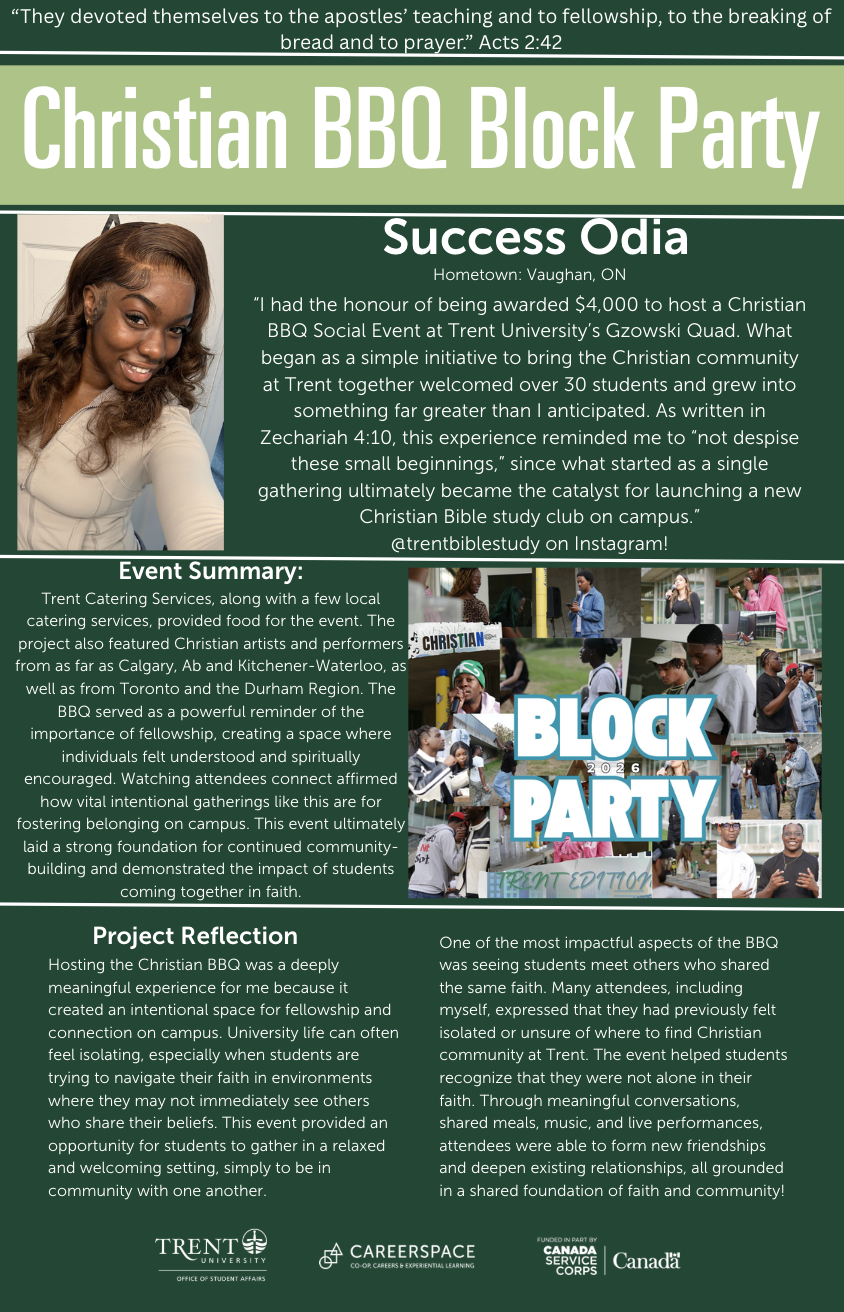
This project highlights the Christian BBQ Block Party, a student‑led social and community‑building event designed to create an intentional space for fellowship and connection among Christian students at Trent University. Developed to address feelings of isolation and the lack of accessible faith‑based gathering opportunities on campus, the event brought students together through shared food, conversation, music, and worship. By collaborating with local caterers, artists, and performers, the BBQ fostered a welcoming and inclusive environment where participants could connect over shared values and build meaningful relationships. The project demonstrates the importance of student‑initiated, community‑focused events in strengthening belonging, supporting spiritual wellbeing, and creating inclusive spaces for faith‑based expression within university communities.
ASCVI Lions Storefront
Project Participant: Emma Soars
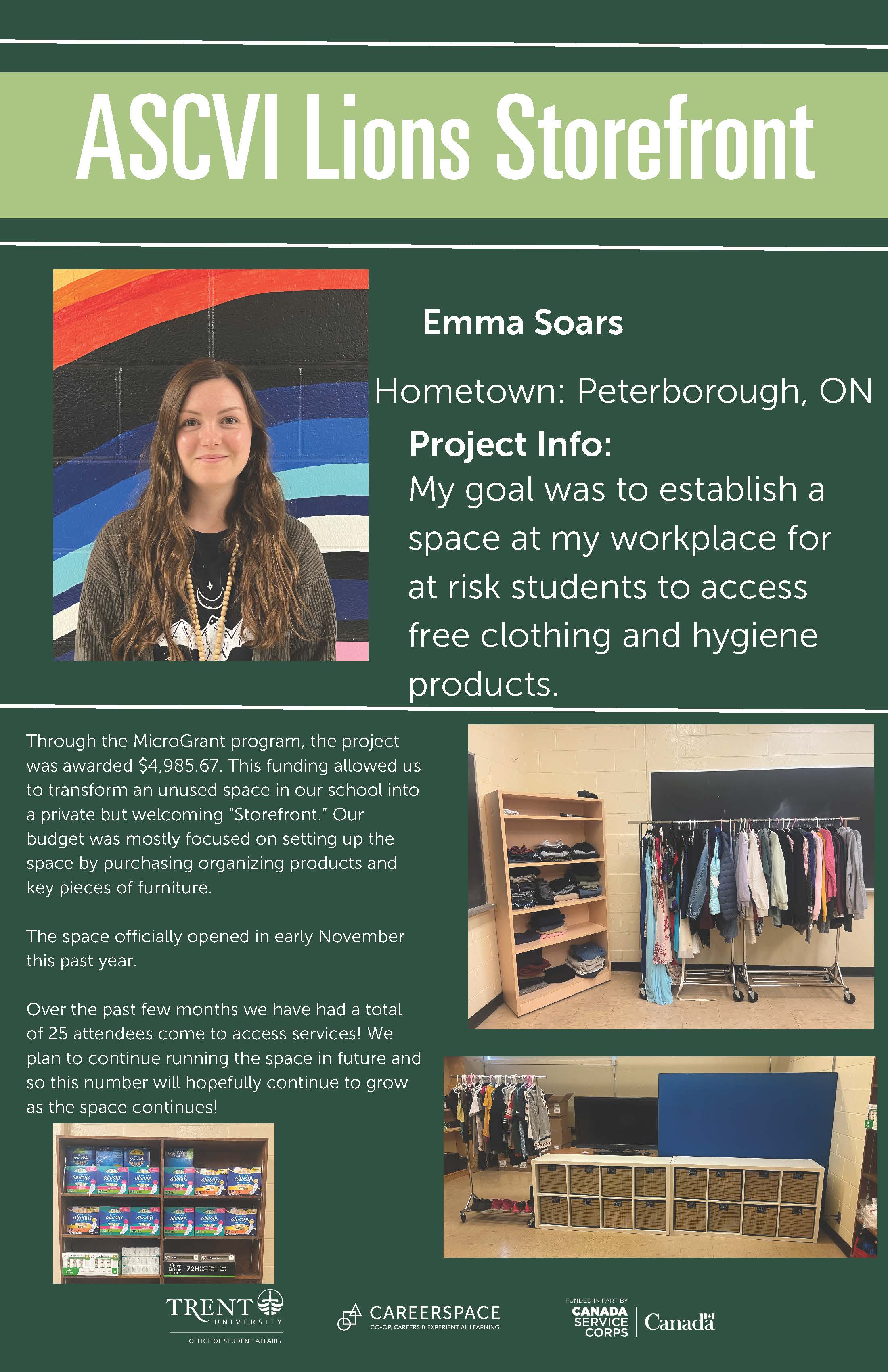
This project highlights ASCVI Lions Storefront, a school‑based community care initiative designed to support at‑risk students by providing access to free clothing and hygiene products. Developed to address barriers related to financial insecurity and basic needs, the project transformed an unused space into a private, welcoming storefront where students can access essential items with dignity. Supported by the Impact Microgrant, the initiative prioritized thoughtful space design and practical resources to ensure accessibility and comfort for students. Since opening, the storefront has supported dozens of students and continues to grow, demonstrating the importance of school‑based initiatives that promote equity, wellbeing, and a strong sense of belonging.
A Gurdwara for Peterborough
Project Participant: Jeevi Kaur Panaich
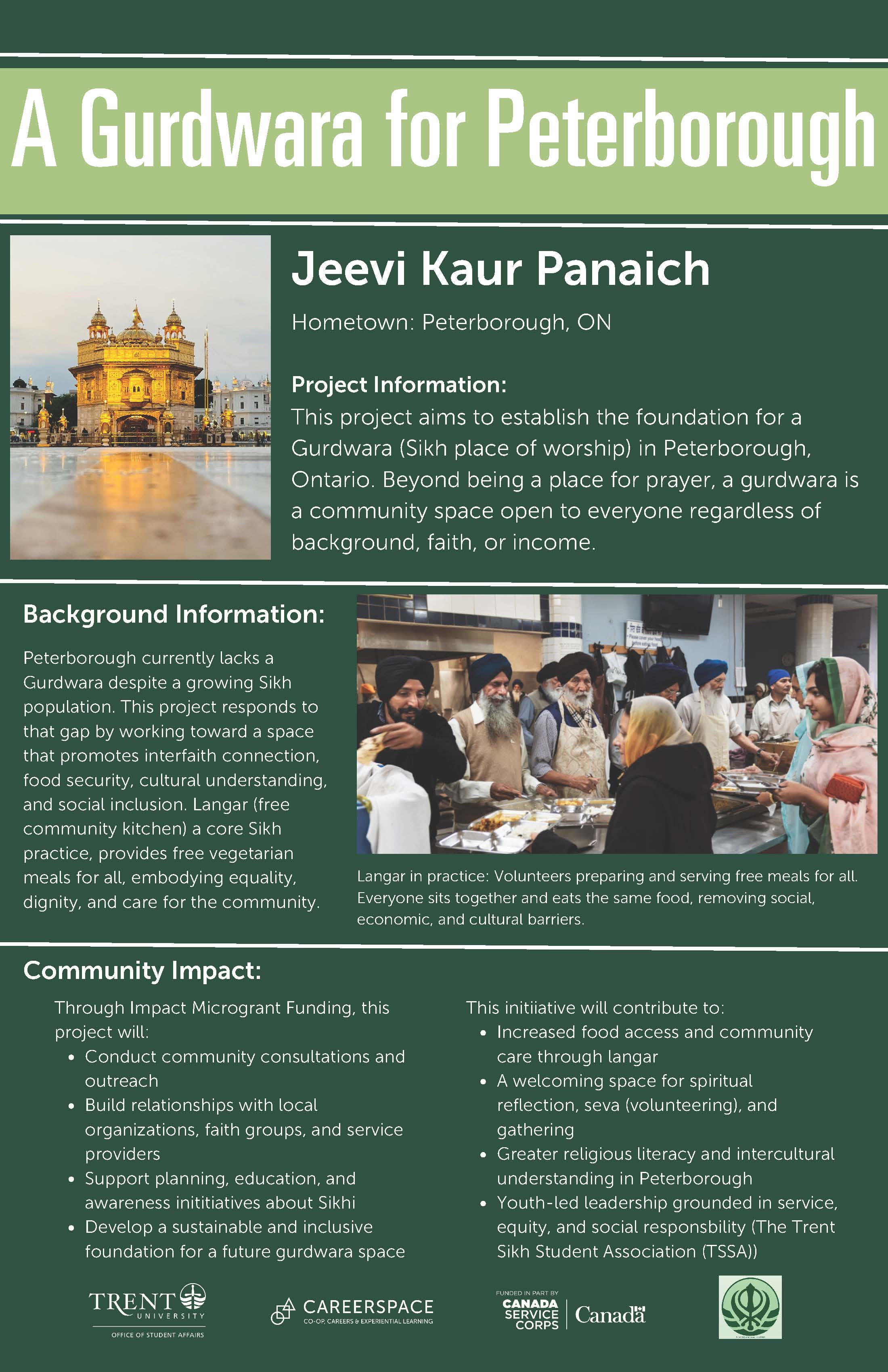
This project was aimed at establishing the foundation for a Sikh place of worship and inclusive community space in Peterborough, Ontario. Developed in response to the needs of a growing Sikh population, the project focused on outreach, consultation, and awareness‑building to support the long‑term creation of a gurdwara. Beyond its religious role, the envisioned space emphasizes openness, service, and equity through practices such as langar, a free community kitchen that welcomes everyone regardless of background. Supported by the Impact Microgrant, the initiative fostered interfaith dialogue, cultural understanding, and youth engagement, highlighting the importance of inclusive, values‑driven spaces that strengthen community connection, belonging, and collective care.
Open Hearts, Open Mosque: Prophet's Table and Tales
Project Participant: Noorisah Khan
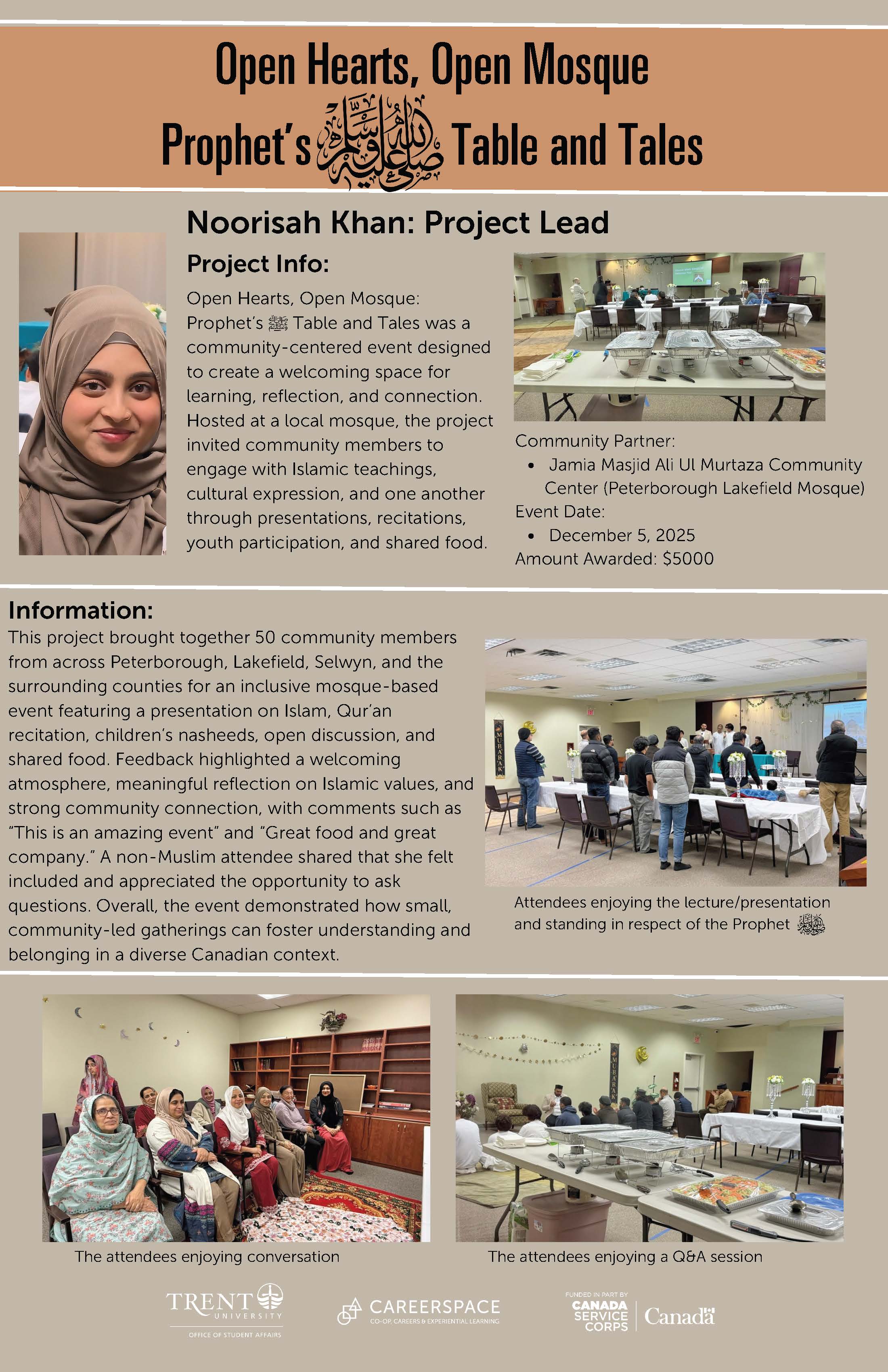
This project highlights Open Hearts, Open Mosque: Prophet’s Table and Tales, a community‑centered initiative designed to create a welcoming space for learning, reflection, and connection across diverse communities. Hosted at the Peterborough Lakefield Mosque, the event invited community members to engage in dialogue, cultural exchange, and shared meals rooted in Islamic traditions of hospitality and service. Through presentations, open discussion, storytelling, and communal dining, participants explored themes of faith, compassion, and mutual understanding. The project demonstrated how inclusive, small‑scale gatherings can build trust, reduce social barriers, and foster meaningful relationships, reinforcing the value of interfaith and intercultural engagement within diverse community contexts.
MMS Debate
Project Participant: Yassmin Hafez
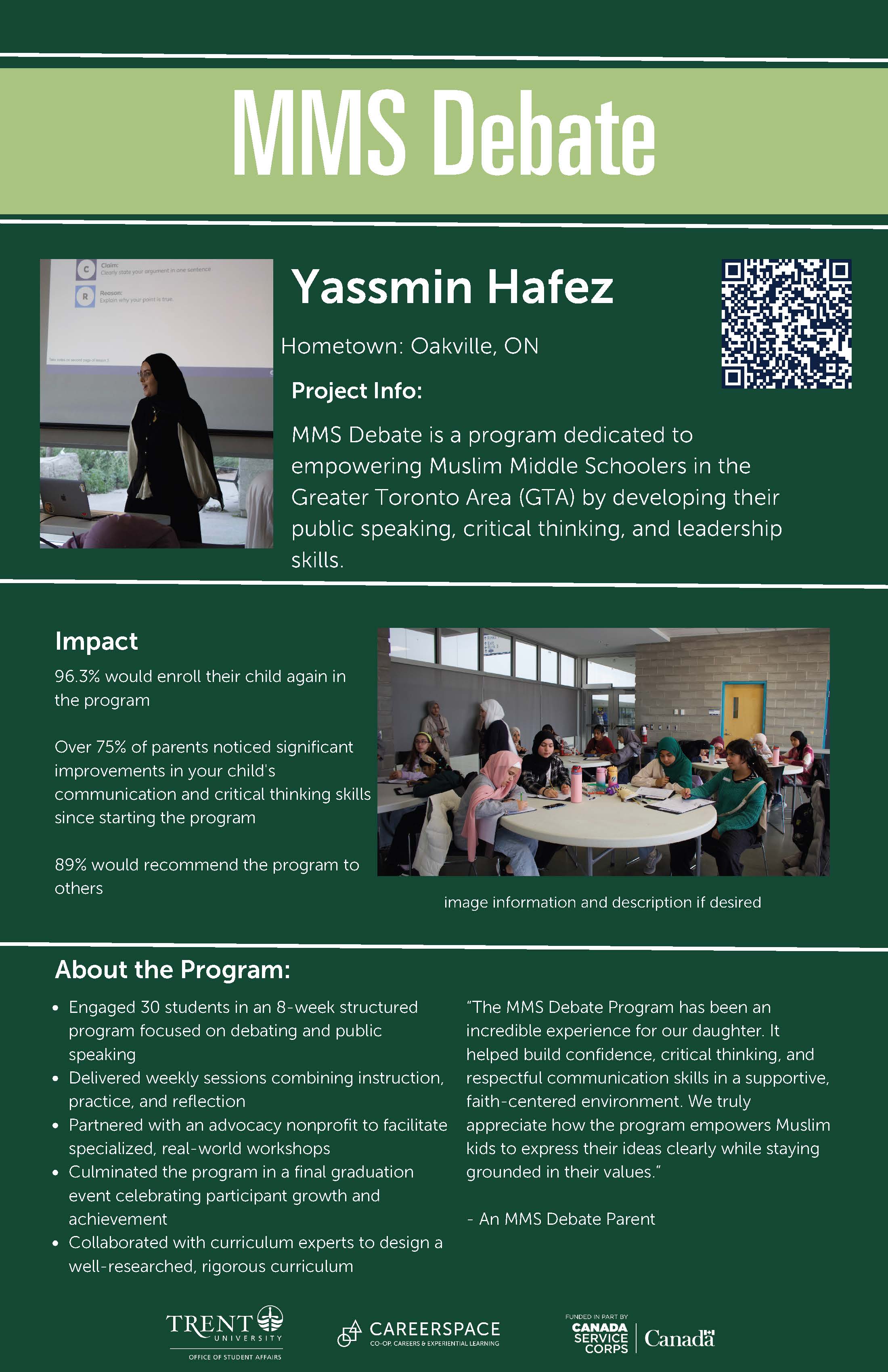
This project was an educational initiative designed to empower Muslim middle school students in the Greater Toronto Area by strengthening public speaking, critical thinking, and leadership skills. Delivered through an eight‑week structured program, MMS Debate combined instruction, practice, and reflection to build confidence and effective communication in a supportive, faith‑affirming environment. Participants engaged in hands‑on debates, small‑group workshops, and guided activities focused on critical analysis and respectful dialogue. Supported by the Impact Microgrant, the program fostered personal growth, academic skill development, and community connection, while providing families with accessible, culturally responsive learning opportunities. The project demonstrates the impact of youth‑focused programs that centre confidence‑building, inclusivity, and leadership development.