
Experiential Training Approach
The focus on training at the graduate and senior undergraduate levels is integral to research in Canada’s smaller universities (including Trent University) and provides the opportunity to enhance the level of highly qualified personnel at our institutions. The Rural Aging Research Program’s Experiential Training Strategy provides graduate and undergraduate students with a range of social science training through experiential learning and involved mentorship, enabling them to become the next generation of rural aging researchers.
About Our Experiential Training Strategy
Students in the Rural Aging Research Program are actively involved in every stage of the research process and receive training on a range of social science research tasks. Through their involvement with the Program, student research assistants (RAs) will broaden their knowledge of the relevant academic literature and improve their critical and analytical thinking, methodological, project management, budgeting, and software skills. Specifically, students receive experiential training in:
- Literature review
- Media analysis
- Research ethics
- Case study design
- Transcription and auto-transcription software
- Qualitative data analysis, including the Iterative Collaborative Qualitative Analysis developed by the research team and NVivo qualitative analysis software
- Academic paper and report writing
- Scholarly and broader public-oriented presentations
- Knowledge mobilization for academic, policy, and community audiences
Additionally, graduate trainees are given the opportunity to complete a Professional Practice Course in Knowledge Mobilization, taught by Dr. Elizabeth Russell (Program Principal Investigator). Trainees can also become Student Associates of the Trent Centre for Aging & Society (TCAS), a world-class research centre on aging, offering enhanced peer support, professional development opportunities, and networking in interdisciplinary aging studies. RAs can participate in the annual TCAS Aging & Society Seminar Series dedicated to student research and may attend student focused webinars at partner research centres in Canada and internationally. These complementary training experiences enhance the qualitative analysis and knowledge mobilization skill set acquired by all trainees.
A unique feature of the Rural Aging Research Program’s Experiential Training Strategy is the value-added emphasis on instilling trainees with a collaborative way of engaging with community partnerships in the research process. Student mentorship opportunities include routine interaction with the Program’s Principal Investigators, Research Coordinator, and other RAs through team meetings and ongoing team communication.
Trainees are also sponsored to complete many professional development opportunities offered by Trent University, including equity, diversity, and inclusion training, "Just Get Over It", a micro-credential in stereotypes, biases, and racism between Indigenous Peoples and Settlers, courses through the Trent Teaching Commons, and Trent’s comprehensive Student Support Certificate. Finally, our Training Strategy provides students with skills and experiences that will help to further their career development, including applications for graduate studies, postdoctoral fellowships, and academic or research-related appointments.
Trainees
The Rural Aging Research Program has a record of success integrating graduate and undergraduate students into our research and achieving research training goals within the context of Trent’s smaller university environment. See below to learn more about our current and past trainees.
Current Trainees
Benjamin Darkwa, M.A. Student, Interdisciplinary Aging Studies

Benjamin Darkwa is an M.A. student in the Interdisciplinary Aging Studies program at Trent University and a Research Assistant with the Rural Aging Research Program (RARP). His research interests include aging in place, rural aging, place and belonging, and the experiences of older adults in changing communities. His current thesis research explores older adults’ experiences of aging in place in Canada and Ghana. He’s under the supervision of Dr. Kirsten Woodend and Dr. Elizabeth Russell.
Tabytha Wells, Ph.D. Student, Psychology

Tabytha Wells (Ph.D. Student, Psychology) holds an M.Sc. from the Psychology program at Trent University with a specialization in Aging Studies. She completed her degree in 2025, under the supervision of Dr. Elizabeth Russell and Dr. Mark Skinner. Her research focuses on the short-term and lasting impacts of intergenerational initiatives. She is the 2026 recipient of the President’s Medal for Master of Science, awarded for academic excellence including her work on the Experiential Learning in Aging Project.
Dr. Molly-Claire Gillett, Postdoctoral Fellow, Trent Centre for Aging & Society

Molly-Claire Gillett, Ph.D., is a Social Sciences and Humanities Research Council of Canada Postdoctoral Fellow (2024-2026) working between the Trent Centre for Aging & Society at Trent University and the University of Galway. Her current research focuses on rural community-building, placemaking and intergenerational skill-sharing through craft in the Federated Women's Institutes of Ontario and Irish Countrywomen's Association.
Dr. Mary Rita Holland, Postdoctoral Fellow, Trent Centre for Aging & Society

Mary Rita Holland, Ph.D., is a postdoctoral fellow in the Trent Centre for Aging & Society and the Nancy's Chair in Women's Studies at Mount Saint Vincent University. Her current research uses the example of family carers of rural older adults in Atlantic Canada to shed light on the invisible emotional labour required to maintain the home as a site of care and manage disrupted meanings of home space and family relationships.
Recent Trainees
Millicent (Millie) MacDonald, B.Sc. (Hons.) in Psychology and Biology (2025-2026)

Millicent (Millie) MacDonald was a Research Assistant in the Rural Aging Research Program as a fourth-year Psychology and Biology student at Trent University. She is currently pursuing her Master's in Epidemiology at the University of Ottawa.
Laura Moledina, B.Sc. (Hons.) in Psychology (2025-2026)
Laura Moledina holds a Bachelor of Science (Hons.) in Psychology from Trent University. Laura completed her undergraduate honours thesis under the supervision of Dr. Elizabeth Russell. Her thesis explored the lasting impacts of the Intergenerational Psychology of Aging Classroom.
Heidi Burns, M.A. in Canadian Studies (2025)
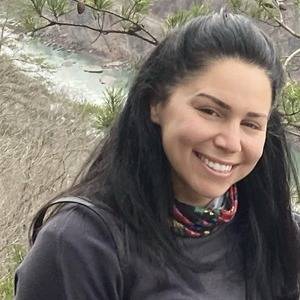
Heidi Burns holds an M.A. from the Canadian Studies and Indigenous Studies program at Trent University with a specialization in Aging Studies. She completed her M.A. in 2025 under the supervision of Dr. Mark Skinner. Her thesis focused on intergenerational Mnoomin gathering and well-being.
Lyda-Rose Eves, B.Sc. (Hons.) in Psychology (2025)
Lyda-Rose is a third-year student in the Psychology program at Trent University and was supervised by Dr. Elizabeth Russell in 2025. Her practicum research focused on the outcomes of the Intergenerational Psychology of Aging Classroom.
Daniel Katey, M.A. in Interdisciplinary Aging Studies (2025)

Daniel Katey holds an M.A. from the Interdisciplinary Aging Studies program at Trent University, belonging to its inaugural cohort. Daniel was supervised by Dr. Mark Skinner and Dr. Elizabeth Russell and completed his degree in 2025. His thesis, titled "Exploring the pandemic and post-pandemic challenges of older voluntarism in a regional health centre", explored the current landscape of gerontechnology usage in rural older voluntarism in Peterborough County.
Dr. An Kosurko, Ph.D. in Social Sciences (2024)

An Kosurko is a postdoctoral researcher at the University of Guelph and Research Associate with the Trent Centre for Aging & Society. She holds a Ph.D. in Social Sciences from the University of Helsinki, Finland and completed her M.A. in Sustainability Studies at Trent University under the supervision of Dr. Mark Skinner. More recently, she collaborated with Dr. Mark Skinner as a research associate on the Canadian Institutes of Health Research (CIHR)/Alzheimer Society of Canada "Improving social inclusion for people with dementia and carers through sharing dance", a remote expansion to rural areas by Baycrest and Canada's National Ballet School. An's current research focuses on the local relevance of social inclusion in action-and-interaction through artistic practice and applied technology.
Erika Snowden, B.Sc. (Hons.) in Psychology (2024)

Erika Snowden graduated with a B.Sc. from Trent University's psychology program in 2024. As previous Research Administrative Assistant with the Rural Aging Research Program, Erika assisted on SSHRC funded projects such as “Rural insights into the precarity of older voluntarism during COVID-19” and "Prospect and precarity of older volunteer leadership in aging rural communities”. For her honours thesis project, Erika led a community-based research study examining the social experiences of people with aphasia. In 2025, Erika began her Masters studies in Speech-Language Pathology at McMaster University.
Past Trainees
Dr. Sarah Cullingham, Ph.D. in Canadian Studies and Indigenous Studies, Trent University (2025)
Dissertation title: “Let’s do something really revolutionary”: Towards care-full relations of cannabis access in Ontario post-legalization
Supervisor: Dr. Mark Skinner
Amelia Heins, B.Sc. in Psychology, Trent University (2024)
Role: Knowledge Mobilization Videographer, Intergenerational Classroom Project
Supervisor: Dr. Elizabeth Russell
Current position: Master of Library & Information Science Student, University of Western Ontario
Avery Hinchcliffe, B.Sc. in Psychology, Trent University (2024)
Role: Knowledge Mobilization Assistant, Trent Centre for Aging & Society (2024)
Supervisor: Dr. Elizabeth Russell
Current position: M.Sc. Student, Kinesiology, University of Toronto
Agostina Prigioni (2023-2024)
Role: Knowledge Mobilization Coordinator, Trent Centre for Aging & Society (2023-2024)
Supervisor: Dr. Elizabeth Russell
Current position: Graduate Enrolment Advisor, School of Graduate Studies, Trent University
Kalyca Herbert, M.Sc. in Psychology, Trent University (2023)
Role: Research and teaching support (2021-2023)
Supervisor: Dr. Elizabeth Russell
Current position: Program and Policy Analyst, Government of Manitoba
Dr. Laura Poulin, Ph.D. in Canadian Studies, Trent University (2023)
Dissertation title: Rural older adult transitions in care
Supervisor: Dr. Mark Skinner
Jordan Till, M.Sc. in Psychology, Trent University (2023)
Role: Knowledge Mobilization Hub Graduate Assistant, Trent Centre for Aging & Society (2022-2023)
Supervisor: Dr. Elizabeth Russell
Current Position: Ph.D. Student, Clinical Psychology, Toronto Metropolitan University
Dr. Rachel Bar, Postdoctoral Fellow, Trent Centre for Aging & Society (2020-2022)
Project title: Canadian Institutes of Health Research (CIHR)/Alzheimer Society of Canada "Improving social inclusion for people with dementia and carers through sharing dance"
Supervisor: Dr. Mark Skinner
Current position: Director, Research and Health, Canada's National Ballet School
Stephanie Dagg, B.Sc. (Hons.) in Psychology, Trent University (2020-2021)
Role: Research assistant, Trent Centre for Aging & Society
Supervisor: Dr. Elizabeth Russell
Aarzoo Nathani, B.Sc. in Psychology, Trent University (2021)
Role: Research assistant, Trent Centre for Aging & Society
Supervisor: Dr. Elizabeth Russell
Luke Whale, B.Sw. (Hons.) in Social Work, Trent University (2021)
Role: Research assistant, Trent Centre for Aging & Society
Supervisor: Dr. Elizabeth Russell
Elisabeth Burden, B.A. (Hons.) in Geography & Psychology, Trent University (2018)
Thesis title: Older people, environment and age-friendly communities
Supervisor: Dr. Elizabeth Russell
Dr. Kingsley Hurlington, Ph.D. in Canadian Studies, Trent University (2018)
Dissertation title: Something out of nothing? Place-based resilience in rural Canadian youth
Supervisor: Dr. Mark Skinner
Amber Zapletal (Colibaba), M.A. in Sustainability Studies, Trent University (2018)
Thesis title: Older voluntarism and rural community sustainability: A case study of a volunteer-based rural library
Supervisor: Dr. Mark Skinner
Jan Wang, B.Sc. in Nursing, Community Health Placement, Trent University (2017)
Project title: Aging parolees and community re-integration background report
Supervisor: Dr. Mark Skinner
Laura Christie, B.Sc. in Nursing, Community Health Placement, Trent University (2016)
Project title: Creating narratives for Age-friendly Peterborough knowledge dissemination
Supervisor: Dr. Mark Skinner
Elizabeth Teleki, M.A. in Sustainability Studies, Trent University (2016)
Thesis title: Sustainable economic initiatives in small rurally situated cities
Supervisor: Dr. Mark Skinner