
Environmental & Life Sciences Ph.D.
Ask the critical questions, create knowledge and work alongside globally recognized experts to address crucial environmental issues that will impact the future. Explore, research and enact change in key sectors, including the conservation of biodiversity, the spread of contaminants and infectious diseases, sustainability, and water quality. Take advantage of world-class research facilities, including the Trent Water Quality Centre, the Institute for Watershed Science, and the Natural Resources DNA Profiling & Forensic Centre.
This interdisciplinary program is home to faculty from the departments of Biology, Chemistry, Forensic Science, and the School of the Environment, as well as adjunct faculty from provincial and federal government agencies, nongovernmental organizations and industry. Faculty include Canada Research Chairs and an NSERC Senior Industrial Research Chair. Make your mark in a program with a reputation for excellence.
As part of the prestigious Ph.D. program, you will hone your scientific and communication skills, generate knowledge and contribute to the future. Inspired by top-notch professors from diverse disciplines, as well as scientists from governmental and non-governmental organizations, you will help forge new approaches to key environmental challenges.
Experiential Learning
Experiential Learning is foundational to graduate studies. In the ENLS Graduate Program you will be immersed in high-quality research, both in the lab and the field. Our program has access to world class instrumentation and research facilities including the Trent Water Quality Centre, the Institute for Watershed Science, and the Natural Resources DNA Profiling & Forensic Centre. You will have the opportunity to get hands-on experience with research equipment and with professionals who will prepare you for your next career step. Because of our interdisciplinary and collaborative environment, you will not only be able to access researchers within Trent University but also international collaborators, government and industry personnel. You will put your skills into practice in research workshops and by teaching and mentoring students through course instruction. Our students showcase their research at national and international conferences and have travelled abroad through research exchanges. The networking opportunities and skill development you will receive in the ENLS Graduate Program has helped our students go on to careers in academia, government and industry. Check out our webpage for more information.
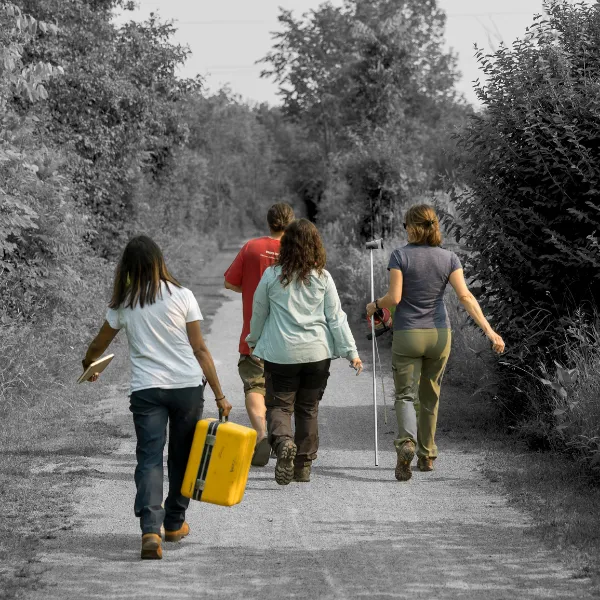
Become a catalyst for change in what is often called “the Age of the Environment.” Explore environmental issues that will shape our future: the conservation of biodiversity, the spread of contaminants and infectious diseases, the matters of sustainability and water quality.
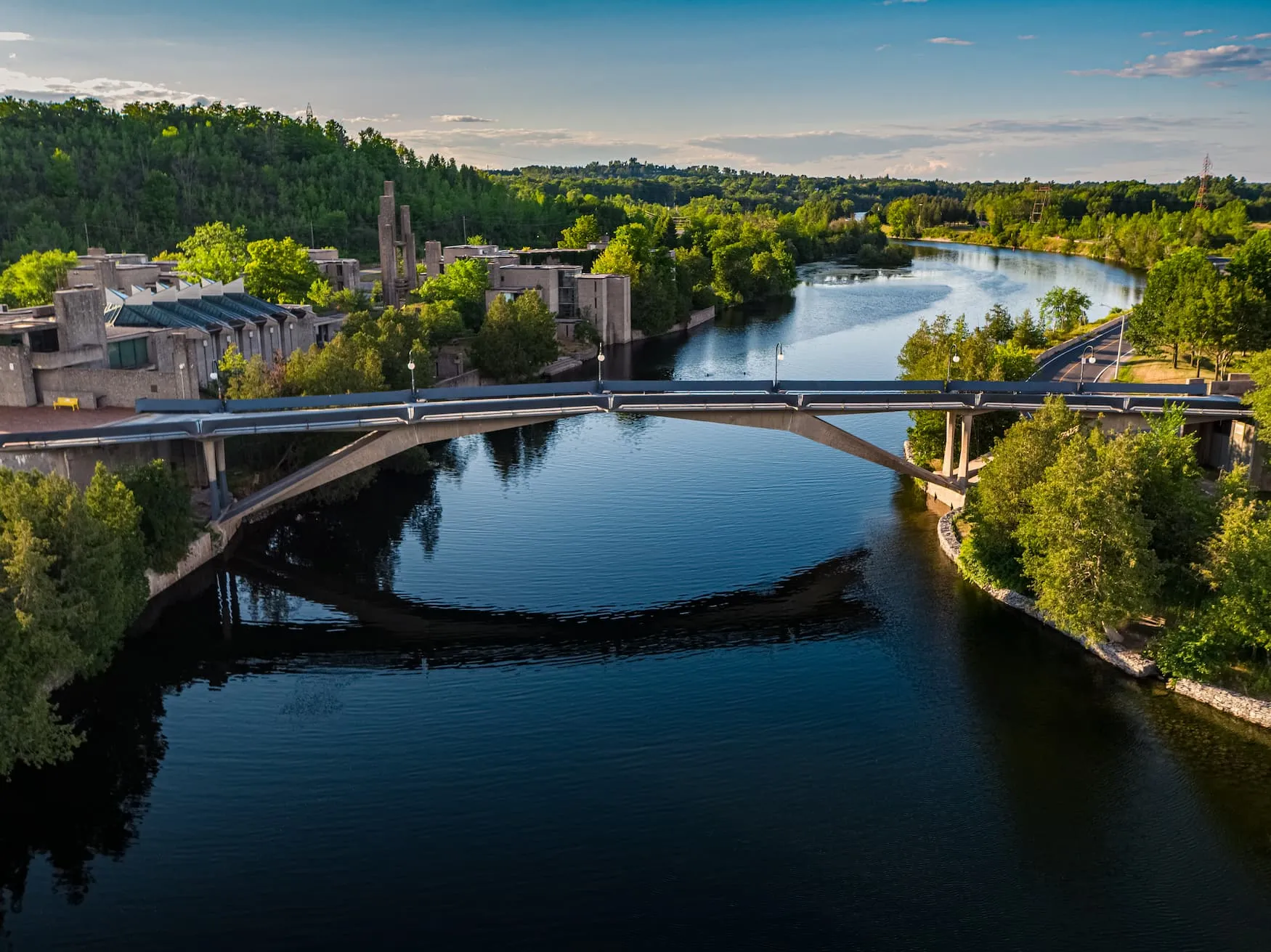
Trent has been home to 2 Nobel Prize winners
10 Canada Research Chairs conduct innovative research at Trent
We are proud to be one of the top 3 greenest campuses in Canada
Eligibility Requirements
- Masters degree in Biology, Environmental Chemistry, Geography, Environmental Science or a related discipline
- Minimum B+ (77%) or equivalent overall in the Master's degree
Eligibility Requirements
- Masters degree in Biology, Environmental Chemistry, Geography, Environmental Science or a related discipline
- Minimum B+ (77%) or equivalent overall in the Master's degree
- Proof of English Proficiency: All international applicants must provide proof of an adequate level of English proficiency regardless of their citizenship status or country of origin. Please visit our How to Apply: International page for details on English Language Proficiency requirements
- A GRE test score is not required for admission into this program
All applicants, domestic and international, must submit the following documents to complete their application:
- Transcripts: Unofficial copies of all post-secondary transcripts
- 2 letters of reference: Academic references are preferred; however, professional references will be accepted. Reference forms will be emailed to the referees that you have appointed on OUAC
- Plan of Study/Personal Statement: 1-2 pages outlining your objectives in a graduate program. Any specific research interests, relevant experiences, and/or career aspirations can be included
- Detailed Resume or Curriculum Vitae
- Proof of Citizenship (ie. copy of passport or birth certificate)
- Supervisor: A confirmed supervisor must be selected as an admissions requirement for the program. Applicants must communicate with and confirm that the listed supervisor will supervise their graduate research. Please list your confirmed supervisor on your OUAC application and discuss this in your plan of study. Please visit the program’s Faculty and Research page for a listing of faculty and areas of research. Applicants are responsible for reaching out to a faculty member and confirming supervision.
For more information on submitting transcripts, re-sending reference links and other application questions, please visit our How to Apply: Domestic or International pages and review Step 4, as well as review our Frequently Asked Questions (FAQ).
Learn more about tuition & fees
Eligible full-time students are offered minimum funding packages during their funded period of $26,000 annually. This includes a Graduate Teaching Assistantship employment offer valued at approximately $13,000 annually. Specific funding details are included in individual admission letters.
As of May 1, 2026, full-time international PhD students pay domestic tuition fees at the out-of-province rate.
Students are supported in competing for external awards during their studies, such as the Ontario Graduate Scholarship. A full list of external awards is available on our Scholarships & Awards page.
Trent has clear pathways for graduate students to apply and be admitted to study for their master's or doctorate at either of our campuses. Please review admission requirements for your program before applying.

My favourite part of the ENLS program was being able to work at nearby field sites to investigate global issues like the impacts of climate change on water resources. Being part of the rigorous and supportive community of interdisciplinary environmental scientists pushed me to develop as a researcher. I often reflect upon the excellent mentorship I received at Trent; as a faculty member at the University of Winnipeg, I now have the chance to mentor my own graduate students.

Dr. Greer is a member of the College of the Royal Society of Canada and is internationally recognized as a scholar dedicated to improving global infectious disease preparedness and response. Her research focuses on the intersection of epidemiology, ecology, and mathematics. The impact of her work is felt across sectors and borders preparing governments and industry to act quickly and decisively when the next outbreak hits human or animal populations.

Dr. Dang's research lab, EnIGMA (Environmental Isotope Geochemistry & Mass spectrometry Applications) investigates interactions between the environment and Humankind, focusing on environmental pollution, climate change, and biodiversity loss through environmental and analytical chemistry. Using cutting-edge techniques, including ICP-MS for elemental and isotopic composition and SEM for microscopic morphology, our research addresses complex environmental dynamics in various ecosystems globally, e.g., the St. Lawrence Seaways, mangrove forests in Brazil and Vietnam, and the Mediterranean coastal regions.