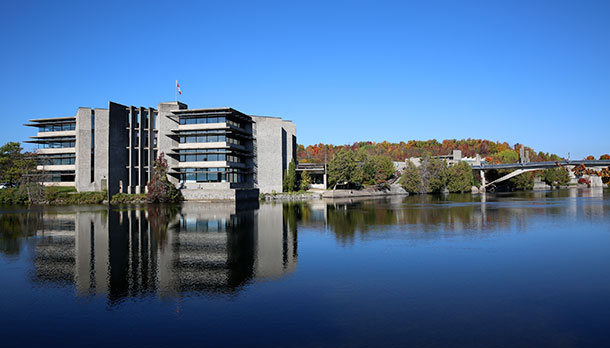
Elders Not Idle: Trent University Hosts the 2013 Elders Gathering
Elders call on youth to continue working for change
“I certainly have not been idle!” announced the chair of Indigenous Studies at Trent University. Professor David Newhouse introduced the elders’ panel discussion on the Idle No More movement at the 36th Annual Elders Gathering this past weekend held at the First Peoples House of Learning in Gzowski College.
His voice was soon drowned out by celebratory whoops and raucous applause and his sentiments were soon echoed by many of the elders brought together to speak on the issue. It was a common theme for both presenters and attendees and elders were quick to point out that many in their communities have been actively raising awareness of Aboriginal issues for decades.
They brought this passion for change into virtually every presentation offered at the Gathering. The knowledge, experience, and enthusiasm of the elders had great impact on the many Trent students in attendance.
“Having access to the elders in a setting like this has been a gift and an honour,” said Holly Poell, a fourth-year Indigenous Environmental Studies student. “Not only have they been a great source of inspiration, but they have been open and welcoming. They’ve welcomed people of all levels of experience and knowledge with open arms.”
According to Jill Thompson, cultural advisor and councellor for the First Peoples House of Learning, the purpose of the Gathering is to help educate and inspire students and community members.
“We hope that people – particularly students – come away from this with a better understanding of culture, of language, of traditional ways. We hope they leave with a better understanding of the important issues that First Nations people are currently facing.”
While workshops and presentations ranged from the cultural to the political, the impact of the Idle No More movement was a constant theme. And elders called on youth and students to continue working for change.
Professor emeritus and Ojibway and Odawa First Nations elder, Shirley Williams, believes that there is a gap between the elders and the youth of today, and that the Gathering helps to bridge this gap.
“They have a hunger for knowledge,” she says. “And we have been invited here to share our knowledge and experience.”
For Prof. Williams, the experience should be irreplaceable.
“It is the opportunity to learn firsthand, rather than through a book,” she explains. “It is a sharing of an oral tradition – where students get to hear the living stories. They get the opportunities to witness ceremonies, such as the sunrise ceremony. They get to experience the culture. And they get to ask questions of elders that they otherwise would never get the opportunity to.”
It is a once in a lifetime opportunity to learn from Elders who don’t know what it is like to be idle.
For more information on the annual Elders Gathering and the First Peoples House of Learning, please visit: http://www.trentu.ca/academic/nativestudies/eldersgather.htm