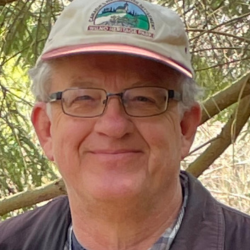
 Stephen Bocking
Prof Stephen Bocking started teaching at Trent in 1994. Before working at Trent he taught part-time at York University and U of T, and had a one-year job at the University of British Columbia. After working at those big universities, he was really happy to have the opportunity to work at a smaller place with such a beautiful campus. "The best part of my experience at Trent has been the students I've taught over the years. They are so serious about learning, and are so interested in our environment and in making a difference in the world. Whether it's discussing environmental issues on the other side of the world (in my Environment and Development course), or the campus environment (in my Environmental History course), there have been countless moments of connection and inspiration."
Stephen Bocking's Website
Email: sbocking@trentu.ca
 Alan Brunger
Research and Teaching: Historical geography of immigration and settlement of individuals and groups from Ireland and England, particularly British military; landscape perception and graphical representation particularly through maps; environmental alteration by settlement episodes
Email: abrunger@trentu.ca
 Jim Buttle
Prof Jim Buttle started teaching at Trent in 1983 immediately after receiving a PhD from Southampton, UK. Best part of Trent – the collegiality between faculty, staff and students, and the willingness of others to tolerate my sense of humour. Favourite teaching moment – playing golf with Miles Ecclestone on the ice on Knob Lake in Quebec in February during the Geog342 fieldtrip while the students were auguring holes in the ice. “Studying geography at university is supposed to be challenging. If it was easy, anybody could do it.”
2021 Tuzo Wilson Medal Recipient
Buttle ResearchGate
Email: jbuttle@trentu.ca
Peter Dillon
Research and Teaching: Geochemistry; Hydrology; Environmental Chemistry
Dillon ResearchGate
Email: pdillon@trentu.ca
 Douglas Evans
International Institute for Environmental Studies
Research and Teaching: Aquatic toxicology and historical reconstructions of pollution patterns; use of biota such as clams and mussels as accumulators and indicators of pollution; studies of food chain impacts on aquatic systems of cadmium, lead and mercury; sediment disposition and bioavailability of pollutants
Email: devans@trentu.ca
 Michael Fox
Research and Teaching: Fish ecology; adaptations of invasive species and their effects on aquatic communities; management of fishes and aquatic systems; life history adaptations of fishes to their abiotic and biotic environment, as well as exotic species introductions in Canada and Europe, and factors that affect their invasion success; habitat selection of native and invasive stream fishes.
Email: mfox@trentu.ca
 Steven Franklin
Research and Teaching: Remote Sensing and GIS; impacts of humans on the environment, including loss of biodiversity; Terrain Analysis; Geomorphometry; Earth Science; Forest Science
Email: sfranklin@trentu.ca
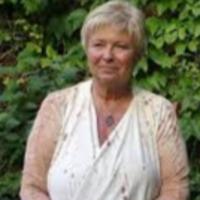
Magda Havas
Research and Teaching: Acid rain and metal pollution; electromagnetic fields and non-ionizing radiation.
Magda Havas' Website
Email: mhavas@trentu.ca
Fred Helleiner
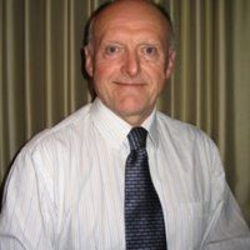 David Holdsworth
Research and Teaching: Environmental ethics and environmental risk assessment; environmental theory; theorizing place (topos); theoretical physics, quantum theory and algebraic geometry; the notion of place exhibits shared characteristics across these disparate fields, from philosophy to political theory, to environmental theory
Holdsworth ResearchGate
Email: dholdsworth@trentu.ca
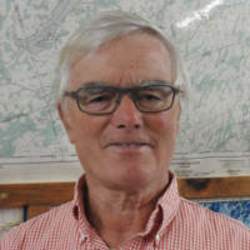 Tom Hutchinson
Research and Teaching: Restoration and re-vegetation of acidic and toxic mine sites; adaptations of plants to heavy metal and acidity stress and to air pollution including sulphur dioxide, ozone and acid rain; ecology of tundra and boreal forests; use of heritage livestock breeds in sustainable agriculture
Email: thutchinson@trentu.ca
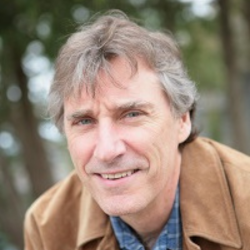 Peter Lafleur
Prof Peter Lafleur grew up in south-west Manitoba and did an undergraduate degree in geography at Brandon University in the late 1970s. After realizing there was more to life than small town Manitoba, he came to Trent in May 1982 at the urging of Peter Adams and Colin Taylor (a very personal approach) to be one of the first students in the new Watershed Ecosystems Graduate program; he then went on to start a PhD in the Geography Department at McMaster in 1984, where he spent time traipsing around the wilds of the James Bay lowlands assessing climate-wetland interactions. After graduating he came directly to Trent for a 1-year contract and stayed for 34 years. He is probably most well-known for teaching the required Natural Science Statistics course for about 20 years. His most memorable course was the Geog386H field course, and having the great pleasure of taking students to far away places, like Northern Ireland, Barbados, England, Quebec, and many times to the Canadian Rockies. "I have been blessed in my career at Trent in that I was able to do everything I wanted to do. I have had the pleasure of working with great people here at Trent. I have many fond memories of students I have taught and the only advice I freely offer is to go out and make the most of the life we have been given and be nice to others and the planet."
Lafleur Google Scholar
Email: plafleur@trentu.ca
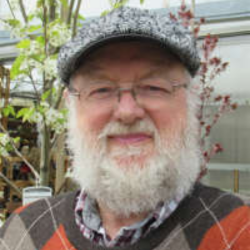 John Marsh
BA (Reading), MSc (Alberta), PhD (Calgary)
Research and Teaching: Parks and heritage areas, recreational trails and the British heritage in Chile. John is a member of the World Commission on Protected Areas and the government of Ontario Trails Coordinating Committee. His consultancies have included the City of Peterborough, Parks Canada and work in China, Slovakia, Lebanon, and Turkey.
Email: jmarsh@trentu.ca
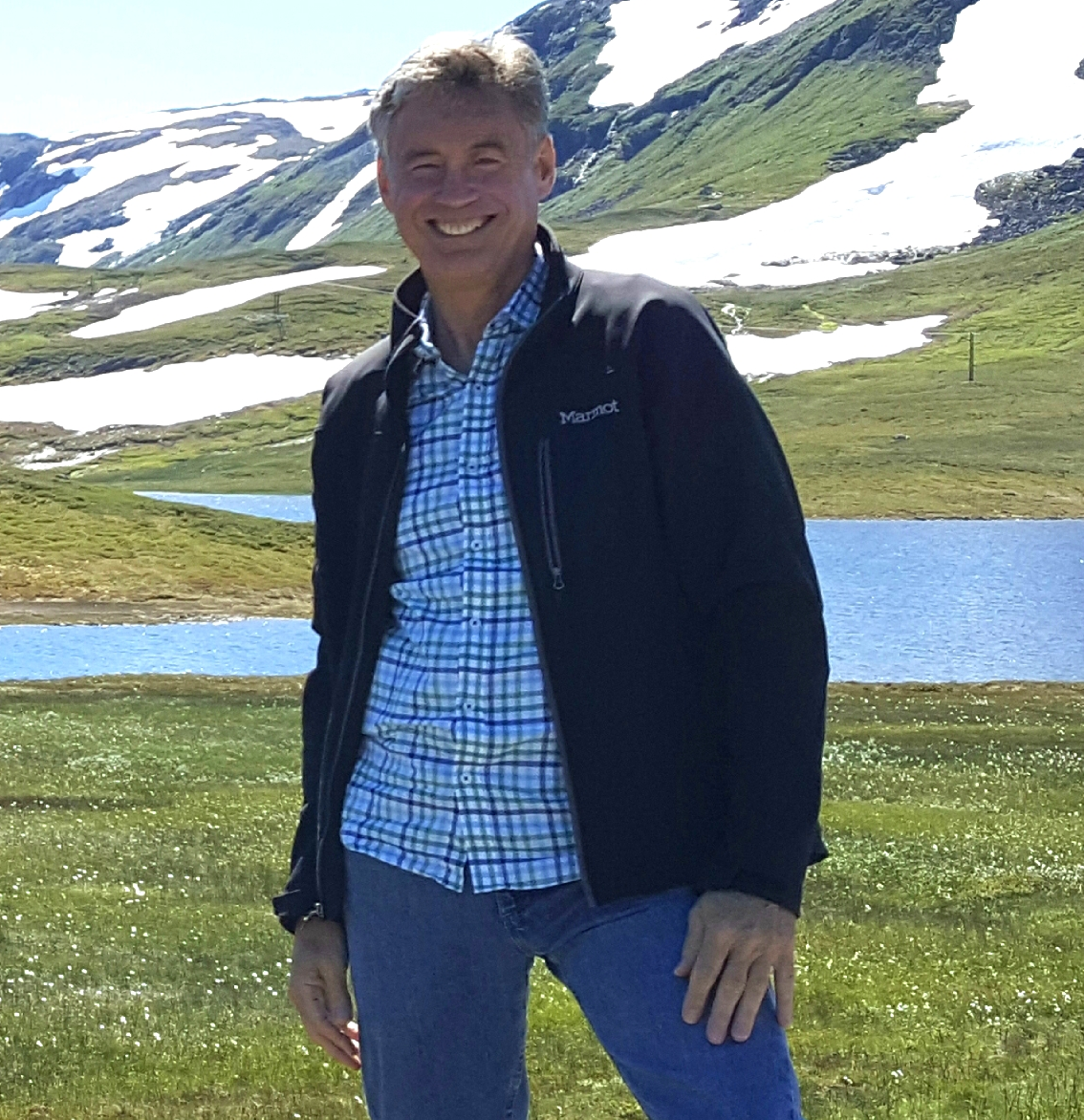 Chris Metcalfe
BSc Manitoba; MSc New Brunswick; PhD McMaster
Research and Teaching: The fate and effects of contaminants in the environment; projects to develop water safety plans and to protect the quality of water
Email: cmetcalfe@trentu.ca
Robert Paehlke
Research and Teaching: Environmental policy and politics
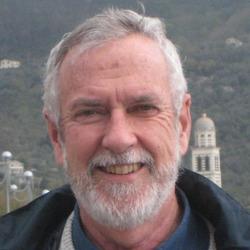
Colin Taylor
Research and Teaching: Surface and subsurface runoff processes in rural, urban, and forested environments; small watersheds in and around the Peterborough area, in the Muskokas, and in the South Island of New Zealand. During his term as Dean of Arts and Science he also published results from a projects that emphasized the value of embedding a teacher education program within a liberal arts and science setting in a small university
Email: ctaylor@trentu.ca
 Tom Whillans
Prof Tom Whillans started at Trent in 1983 with a PhD from University of Toronto in Zoology (areas of emphasis: fish ecology, environmental impact assessment, osteoarchaeology). Best part of Trent: the connections to field research and teaching through community engagement. In that regard, the three most personally memorable experiences are (a) the 33 years of involvement with the Haliburton community’s environmental stewardship through U-Links and its predecessor; (b) the projects from 1992 to 2003 in South America on community based watershed rehabilitation in regions of primarily Indigenous heritage; and (c) the creation of the Ecological Restoration BSc, Indigenous Environmental Science/Studies BSc/BA and Sustainability Studies MA. "Prepare to be surprised."