
Trent University Research Examines Nanomaterials in the Environment
Team of Trent scientists look at threat to aquatic ecosystems
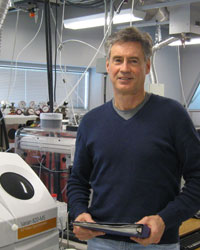
You’ve probably never heard of them, but over the past decade tiny substances called nanomaterials have become part of our daily lives. It’s possible that the clothes you’re wearing, or the sunscreen you just applied, contain nanomaterials. Because of this growing use, there is now concern that nanomaterials may pose threats to the environment.
“We have seen an exponential growth in the use of nanomaterials,” said Dr. Maggie Xenopoulos, an associate professor in the Biology department at Trent University. “However, questions of safety are not being asked.”
Nanomaterials are submicroscopic particles whose physical and chemical properties make them useful for a variety of applications. They can help fabrics resist germs, extend the life of rechargeable batteries and strengthen the cutting-edge of tools. Since 2005, the number of consumer, electronics, medical and industrial products that contain nanomaterials has exploded, growing from less than sixty to more than 1,300.
While the benefits of nanomaterials are recognized, we know little about their risks to health and the environment. Due to their extremely small size, nanomaterials interact with cells and organic molecules, raising questions about their impact on organisms.
Due to their antibacterial properties, nanosilver particles are among the most widely-used nanomaterials in consumer goods. Clothing, home appliances, paint, bandages and food storage containers are a few of the products which may contain nanosilver. As we use and dispose of these products, there is a risk that nanosilvers will travel through our municipal water systems into our lakes and rivers.
Researchers at Trent University are working to understand the effect of nanosilver particles on the aquatic environment. Initial laboratory research conducted at Trent University showed that nanosilver can strongly affect aquatic organisms at the bottom of the food chain, such as bacteria, algae and zooplankton.
To further examine these effects in a real ecosystem, a team of researchers from Trent University, Fisheries and Oceans Canada and Environment Canada is conducting a study at the Experimental Lakes Area, near Kenora, in northwestern Ontario.
The Lake Ecosystem Nanosilver (LENS) project will monitor changes in a lake’s ecosystem that occur after the addition of nanosilver. It will follow nanosilver as it travels through the lake ecosystem, track effects through the entire food web, and determine how resulting changes alter ecosystem function.
Dr. Chris Metcalfe, a Trent professor and director of the Institute for Watershed Science, is the principal investigator on the LENS project. Other Trent members include Drs. Maggie Xenopoulos, Holger Hintelmann and Paul Frost.
“This is a high profile project that will have the eyes of the scientific community on Trent,” said Professor Metcalfe. “We’re fortunate that we have four world class researchers on our team.”
The LENS project follows in the footsteps of other notable studies that have been conducted at the Experimental Lakes Area. “The environmental impacts of acid rain, phosphorous, mercury and estrogen were all studied at the ELA,” said Prof. Metcalfe.
“The Experimental Lakes Area is the only place in the world where we can study the effects of nanosilver at the whole ecosystem level,” added Professor Xenopoulos. “The LENS project is extremely important to help guide future policy.”
The knowledge gained from the study will help policy-makers make decisions about whether nanomaterials can be a threat to aquatic ecosystems and whether regulatory action is required to control their release into the environment.
The LENS project, which is supported by the Strategic Grants Program of the Natural Sciences and Engineering Research Council of Canada and Environment Canada, will take place over a three year period, beginning in 2012.