

Episode 4: Can Rocks Reverse Climate Change?
One of the most promising solutions to mitigating climate change may be beneath our feet. In this episode of Making Strides, President Cathy Bruce talks to Dr. Ian Power, Canada Research Chair in Environmental Geoscience at Trent University, to explore how rocks and minerals could play a major role in carbon capture. From enhanced weathering to Canada’s unique geological advantage, this conversation digs into the science behind using rock formations to permanently store carbon and slow rising atmosphere temperatures. Together, they explore how science innovation based on natural mineral reactions can offer long-term solutions to this urgent environmental crisis.

Featured Expert
Dr. Ian Power
Canada Reseach Chair in Environmental Geoscience
Dr. Ian Power is the Canada Research Chair in Environmental Geoscience and professor in the Trent School of the Environment. His research focuses on carbon mineralization and the potential for rocks to naturally and safely capture carbon dioxide. A leader in the emerging field of enhanced weathering, his work explores how Canada’s unique geology can be harnessed to advance large-scale climate solutions. At Trent, Dr. Power leads cutting-edge applied research in low-carbon technology and mentors the next generation of environmental scientists.
More about Climate Change Innovation at Trent University
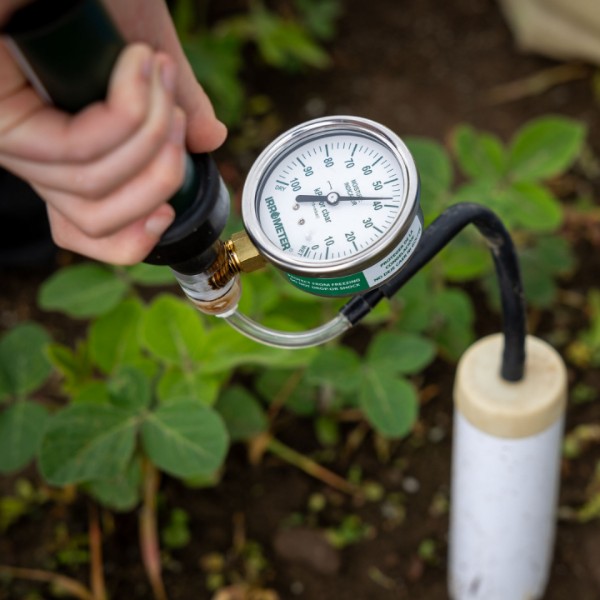
Harnessing the Power of Wollastonite for Carbon Sequestration
School of Environment professor and Canada Research Chair Dr. Ian Power is leading a team of graduate and undergraduate student researchers to test how finely ground wollastonite, a calcium-rich mineral found in Ontario, can be used to capture and store carbon in agricultural soils. In a recent pilot project, researchers conducted a study on applying this mineral to agricultural plots at the Trent Farm Research Centre, investigating the effect of the approach on reducing emissions while improving soil quality.
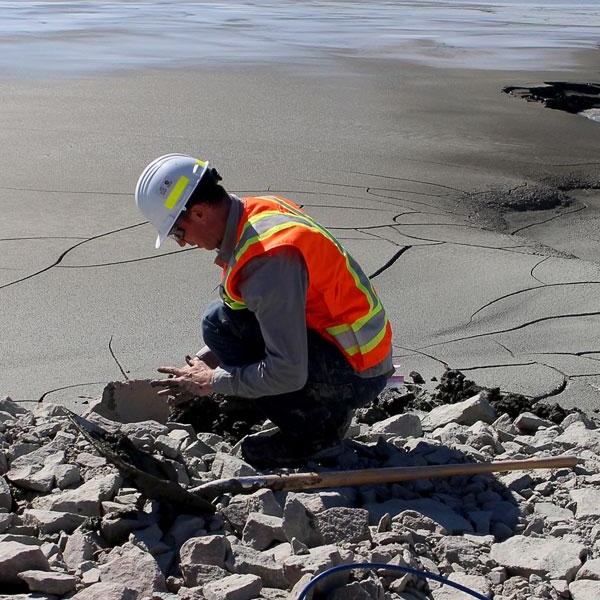
National Leadership on Climate and Environment
Trent is home to 10 Canada Research Chairs, five of whom are focused on addressing climate change and its impact on water, ecosystems, and society. This nationally funded research leadership reflects Trent’s reputation as a university leading investigations into the most pressing environmental challenges through interdisciplinary collaboration.
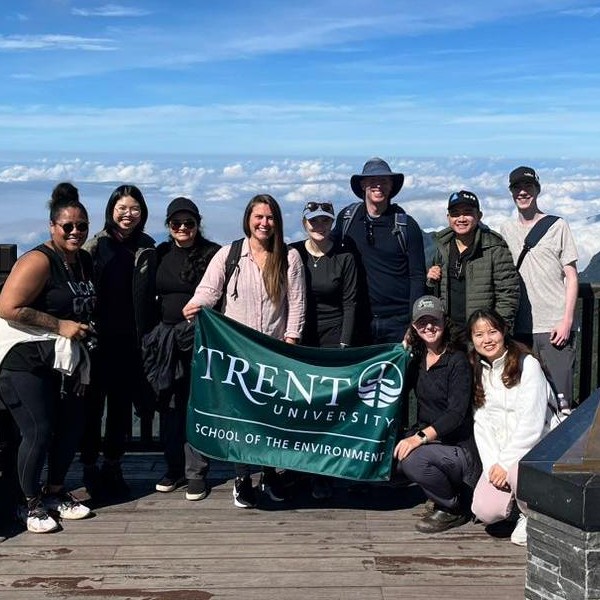
International Institute for Environmental Studies (IIES)
Trent University is a founding member of the IIES, helping lead international collaboration on climate and environmental research. Through global initiatives like One Health and One Climate and a research partnership with Ho Chi Minh City University of Technology in Vietnam, Trent is advancing solutions in pollution, sustainable agriculture, and carbon capture while preparing the next generation of environmental leaders.
Testing Grounds for Tomorrow’s Environmental Technology
At the Trent School of the Environment, students gain interdisciplinary training and hands-on experience to understand and address today’s most urgent environmental issues. Through programs like Environmental and Resource Science/Studies (B.A. or B.Sc.), Environmental Geoscience (B.Sc.), Water Sciences (B.Sc.), and Sustainable Agriculture and Food Systems (B.A. or B.Sc.), students explore everything from carbon capture and land use to food systems and climate policy.
The School also leads nationally in Indigenous Environmental Studies & Sciences (B.A. or B.Sc.), and offers global learning opportunities through the Trent/Swansea Dual Degree in ERS or Geography and Law (B.A.). This immersive, solutions-focused approach prepares graduates to be leaders in environmental research, policy, and innovation.
