
Graduate
Bioenvironmental Monitoring & Assessment
-
- Master of Science (M.Sc.)
- Master of Bioenvironmental Monitoring & Assessment (M.BEMA)
-
- Online & Peterborough
-
- Fall & Winter & Summer
At a glance:
- Degree Master of Science (M.Sc.) Master of Bioenvironmental Monitoring & Assessment (M.BEMA)
- Campus Online Peterborough
- Program is Offered Fall & Winter & Summer
- Study Options Part time/Full time
- Length Thesis: 28 months Course-based: 12 months
- Guaranteed Funding Thesis: Yes (for eligible students) Course-based: No
- Applications Open Fall intake: September 11 Winter intake: February 1 (thesis only) Spring intake: June 1 (thesis only)
- Application Deadline Fall intake: February 1 Winter intake: June 1 Spring intake: October 1
- Deposit Required Thesis stream: No Course-based stream: Yes
- Graduate Studies Contact bema@trentu.ca
- Apply Now Stay in Touch
The Trent Advantage
Launch your environmental career with applied knowledge, professional placement experience, and specialized skills sought by leading organizations across the environmental sector.
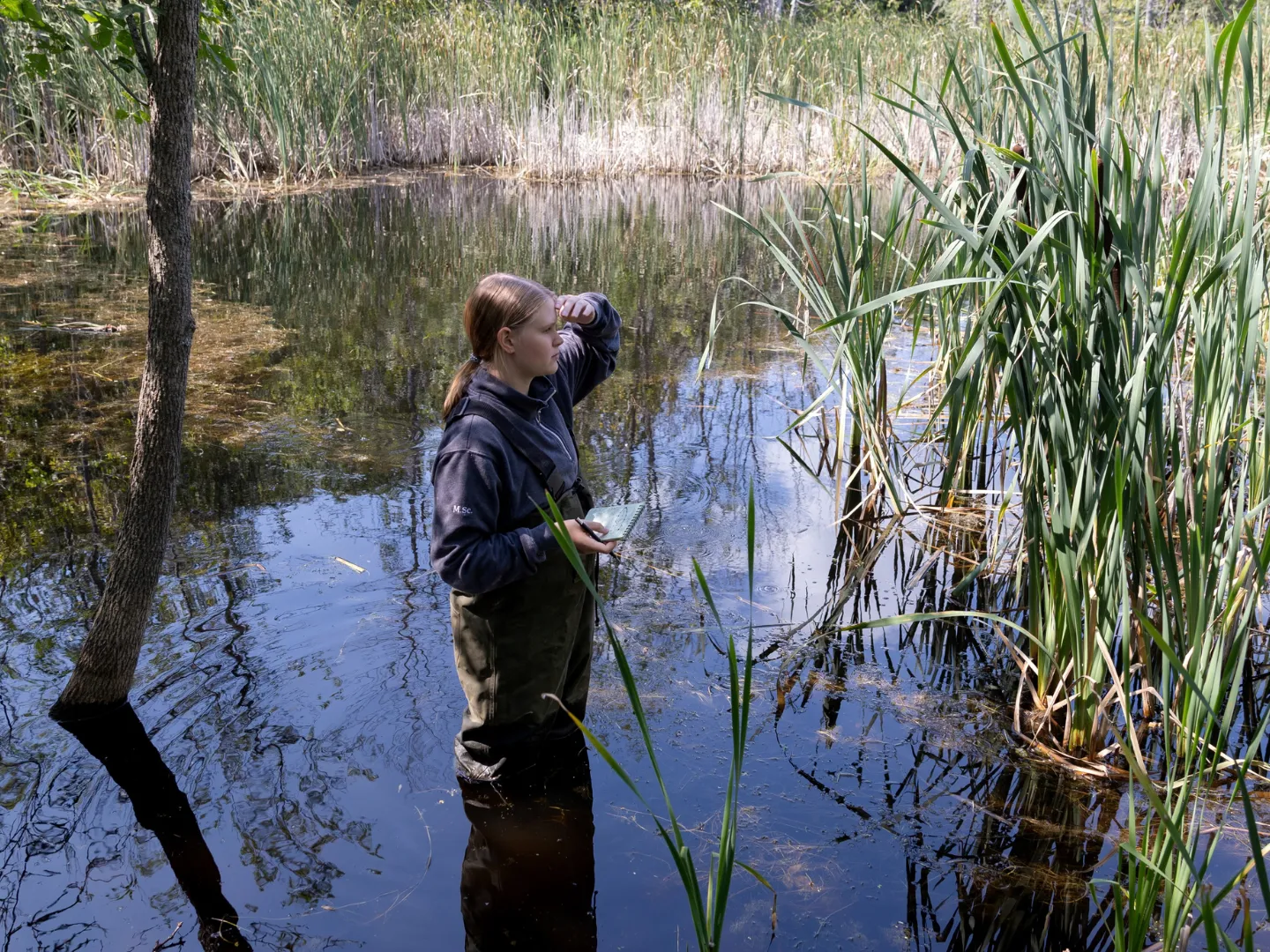
Monitor, protect, and preserve our natural world through specialized training in bioenvironmental monitoring and assessment at Trent. Choose the pathway aligned with your interests through research or professional study options. Apply critical thinking to pressing environmental questions while learning and applying the latest techniques in environmental monitoring and data analysis. You will also build specialized expertise and professional experience for careers in government, environmental consulting, and conservation.
- Develop advanced skills in data analysis, sampling design, science communications, geomatics and landscape ecology
- Gain four months of professional placement experience with a conservation authority, government agency, environmental consultancy or NGO
- Shape your graduate experience around your goals with the online, course-based M.BEMA or research-based M.Sc.
Program Types
-
Thesis: M.Sc.
Develop advanced skills in ecological data analysis and research by analyzing existing datasets or conducting original research through the 24-month thesis-based M.Sc. Use state-of-the-art data collection and analytical tools in landscape genetics, population viability and trend analysis, environmental genomics, ecological stoichiometry, and nutrient cycling assessment. Gain professional experience through a four-month placement in the environmental sector.
-
Course-based: M.BEMA
Gain professional skills and practical experience in the Master of Bioenvironmental Monitoring and Assessment (M.BEMA) program. This 12-month course-based master’s degree combines expert-led online learning with a four-month placement in the environmental sector and one-week in-person capstone course.
Career Paths
In Their Own Words
One of the aspects I appreciated most about the M.BEMA program was how it rewarded effort and engagement—what you put into the experience directly reflected what you gained from it. The program fostered my personal and professional growth by encouraging me to take initiative and immerse myself in industry-relevant content. Overall, the M.BEMA program has left me highly confident in my ability to tackle real-world environmental challenges in the workforce.
David Griffin
M.BEMA alum

Faculty Spotlight
Meet some of Trent's world-class professors and researchers.
Dr. Paul Frost
David Schindler Endowed Professor of Aquatic Science, M.Sc. Supervisor, Professor, Biology
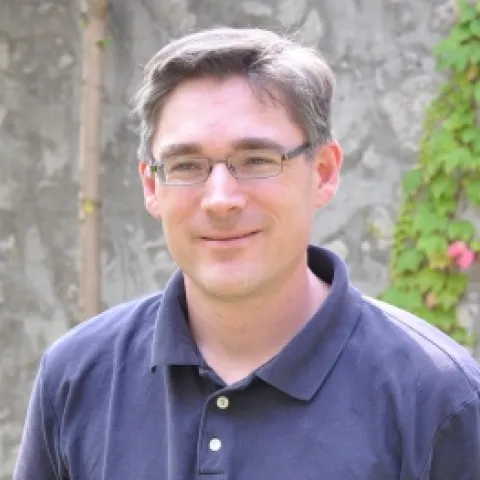
Dr. Frost focuses on how nutrients affect animals and their food web interactions in aquatic ecosystems. His current research examines animal responses (biochemical, physiological and population-level) to interactions among nutritional and environmental stressors in the laboratory and in the field, using a diverse collection of aquatic life from aquatic plants and algae to mayflies and zooplankton.

Dr. Thomas Hossie
M.Sc. Co-Supervisor, Professor, Biology
Dr. Hossie's research focuses on behavioural ecology and population biology of amphibian and insect systems, including predator-prey interactions and understanding ecological and evolutionary mechanisms. His recent research has focused on rare salamander populations on Pelee Island in Ontario, and he teaches the Data Analysis course in the BEMA Program. His conservation efforts include leading efforts on the Trent campus to redesign and replace a section of existing curb to help salamanders reach their wetland breeding site more safely.
Admissions
Trent has clear pathways for graduate students to apply and be admitted to study for their master's or doctorate at either of our campuses. Please review admission requirements for your program before applying.
Eligibility Requirements
- B.Sc. Honours degree (a four-year undergraduate bachelor’s degree) in the Sciences
- Minimum B+ (77%) or equivalent in the last two years of full-time study, or last ten full academic credits
Eligibility Requirements
- B.Sc. Honours degree (a four-year undergraduate bachelor’s degree) in the Sciences
- Minimum B+ (77%) or equivalent in the last two years of full-time study, or last ten full academic credits
- Proof of English Proficiency: All international applicants must provide proof of an adequate level of English proficiency regardless of their citizenship status or country of origin. Please visit our International Applicant Resource page for details on English Language Proficiency requirements.
- A GRE test score is not required for admission into this program
All applicants, domestic and international, must submit the following documents to complete their application:
- Transcripts: Unofficial copies of all post-secondary transcripts
- 2 letters of reference: Academic references are required for the M.Sc. thesis stream. Academic references are preferred for the M.BEMA; however, one professional reference can be accepted. Reference forms will be emailed to the referees that you have appointed on OUAC
- Plan of Study/Personal Statement: 1-2 pages outlining your objectives in a graduate program. Any specific research interests, relevant experiences, and/or career aspirations can be included
- Detailed Resume or Curriculum Vitae
- Proof of Citizenship (ie. copy of passport or birth certificate)
- Supervisor (thesis-stream only): A potential supervisor is strongly recommended as an admission requirement for the thesis-stream. Please list your supervisor on your OUAC application and discuss this in your plan of study. Please visit the program's Faculty and Research page for a listing of faculty and areas of research. Applicants are responsible for reaching out to a faculty member
For more information on submitting transcripts, re-sending reference links and other application questions, please visit our How to Apply page and review Step 4, as well as review our Frequently Asked Questions (FAQ).
Tuition Estimate
Estimate your tuition, ancillary fees, and potential entrance scholarships based on your program, residency status, and academic average.
Tuition Fees
Base tuition fees for the Bioenvironmental & Assessment M.Sc. program (thesis-stream)
$8,252.00
Funding Package
Minimum funding package for eligible Bioenvironmental & Assessment M.Sc. program (thesis-stream) students
$-22,500.00
Ancillary Fees
Mandatory ancillary fees
$1,329.00
Total:
$ -12,919.00
* The tuition details and scholarships listed are for domestic students only. International applicants should contact the financial aid office directly for equivalent guidance.
Financial Matters
Thesis
Eligible full-time students are offered minimum funding packages during their funded period of $22,000 annually, which includes a Graduate Teaching Assistantship employment offer valued at approximately $13,000 annually. Specific funding details are included in individual admission letters.
Students are supported in competing for external awards during their studies, such as the Ontario Graduate Scholarship. A full list of external awards is available on our Scholarships and Awards page.
Course-based
Professional programs do not offer funding as part of the letter of offer. It is expected that graduate students in these programs will have funds to support themselves for the duration of their studies.
Connect with Financial Aid at Trent for information about provincial loan programs for domestic students, as well as bursary opportunities for both domestic and international students.