
Lecture series through the years
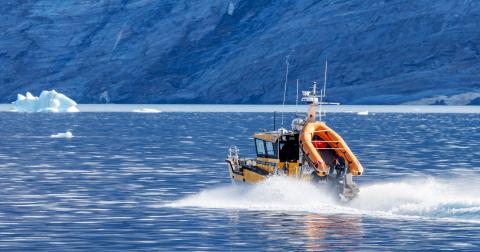
All Eyes on the Artic: Where Geopolitics and Security Intersect
Friday 28 November 2025
1:00 pm
The Pit, Lady Eaton College, Symons Campus
Greenland Foreign Policy in the Midst of Geopolitical Tensions
with Rasmus Leander Nielson
and
The Nature of Grey Zone Arctic Threats: Lessons from Norway
with Marc Lanteigne
About the lectures:
The world is in flux, with powerful, connected trends reshaping global geopolitics: climate change, autocracies and disruptive states (particularly China and Russia) challenging the rules-based international order, and new and disruptive technologies that “are rapidly redefining conflict and what it takes to be safe and secure.”
Canada highlights the Arctic as a region of particular concern and priority. Reflective of this new world, Greenland and Norway have announced new foreign policy strategies focused on the changing threat environment and the connection of local, national, and international security issues
About the speakers:
Dr. Nielsen is Head of Nasiffik (Centre for Foreign & Security Policy) and Associate Professor at the Department of Arctic Social Science and Economics, Ilisimatusarfik (University of Greenland). He holds a PhD from the University of Southern Denmark and has previously worked as editor-in-chief at an online magazine and as assistant lecturer at the University of Copenhagen. His main research interests include Greenlandic foreign policy, Arctic security and cooperation, and International Relations and EU-studies. Dr. Nielsen is a widely used expert and commentator on Greenlandic and Arctic Affairs.
Dr. Lanteigne is a Professor of Political Science at UiT: The Arctic University of Norway, Tromsø, specialising in Chinese and East Asian politics and international relations, as well as Asia-Pacific security and cooperation. He also specialises in the politics and security of the Polar Regions, including Chinese and East Asian diplomacy in the Arctic and via the Antarctic Treaty System.
This event is co-sponsored by the North American and Arctic Defence and Security Network (NAADSN) and the Frost Centre for Canadian Studies and Indigenous Studies.
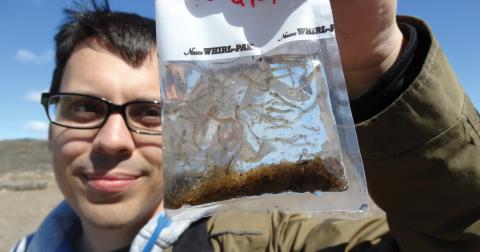
Climate Change Impacts on Freshwater Resources in the Arctic
Dr. Andrew Medeiros, Associate Professor, School for Resource and Environmental Studies, Dalhousie University
Tuesday 18 November 2025
11:30 am
Enwayaang room 112, Symons Campus
*please note revised time & location
About the speaker:
Dr. Andrew Medeiros, an associate professor at the School for Resource and Environmental Studies (SRES) at Dalhousie University, is at the forefront of freshwater ecology research. With a career deeply rooted in both the historical and contemporary aspects of environmental science, Dr. Medeiros's work is integral to understanding and predicting the impacts of climate change on freshwater resources.
Dr. Medeiros's research revolves around two main avenues: the historical influence of climate change over the past 10,000 years and predicting future ecosystem changes under contemporary climate conditions. As a freshwater ecologist, he employs methodologies like limnology, paleolimnology, and bioassessment to study lakes, lake sediments, and biological indicators, respectively. This interdisciplinary approach allows Dr. Medeiros to bridge the gap between ecological systems and human interactions, providing insights into how environmental and anthropogenic factors affect freshwater security.
A significant portion of Dr. Medeiros's recent work focuses on municipal water supply sustainability in Arctic communities. These communities often rely on a single reservoir, making them vulnerable to climate variability. Dr. Medeiros has conducted extensive environmental impact assessments and bioindicator analyses to understand how pollution and climate change affect these water resources.
About the talk:
Anthropogenic stressors to freshwater environments have perpetuated water quality and quantity challenges for communities across Arctic Canada, making drinking water resources a primary concern for northern peoples. The ability to collect and synthesize long-term environmental monitoring data is essential for the effective management of freshwater ecosystems; yet, our knowledge of Arctic systems is rarely sufficient for even short-term planning for municipal freshwater provisioning. Progress has been made in assessment and monitoring approaches that have integrated routine monitoring programs into more holistic watershed-scale vulnerability assessments. While the concept of vulnerability assessment is well-defined for ecosystems, complementary and sometimes competing concepts of adaptive management, ecological integrity, and ecological condition complicate the communication of results to a broader audience. Likewise, we often do not have enough monitoring data to be able to effectively plan for future needs. Here, I discuss progress in freshwater assessments for Arctic communities that can contribute to the identification and communication of freshwater vulnerability. We review novel methods that address common challenges associated with: 1) a lack of baseline information behind ecosystem services, 2) variability associated with a spatial context of how climate change manifests in the Arctic, and 3) the ability of biological indicators that enable us to make inferences about ecological condition. Innovation in methods and communication are discussed as a means to highlight meaningful cost-effective results that target policy towards heuristic ecosystem-management of freshwater resources geared towards Arctic regions.
Friday 21 March 2025
1 pm in Scott House 105
About the lecture:
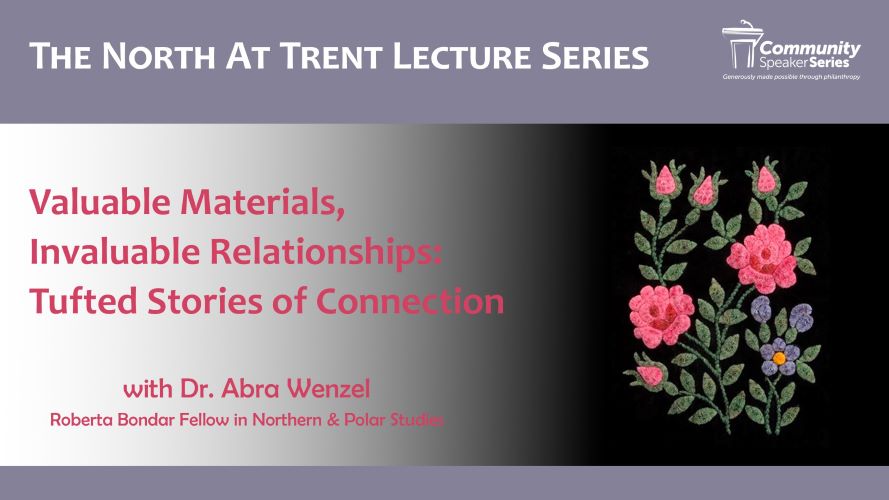
Moose and caribou hair tufting is an important Subarctic women’s artform in the Great Slave Lake region, Northwest Territories. However, tuftings and tufters have historically been identified following non-Indigenous ideologies rooted in colonialism and capitalist values, resulting in labels such as “craft”, and “artisan”, that are difficult to change. This practice has undervalued, if not dismissed, Indigenous artists, their artistry and by and large their art. Drawing on my previous doctoral fieldwork in the Northwest Territories, this presentation draws on artists’ stories to show how they have used their art as mediums of agential resistance. Significant to their art are the important
values such as Culture, Community, and Land that are embodied within each tufting. In illuminating these
narratives, I connect them to my present research on current Northern discussions on climate change(s) and the impact on people and place, including traditional arts.
About the Speaker, Dr. Abra Wenzel:
Dr. Abra Wenzel joined Trent as the Roberta Bondar Fellow in Northern & Polar Studies in July of 2024. Dr. Wenzel completed her dissertation at Carleton in 2023, in Anthropology. She holds a Masters in Arts in Anthropology from the University of Victoria and an undergraduate degree in Anthropology and Political Science from McGill. Her doctoral research took an economic anthropological approach to Indigenous women’s textiles and art in the sub-Arctic region, specifically in the Mackenzie Valley in the Northwest Territories, and their relationship to the Canadian tourism industry. Her research during her fellowship will focus on Indigenous peoples' experiences of wildfires. The ongoing impacts of settler-colonial practices have continuously dispossessed Indigenous peoples through the imposition of regimes that disregard Indigenous knowledge systems, stewardship practices, and connectivity to Land. These experiences of colonial environmental violence in policy and practice are increasingly worsened by anthropogenic climate change.
Read more about Dr. Wenzel and her plans during the Fellowship in the Arthur and in Trent's News.
Monday 24 February 2025
11:00 am
Bagnani Hall, Traill College
About the lecture:
Adventure Canada is a family-run, small-ship expedition cruise company specializing in educational travel experiences to the Canadian Arctic, the East Coast, Greenland and the North Atlantic. Adventure Canada voyages centre Indigenous leaders, local guides, and renowned artists, authors and musicians who share the goal of informing and engaging travellers. As a small operation working closely with Inuit communities at a time of cultural, climatic and environmental change, Cedar and Jason will share their unique perspective on connecting North and south in contemporary Canada.
About the Speakers Cedar Swan & Jason Edmunds:
Cedar has grown up surrounded by the world’s foremost adventurers and explorers, and now proudly carries on the work her father started while leading Adventure Canada. She is a founding member of Canadian Women for Nature, a fellow of the Royal Canadian Geographical Society, a member of the Explorers Club and the International Women's Forum, and sits on the board of directors for both ArcticNet and Project North. In 2018, Cedar was named one of Canadian Traveller’s Top 40 Under 40 travel professionals. In 2020 Cedar was awarded the Citation Of Merit from The Explorers Club Canadian Chapter.
Jason is an Inuk expedition leader and educator from Nunatsiavut. Jason collaborates with community stakeholders, Indigenous educators, and businesses to build capacity, address power imbalances, and increase accountability. In 2020 he was recognized with the Parks Canada CEO award for his role in developing a visitor experience to the wreck of the HMS Erebus. Jason is a recipient of the Royal Canadian Geographical Society Martin Bergmann Medal for Excellence in Arctic Leadership and was named to the 2024 class of The Explorers Club 50; Fifty People Changing the World that the World Needs to Know About.
transcript of 23 Jan 2025 talk
Circumpolar Food Systems: Alaska Isn't Out Standing Alone In Our Field
with Jodie Anderson, University of Alaska Fairbanks
Thursday 23 January 2025
About the lecture "Circumpolar Food Systems: Alaska Isn't Out Standing Alone In Our Field":
Have you ever thought about the role of agricultural production in the food system of Alaska? Don't worry - most people haven't, even Alaska residents! We will spend some time learning about the past, present, and future of the food system in Alaska and how the University of Alaska Fairbanks' Agricultural and Forestry Experiment Station plays a major part. There will be opportunities for questions and answers.
About Jodie Anderson:
Mrs. Jodie Anderson’s research interests are in soil biochemistry with a focus on soil health in cold agricultural soils. Her diverse training began with a BS in Science Education Biology from the University of North Carolina at Chapel Hill and a MAT in Science Education from Brown University. She taught chemistry and many life sciences at the high school and college levels for 11 years in North Carolina.
She moved north in 2003 and worked for the University of Alaska Fairbanks (UAF) where she began and managed the Alaska Community Horticulture Program as well as research that focused on potato virus studies, citizen science projects, soil building, organic nitrogen soil supplements, compost development, and community gardening. Her work throughout Alaska afforded many opportunities to travel around rural Alaska and develop collaborations and relationships with many teachers, growers, and communities. She is currently the UAF Institute of Agriculture, Natural Resources and Extension Director, the Director of the Alaska Agricultural and Forestry Experiment Station and the Director of the Alaska Cooperative Extension Service.
The JUSTNORTH Film Project
with Adrian Fisk, Photographer & Filmmaker
October 10, 2024
8:00 pm ET
Bagnani Hall, Traill College
Film screening followed by Q&A with the filmmaker
‘JUSTNORTH’ A Documentary by Alucinari Productions
‘With fraught geopolitical tension and the impact of climate change life in the Arctic is more uncertain than ever. As the European Union looks to the polar north to enable its clean energy transition what do the people of this remote region think? What agency do they have over decisions made for them, ones that all too often are made by external forces with little or no understanding of the Arctic?
Adrian Fisk’s work has featured in the world’s top current-affairs periodicals, from National Geographic and The Economist to Vogue and Vanity Fair. In the noughties he was identified as one of ‘The world’s top photographers’ in the book published by Rotovision. Photographing some of the most iconic counter cultural movements of the 1990’s his work has been exhibited internationally including the 2016 East Wing Biennial at the Courtauld Institute of Art and the Saatchi gallery in 2019 which showcased his series ‘London Acid City’ documenting illegal raves in the 90’s. Having worked in five continents he went onto start Alucinari Productions in 2020 and has recently completed his first feature length documentary in 2024 that explores what needs to be put in place to allow indigenous and local Arctic communities a just, resilient and sustainable existence in the face of dramatic climate change in the polar North. The film, commissioned by the European Commission and JUSTNORTH seeks to influence Arctic policy by both local and regional stakeholders.
North at Trent 2023-2024 Lecture Series
A Northern Perspective on Decolonization and Indigenization: Retelling Narratives
with Bridget Larocque, Trent University's 44th Ashley Fellow
February 8, 2024, 7:30 pm ET, Bagnani Hall, Traill College
This lecture is jointly offered as an Ashley Fellow & North at Trent Lecture by Trent's Colleges and the Frost Centre.
Bridget Larocque, a Métis Change Advocate in Indigenous, Arctic, and Gender Affairs, has been named the 2023/24 Ashley Fellow at Trent University. The 2023/24 Ashley Fellow is hosted by Traill College. Known for its interdisciplinary academic departments and vibrant collegiate environment, Traill College provides the perfect setting for Bridget Larocque's activities on campus. Her integration into college life by living at Traill during her residency will present Trent students and faculty alike with unique and enriching opportunities for innovative, informal, and educational discussions with Larocque.
“Traill is honoured to be the host college for this year’s Ashley Fellow,” says Dr. Michael Eamon, principal, Traill College. “Bridget Larocque is the embodiment of the ideals on which the fellowship was founded upon, bringing a wealth of lived experience and her unique northern perspective to Indigenous relations.”
As Ashley Fellow, Ms. Larocque will visit Trent’s Peterborough campus from February 4th to February 18th, 2024, sitting in on lectures, visiting classrooms, and offering mentorship sessions for students. Ms. Larocque will also deliver a public lecture and be honoured at a College dinner.
Ashley Fellowship
The Ashley Fellowship is administered by the Colleges at Trent University and is awarded to a visiting scholar each year. The Ashley Fellowship Committee is now requesting nominations for the 2024-2025 Ashley Fellow. Nominations may come from fellows of any of the Colleges or from any college affiliated departments. This is a wonderful opportunity for the University community to benefit from the presence of a distinguished intellectual who enhances our academic programs and collegiate life.
The fellowship is funded by a bequest from the late Professor C.A. Ashley, long-time friend of Trent University and an enthusiastic proponent of the importance of collegiate life in the academic pursuits of the University. The Ashley Fellow is therefore a visiting scholar who is a resident guest in one of Trent's residential Colleges. By the terms approved by Senate in 1976, and in keeping with Professor Ashley's wishes, "scholar" should be broadly interpreted to include persons not necessarily holding an academic appointment.
Security and Socio-Economic Inequalities in the North
with Dr. Gérard Duhaime and Dr. Karen Everett from Laval University
November 30, 2023, 7:30 pm ET, Bagnani Hall, Traill College (in person), also available via zoom
For over a decade, the concept of security in the Arctic has expanded beyond traditional military concerns and is inclusive of a range of issues, including those affecting human and economic security, for example. Concerns such as these are often addressed though different policies. In 2019, Canada released it’s Arctic and Northern Policy Framework (ANPF) that takes a more holistic approach to policy development, encompassing several areas, including but not limited to health, education, the economy, and traditional security. Priorities from territorial and Inuit partners are also expressed through their own chapters. This presentation examines different socio-economic inequalities in relation to the ANPF and argues that unless they are adequately addressed, they contribute to insecurity in the Canadian North.
North at Trent 2022-2023 Lecture Series
For the 2022-2023 academic year, the North at Trent Lecture Series is proud to connect with the Canadian Studies 50th Anniversary events for their year of Conversation & Celebration.
Arctic Interests of the Kingdom of Denmark at a Time of Geopolitical Rivalry in the Arctic
with Torsten Kjølby Nielsen, Chief Counsellor for Arctic Affairs at the Danish Ministry of Foreign Affairs
Monday March 20, 2023 at 7 p.m. Kerr House Seminar Room, Traill College
Torsten Kjølby Nielsen, Chief Counsellor for Arctic Affairs at the Danish Ministry of Foreign Affairs. Since 2016 he has worked on Arctic affairs multilaterally (Arctic Council) and in the bilateral relations of the Kingdom of Denmark to both Arctic and non-Arctic actors, bilateral relations with the USA and Canada and the foreign and security policy interests of Greenland and the Faroe Islands. At present he takes a particular interest in geopolitical aspects of developments in the Arctic region with a focus on a broad spectrum of security, economic, and political governance related issues.
Previously in his diplomatic career he has held a number of positions at the Ministry of Foreign Affairs in Copenhagen on a variety of Danish foreign policy priorities and has served as deputy head of mission at the Danish embassies in Prague (2004-2007) and Madrid (2012-2016). Torsten has a MSc. in Political Science from the University of Aarhus, Denmark (1999).
From Trent to Reykjavik – the path of Canada’s current Ambassador to Iceland
with Jeannette Menzies, Ambassador of Canada to Iceland
Wednesday January 25, 2023 at 7 p.m. Bagnani Hall, Traill College
This talk was recorded and is available for viewing in the 50th Anniversary Speakers collection at the Trent Canadian Studies youtube page.
This talk will be a conversation which will touch on the importance of Canadian Studies in global diplomacy, on Canada-Iceland relations, on Arctic issues, and on recruitment to the Canadian Foreign Service.
Ms. Menzies holds an Honours BA in Canadian Studies from the University of Manitoba, 1995, and a Master of Arts in Canadian Heritage and Development Studies from Trent University, 1998.
She was appointed Canada’s Ambassador to Iceland in January 2021. She has served for over 22 years in Canada’s Foreign Service, with assignments in Ankara, Anchorage, Oslo and now Reykjavik. At headquarters, she has worked on Arctic policy, humanitarian issues and consular and emergency management. Outside of the foreign ministry, she served as Director of Knowledge Management and Engagement at Polar Knowledge Canada from 2015-2019, where she was integral to the establishment of the Canadian High Arctic Research Station in Nunavut. Ms. Menzies is a governmental expert on Arctic and Antarctic issues and is passionate about engaging youth on the future of the polar regions.
Claims, Cooperation, and Continental Security
with Dr. Elizabeth Elliot-Meisel, Trent University Fulbright Research Chair
Thursday December 1, 2022 at 7 p.m. Bata Library Film Theatre BL 103, Symons Campus.
This talk is open to the public and can be attended in person or online - registration is required for online attendance.
The School for the Study of Canada is pleased to welcome Dr. Elizabeth Elliot-Meisel for the fall of 2022, as the inaugural Trent University Fulbright Research Chair.
Dr. Elizabeth Elliot-Meisel joined the Department of History at Creighton University (Omaha, NE, USA) in 1993 and was promoted to Associate Professor in 2000. She served as department chair from 2001-2010. Elliot-Meisel received her Ph.D. from Duke University, where she was on a Ford Foundation scholarship.
Dr. Elliot-Meisel’s first book, Arctic Diplomacy: Canada and the United States in the Northwest Passage (1998) built upon and expanded her doctorate thesis. Her research continues to focus on U.S.-Canada relations in the Arctic in general and the Northwest Passage in particular. Recent publications include the co-authored (P. Whitney Lackenbauer) 2-volume document collection “One of the Great Polar Navigators”: Captain T.C. Pullen’s Personal Records of Arctic Voyages. Lackenbauer and Elliot-Meisel are currently writing a biography of Pullen, and Elliot-Meisel is also writing a second book about Canadians in the Arctic, tentatively titled Arctic Visionaries.
Elliot-Meisel believes that History tells the ever-dynamic story of people that always asks new questions of the past and challenges people of today to seek a deeper and broader understanding of those who came before them.
Changing Arctic Security
with Dr. Lassi Heininen
Thursday November 10, 2022 at 7 p.m. Bata Film Theatre BL 103, Symons Campus.
This talk was recorded and is available for viewing in the 50th Anniversary Speakers collection at the Trent Canadian Studies youtube page.
Dr. Lassi Heininen is Professor (emeritus) of Arctic Politics at University of Lapland (Finland), Editor of Arctic Yearbook, Chair of (traveling symposium) Calotte Academy, Leader of UArctic’s TN on Geopolitics & Security. His research fields include IR, Geopolitics, Security Studies, Environmental Politics, Northern European Studies, Arctic Studies. He lectures at, and supervises PhD candidates from, Finnish & foreign universities, speaks regularly in international conferences, and chairs the GlobalArctic Mission Council of the Arctic Circle.
He publishes in, and acts as reviewer for, international academic journals & publications. Among his recent publications are “Climate Change and the Great Power Rivalry in the Arctic” in Insight Turkey; “The Post-Cold War Arctic” in Global Arctic (Springer); “Arctic Geopolitics from Classical to Critical Approach” in Geography, Environment, Sustainability Journal; Arctic Policies and Strategies - Analysis, Synthesis, and Trends (with Everett, Padrtova & Reissell, IIASA); Climate Change and Security. Searching for a Paradigm Shift (with Exner-Pirot, Palgrave Pivot).
North at Trent 2021-2022 Lecture Series
How Long Term, Multi-Disciplinary Research has Contributed to the Conservation of Seabirds in a Changing Arctic
Friday February 11, 2022 at 5:00 p.m.
Grant Gilchrist is a Research Scientist at the National Wildlife Research Centre in Ottawa (Environment and Climate Change Canada) and currently an adjunct professor at Carleton University, McGill University, and the University of Windsor. Early in his career he was inspired by several long-term ecological studies led by Jamie Smith (song sparrows, University of British Columbia), Tony Gaston (seabirds, Environment Canada), Erica Nol (shorebirds, Trent University), and Ian Stirling (Polar Bears, Environment Canada). These studies not only quantified environmental change over time, but also the often complex responses of wildlife to these changes. These rare studies were instrumental when detecting ecological change driven by extreme weather events, diet shifts, the emergence of diseases, and climate change; all issues that might otherwise have gone undetected.
After joining Environment Canada in 1995, Grant worked to emulate these studies when designing his own research program to address Federal priorities to conserve Arctic birds and ecosystems. He has led multidisciplinary, collaborative research programs to study the underlying processes of Arctic seabird ecology. These include foraging behaviour, reproduction, migration, winter distribution, and how seabirds are affected by changing climate and emerging diseases in the north. Most studies are very collaborative in nature; linking academia, government, industry, and Indigenous organizations.
Transcript of the Feb. 11, 2022 talk
Monitoring Plastic Pollution in the Canadian Arctic: What We Have Done, and Future Planning
Friday March 4, 2022 at 5:00 p.m.
Dr. Jennifer Provencher is a research scientist with the Ecotoxicology and Wildlife Health Division in Environment and Climate Change Canada. Dr. Provencher has collaborated with partners across the Arctic since the 2007‐08 International Polar Year, when she was a graduate student and visited the Arctic for the first time. Her work addresses wildlife health. Her work in the Arctic currently focuses on legacy and emerging contaminants, with a focus on plastic pollution. The work on plastic pollution in the Arctic dates back to the 2000s, and her research team works to explore both the fate and the effects of plastic pollution on all three of Canada’s coasts. She is currently the lead of the long‐term seabird contaminants project under the Northern Contaminants Program (NCP), and is also the co‐chair of the Litter and Microplastics Expert Group (LMEG) for Canada under the Arctic Monitoring and Assessment Program (AMAP).
Transcript of the March 4, 2022 talk
North at Trent 2020 Lecture Series
More Than Just Franklin Stories: Inuit Oral History Beyond Canadian Mythology
Thursday 27 February, 3 p.m. Bagnani Hall, Catharine Parr Traill College
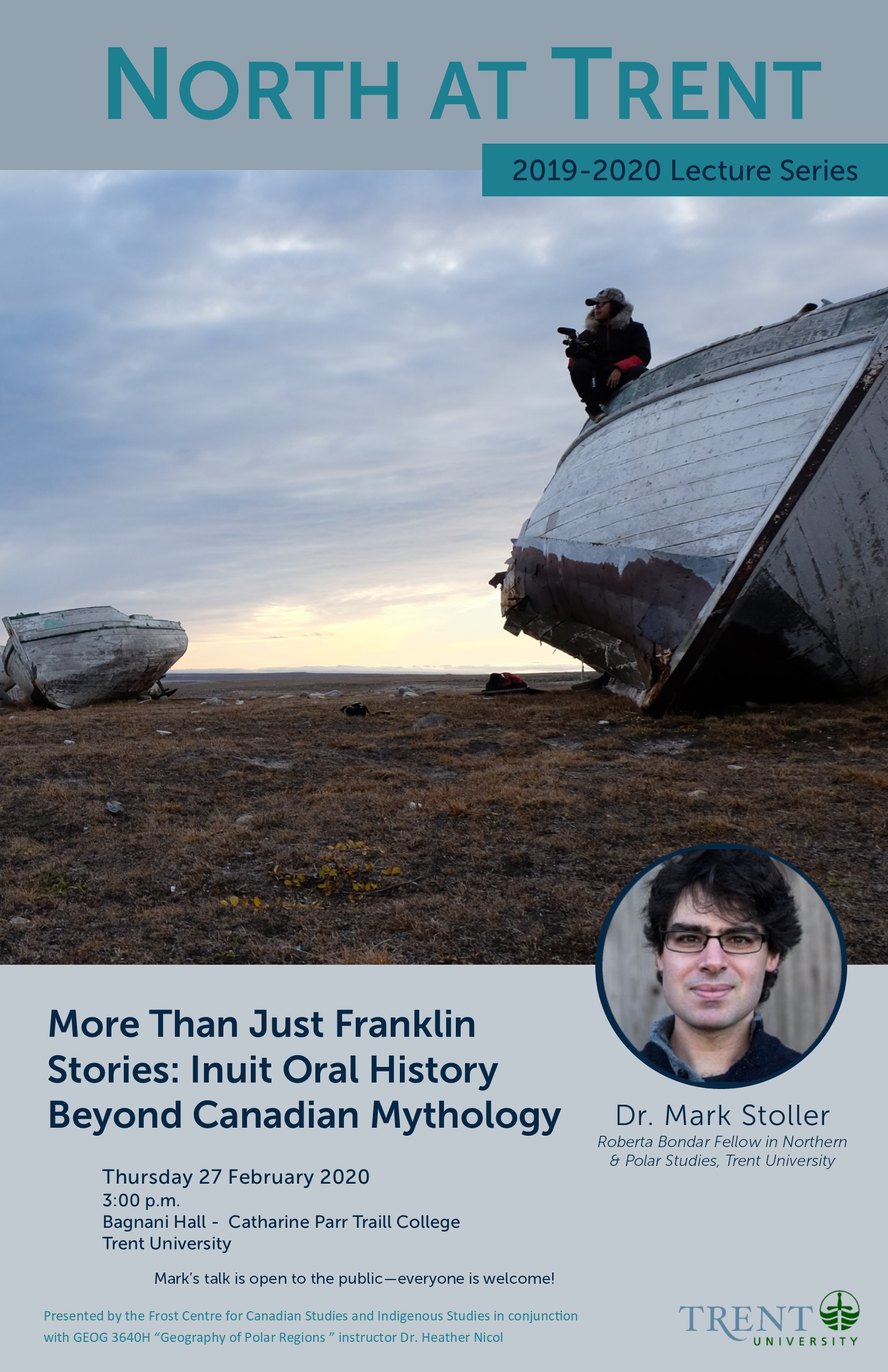
About the talk: The recent discovery of the lost ships of the Franklin Expedition has brought much attention to the Inuit community of Gjoa Haven/Uqshuqtuuq, and to the role of Inuit knowledge in locating the wrecks. This talk focuses on the role and relationship of local Inuit to the ongoing Franklin research. It examines how Inuit histories are represented in Canadian Arctic iconography and mythology, and locates these in the wider context of intergenerational knowledge sharing in present-day Nunavut.
About the speaker: Dr. Mark Stoller is the Roberta Bondar Fellow in Northern & Polar Studies
Locating Hope in a Melting Arctic
Thursday 12 March, 2020, 3 p.m., Bagnani Hall, Catharine Parr Traill College
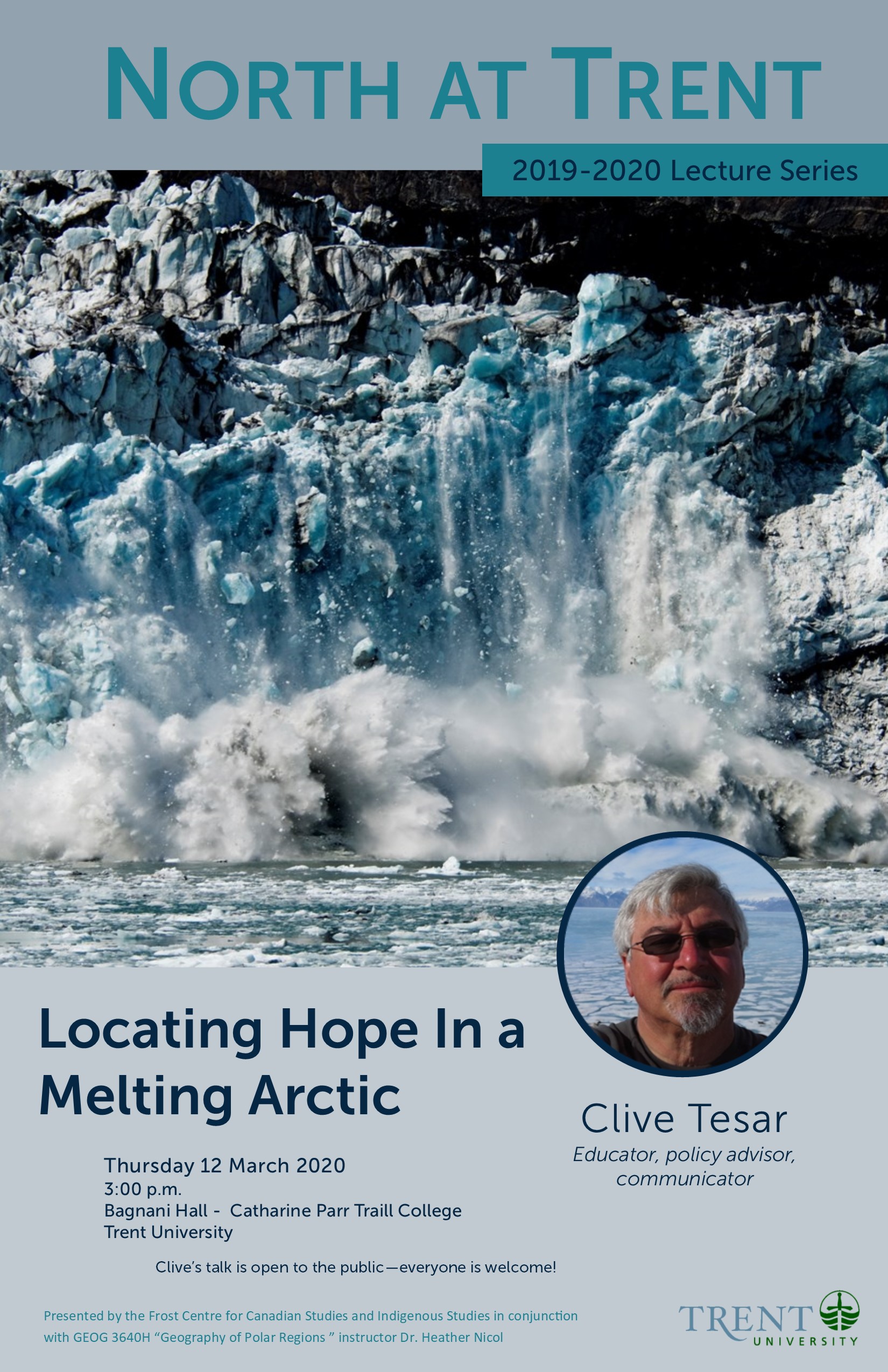
About the talk: The speaker led a project for WWF international for eight years called "the Last Ice Area/Similijuaq". It focuses on a resilient area of sea ice, projected to be the last place where large areas of summer sea ice will persist under the current climate trajectory. This talk will chart the journey from despair over the disappearing sea ice in the Arctic to a conscious decision to turn the narrative into one of hope centred on the Similijuaq (place of the big ice). The presentation will show how this hopeful message was communicated and how it resonated with policy-makers and policy-shapers.
About the speaker: Clive Tesar Educator, policy advisor, communicator
Clive Tesar grew up and worked in the Northwest Territories and has worked all over the Canadian and circumpolar north. He was a journalist, radio host, and editor for the Canadian Broadcasting Corporation.
He has led communications for Inuit Tapiriit Kanatami, and the Indigenous Peoples’ Secretariat of the Arctic Council. He was also Head of Communications and External Relations for World Wildlife Fund’s Global Arctic Program for nine years, where he led the “Last Ice Area” project.
Clive is now an educator, lecturing in the Northern Studies Masters program at Carleton University. He has also designed courses for Trent University, and taught at Nunavut Sivuniksavut, a special program for Inuit students. He continues to consult for a variety of clients and was recently the drafter of the Arctic and Northern Policy Framework for the federal government. He has a Master’s degree in Environmental Education and Communication, and has published in several journals and Arctic Council reports.
North at Trent 2018-2019 Lecture Series
Arctic Forager Mobility and Information Exchange, ca. 2500 - Contact era: A Study of Beringian Ceramic Technology"
Monday March 18, 2019
7:00 p.m. in the DNA building, room B104, Symons Campus, Trent University
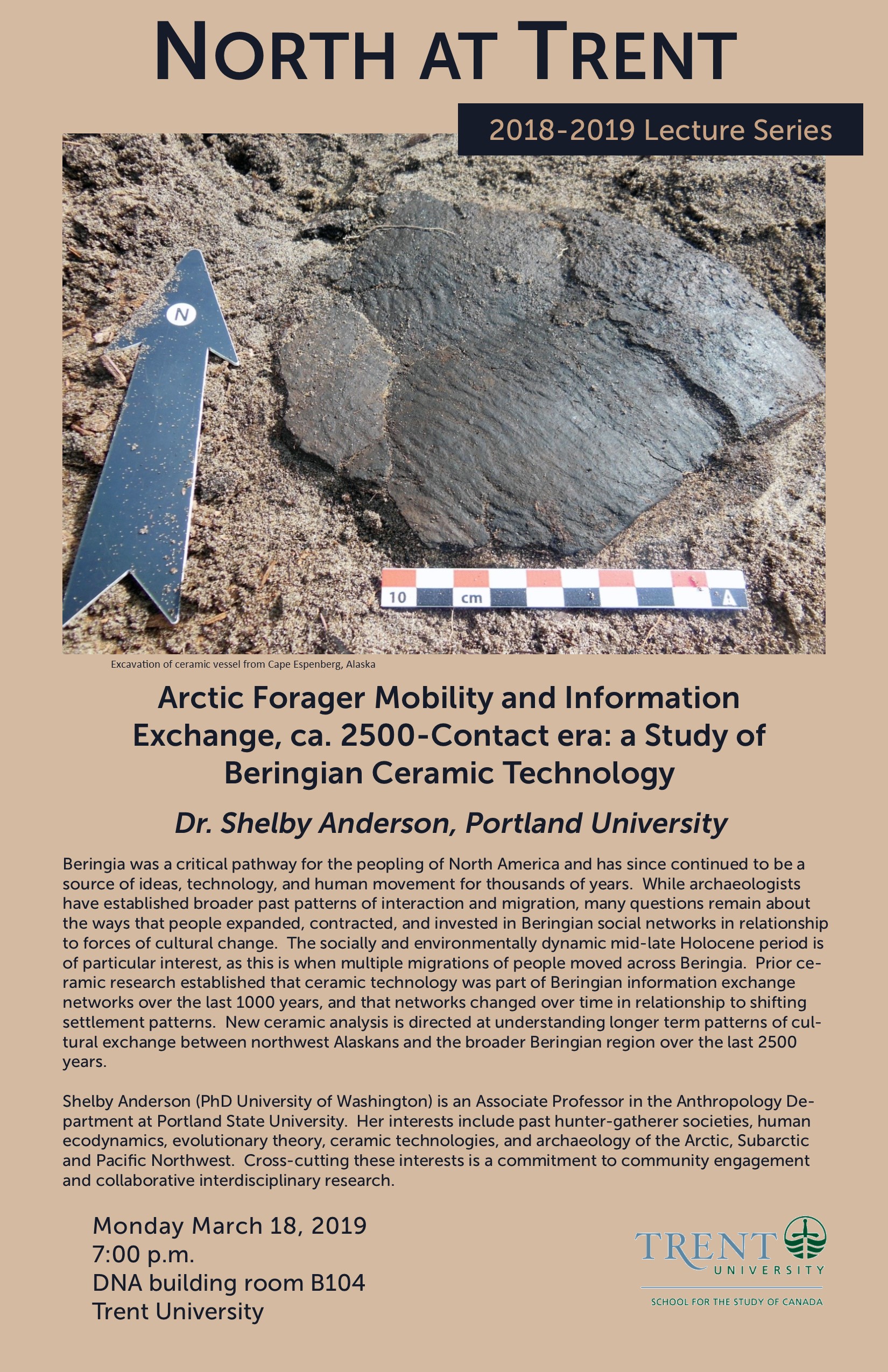
About the lecture:
Beringia was a critical pathway for the peopling of North America and has since continued to be a source of ideas, technology, and human movement for thousands of years. While archaeologists have established broader past patterns of interaction and migration, many questions remain about the ways that people expanded, contracted, and invested in Beringian social networks in relationship to forces of cultural change. The socially and environmentally dynamic mid-late Holocene period is of particular interest, as this is when multiple migrations of people moved across Beringia. Prior ceramic research established that ceramic technology was part of Beringian information exchange networks over the last 1000 years, and that networks changed over time in relationship to shifting settlement patterns. New ceramic analysis is directed at understanding longer term patterns of cultural exchange between northwest Alaskans and the broader Beringian region over the last 2500 years.
About our speaker:
Shelby Anderson (PhD University of Washington) is an Associate Professor in the Anthropology Department at Portland State University. Her interests include past hunter-gatherer societies, human ecodynamics, evolutionary theory, ceramic technologies, and archaeology of the Arctic, Subarctic and Pacific Northwest. Cross-cutting these interests is a commitment to community engagement and collaborative interdisciplinary research.
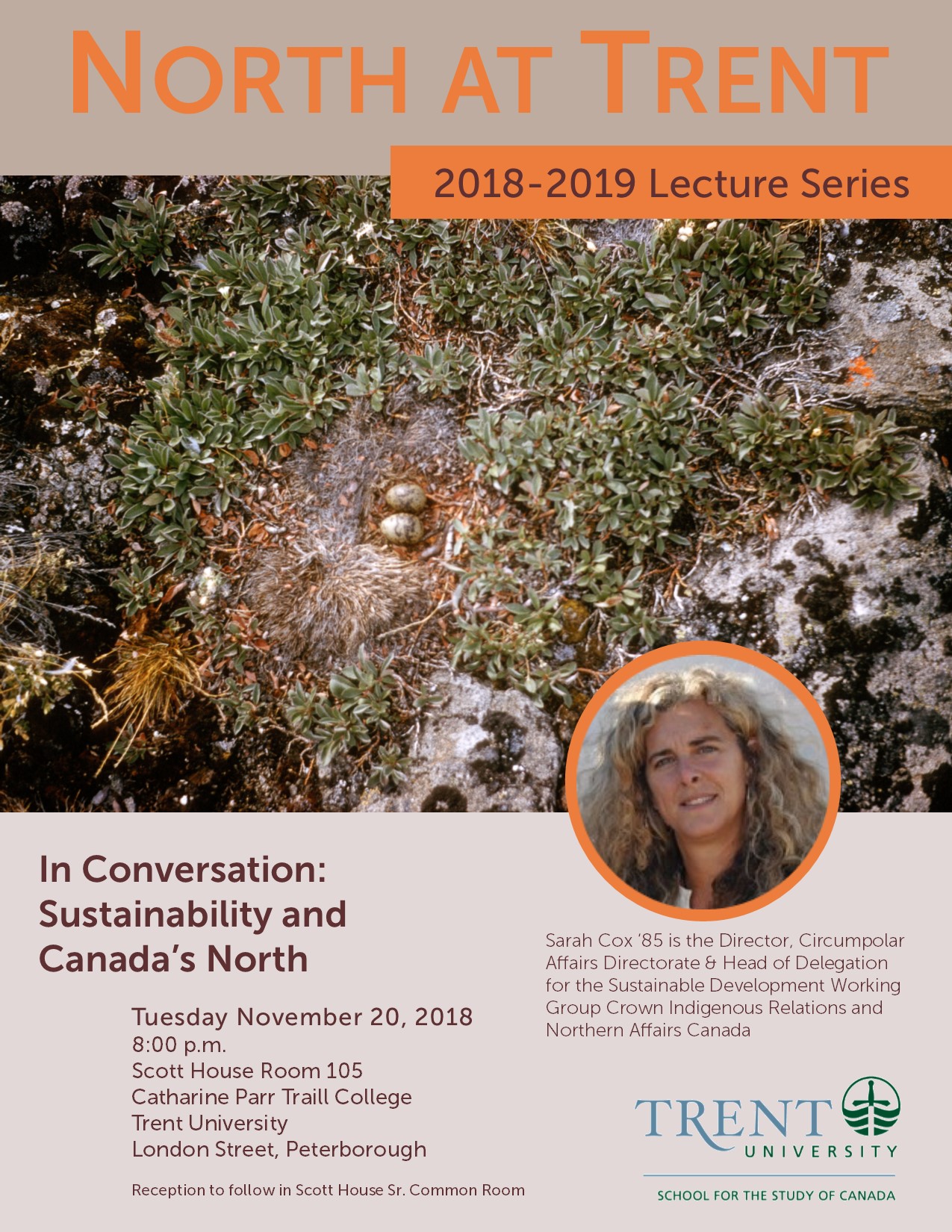
In Conversation: Sustainability and Canada's North
November 20, 2018 - Sarah Cox '85
Director, Circumpolar Affairs Directorate & Head of Delegation for the Sustainable Development Working Group Crown Indigenous Relations and Northern Affairs Canada
8:00 p.m. in Scott House room 105
reception to follow in Scott House Senior Common Room
Settling the North: Development of Communities in Northeast Asia
Tuesday January 29, 2019
2:00 p.m. in Bagnani Hall, Traill College, 310 London Street
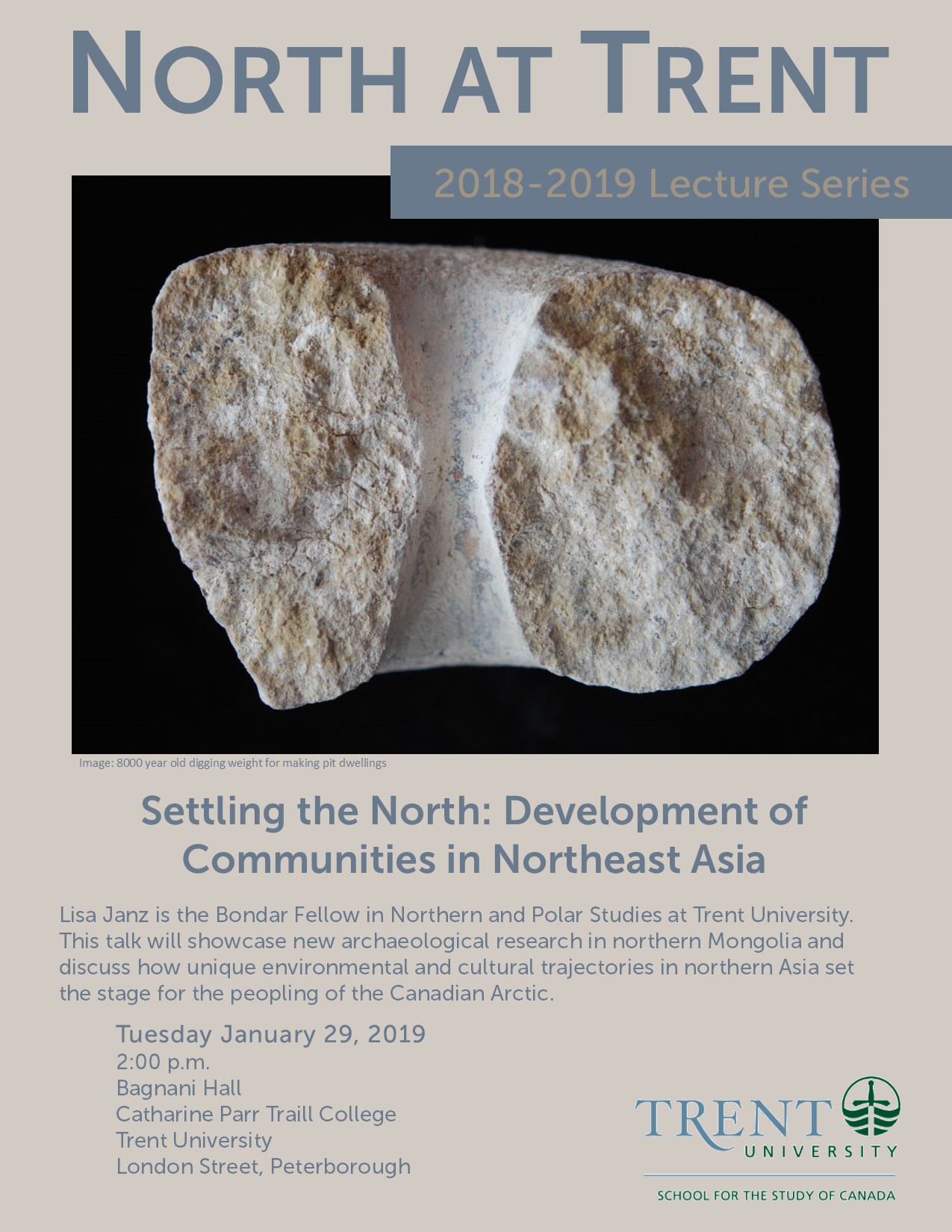
This talk, presented by Dr. Lisa Janz, will showcase new archaeological research in northern Mongolia and discuss how unique environmental and cultural trajectories in northern Asia set the stage for the peopling of the Canadian Arctic. Dr. Janz is the Bondar Fellow in Northern and Polar Studies at Trent University.
Polar Knowledge Canada: Leadership and Partnership in Arctic Research
Tuesday February 26, 2019
7:30 p.m. in Bagnani Hall, Traill College, 310 London Street
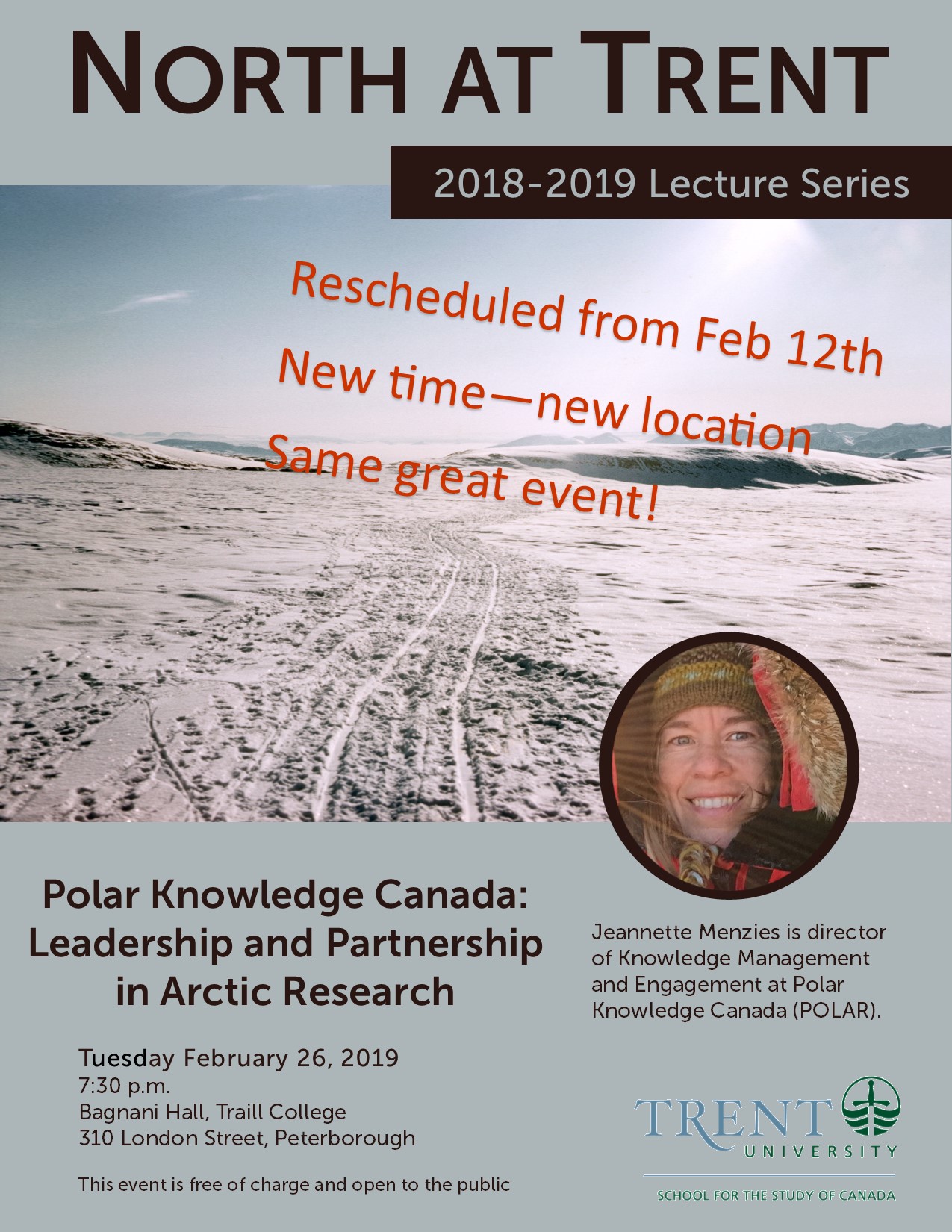
The Frost Centre is pleased to be able to present this rescheduled talk by Trent Alumnae Jeannette Menzies. Jeannette is director of Knowledge and Engagement at Polar Knowledge Canada (POLAR). She will be speaking of her experiences and connections to research being conducted in and about the arctic.
North at Trent 2018 Lecture Series
“Post-Glacial Palaeoecology and the Greening of the Gobi Desert”
January 24 - Dr. Lisa Janz
Roberta Bondar Fellow in Northern & Polar Studies, Trent University
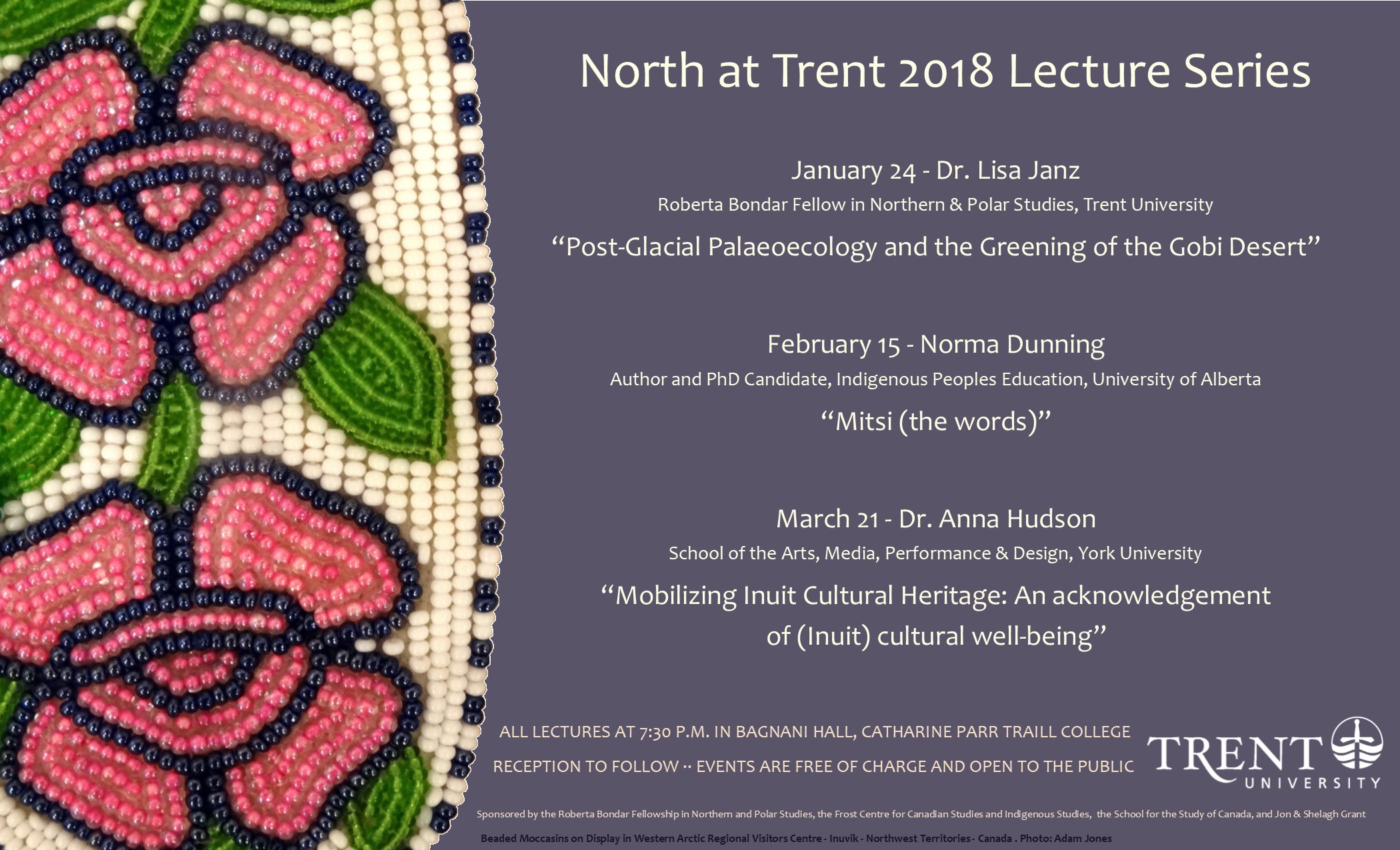
“Mitsi (the words)”
February 15 - Norma Dunning
Author and PhD Candidate, Indigenous Peoples Education, University of Alberta
“Mobilizing Inuit Cultural Heritage: An acknowledgement of (Inuit) cultural well-being”
March 21 - Dr. Anna Hudson
School of the Arts, Media, Performance & Design, York University
All lectures at 7:30 p.m. in Bagnani Hall, Catharine Parr Traill College
reception to follow ·· events are free of charge and open to the public
North at Trent 2017 Lecture Series
Putting the Cold War on Ice: Science, Sovereignty and Security in the Canadian Arctic During the Cold War, 1945-1972
Thursday, March 23, 2017
Dr. Daniel Heidt
Frost Centre Research Associate, Trent University
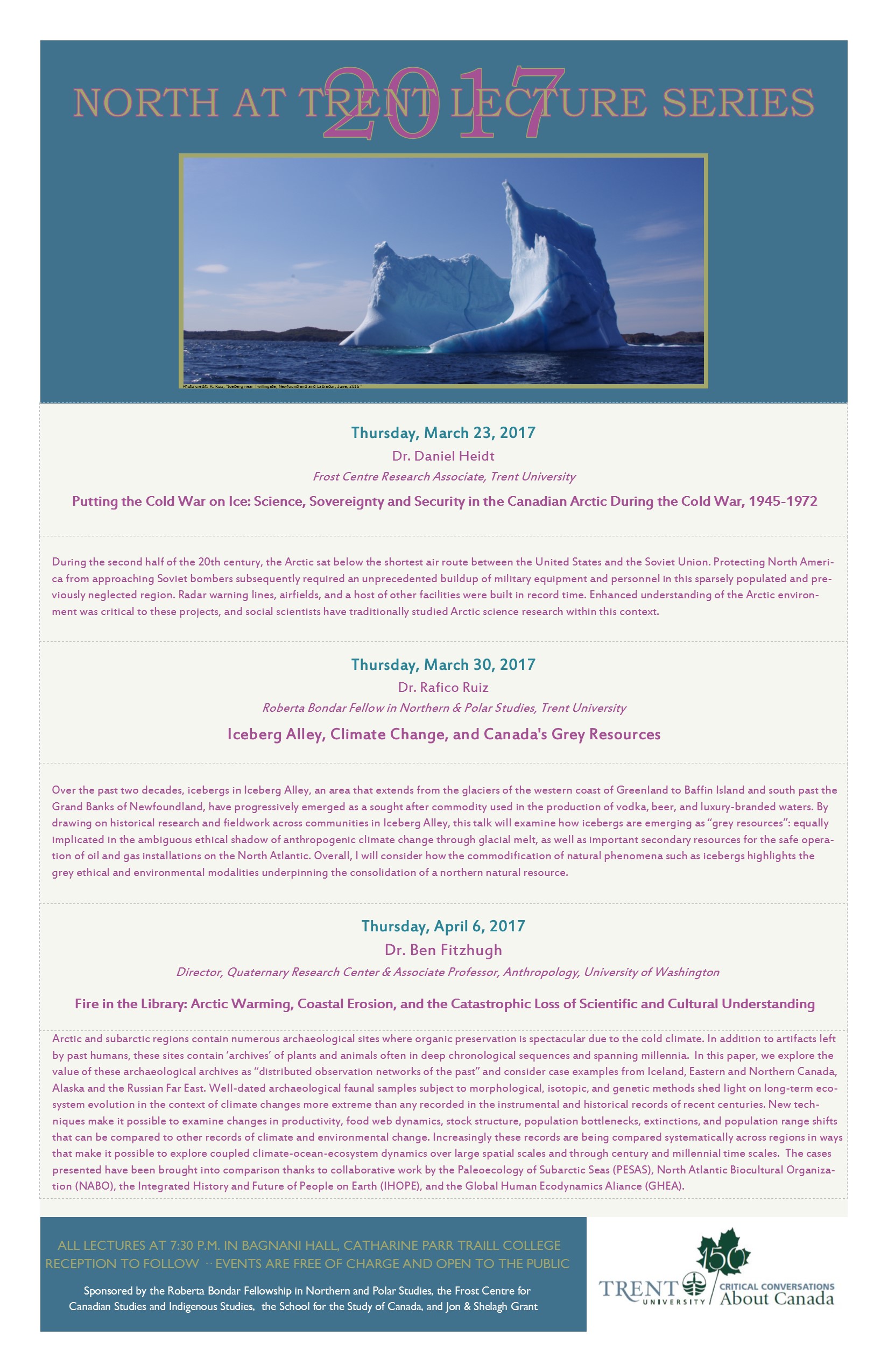
During the second half of the 20th century, the Arctic sat below the shortest air route between the United States and the Soviet Union. Protecting North America from approaching Soviet bombers subsequently required an unprecedented buildup of military equipment and personnel in this sparsely populated and previously neglected region. Radar warning lines, airfields, and a host of other facilities were built in record time. Enhanced understanding of the Arctic environment was critical to these projects, and social scientists have traditionally studied Arctic science research within this context.
Iceberg Alley, Climate Change, and Canada's Grey Resources
Thursday, March 30, 2017
Dr. Rafico Ruiz
Roberta Bondar Fellow in Northern & Polar Studies, Trent University
Over the past two decades, icebergs in Iceberg Alley, an area that extends from the glaciers of the western coast of Greenland to Baffin Island and south past the Grand Banks of Newfoundland, have progressively emerged as a sought after commodity used in the production of vodka, beer, and luxury-branded waters. By drawing on historical research and fieldwork across communities in Iceberg Alley, this talk will examine how icebergs are emerging as “grey resources”: equally implicated in the ambiguous ethical shadow of anthropogenic climate change through glacial melt, as well as important secondary resources for the safe operation of oil and gas installations on the North Atlantic. Overall, I will consider how the commodification of natural phenomena such as icebergs highlights the grey ethical and environmental modalities underpinning the consolidation of a northern natural resource.
Fire in the Library: Arctic Warming, Coastal Erosion, and the Catastrophic Loss of Scientific and Cultural Understanding
Thursday, April 6, 2017
Dr. Ben Fitzhugh
Director, Quaternary Research Center & Associate Professor, Anthropology, University of Washington
Arctic and subarctic regions contain numerous archaeological sites where organic preservation is spectacular due to the cold climate. In addition to artifacts left by past humans, these sites contain ‘archives’ of plants and animals often in deep chronological sequences and spanning millennia. In this paper, we explore the value of these archaeological archives as “distributed observation networks of the past” and consider case examples from Iceland, Eastern and Northern Canada, Alaska and the Russian Far East. Well-dated archaeological faunal samples subject to morphological, isotopic, and genetic methods shed light on long-term ecosystem evolution in the context of climate changes more extreme than any recorded in the instrumental and historical records of recent centuries. New techniques make it possible to examine changes in productivity, food web dynamics, stock structure, population bottlenecks, extinctions, and population range shifts that can be compared to other records of climate and environmental change. Increasingly these records are being compared systematically across regions in ways that make it possible to explore coupled climate-ocean-ecosystem dynamics over large spatial scales and through century and millennial time scales. The cases presented have been brought into comparison thanks to collaborative work by the Paleoecology of Subarctic Seas (PESAS), North Atlantic Biocultural Organization (NABO), the Integrated History and Future of People on Earth (IHOPE), and the Global Human Ecodynamics Alliance (GHEA).
North at Trent 2016 Lecture Series
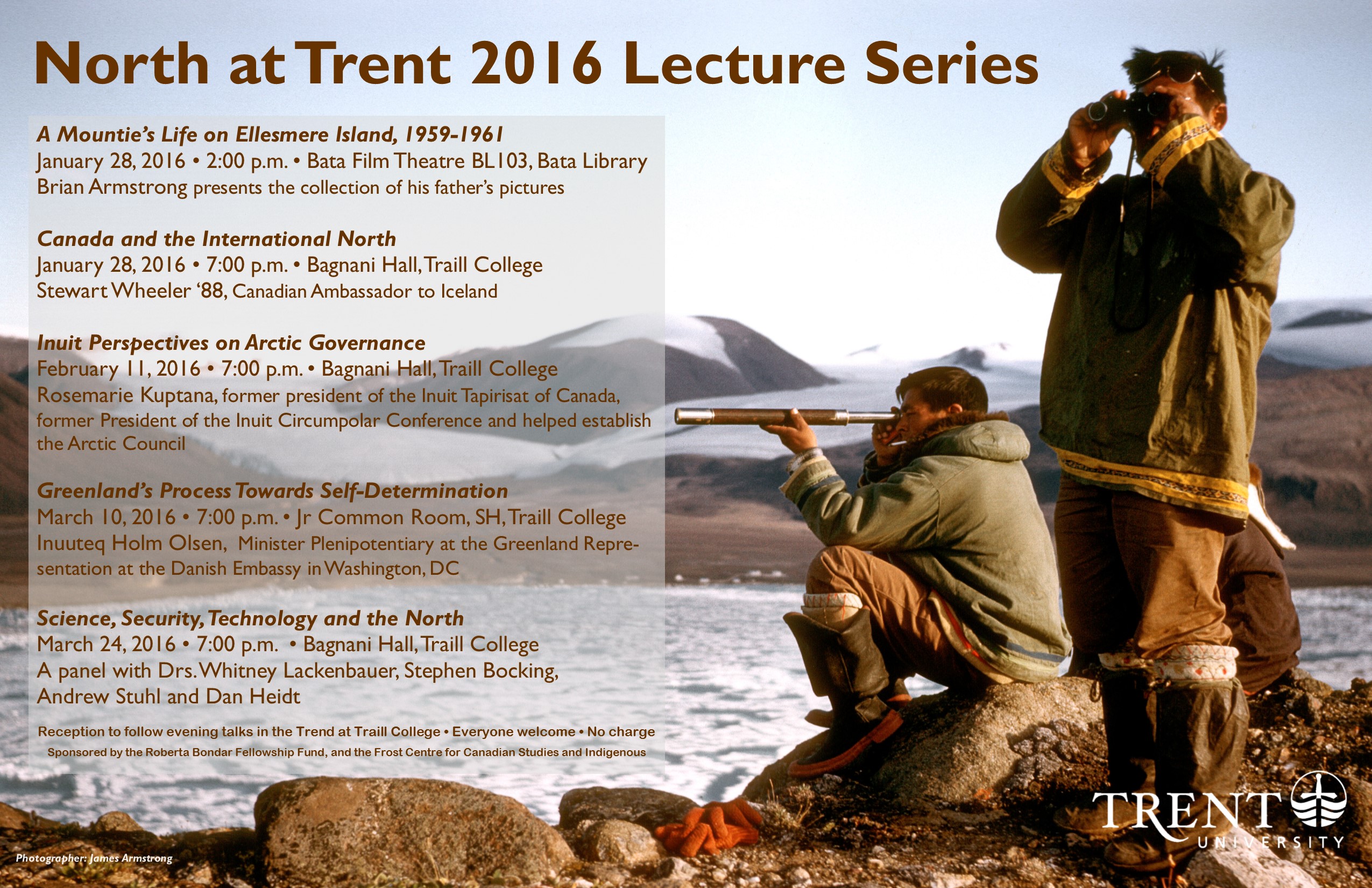
A Mountie’s Life on Ellesmere Island, 1959-1961
January 28, 2016 • 2:00 p.m. • Bata Film Theatre BL103, Bata Library
Brian Armstrong presents the collection of his father’s pictures
Canada and the International North
January 28, 2016 • 7:00 p.m. • Bagnani Hall, Traill College
Stewart Wheeler ‘88, Canadian Ambassador to Iceland
Trent University Trent graduate and current Canadian Ambassador to Iceland, Stewart Wheeler, offered reflections on his time in Iceland as his posting comes to an end.
Inuit Perspectives on Arctic Governance
February 11, 2016 • 7:00 p.m. • Bagnani Hall, Traill College
Rosemarie Kuptana, former president of the Inuit Tapirisat of Canada, former President of the Inuit Circumpolar Conference and helped establish the Arctic Council
Ms. Kuptana is a former president of the Inuit Tapirisat of Canada. She became involved in Inuit organizations around 1975 in discussions between Inuit and the Government of Canada regarding Inuit land rights. In 1979, she joined the Northern Service Branch of the CBC, and subsequently joined the Inuit Broadcasting Corporation as a Production Coordinator and as President from 1983-1988. From 1986 to 1989, she was the Canadian Vice-president for the Inuit Circumpolar Conference. From 1991 to 1996, She served as President of the Inuit Tapirisat of Canada where she led negotiations seeking recognition of the inherent right of self-government of indigenous peoples. In 1995-1996, Kuptana was President of the Inuit Circumpolar Conference and helped establish the Arctic Council. Kuptana has received many awards for her service in the protection of Inuit culture and Inuit rights: the Order of Canada, the Governor General’s Confederation Medal, the 1994 National Aboriginal Achievement Award and honourary doctorates from Trent and York Universities.
Rosemarie has published the text of her talk on her facebook page
Transcript of Rosemarie Kuptana's lecture
Greenland’s Process Towards Self-Determination
March 10, 2016 • 7:00 p.m. • Jr Common Room, SH, Traill College
Inuuteq Holm Olsen, Minister Plenipotentiary at the Greenland Representation at the Danish Embassy in Washington, DC
(video unavailable)
Science, Security, Technology and the North
March 24, 2016 • 7:00 p.m. • Bagnani Hall, Traill College
A panel with Drs. Whitney Lackenbauer, Stephen Bocking, Andrew Stuhl and Dan Heidt
(Event canceled due to weather)
North at Trent 2015 Lecture Series
UN Declaration: Blueprint for Reconciliation, Justice and Hope
February 10, 2015 • 7:30 p.m. • Bagnani Hall, Traill College
Paul Joffe and Jennifer Preston
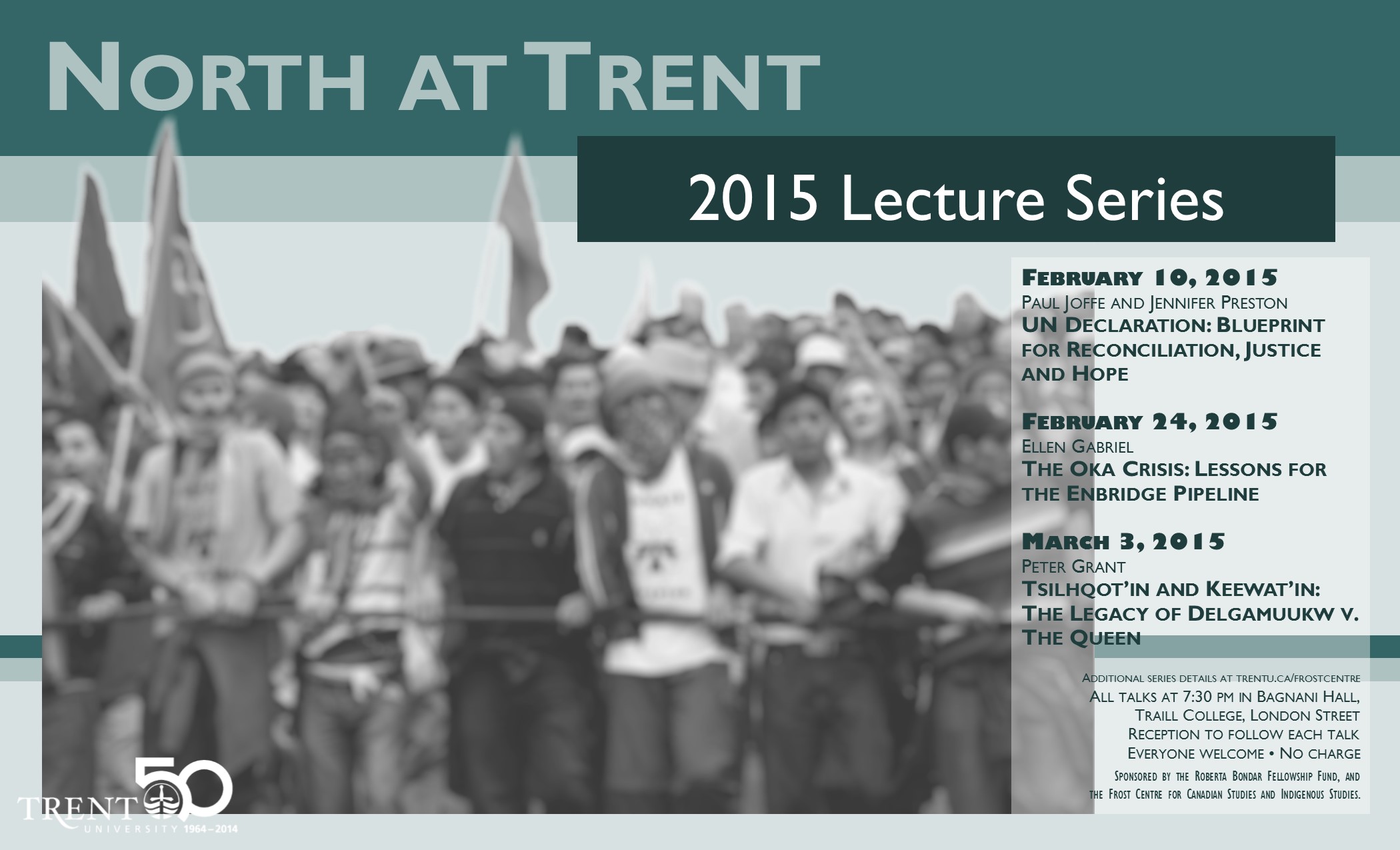
The Oka Crisis: Lessons for Enbridge Pipline
February 24, 2015 • 7:30 p.m. • Bagnani Hall, Traill College
Ellen Gabriel
Tsilhqot'in and Keewat'in: The Legacy of Delgamuukw v. the Queen
March 3, 2015 • 7:30 p.m. • Bagnani Hall, Traill College
Peter Grant