

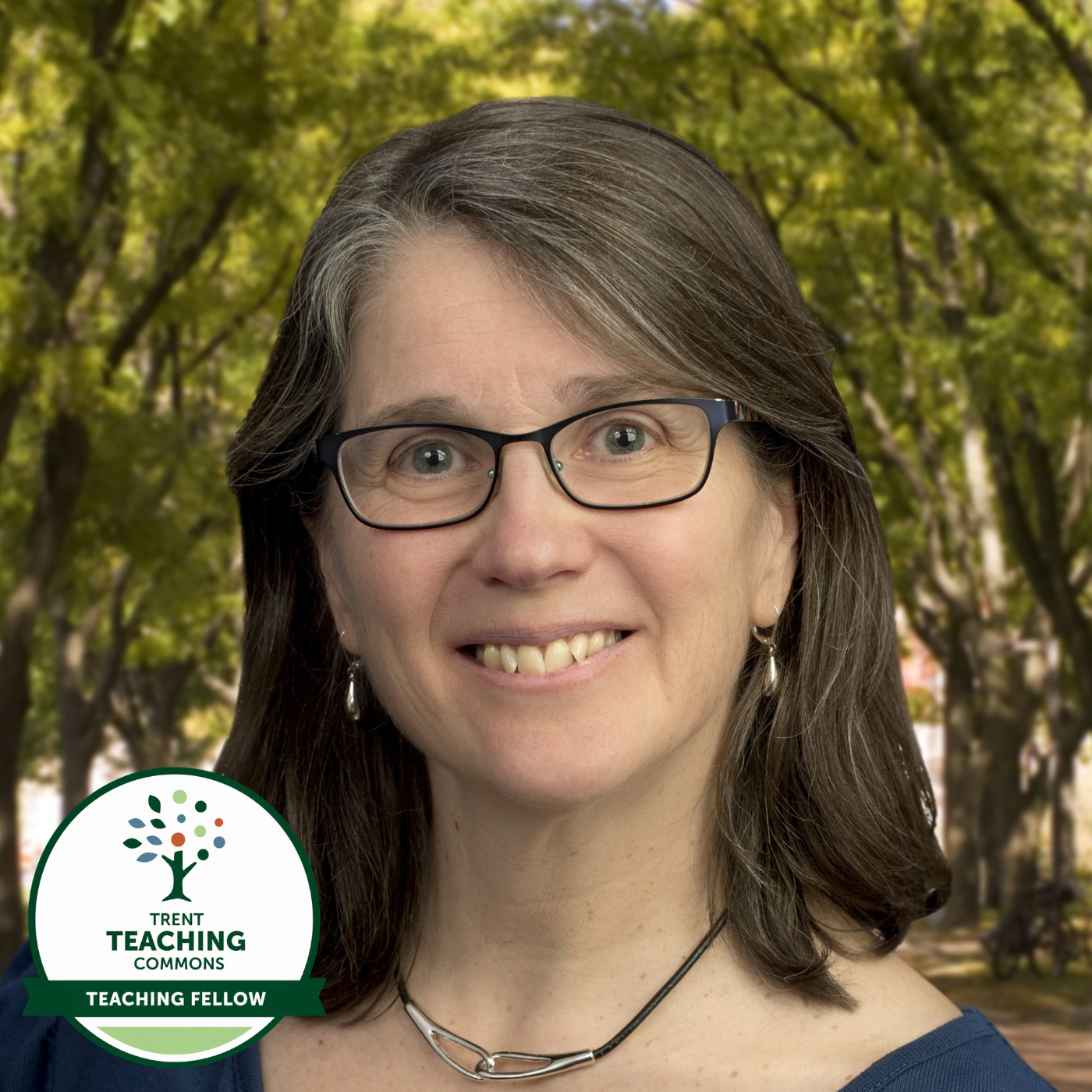
How did you become interested in the Scholarship of Teaching and Learning?
I have been interested in the Scholarship of Teaching and Learning right from the very first course I ever taught as a doctoral student in 1998, Critical Analysis of Research. The course was a passion of mine but not for the majority of my social work students because of fears about research encompassing logical analysis, math, and statistics. As an instructor, I felt compelled to create innovative ways of teaching the challenging aspects about research methods in an empowering, relevant, engaging, and motivating way. My approach led to a couple of peer-reviewed publications and in 2024, I co-authored an entire re-search methods textbook that brings in Indigenous and critical theory worldviews that are more aligned with social work principles (in addition to positivist and interpretivist perspectives).
What keeps you engaged or motivates you in the Scholarship of Teaching and Learning?
Changing and advocating for new ways of teaching—now more focused on de-colonizing practices—has been rewarding, particularly given the positive feedback from students. Creating a community of learners in the classroom where everyone feels included, respected, and challenged motivates me to continue this work.
What projects are you currently working on or hope to work on in the near future?
My most recent SoTL project has been a collaborative team effort titled “Creating more anti-/de-colonizing social work curriculums and pedagogy.” The results are not just about the findings from 22 social work educators across the country, but about my own personal journey and growth as a co-learner in the university environment, shifting everyday toward being a more respectful, inclusive, humble, kind person who is making a difference. My team and I are now in the process of writing manuscripts for publication about our findings, the de-colonizing methods we used (as non-Indigenous interviewers), and a decolonizing tree framework that emerged from the findings that can be used as a self-reflection tool. Our team is planning to continue broader knowledge mobilization beyond publications and is planning a subsequent study with a focus on student experiences.
SoTL publications or presentations:
Calderwood, K. A., Morgenshtern, M., & Absolon, K. E. (2024). Re-search methods in social work: Linking ways of knowing to knowledge creation. Canadian Scholars.
Calderwood, K., & Degenhardt, J. (2010). Accommodating a social work student with a speech impediment: The shared experience of a student and instructor. Journal of Social Work in Disability & Rehabilitation, 9(4), 235-253. https://doi.org/10.1080/1536710X.2010.523646
Calderwood, K. A., Harper, K., Ball, K., & Liang, D. (2009). When values and behaviors conflict: Immigrant BSW students' experiences revealed. Journal of Ethnic and Cultural Diversity in Social Work, 18(1), 110-128. https://doi.org/10.1080/15313200902874995
Calderwood, K. A., & Kvarfordt, C. L. (2023). Lessons learned from an in-house social work placement: Practicum students' views about a stress reduction peer support pilot project. Social Work Education, 43(6), 1534–1551. https://doi.org/10.1080/02615479.2023.2194337
Calderwood, K. A., & Rizzo, L. (2022). Co-creating a transformative learning environment: Results of a social work field placement duo-ethnography. Journal of Transformative Education, 21(1), 138-156. https://doi.org/10.1177/15413446221079590
Calderwood, K. A., & Rizzo, L. (2022). Meeting learning objectives in an in-house research placement: Results of a student-supervisor duo-ethnography. Social Work Education. 42(8), 1327–1343. https://doi.org/10.1080/02615479.2021.2021173
Calderwood, K. A. (2012). Teaching inferential statistics to social work students: A decision-making chart. Journal of Teaching in Social Work, 32(2), 133-147. https://doi.org/10.1080/08841233.2012.670065
Calderwood, K. A. (2002). Incorporating multiple epistemologies into teaching statistics to social work students. Journal of Teaching in Social Work, 22, 17-23. https://doi.org/10.1300/J067v22n01_03
SoTL interests:
- Qualitative methods
- Mixed methods
- Student engagement
- Indigenous pedagogies
- Trauma-Informed Pedagogy