
Sustainability Studies M.A.
Sustainability is in Trent’s DNA. As the leading institution for sustainability studies in Canada, Trent provides graduate students with advanced opportunities to drive your career forward.
The M.A. in Sustainability Studies features a customized individual study plan for each student, consisting of a balance of core and elective courses. Create your own Master’s degree with either a strong academic focus (thesis), or a more applied approach (major research paper), or choose our co-op path where you will have the opportunity to secure hands-on work experience with a paid co-op placement.
Graduates will find career opportunities and success in a number of realms, from academia to industry, to government and the non-profit sector. Have a direct impact on future policies and practices within your chosen field, or consider pursuing further studies at the doctoral level. Guided by complementary course instruction in research methods, professional development, leadership and entrepreneurship, you’ll acquire the tools and expertise necessary to address complex social and environmental challenges in practical ways.

You can imagine a more sustainable way of life. Now, make it a reality. Prepare to work in one of the fastest-growing markets in the world. Sustainability experts are in high demand across all sectors. In this acclaimed program — the first of its kind in Canada — you’ll have the opportunity to tailor your educational experience while making a real-world impact. Advance your pursuit for positive change, as you explore the interconnectedness of environmental sustainability, economic prosperity, and social responsibility.
The MA in Sustainability Studies offers a variety of avenues to apply your learning and build skills for your career as a sustainability professional. Our co-op stream includes a paid summer placement where students gain real-world experience in a range of governmental, not-for-profit, and corporate sustainability settings. Students in all steams benefit from project-based learning in core courses, where they research and develop solutions to pressing sustainability problems in our community. And as part of our community colloquium, students build their network through connections to sustainability professionals in their chosen field.

Trent has been home to two Nobel Prize Winners.
10 Canada Research Chairs conduct innovative research at Trent.
We are proud to be one of the Top 3 Greenest Campuses in Canada
Eligibility Requirements
- B.Sc. or B.A. honours degree (a four year undergraduate bachelor's degree) in a related field
- Minimum A- (80%) or equivalent in the last two years of full-time study, or last ten full academic credits
- Appropriate previous education and training, plus feasible proposed course of study and research project
- A foundation in appropriate research methodology
Eligibility Requirements
- B.Sc. or B.A. honours degree (a four year undergraduate bachelor's degree) in a related field
- Minimum A- (80%) or equivalent in the last two years of full-time study, or last ten full academic credits
- Appropriate previous education and training, plus feasible proposed course of study and research project
- A foundation in appropriate research methodology
- Proof of English Proficiency: All international applicants must provide proof of an adequate level of English proficiency regardless of their citizenship status or country of origin. Please visit our How to Apply: International page for details on English Language Proficiency requirements
- A GRE test score is not required for admission into this program
All applicants, domestic and international, must submit the following documents to complete their application:
- Transcripts: Unofficial copies of all post-secondary transcripts
- 2 letters of reference: Academic references are required. Reference forms will be emailed to the referees that you have appointed on OUAC
- Plan of Study/Personal Statement: 1-2 pages outlining your objectives in a graduate program. Any specific research interests, relevant experiences, and/or career aspirations can be included
- Writing Sample: A sample of your writing of about 20 pages or less. The preferred submission format is PDF. Good choices for writing samples include: an undergraduate essay, lab report, research report, journal article, a chapter from a masters thesis, or a published article.
- Detailed Resume or Curriculum Vitae
- Proof of Citizenship (ie. copy of passport or birth certificate)
- Supervisor: A potential supervisor must be chosen as an admission requirement for this program. Please list your supervisor on your OUAC application and discuss this in your plan of study. Please visit the program's Faculty and Research page for a listing of faculty and areas of research. Applicants are responsible for reaching out to a faculty member to seek approval prior to submitting their application
For more information on submitting transcripts, re-sending reference links and other application questions, please visit our How to Apply: Domestic or International pages and review Step 4, as well as review our Frequently Asked Questions (FAQ).
Learn more about tuition & fees
Eligible full-time students are offered minimum funding packages during their funded period of $18,000 annually. This includes a Graduate Teaching Assistantship employment offer valued at approximately $13,000 annually. Specific funding details are included in individual admission letters.
Students are supported in competing for external awards during their studies, such as the Ontario Graduate Scholarship. A full list of external awards is available on our Scholarships and Awards page.
Trent has clear pathways for graduate students to apply and be admitted to study for their master's or doctorate at either of our campuses. Please review admission requirements for your program before applying.
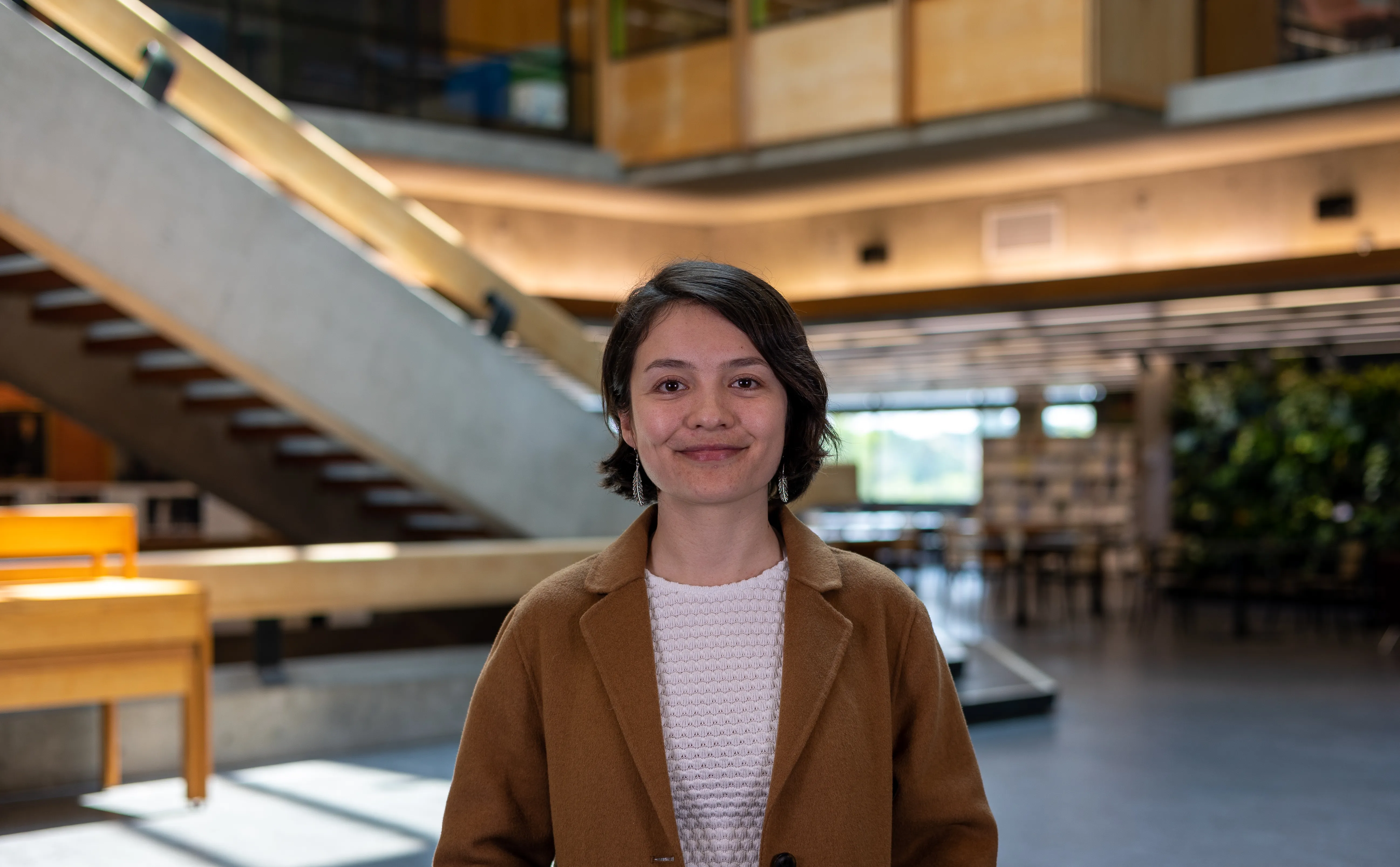
I chose Trent as it was scored as one of the best universities focusing on the environment in Canada. My undergrad taught me about environmental engineering and sustainability. However, I believe the MASS program helped me refocus on community. I really appreciate the guidance offered by the professors that were involved in the program.

Dr. Rutherford’s research thinks about justice – for both humans and nonhumans. She has current research projects that explore environmental inequality in Peterborough, climate justice from a multispecies lens, and wildlife coexistence strategies.

Dr. Zohar’s research examines the processes and enabling conditions that promote the translation of visions and missions of sustainability into successful organizing strategies and actions. He has played a leadership role in introducing sustainability into both undergraduate and graduate programs at Trent and beyond.