
The Event
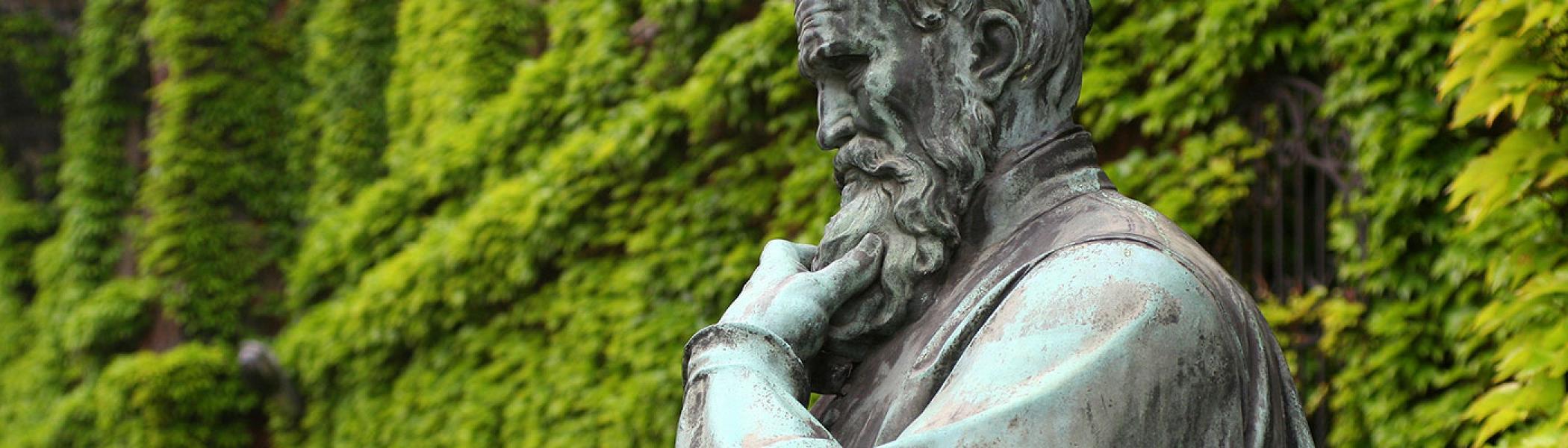
The Ryle Lecture Series is a prestigious annual event hosted by the Philosophy Department at Trent University, bringing some of the world’s most distinguished philosophers to campus. The origin of the series dates back to 1971, when renowned British philosopher Gilbert Ryle visited Trent to give a public lecture, marking a significant moment for the then-young department. In recognition of his contribution, Ryle was awarded a Doctorate of Letters by the university.
Following Ryle’s visit, the department welcomed several other prominent philosophers to give public talks, including Emil Fackenheim, Carl Hempel, and Terence Penelhum. In 1976–77, the lecture series was formally established by Professor David Gallop, with support from the Matchette Foundation. The inaugural lectures were delivered by Sir Anthony Kenny of Oxford on the topic of free will and responsibility. Originally known as the Matchette Lectures, the series was renamed the Gilbert Ryle Lectures after A.J. Ayer’s participation in its third year, to honour Ryle’s foundational role.
Since then, the Ryle Lectures have grown into a major intellectual event at Trent, offering a series of three public talks and informal engagement between visiting philosophers, students, and faculty. The lectures consistently draw large and diverse audiences from both the university and the broader Peterborough community. Today, the Ryle Lectures are no longer funded by the Matchette Foundation but continue thanks to the generous support of donors, including Trent alumni, emeritus professors, current faculty, and members of the wider community.
The Next Series
Speaker:
To Be Announced
Topics:
To Be Announced
Dates and Times:
To Be Announced
The Most Recent Series
Peering Past the Limits of Philosophy
2024 Ryle Lectures: March 18, 19, 20 at 5pm
Professor Eric Schwitzgebel
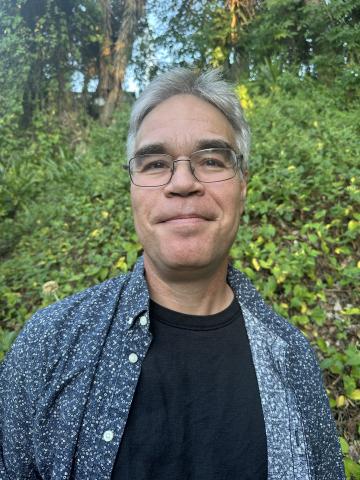
Eric Schwitzgebel has been a professor of philosophy at University of California, Riverside, since 1997. He has published four books and over a hundred articles on a wide range of topics, including: the nature of belief (belief is more about walking the walk than talking the talk); theories of consciousness and introspection (he's skeptic about all theories and about all but the most obvious introspective reports); the relationship between moral reflection and moral behavior (especially the not-particularly-ethical behavior of ethics professors); robot rights (including what to do if we don't know whether our robots are conscious); and philosophy of science fiction (including having published several weird short fictions of his own in leading SF venues). His most recent book, forthcoming with Princeton University Press, is The Weirdness of the World.
Talks:
1. Monday, March 18, 2024, 5pm, Trent Student Centre 1.07, Event Space
"Walking the Walk": Do ethicists have any particular obligation to live according to the norms they espouse? Or instead, to paraphrase Max Scheler, can a sign point to Boston without needing to go there?
2. Tuesday, March 19, 2024, 5pm, Trent Student Centre 1.07, Event Space
"Falling in Love with Machines": People are starting to fall in love with Large Language Models. If this becomes common, it will precipitate a social and moral crisis that our best ethical theories are radically unprepared to handle
3. Wednesday, March 20, 2024, 5pm, Enwayaang Building, Room 106
"Intelligent Aliens Would Be Conscious; Intelligent Robots Maybe Not": If a naturally evolved alien species acts as if it's intelligent, the best explanation is probably that it has whatever it takes to be conscious. However, if a robot acts as if it's intelligent, it might just be a mimic.
This year’s lectures are supported by the Office of Provost & VP Academic, the Cultural Studies Department, Kenneth Mark Drain Chair in Ethics, Lady Eaton College, and by funds from members, alumni, and friends of the Department of Philosophy.
1976-2023
Past Gilbert Ryle Lecturers: 1976-2023
- 2022-23: Jennifer Nagel, New Frontiers in Social Cognition
- 2018-19: Luciano Floridi, Cut and Paste: Making Sense of our Digital Realities
- 2017-18: Jason Stanley, How Fascism Works
- 2016-17: Catherine Wilson, Life According to Nature
- 2015-16: Leo Groarke, Words, Pictures, Arguments: What Happens to Logic in an Age of Pictures?
- 2014-15: Richard Swinburne, God and Christian Morality
- 2013-14: Harry Brighouse, Justice and Educational Policy
- 2012-13: Claudia Card, Surviving Atrocities
- 2011-12: Sally Haslanger, Doing Justice to the Social
- 2010-11: Anthony Grayling, Forms of Liberty: The Evolution of an Idea and its Applications
- 2009-10: Paul Boghossian, Rules, Relativism and Reduction
- 2008-09: No Ryle lectures this year.
- 2007-08: Nancy Fraser, Abnormal Justice
- 2006-07: Simon Blackburn, Pragmatism, Minimalism, and Common-Sense
- 2005-06: Evelyn Fox Keller, Self-Organization" and the Problem of Life
- 2004-05: Alvin Plantinga, Christian Belief and Science: surface conflict, deep discord: Naturalism and Science: surface concord, deep conflict
- 2003-04: Iris Marion Young, Political Responsibility and Structural Injustice
- 2002-03: Drucilla Cornell, Whose Development?: Freedom,Equality, and Globalization
- 2001-02: Dennis Dutton, Art and Human Evolution
- 2000-01: G. A. Cohen, Rescuing Justice from Constructivism
- 1999-2000: Susan Haack, Defending Science - Within Reason
- 1998-99: Paul Churchland, New Light on Some Old Philosophical Problems: How Computational Neuroscience Illuminates Mind, Meaning, and Morals
- 1997-98: Thomas P. Kasulis, A Cultural Philosophy of Relationship—Intimacy vs. Integrity
- 1996-97: Kenneth Schmitz, The Recovery of Wonder - Unmakable Things and the New Freedom
- 1995-96: Francis Sparshott, The Future of Aesthetics
- 1994-95: Calvin O. Shrag, The Portrait of the Self—After Postmodernity
- 1993-94: No lecture this year.
- 1992-93: William Newton-Smith, The Nature of Rationality
- 1991-92: Jonathan Glover, Ethics: Lessons From the Nazi Period
- 1990-91: Alan Donagan, The Cartesian Myth Revisited (Cancelled)
- 1989-90: Martha Nussbaum, Aristotelian Politics—Human Functioning and Social Structure
- 1988-89: Daniel J. O’Connor, Time and Free Will
- 1987-88: Tom Regan, Individualism Reconsidered
- 1986-87: David Gallop, Reminations
- 1985-86: David Kaplan, Word and Belief
- 1984-85: Bernard Williams, Social Justice
- 1983-84: Errol Harris, Time and the World
- 1982-83: Donald Munro, Images of Human Nature
- 1981-82: Mary Midgley, Wickedness
- 1980-81: Richard Taylor, Directions of Moral Philosophy
- 1979-80: Robert Paul Wolff, The Language of Marxian Economics
- 1978-79: A. J. Ayer, Hume’s Philosophy Reappraised
- 1977-78: William Dray, Theories of History
- 1976-77: Master Anthony Kenny, Free Will and Responsibility