
Certain images are scalded into our memory. Regardless of time or distance, these images are too powerful to be forgotten. These are the moments that shake us so deeply that they re-shape us.
Lago Agrio is a small dusty town on the Colombian-Ecuadorian border. It’s a town that is ruled by drug lords, petroleum machos, and police looking for bribes. But in between, and on the outskirts, are the quiet hardworking families, campesinos and indigenous people who struggle to survive.
The first time I was in Lago Agrio – five years earlier, I saw only the surface. On a trip that forever captured by heart, we followed a spectacular winding river, the Aguarico, into the Amazon Basin. There, we had the fortune of seeing the spellbinding beauty that iridescent butterflies and freshwater pink dolphins dance for. And now, years later, I am thankful that these were my initial impressions; that I was able to see this sacred place in an unscarred state first.
When I returned, our purpose was different. Lago Agrio is one of the first major pumping stations that amasses the petroleum extracted from wells located throughout Ecuador’s Amazon and funnels it into one of two pipelines that runs up the Andes and back down to the Pacific coast for export. It is estimated that more than twice the Exxon Valdez has been spilt in Ecuador’s Amazon, but less than a fraction of it has been cleaned up. While the carcinogenic and toxicological effects of petroleum contamination are well documented, it was hard for me to grasp the gravity of these projects until I saw them firsthand. But these images are now scalded into my memory.
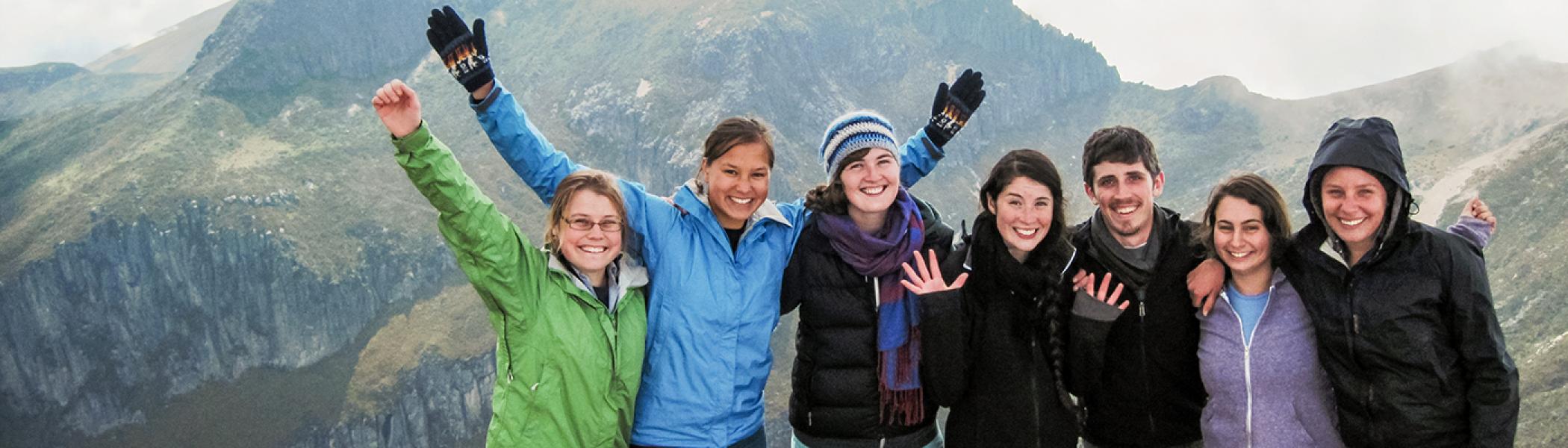
The second time I travelled to Ecuador was through the Trent-in-Ecuador Program. And while I couldn’t fully comprehend it at the time, with the distance of a decade, I can see that this Program profoundly shaped my decision to practice environmental and aboriginal law.
When I found myself cross-examining the executives and experts for the Enbridge Northern Gateway Pipeline project this fall, I thought of the exceptional Ecuadorian families, campesinos and indigenous people who are directly affected by petroleum contamination and are forced to cope with petroleum related health problems. I continue to draw inspiration from the lawyers, doctors and activists I worked with in Ecuador to document the impacts of petroleum contamination. Collectively, these people taught me about the fundamental need to carefully evaluate, and fully comprehend, the likely social, cultural and environmental impacts of an oil pipeline, and its related oil contamination, prior to approving a project.
The National Energy Board’s review of the proposed Enbridge Northern Gateway Pipeline project makes it clear that Canada, like Ecuador, is struggling to reconcile the risks and benefits of the petroleum extractive industry. Public evaluations of these types of projects are necessary: they provide an arena for defining national policies, they require us to evaluate the benefits against the burdens, and ultimately, they shape the future of our Nation.
When I left for Ecuador, I didn’t expect that this is where I would end up.