
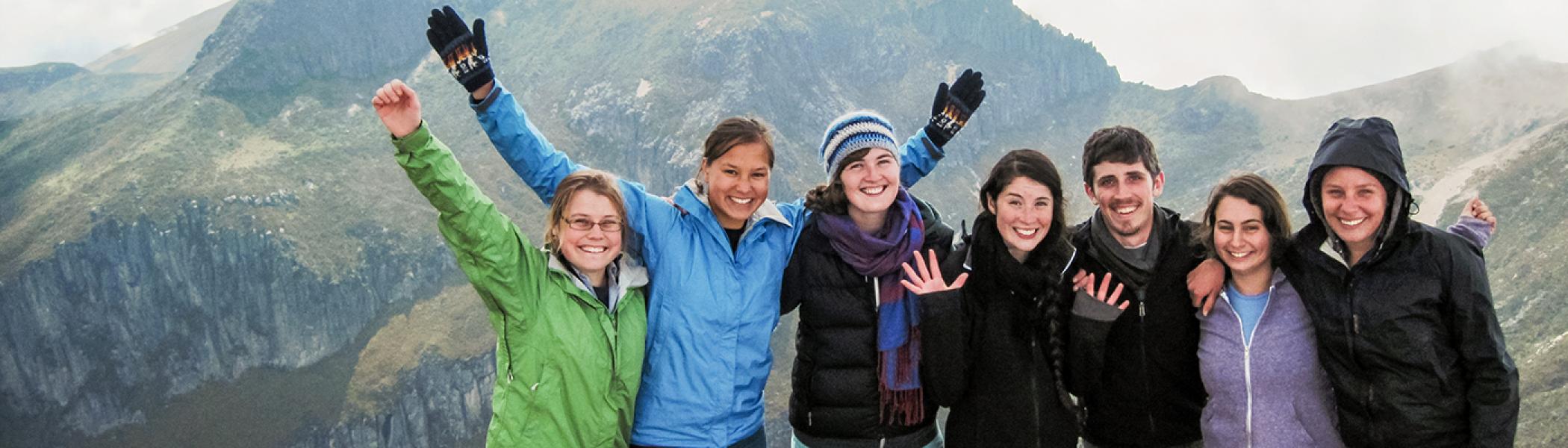
The Trent-in-Ecuador program is a challenging and necessary experience for any student of International Development. It is a way to confront the divide between our theoretical explorations and conversations in the classroom and the realities of everyday life, particularly in the context of living in a place profoundly different from what one is accustom to. It gave me the opportunity to explore not only important academic questions, but also arguably more complex issues of identity and my own place within the IDST field. Far more often than not, if we don't take that step outside of 'our' classroom and challenge ourselves to question the basis of what we are studying, we will not encounter these types of enriching experiences that shift our perspectives and understandings of the world and our relation to it.
The Trent-in-Ecuador program is what you make of it as a student, as all education is. One's immersion in Spanish and the academics, activists and friends that you meet along the way, all play an integral part in your year. Since graduating from the IDST program I have continued living in Ecuador, completing a CIDA internship in community relations at a university, following which I worked in the field of international education. Currently I am enrolled in an Erasmus Mundus Masters program in Europe exploring questions of international migration and social cohesion. My trajectory since I have finished my university degree has been profoundly influenced by my experiences during the Trent-in-Ecuador program. It helped me foster the drive to constantly seek new challenges, step out of my comfort zone and value the plurality of thought found within the international realm. It was a key foundational experience that influenced my perspective on issues of social justice and global critical education within my life and work, which has led me to explore the politics of knowledge production and critical social research.