
Graduate
Psychology
-
- Doctorate (Ph.D.)
-
- Peterborough
-
- Fall
At a glance:
- Degree Doctorate (Ph.D.)
- Campus Peterborough
- Program is Offered Fall
- Study Options Full time
- Length Thesis: 4 years
- Guaranteed Funding Yes (for eligible students)
- Applications Open September 11
- Application Deadline February 1
- Deposit Required No
- Graduate Studies Contact psychologygrad@trentu.ca
- Apply Now Stay in Touch
The Trent Advantage
Meaningful questions lead to meaningful answers and opportunities. Grow your knowledge, writing, and research skills to conduct advanced doctoral research in psychology.
Gain the core knowledge, skills, and methodological expertise to conduct advanced research in psychology and become a producer of original scholarly research. In Trent’s Psychology Ph.D. program, you will engage in research directed towards understanding how cognitive, neurobiological, developmental, and social processes drive and shape human behaviour, personality, health, and well-being. Develop the research skills and professional expertise to pursue careers in academia, industry, government, or community-related fields.
- Choose from three areas of research: Behavioural and Cognitive Neuroscience; Developmental Psychology; or Social, Health & Personality Psychology.
- Draw on multidisciplinary research across the Social and Natural Sciences, developing advanced research methods and area-specific expertise through comprehensive doctoral training.
- Pursue applied research opportunities through partnerships and collaborations with external communities, professions, and other institutions.
Program Types
-
Thesis
Complete Trent's four-year Ph.D. designed to develop the knowledge, skills, and research experience needed to make meaningful contributions to the field of Psychology. Through advanced training and original scholarly research, students prepare for careers as independent researchers and scholars.
Research Areas
Areas of academic research focus and faculty expertise
Trent's Psychology Ph.D. draws on multidisciplinary faculty research strengths across the social sciences and natural sciences. Ph.D. students develop innovative research that advances knowledge and contributes to teaching, learning, and student development. Doctoral students can pursue research in one of three fields of study:
- Social, Health, and Personality Psychology
- Behavioural and Cognitive Neuroscience
- Developmental Psychology
Career Paths
In Their Own Words
I've learned and grown a lot as a person and researcher so far in the Psychology PhD program at Trent. I've gotten to be a part of some really exciting research projects on personality, post-secondary education, and mental health while working and interacting with amazing professors and researchers in the department. I really appreciate the one-on-one time faculty and staff give you in the Psychology department at Trent and the research, statistical analysis, and communication skills that they've helped me to develop.
Colin Henning
Psychology Ph.D. Student

Faculty Spotlight
Meet some of Trent's world-class professors and researchers.

Dr. Terry Humphreys
Graduate Director and Professor, Psychology
Dr. Humphreys' academic/research interests focus on the negotiation of sexual consent in multiple contexts; sexting behaviour in young adults; and first sexual experiences. He is currently the editor-in-chief of the Canadian Journal of Human Sexuality, a consulting editor for the Journal of Sex Research and a vice-chair of the Scientific Committee for the World Association of Sexual Health (WAS). He has also been the past president of both the Society for the Scientific Study of Sexuality (SSSS) in the United States, and the Canadian Sex Research Forum (CSRF) in Canada.

Dr. Liana Brown
Associate Professor, Psychology and Kinesiology
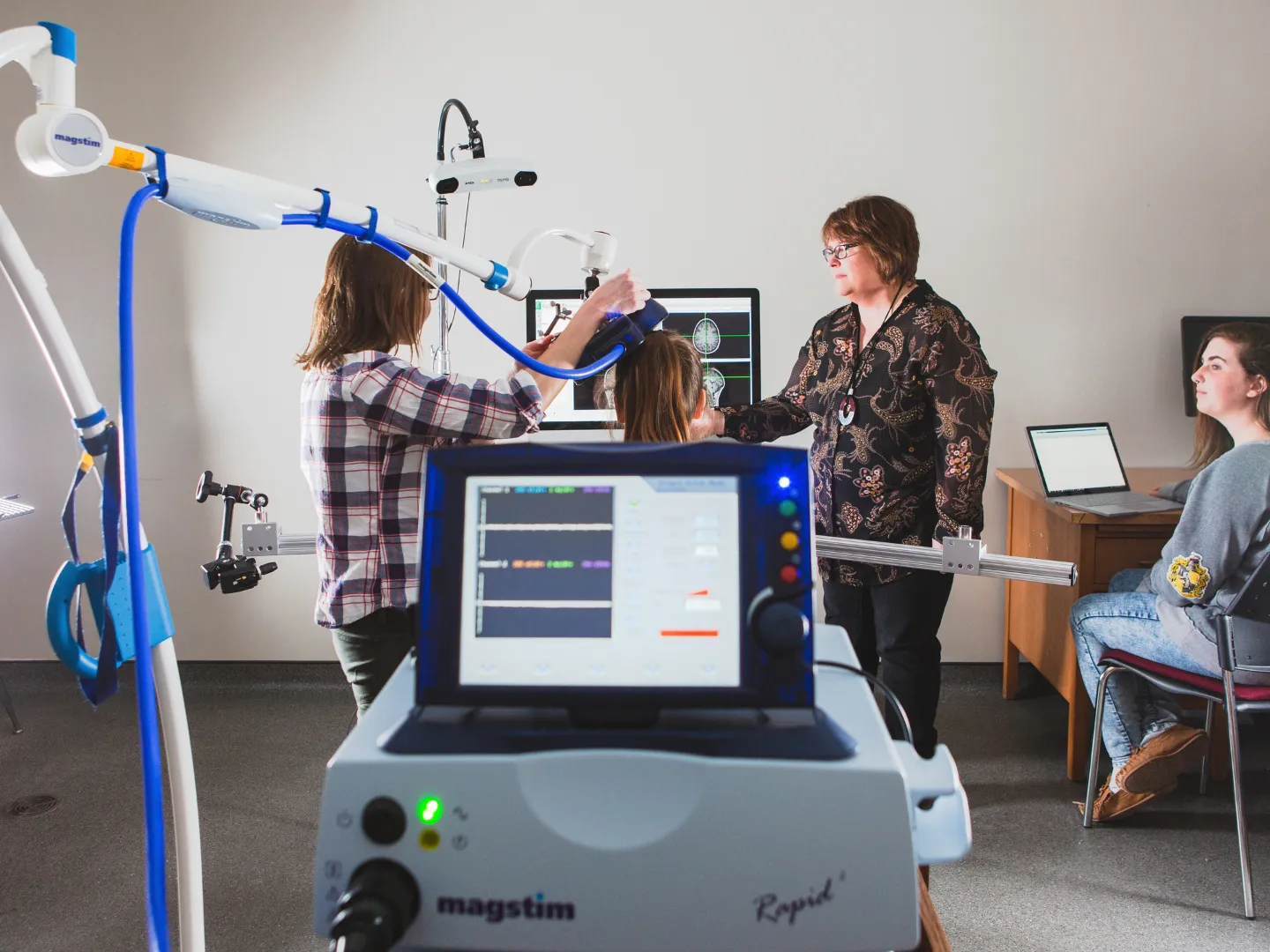
In the ACT Lab, Dr. Brown leads research at the intersection of psychology, kinesiology, and neuroscience to answer fundamental questions about how people learn and perform skilled movements. She has a long-standing interest in how senses like vision and proprioception contribute to movement performance and in how perception, action, and cognition are affected by brain injuries and neurological disorders. Learn more about our current research projects: actlab.squarespace.com/research.
Admissions
Trent has clear pathways for graduate students to apply and be admitted to study for their master's or doctorate at either of our campuses. Please review admission requirements for your program before applying.
Eligibility Requirements
- M.Sc., M.A. or equivalent degree in Psychology or a related field. Applicants with a course-based M.A./M.Sc. degree will not typically be considered
- Minimum A- (80%) or equivalent overall in the master's degree
- Must have completed at least 1 credit in Statistics or Experimental Design at the graduate level
- Aptitude for research inquiry as determined by the completion of an original graduate (dissertation) project and demonstrated excellence in scholarly written as determined from the submission of a written sample from the applicants MSc/ MA studies. Submission of a first-author manuscript/ publication is permissible with an accompanying letter from the corresponding author confirming the primacy of the applicant’s contribution to the paper
Eligibility Requirements
- M.Sc., M.A. or equivalent degree in Psychology or a related field. Applicants with a course-based M.A./M.Sc. degree will not typically be considered
- Minimum A- (80%) or equivalent overall in the master's degree
- Must have completed at least 1 credit in Statistics or Experimental Design at the graduate level
- Aptitude for research inquiry as determined by the completion of an original graduate (dissertation) project and demonstrated excellence in scholarly written as determined from the submission of a written sample from the applicants MSc/ MA studies. Submission of a first-author manuscript/ publication is permissible with an accompanying letter from the corresponding author confirming the primacy of the applicant’s contribution to the paper
- Proof of English Proficiency: All international applicants must provide proof of an adequate level of English proficiency regardless of their citizenship status or country of origin. Please visit our International Applicant Resource page for details on English Language Proficiency requirements.
- A GRE test score is not required for admission into this program
All applicants, domestic and international, must submit the following documents to complete their application:
- Transcripts: Unofficial copies of all post-secondary transcripts
- 2 letters of reference: Academic references are required. Reference forms will be emailed to the referees that you have appointed on OUAC
- Plan of Study/Personal Statement: A clear and detailed statement of interest that aligns with one or more of the following research streams: (a) Behavioural and Cognitive Neuroscience, (b) Development Psychology, and (c) Social, Health, and Personality Psychology. Potential supervisors must be named in the application and in the Statement of Interest. Typically 1-2 pages. Any specific research interests, relevant experiences, and/or career aspirations can be included.
- Writing Sample: A sample of your writing of about 20 pages or less. The preferred submission format is PDF. Good choices for writing samples include: an undergraduate essay, lab report, research report, journal article, a chapter from a master's thesis, or a published article.
- Detailed Resume or Curriculum Vitae
- Proof of Citizenship (i.e. copy of passport or birth certificate)
- Supervisor: A potential supervisor must be chosen as an admission requirement for this program. Please list your supervisor on your OUAC application and discuss this in your plan of study. Please visit the program's Faculty and Research page for a listing of faculty and areas of research. Applicants are responsible for reaching out to a faculty member
For more information on submitting transcripts, re-sending reference links and other application questions, please visit our How to Apply page and review Step 4, as well as review our Frequently Asked Questions (FAQ).
Tuition Estimate
Estimate your tuition, ancillary fees, and potential entrance scholarships based on your program, residency status, and academic average.
Tuition Fees
Base tuition fees for the Canadian Studies (Ph.D.), Cultural Studies (Ph.D.), Indigenous Studies (Ph.D.), Interdisciplinary Social Research (Ph.D.), and Psychology (Ph.D.) programs
$8,252.00
Funding Package
Minimum funding package for eligible Canadian Studies (Ph.D.), Cultural Studies (Ph.D.), Indigenous Studies (Ph.D.), Interdisciplinary Social Research (Ph.D.), and Psychology (Ph.D.) students
$-23,000.00
Ancillary Fees
Mandatory ancillary fees
$1,329.00
Total:
$ -13,419.00
* The tuition details and scholarships listed are for domestic students only. International applicants should contact the financial aid office directly for equivalent guidance.
Financial Matters
As of May 1, 2026, full-time international PhD students pay domestic tuition fees at the out-of-province rate.
Eligible full-time students are offered minimum funding packages during their funded period of $23,000 annually. This includes a Graduate Teaching Assistantship employment offer valued at approximately $13,000 annually. Specific funding details are included in individual admission letters.
Students are supported in competing for external awards during their studies, such as the Ontario Graduate Scholarship. A full list of external awards is available on our Scholarships and Awards page.