

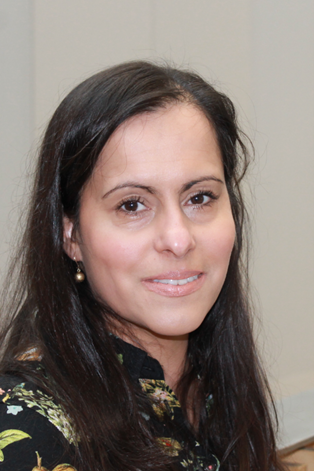
 Associate Professor, Department of Anthropology
B.Sc. (Toronto), M.A. (Toronto) , Ph.D. (Toronto)
Life & Health Sciences DNA C224, ext. 7852, liannetripp@trentu.ca
Research Interests: Medical anthropology, biocultural and archival research, 19th and 20th Colonial health, demography, epidemics of infectious diseases, pandemics, Canada, Mediterranean
Current research projects
I am a biological medical anthropologist whose research involves the use of archival materials as well as vital statistics (birth, marriage, and death records) to examine health and demographic properties of small-scale populations. My work takes a classic biocultural anthropology approach by blending numerical data with cultural understanding of populations to uncover the multifactorial nature of epidemics and poor health outcomes.
I continue to focus on many infectious diseases and epidemics/pandemics, primarily from the 19th and 20th centuries, including cholera, the 1918/19 influenza pandemic, undulant fever, and yellow fever. I am looking for keen undergraduate and graduate students who are interested in joining the Trent Historical research on epidemics and anthropological demography (THREAD) lab.
Some research projects are provided below. Please feel free to contact me to discuss cognate research topics.
20th-century health and demography of two sister British colonies (Gibraltar and Malta)
This project examines comparative aspects of the two sister colonies to uncover how, in many respects, the colonies were similar, yet small differences in scale and/or overall health contributed to differences during times of stress or crises. One such example is the role of mitigation strategies and the different implementations from health officials across the two colonies during the 1918/19 influenza pandemic. Research questions include: What were the strategies that were put in place and the rationale for their use? Did the mitigation strategies contribute to differences in disease outcomes?
COVID-19 in Indigenous populations in Canada
This project uses government records to answer, how did the pandemic experiences of Indigenous populations compare to each other and to the non-Indigenous populations? How did rates of disease change over time, and ultimately did the Indigenous populations experience worse outcomes during the pandemic?
1918/19 influenza pandemic and tuberculosis syndemic (disease interaction) in Indigenous populations in Canada
There have been numerous accounts of the pandemic mortality experience among various Indigenous populations in Canada as being heightened because of a disease interaction with respiratory tuberculosis. This SSHRC (Insight Development) funded project examines the syndemic phenomenon at the provincial level.
The history and ethnoprimatology study of macaques of Gibraltar
This is ongoing research that has already culminated in a book and research paper on the history of the unique population of the only naturalized European population of non-human primates. There are numerous research topics to be further explored, including theories for why the macaque population was originally introduced and how, as well as how the demography of the macaques has been influenced by their interactions with the military and civilian populations.
Selected publications
Tripp, L., Sawchuk, L.A., & Farrugia, C. (2025). Assessing the 1918/19 influenza pandemic and respiratory tuberculosis interaction in Malta: Operationalizing a syndemic during a crisis event. Tropical Medicine and Infectious disease, Special Issue: An Update on Syndemics,10(6). https://doi.org/10.3390/tropicalmed10060149.
Sawchuk, L. A., & Tripp, L. (Oct 2024). Calomel, ‘Purifying Airs’ and the Encampment: Gibraltar’s Military Experience with Yellow fever in 1804 and 1828. Gibraltar Heritage, 30. Gibraltar Heritage Trust.
Tripp, L., Sawchuk, L. A. & Samarakoon, M. (2024). Brucellosis a possible link to Increased Stillbirths: A Population based Study from Malta, 1919-1954 (Short communication). Public health challenges,3: e203. https://doi.org/10.1002/puh2.203
Tripp, L., & Sawchuk, L. A. (2023). The emergence of a suburban penalty during the 1918/19 influenza pandemic in Malta: The role of a marketplace, railway, and measles. PLOS Global Public Health, 3(9), e0002167. https://doi.org/10.1371/journal.pgph.0002167.
Evelin Alves, D., Mamelund, S-E, Dimka J., Simonsen L., Mølbak, M. Søren Ørskov, S., Sattenspiel, L., Tripp L., Noymer, A., Chowell-Puente, G., Dahal, S., van Doren, T., Wissler A., Heffernan, C., Kedzierska K., Renfree Short K., Battles, H., & Baker M. (2022). Indigenous Peoples and Pandemics. Scandinavian Journal of Public Health, 50(6), 662-667. DOI: 10.1177/14034948221087095.
Tripp L. (2022). Overlooking the Canadian Indigenous demographic data: A response to An urgent call to collect data related to COVID-19 and Indigenous populations globally. British Medical Journal, Global Health, 7(3). http://dx.doi.org/10.1136/bmjgh-2022-008847.
Sawchuk, L.A. & Tripp, L. (2021). Managing an epidemic in imperfect times: encampment and immunity passes in 19th century Gibraltar. British Medical Journal, Global Health, 6, 006713. https://gh.bmj.com/content/6/8/e006713
Tripp, L. & Sawchuk, L. A. (2021). Revisiting the Origins and the Early History of the Gibraltar Macaques. Anthrozoös, 34(2), 267-280. DOI: 10.1080/08927936.2021.1885141.
Sawchuk, L.A., Tripp, L., & Samakaroon, M. (2020, fully published in 2022). Assessing a Syndemic: Gibraltar in the Time of Cholera. Social Science & Medicine: Special Issue on Syndemics, 295, 112956. https://doi.org/10.1016/j.socscimed.2020.112956
Tripp, L., Sawchuk, L. A. & Saliba, M. (2018). Deconstructing the 1918/19 Influenza Pandemic in the Maltese Islands: A Biosocial Perspective. Current Anthropology, 59(2), 229-239. DOI: 10.1086/696939.
Tripp, L. & Sawchuk, L. A. (2017). Insights into Secular Trends of Respiratory Tuberculosis: The 20th century Maltese experience. PLoS one, 12(8), e0183296. https://doi.org/10.1371/journal.pone.0183296.