
Project Summary
Universities can play an important social role in addressing ageism in our society. Led by Dr. Elizabeth Russell (Co-Principal Investigator, Rural Aging Research Program and Associate Professor, Psychology), the Experiential Learning in Aging Project examined the outcomes of both lecture-based and intergenerational psychology of aging courses on ageism and intergenerational connectivity. Findings show positive outcomes in both learning environments, highlighting the positive impacts that university-led intergenerational programs can have on both students and older community members.
Intergenerational Classroom
Embedded in Dr. Elizabeth Russell's third-year Psychology of Aging course (Winter 2024 and 2026), the Intergenerational Classroom aimed to increase intergenerational connectivity between undergraduate students and older community members within the Peterborough community.
Each week, older community members (community participants) were invited into the classroom space as valued members of the course, connecting with students through small-group intergenerational discussions and activities. Together, students and community members listened and contributed to lectures on the science behind aging, exchanged ideas, and reflected on lived experience. Through this, students and community participants encountered an enriched and positive intergenerational learning environment that reduced ageism, broke down perceived generational divides, and humanized people of all ages.
We are currently planning the 2028 iteration of the Intergenerational Classroom (funding dependent).
Snapshot into the Intergenerational Classroom (1 min.)
Check out our 1-minute snapshot video showcasing the intergenerational classroom.
Capstone Video (7 min.)
Watch our 7-minute capstone video that highlights the voices of students and community participants in the intergenerational classroom.
Project Team
Dr. Elizabeth Russell, Principal Investigator
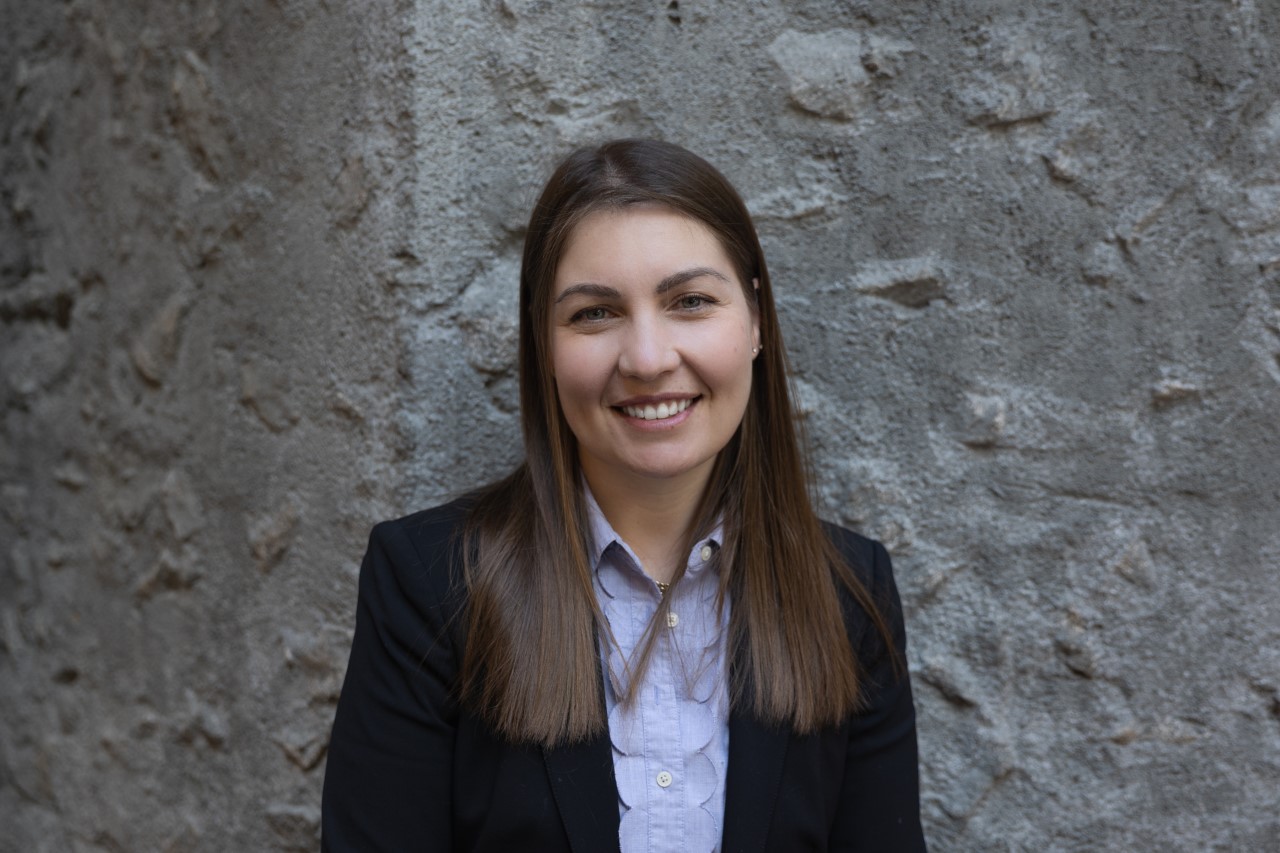
Elizabeth Russell (Ph.D.) is Associate Professor of Psychology at Trent University, Co-Principal Investigator of the Rural Aging Research Program, and Principal Investigator of the Experiential Learning in Aging Project. The Intergenerational Classroom project, in particular, highlights Dr. Russell's passion for aging research, intergenerational connectivity, and community engagement.
Contact: elizabethrussell@trentu.ca
Tabytha Wells, Project Coordinator

Tabytha Wells (Ph.D. Student, Psychology) is the Research Coordinator for the Rural Aging Research Program and the Project Coordinator for the Experiential Learning in Aging Project. She plays a key role in the Project's implementation and research components, from project development to data collection to manuscript creation. She is the 2026 recipient of the President’s Medal for Master of Science, awarded for academic excellence including her work on the Intergenerational Classroom Project.
Contact: twells@trentu.ca
Millicent (Millie) MacDonald, Research Assistant

Millicent (Millie) MacDonald (B.Sc., Psychology and Biology) is a Research Assistant in the Rural Aging Research Program. She works with the Principal Investigator and Research Coordinator to support all aspects of the project, from classroom implementation to data collection, transcription, and analysis.
Project Video Series
Our project video series includes six snapshot videos that showcase the classroom dynamics of the intergenerational classroom, along with one 7-minute capstone video highlighting the voices of community participants and students.
Photo Gallery
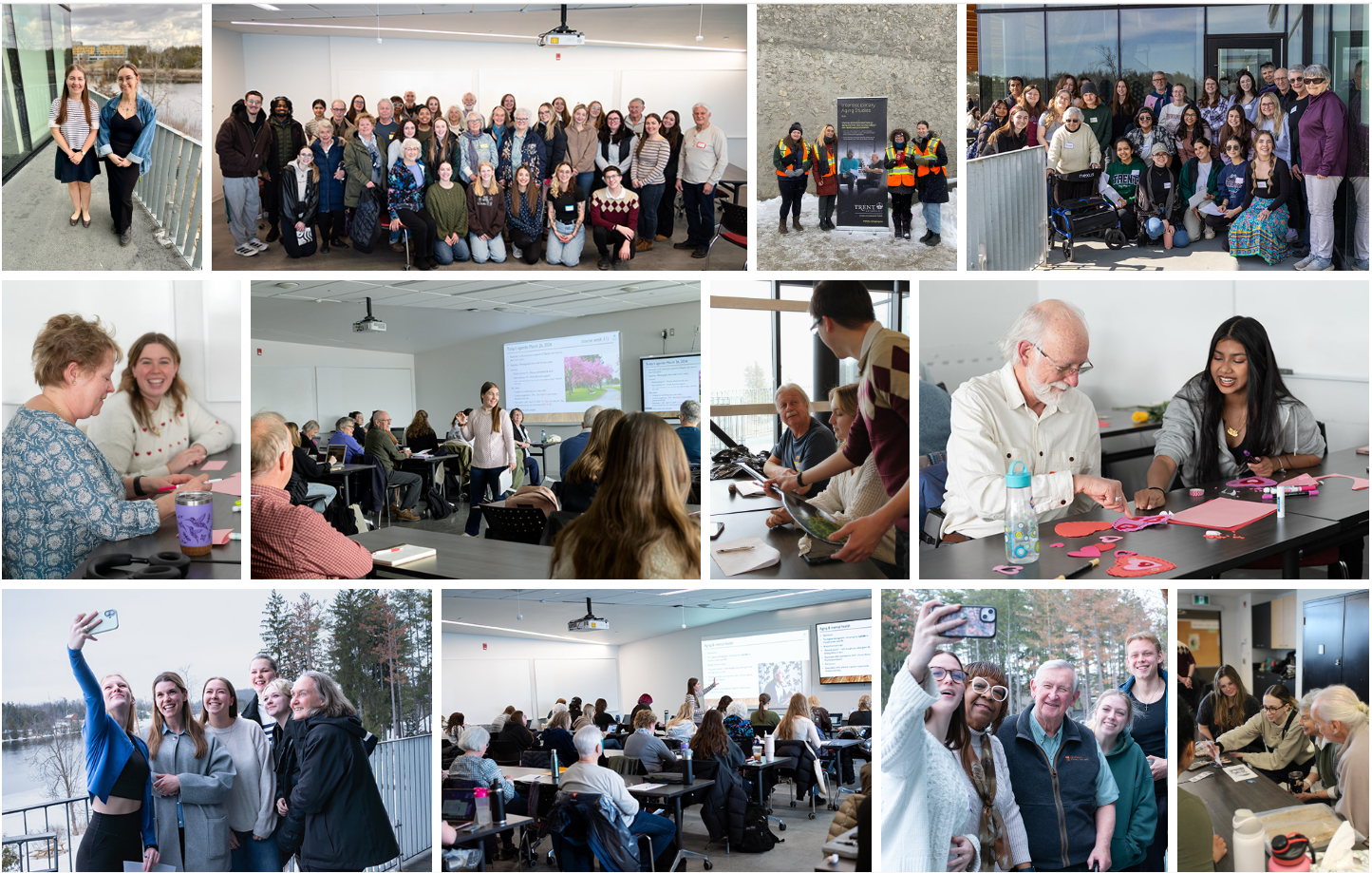
Check out our photo gallery for a better look into the Intergenerational Classroom!
[ VIEW THE GALLERY ]
Media Profiles
Back to School!
Wrinkle Radio | July 2026

[ LISTEN NOW ]
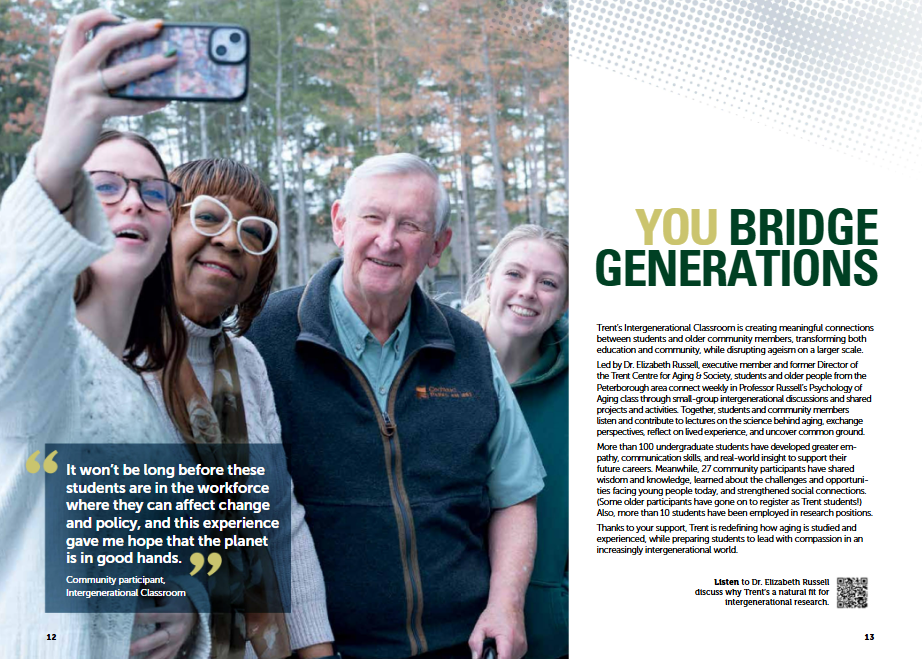
You Made This Possible: Momentous Campaign Impact Report 2026
Trent University | June 2026
[ ACCESS THE REPORT ]
Seniors return to the classroom at Trent University
Nav Nanwa featuring Dr. Elizabeth Russell, CBC Ontario Morning | June 2025
[ LISTEN NOW ]
Firsthand perspective on a learning between generations
Nav Nanwa featuring Bonnie Kimmett (2024 Community Participant), CBC Ontario Morning | June 2025
[ LISTEN NOW ]
Rural aging up close: Inside Trent's community-driven research
Marina Kydd featuring Dr. Elizabeth Russell, Dr. Mark Skinner, and Tabytha Wells, Trent Radio | July 2025
[ LISTEN HERE ]
Bridging the academic age gap
Trent News featuring Tabytha Wells | June 2024
[ READ THE ARTICLE ]
Young and old learn side by side in Trent’s "intergenerational classroom"
Will Pearson, Peterborough Currents featuring Dr. Elizabeth Russell, students, and community participants | February 2024
[ READ THE ARTICLE ]
Reports, Toolkits, and Publications
Project Report
Want to learn more about the Intergenerational Classroom and its outcomes? Our Project Report outlines the research component of the Intergenerational Classroom, including key findings.

[ READ THE REPORT ]
Pedagogical Toolkit
Are you interested in creating your own intergenerational classroom? Our Pedagogical Toolkit provides an overview of key considerations to make when creating a university-based intergenerational classroom.

[ ACCESS THE TOOLKIT ]
Challenging ageism and supporting age-based equity through an intergenerational university classroom: Proposing a revised model of age-consciousness
Wells (2026)
Abstract: Ageism is pervasive and harmful, creating an urgent need to understand how ageist attitudes can be improved. Building on the novel age-conscious student concept, this thesis explored the outcomes of a pilot intergenerational classroom, aimed at reducing ageism, that integrated 13 older community participants into a university-based psychology of aging course alongside 60 younger students. Following course completion, 31 individual interviews (13 community participants, 18 students) and one focus group (4 students) were conducted to assess the impact of intergenerational connectivity on ageism and age-consciousness. An iterative collaborative qualitative analysis revealed three major themes regarding participants’ experiences with ageism and age-consciousness in the intergenerational classroom: (1) heightened knowledge of ageism, (2) transformed attitudes toward aging and youth, and (3) enhanced personal connection with aging. From these findings, a revised model of age-consciousness is presented, describing three integrative factors that promote positive attitudes toward aging and youth.
[ ACCESS THE THESIS ]
Facilitating age-conscious student development through lecture-based courses on aging
Russell, Thériault, & Colibaba (2021)
Abstract: Ageism is pervasive and socially normalized, and population aging has created a need to understand how views of aging and of older people, typically considered to be people over the age of 65, can be improved. This study sought to understand how undergraduate students’ attitudes towards older adults and the aging process may be influenced after completing a typical, lecture-based undergraduate course on aging that lacked service-learning components. Two undergraduate student cohorts (n = 40) at two Canadian universities participated in semi-structured focus groups/interviews, describing how the course may have impacted their perceptions of the aging process and of older adults. An iterative collaborative qualitative analysis demonstrated that course content stimulated a deeper understanding of the aging process, prompting a reduction in and increased awareness of ageism, and enhanced personal connection with aging, ultimately facilitating the development of an age-conscious student. Lecture-based courses focused on aging may be sufficient to facilitate positive attitude change among undergraduate students towards older adults and the aging process.