
In Physics at Trent, you'll combine theoretical study with hands-on experimentation, developing the analytical, computational, and problem-solving skills needed to tackle complex scientific questions and contribute to emerging fields of discovery.
- Specialized areas of study including astronomy, electricity and magnetism, classical mechanics, thermodynamics, quantum computing, and materials science.
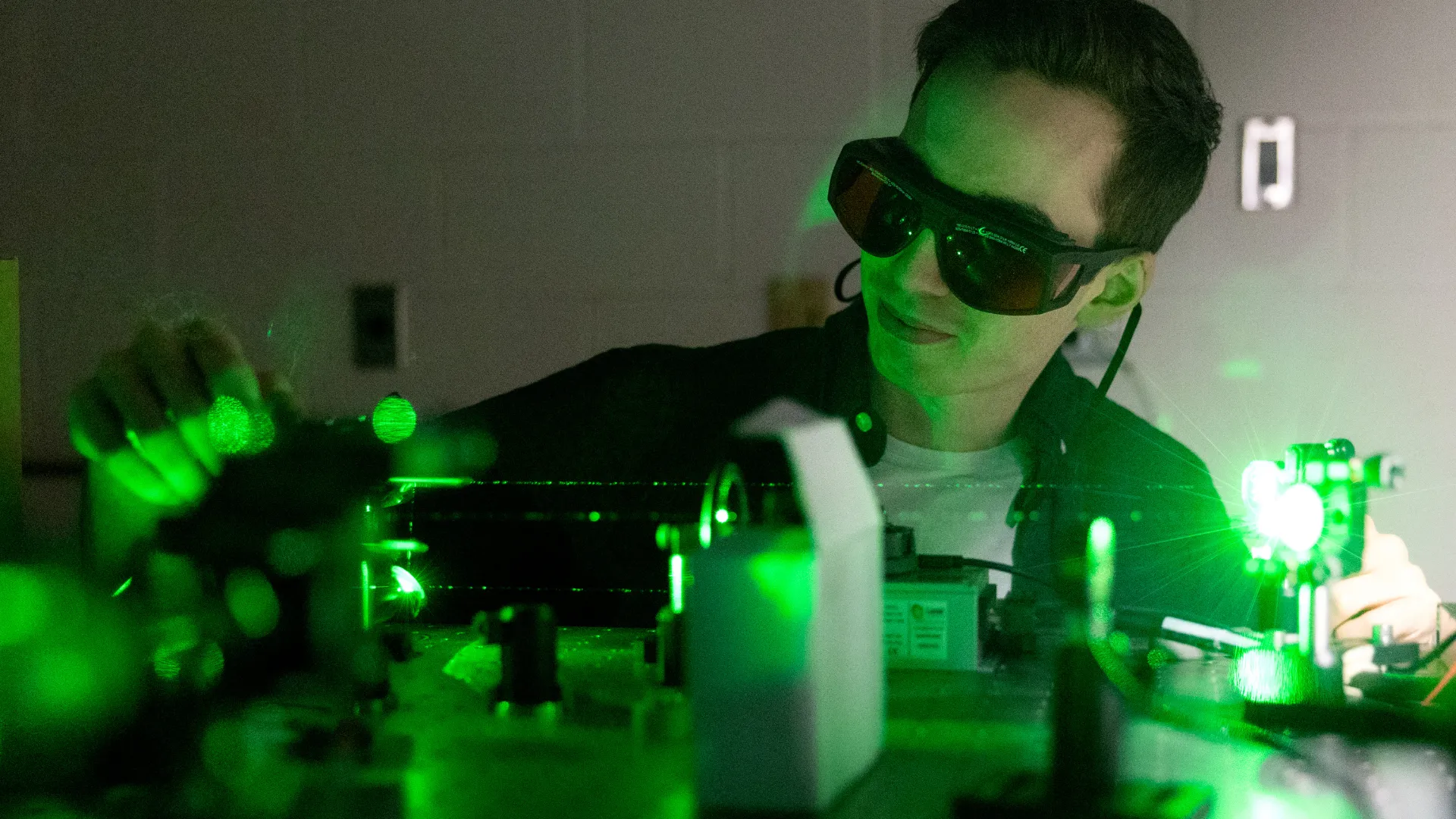
- Advanced research facilities, including computer laboratories, laser biophotonics facilities, and the Trent Centre for Biomaterials Research.
- Undergraduate research opportunities through project-based courses, honours thesis projects, and summer research experiences.
- Professional experience opportunities within the department as a lab demonstrator, academic assistant, marker, or Physics Help Desk tutor.
- Active student community through the Trent Undergraduate Physics Society, lab tours, and events such as the Canadian Undergraduate Physics Conference.
Explore quantum computing, astronomy, materials science, and more through a research-intensive Physics degree built around hands-on learning and faculty mentorship.
Gain valuable career experience while earning academic credit.
Requirements
If you are coming straight from high school in Ontario or are a recent grad, the general admission requirements are:
- Ontario Secondary School Diploma (OSSD)
- A minimum of six Grade 12 4U or 4M courses, including program-specific prerequisites
- ENG4U with a minimum of 60%
| Admission Requirements | Recommended Admission Requirements | Estimated Admission Average | Co-op Admission Average |
|---|---|---|---|
| ENG4U, and MHF4U or MCV4U | SPH4U | 70-75% |
Requirements
Students from across Canada can use their grades from their home province to apply to Trent.
Requirements
International students from outside Canada can apply based on the curriculum of their home country.
Requirements
Mature students can apply to Trent based on previous education and professional or volunteer experience.
Requirements
With many transfer agreements and flexible pathway options, Trent University makes it easy for students to make the most of the credits you have already earned.
Whether you're graduating from an Ontario high school, looking to study in Canada, or training for a second career, Trent has clear pathways for students to apply and be admitted to study at either of our campuses.
I went to Leeds University with the Study Abroad program in my third year. I was pleased to find that I was well prepared to study competitively in England (and scored at the top of my class while I was there!). I had incredible social and cultural experiences. I would recommend Trent’s Physics program for anyone. As a teacher I often recommend Trent as a great option for an undergraduate degree.
- Pursue a summer research project through opportunities such as NSERC Undergraduate Student Research Awards or the Dr. Ian Affleck Physics Undergraduate Research Prize,
- Work with community organizations on collaborative research projects that address community questions and challenges.
- Gain hands-on experience with advanced equipment and instrumentation in computer labs, laser biophotonics facilities, and the Trent Centre for Biomaterials Research.
- Undertake a senior thesis project to expand and build your research skills and experience.
- Pursue hands-on courses including a fourth-year Project Course, undertaking an experimental or theoretical research project alongside expert faculty. Past projects include laser construction, field-emission electron microscopy, spectroscopic analysis of auto exhaust, wind-turbine testing, surface physics and thermal conductivity.
- Gain experience in research laboratories and industry through courses focused advanced experimental techniques, including microcontroller programming, control-system analysis, principal component analysis and interferometry.
- Take your Trent education global. Spend a semester or year studying at one of Trent’s 50+ international partner universities, participate in a summer field course, or gain international experience through a placement or internship.
- With opportunities in more than 35 countries, you can broaden your academic perspective, experience new cultures, and build skills that prepare you for a global career.
- Gain paid workplace experience through internships in areas such as aerospace, astronomy, engineering, computer systems, fibre optics, and government research. Build career-ready skills, industry connections and insight into potential career paths.