
Canadian Studies Ph.D.
Discover a community of scholarly champions who will encourage you to pursue your unique research interests, develop expertise in research-intensive areas and participate in critical conversations connected to Canada in a collaborative and vibrant learning atmosphere. This program prepares graduates to become thought leaders in Canadian academia, as well as in a variety of governmental, not-for-profit and private sector roles.
Throughout your journey – coursework and a thesis – you’ll broaden your knowledge of the study of Canada and its place in the global context and add your own voice to the scholarship. At Trent, your expertise lays the foundation for your work in five possible fields of study including culture, heritage and the arts; environment and place; policy, economy and the state; identities and social movements; and feminist, gender and women’s studies. You’ll push the boundaries of study with the combined support of expert faculty and academic resources from two universities, as well as gain experience with available summer research assistantships. Trent provides a minimum level of funding for the first four years of the program.
Experiential Learning
In the Canadian Studies PhD program, you will be able to explore a number of experiential or ‘learning through doing’ possibilities, including participating in a Humanities wide co-op opportunity, or working closely with a community partner in a community-based research project. You can take advantage of opportunities to travel to conferences and workshops, to present papers, and to engage with professional academic communities, or to work collaboratively with your peers to organize program-specific professional and academic workshops and to earn micro-credits focused on real world applications. Students will be encouraged to pursue advanced research with faculty in the program [including creative work] and to develop their own professional writing and research portfolios.

Join an esteemed community of Canadian scholars. As the only interdisciplinary doctorate program of its kind in the country, Trent’s Canadian Studies Ph.D. fosters a diverse approach to the critical conversations connected to Canada. Here, students develop expertise in research-intensive study as they prepare a doctoral thesis.

Trent has been home to 2 Nobel Prize winners
10 Canada Research Chairs conduct innovative research at Trent
We are proud to be one of the top 3 greenest campuses in Canada
Eligibility Requirements
- Master’s degree with at least high Honours standing in Canadian Studies or a related discipline
- Minimum B+ (77%) or equivalent overall in the Master's degree
Eligibility Requirements
- Master’s degree with at least high Honours standing in Canadian Studies or a related discipline
- Minimum B+ (77%) or equivalent overall in the Master's degree
- Proof of English Proficiency: All international applicants must provide proof of an adequate level of English proficiency regardless of their citizenship status or country of origin. Please visit our How to Apply: International page for details on English Language Proficiency requirements
- A GRE test score is not required for admission into this program
All applicants, domestic and international, must submit the following documents to complete their application:
- Transcripts: Unofficial copies of all post-secondary transcripts
- 2 letters of reference: Academic references are required. Reference forms will be emailed to the referees that you have appointed on OUAC
- Plan of Study/Personal Statement: A 400-600 word statement explaining your intention in applying for Graduate Studies and your overall expectations of the Ph.D. program. It should include a description of your proposed dissertation topic, why this interdisciplinary topic is likely to be of interest to others engaged in Canadian Studies, and a brief account of work that has been done on this, or related topics, by other scholars (This statement is not intended to serve as a binding commitment regarding dissertation topic)
- Writing Sample: A sample of your writing of about 20 pages or less. The preferred submission format is PDF. Good choices for writing samples include: an undergraduate essay, lab report, research report, journal article, a chapter from a masters thesis, or a published article.
- Proof of Citizenship (ie. copy of passport or birth certificate)
- Supervisor: Applicants may identify a Trent faculty member as a provisional dissertation supervisor in their plan of study; however, this is not a requirement for admission. Incoming students will be assigned a Program Advisor (a faculty member familiar with their area of research) who can offer academic advice and guidance. Students will be required to confirm a dissertation supervisor and committee by April 1 of their first year. Please visit our Faculty and Research Page for our listing of faculty and areas of research.
For more information on submitting transcripts, re-sending reference links and other application questions, please visit our How to Apply: Domestic or International pages and review Step 4, as well as review our Frequently Asked Questions (FAQ).
Learn more about tuition & fees
Eligible full-time students are offered minimum funding packages during their funded period of $23,000 annually. This includes a Graduate Teaching Assistantship employment offer valued at approximately $13,000 annually. Specific funding details are included in individual admission letters.
As of May 1, 2026, full-time international PhD students pay domestic tuition fees at the out-of-province rate.
Students are supported in competing for external awards during their studies, such as the Ontario Graduate Scholarship. A full list of external awards is available on our Scholarship & Awards page.
This program also offers unique funding opportunities for its students, such as program-specific entrance awards that would be automatically assigned at the time of admission, and competitive funding opportunities throughout their studies.
The Shelagh Grant Endowment for Northern and Arctic Research provides $20,000 in research funds over and above any scholarships, and is awarded annually to one incoming scholar.
Trent has clear pathways for graduate students to apply and be admitted to study for their master's or doctorate at either of our campuses. Please review admission requirements for your program before applying.

The PhD program helped me to connect my research to relevant and contemporary issues in Canada, thus preparing for life in academia as well as treating humans with dignity.
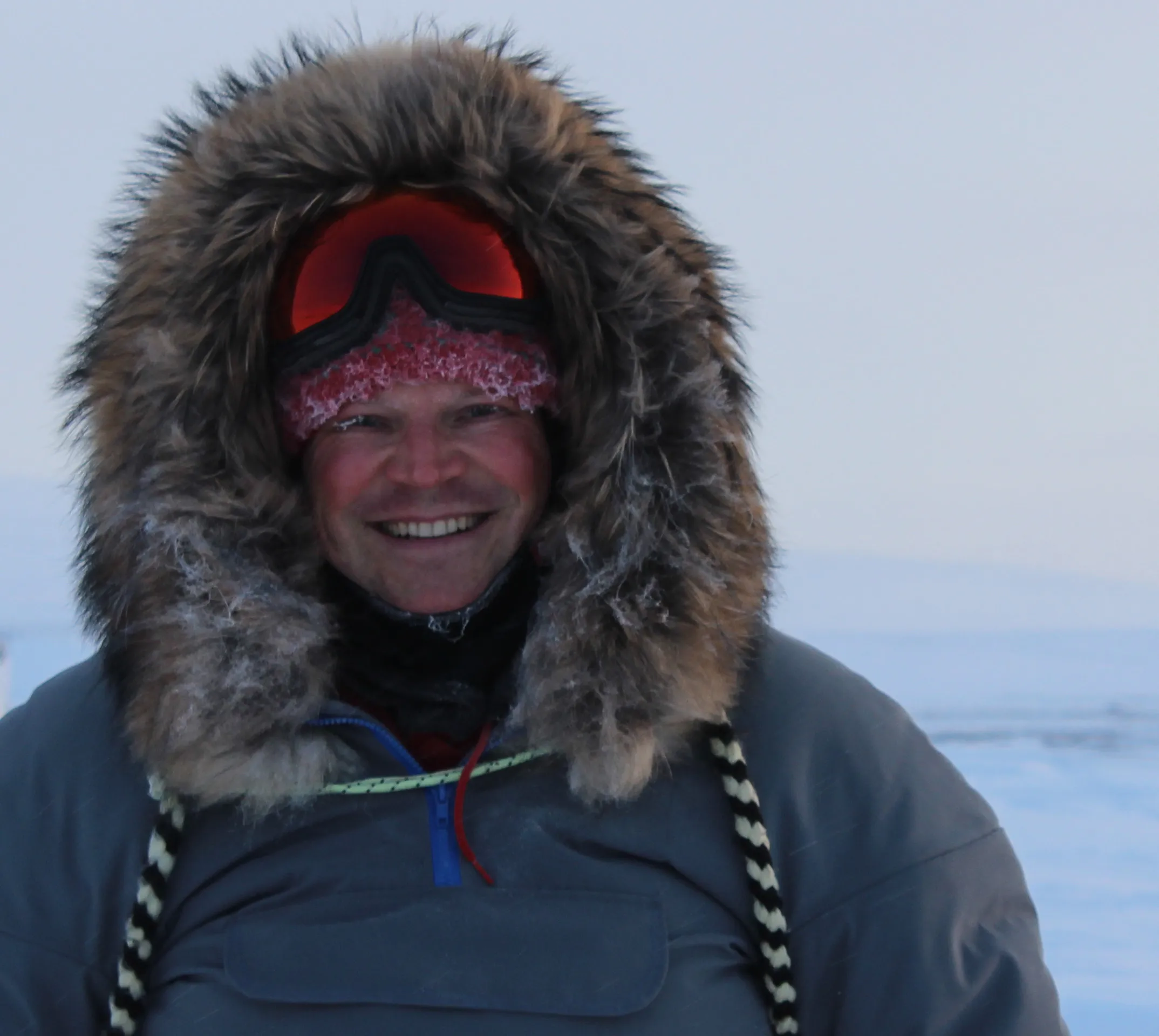
One of Canada’s foremost experts on Arctic history and contemporary Northern policy, Professor Lackenbauer’s research explores the evolution of Canada’s domestic strategies for the North and its international relationships with other Arctic and non-Arctic states. Together with his team, he is also investigating how northern communities have shaped, and been shaped by, different understandings of the region.

Nadine's teaching and research interests combine political theory, feminist, aging, critical disability, critical race, queer and sustainability studies in a Canadian context. She teaches the graduate course titled “Futurities: Centring Difference and Worldmaking(s).” Her research includes activist art and politics, and arts-based and community-based research oriented to improving lives related to the intersections of aging, decolonizing, disability and difference, environmental sustainability, and Indigeneity. Her students have been awarded provincial and national MA and PhD funding. Her research program is funded by CIHR and SSHRC.