
Forensic Science M.Sc.F.S.
The applied field of forensic science is evolving to meet the needs of today’s crime scene investigations, whether they be social, judicial or academic. Trent’s innovative Master of Science in Forensic Science (M.Sc.F.S.) program prepares students to become experts in the field, equipping you with a solid background in foundational sciences and hands-on experience.
Expert faculty combined with cutting-edge technology and a new on-campus Forensic Crime Scene Facility (the first of its kind in Canada!) draw students to this renowned and first-of-its-kind program from across Canada and around the world. Through the unique research program, students also learn from relevant communities, institutions and organizations.
Students in the course-based stream gain real-world experience and build professional networks through a full-term placement with organizations such as the OPP, RCMP, the Centre of Forensic Science and Canada Border Services. Through lectures, labs, and hands-on research placements, students prepare for careers in law enforcement, forensic laboratories, coroner’s offices, border services, inspection agencies, and private testing labs. Students in the major research paper stream will gain experience through extended interaction with one of our placement organizations, learning from them and contributing to the organization through their investigations.
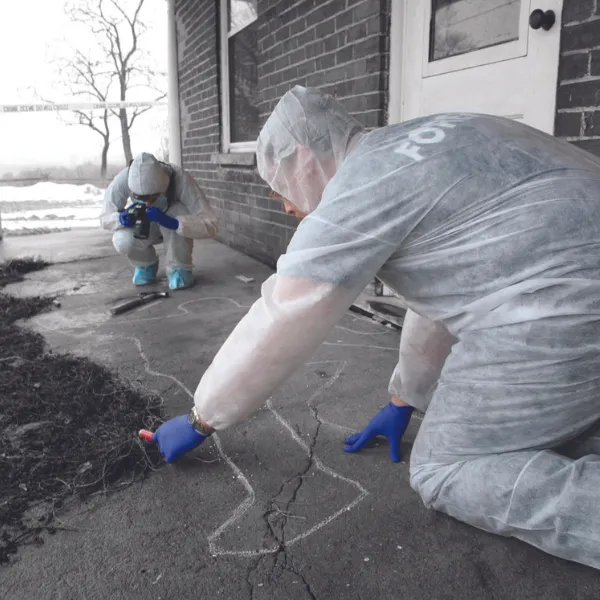
Harness cutting-edge skills and knowledge in the first graduate level Forensic Science program in Canada. Develop critical thinking, leadership and communication skills and apply your experience to a future in forensics. This cutting-edge Master of Science in Forensic Science program emphasizes the value of research within a forensic context and is strengthened by faculty who have extensive experience in academic, practitioner, and professional forensic sciences. Upon graduation you will be prepared to contribute to and improve the justice system through an enhanced understanding of forensic science applications, scientific data interpretation, and the communication of science in a legal context.

Trent has been home to 2 Nobel Prize winners
10 Canada Research Chairs conduct innovative research at Trent
We are proud to be one of the top 3 greenest campuses in Canada
Eligibility Requirements
- B.Sc. honours (a four year undergraduate bachelors) degree
- Minimum B+ (77%) or equivalent in the last two years of full-time study, or last ten full academic credits
- Experience in Forensic Science or undergraduate courses relating to Forensic Science, or willing to take such courses, usually before official admission
- Some applicants may be provided with a conditional acceptance and will be required to successfully complete a qualifying course, Fundamentals in Forensic Science, prior to admission. A fee applies for the qualifying course.
Eligibility Requirements
- B.Sc. honours (a four year undergraduate bachelors) degree
- Minimum B+ (77%) or equivalent in the last two years of full-time study, or last ten full academic credits
- Experience in Forensic Science or undergraduate courses relating to Forensic Science, or willing to take such courses, usually before official admission
- Some applicants may be provided with a conditional acceptance and will be required to successfully complete a qualifying course, Fundamentals in Forensic Science, prior to admission. A fee applies for the qualifying course.
- Proof of English Proficiency: All international applicants must provide proof of an adequate level of English proficiency regardless of their citizenship status or country of origin. Please visit our How to Apply: International page for details on English Language Proficiency requirements
- A GRE test score is not required for admission into this program
All applicants, domestic and international, must submit the following documents to complete their application:
- Transcripts: Unofficial copies of all post-secondary transcripts
- 2 letters of reference: Academic references are preferred; however, professional references will be accepted. Reference forms will be emailed to the referees that you have appointed on OUAC
- Plan of Study/Personal Statement (course-based stream only): A statement detailing the applicant’s interest and experience in forensic science is required. The purpose of this statement of interest is to compile additional information for selection among highly qualified applicants and to allow applicants with practical experience, but without the minimum average, to provide support for their entry into the program. The statement should not exceed 500 words (approximately one page).
- Writing Sample (major research paper stream only): Submit a sample of your writing as a PDF (20 pages or less). Since there is a greater emphasis on performing and communicating research in this stream, this document is intended to display the applicant's ability to communicate scientific concepts clearly. Suitable choices include: an undergraduate essay, a research report, a chapter from a thesis, or a published article
- Detailed Resume or Curriculum Vitae
- Proof of Citizenship (ie. copy of passport or birth certificate)
- Supervisor (major research paper stream only): Applicants applying to the major research paper stream require permission of the program and the availability of a faculty advisor. Available research projects and the associated faculty advisors will be posted on the program website. Interested applicants will select a project and identify the faculty advisor associated with the project as part of their application. Faculty Advisors will be finalized upon acceptance into the program.
Selected applicants will be required to complete an interview to assess suitability for admission; invitation to an interview does not guarantee admission. For more information on submitting transcripts, re-sending reference links and other application questions, please visit our How to Apply: Domestic or International pages and review Step 4, as well as review our Frequently Asked Questions (FAQ).
Learn more about tuition & fees
Professional programs do not offer funding as part of the letter of offer. It is expected that graduate students in these programs, will have funds to support themselves for the duration of their studies.
Financial Aid can provide information about provincial loan programs for domestic students, as well as bursary opportunities for both domestic and international students.
Trent has clear pathways for graduate students to apply and be admitted to study for their master's or doctorate at either of our campuses. Please review admission requirements for your program before applying.

Dr. Bailey Henwood holds a Ph.D. in Defence and Security from Cranfield University, with expertise in small arms and light weapons (SALW) identification and intelligence investigations. Her main research focusses on exploitation of sanitized SALW and recovery of obliterated markings in conflict and criminal investigations. Bailey also serves as a Technical Advisor for the Association of Firearm and Tool Mark Examiners and works as a consultant with the United Nations, and various government and non-government organizations contributing expertise to international cooperative efforts in serial number marking and recovery practices. She has established the Small Arms Exploitation and Research (SAER) Laboratory at Trent University.

Dr. Arun Moorthy is the principal investigator of the Computational Research Applied to Forensic Technology and Sciences (CRAFTS) Lab in the Department of Forensic Science at Trent University. His lab develops computer tools supporting forensic analyses, including mathematical models, algorithms, user software and databases.