
Graduate
Interdisciplinary Aging Studies
-
- Master of Arts (M.A.)
-
- Peterborough
-
- Fall

At a glance:
- Degree Master of Arts (M.A.)
- Campus Peterborough
- Program is Offered Fall
- Study Options Full time
- Length Thesis: 24 months
- Guaranteed Funding Yes (for eligible students)
- Applications Open September 11
- Application Deadline February 1
-
Notice
*Domestic application deadline extended to June 1
- Deposit Required No
- Graduate Studies Contact aging_grad@trentu.ca
- Apply Now Stay in Touch
The Trent Advantage
Explore diverse perspectives on aging and contribute to supporting a rapidly aging population through interdisciplinary research and experiential learning at one of Canada’s leading universities for aging studies.
Gain a rich understanding of the social, cultural, and professional dimensions of aging while developing crucial research and analytical skills. By integrating research and experiential learning, you will develop expertise in aging systems, services and policy, cultural studies, and social justice. Extend your learning beyond the lecture hall through opportunities to engage with older adults, develop insights into their day-to-day experiences and perspectives, and gain practical skills for a successful career in aging-related fields.
- Participate in an experiential learning placement that provides first-hand experience with older adults and opportunities to contribute to community organizations.
- Conduct research alongside faculty from different fields through the Trent Centre for Aging & Society.
- Engage with a collaborative, interdisciplinary community exploring aging from diverse angles and perspectives, enriching your learning.
World Class Facilities
Trent Centre for Aging & Society (TCAS)
TCAS gathers faculty, students, staff, and community stakeholders to build meaningful dialogue that challenges entrenched ideas about aging, old age, and older people, and seeks to celebrate and understand diverse experiences of aging.
Program Types
-
Thesis
This two-year, thesis-based master combines rigorous academic and research training with experiential learning. Develop crucial research and analytical skills while preparing for a meaningful career in aging-related fields, including public and nonprofit sectors, and managerial-level positions in institutions and community organizations that support older adults.
Career Paths
In Their Own Words
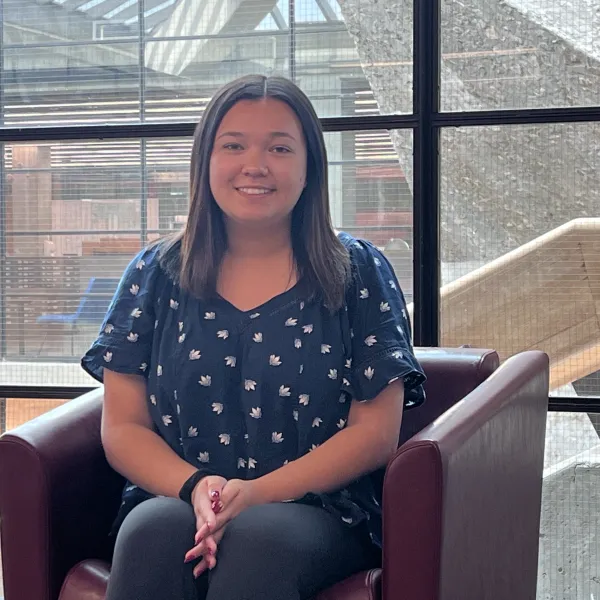
I am truly enthusiastic about the Interdisciplinary Aging Studies program. Housed within the Trent Centre for Aging and Society, the opportunities to learn from experts and older adults, and develop connections with other students interested in aging studies were endless. The unwavering support from faculty further encouraged me to pursue my specific research interests for my thesis.
Alana Hart
Interdisciplinary Aging Studies M.A. Student
Faculty Spotlight
Meet some of Trent's world-class professors and researchers.
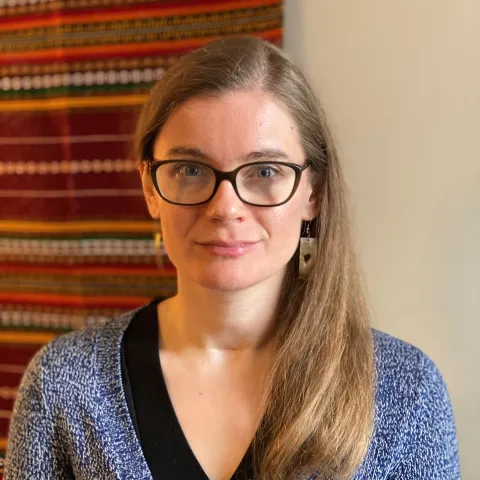
Dr. Mary Jean Hande
Assistant Professor, Sociology
Dr. Hande specializes in community-engaged research focused on aging, disability, immigration, precarious work, continuing care systems, and struggles for social transformation. Her most recent research project is called Towards Just Care (TJC), which partners with the Disability Justice Network of Ontario, to build more socially just care systems through coalition-building with home care receivers and workers across the life course. Check TJC's recent toolkit "Just Care Dreams"!

Dr. Stephanie Tobin
Assistant Professor in Biology
Dr. Tobin’s research program investigates how skeletal muscles change in response to aging and disease using cell culture and animal models. These studies have wider applications to treating sarcopenia (age-related muscle loss) to improve the mobility and overall health of an aging population. For the MA in Interdisciplinary Aging Studies program, Dr. Tobin is happy to talk with candidates and faculty interested in evaluating how aging affects movement, mobility and societal factors associated with sarcopenia in the local community.
Admissions
Trent has clear pathways for graduate students to apply and be admitted to study for their master's or doctorate at either of our campuses. Please review admission requirements for your program before applying.
Eligibility Requirements
- B.A. or B.Sc. Honours degree (a four-year undergraduate bachelor's degree)
- Minimum B+ (77%) or equivalent in the last two years of full-time study, or last ten full academic credits
- Applicants must have completed a supervised research project, such as a thesis, program evaluation, or community-based research project, or include a 250-word statement that indicates their capacity to conduct independent research.
- Volunteer work, paid work experience, or other relevant life experiences will be taken into account
Eligibility Requirements
- B.A. or B.Sc. Honours degree (a four-year undergraduate bachelor's degree)
- Minimum B+ (77%) or equivalent in the last two years of full-time study, or last ten full academic credits
- Applicants must have completed a supervised research project, such as a thesis, program evaluation, or community-based research project, or include a 250-word statement that indicates their capacity to conduct independent research.
- Volunteer work, paid work experience, or other relevant life experiences will be taken into account
- Proof of English Proficiency: All international applicants must provide proof of an adequate level of English proficiency regardless of their citizenship status or country of origin. Please visit our International Applicant Resource page for details on English Language Proficiency requirements.
- A GRE test score is not required for admission into this program
All applicants, domestic and international, must submit the following documents to complete their application:
- Transcripts: Unofficial copies of all post-secondary transcripts
- 2 letters of reference: Academic references are preferred; however, professional references will be accepted. Reference forms will be emailed to the referees that you have appointed on OUAC
- Plan of Study/Personal Statement: A detailed 1-page outline of how your proposed research and professional interests align with an interest in aging and fits with that of your prospective supervisor. The Personal Statement must include a paragraph providing evidence of independent research. Applicants must have completed a supervised research project—such as a thesis, program evaluation, or community-based research project—or include a 250-word statement that indicates their capacity to conduct independent research (including experience gained outside of a university context).
- Writing Sample: A sample of your writing of about 20 pages or less providing evidence of excellent scholarly writing. This can include either the submission of the applicant’s B.Sc./B.A. thesis or a scholarly written piece by the applicant for a university course previously taken, or for another formal initiative outside of the university context.
- Detailed Resume or Curriculum Vitae
- Proof of Citizenship (i.e. copy of passport or birth certificate)
- Supervisor: A potential supervisor must be chosen as an admission requirement for this program. Please list your supervisor on your OUAC application and discuss this in your plan of study. Please visit the program's Faculty and Research page for a listing of faculty and areas of research. Applicants are responsible for reaching out to a faculty member
For more information on submitting transcripts, re-sending reference links and other application questions, please visit our How to Apply page and review Step 4, as well as review our Frequently Asked Questions (FAQ).
Tuition Estimate
Estimate your tuition, ancillary fees, and potential entrance scholarships based on your program, residency status, and academic average.
Tuition Fees
Base tuition fees apply to the following programs: Applied Modeling and Quantitative Methods (thesis/research-based; M.A. and M.Sc.), Anthropology (M.A. and M.Sc.), Canadian Studies and Indigenous Studies (M.A.), Cultural Studies (M.A.), Computer Science (M.Sc.), English (Public Texts) (M.A.), History (M.A.), Interdisciplinary Aging Studies (M.A.), Psychology (M.Sc.), and Sustainability Studies (M.A.). $750 (one-time) co-op fee for Sustainability Studies (Co-op Stream) not included in Estimator.
$8,252.00
Funding Package
Minimum funding package for eligible students in the following programs: Applied Modeling and Quantitative Methods (thesis/research-based; M.A. and M.Sc.), Anthropology (M.A. and M.Sc.), Canadian Studies and Indigenous Studies (M.A.), Computer Science (M.Sc.), Cultural Studies (M.A.), English (Public Texts) (M.A.), History (M.A.), Interdisciplinary Aging Studies (M.A.), Psychology (M.Sc.), and Sustainability Studies (M.A.)
$-18,000.00
Ancillary Fees
Mandatory ancillary fees
$1,329.00
Total:
$ -8,419.00
* The tuition details and scholarships listed are for domestic students only. International applicants should contact the financial aid office directly for equivalent guidance.
Financial Matters
Eligible full-time students are offered minimum funding packages during their funded period of $18,000 annually. This includes a Graduate Teaching Assistantship employment offer valued at approximately $13,000 annually. Specific funding details are included in individual admission letters.
Students are supported in competing for external awards during their studies, such as the Ontario Graduate Scholarship. A full list of external awards is available on our Scholarships & Awards page.