
Undergraduate
Forensic Chemistry
-
- Bachelor of Science (B.Sc.)
-
- Peterborough
-
- Paid Co-op Available
-
- Fall
- Forensics
At a glance:
- Degree Bachelor of Science (B.Sc.)
- Campus Peterborough
- Work Experience Paid Co-op Available
- Program is Offered Fall
- Study Options Part time/Full time
- OUAC Codes RUH - Peterborough RUI - Peterborough co-op
- Apply Now Stay in Touch
The Trent Advantage
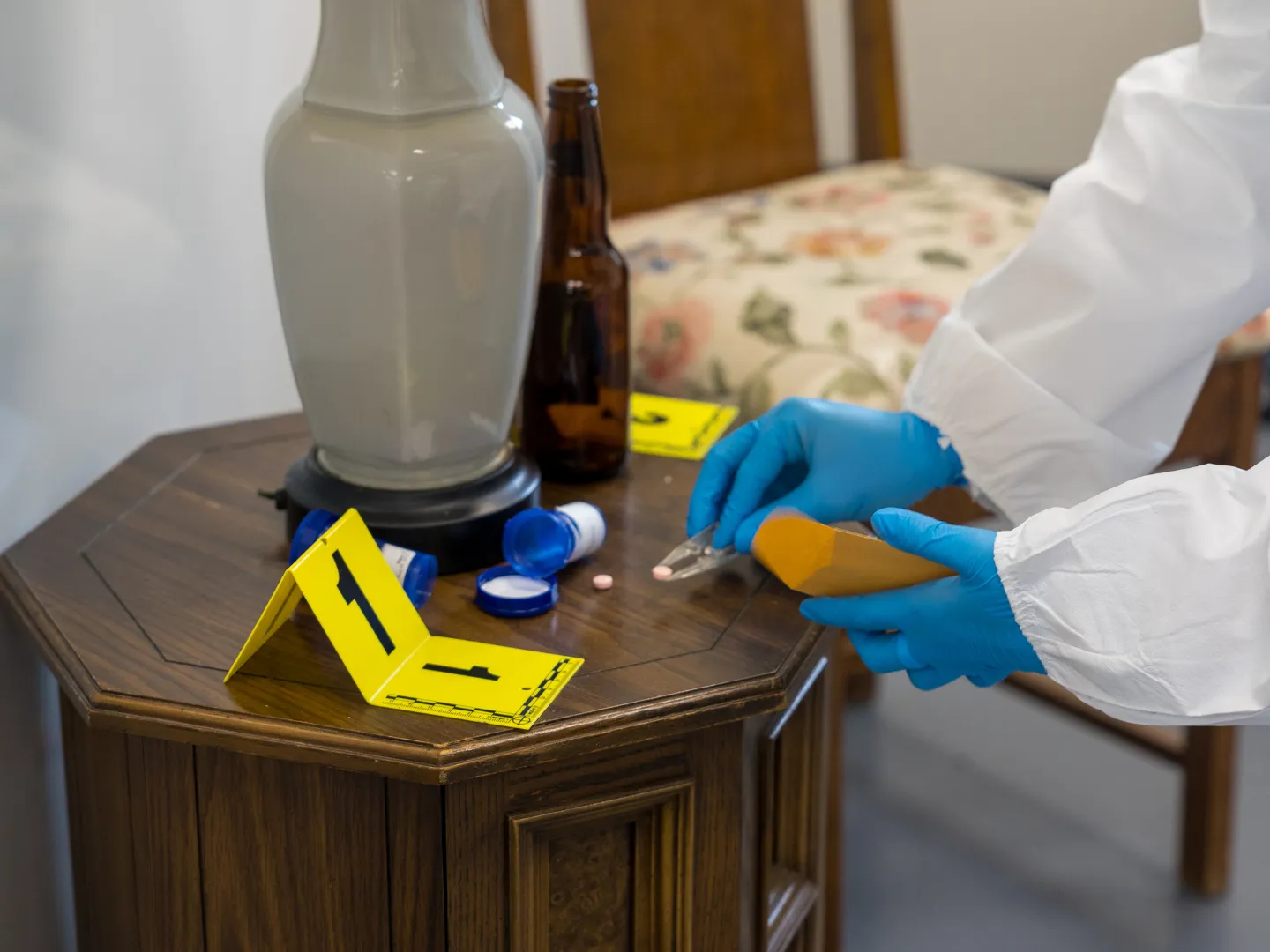
Study in the only Forensic Chemistry program of its kind in Canada and learn how advanced chemical analysis is used to identify unknown substances, interpret evidence, and support forensic investigations.
From toxicology and drug analysis to trace evidence and unknown substances, forensic chemistry sits at the intersection of chemistry and criminal investigation. In this unique degree program, you'll build a strong foundation in chemistry while exploring how analytical techniques are applied to forensic investigations, preparing you to examine evidence with accuracy, objectivity, and scientific rigour.
- Canada's only Forensic Chemistry program, combining advanced chemistry with forensic applications.
- State-of-the-art chemistry laboratories where you'll develop the analytical techniques used to identify, examine, and interpret forensic evidence.
- Trent's 4,100-square-foot Forensics Crime Scene Facility, the first facility of its kind on a Canadian university campus, where evidence collection, analysis, and investigation come together in one learning environment.
- Career-focused training in trace evidence analysis and forensic toxicology, preparing graduates for opportunities across forensic laboratories, government agencies, and related scientific fields.
Career experience while you learn
Every Forensic Chemistry student has a guaranteed route to paid, credited experience before they graduate.
Paid Co-op Available
- Choose the five-year co-op stream and graduate with paid work experience completing three 12–16-week work terms in the summer of year three and fall and winter of year four.
Research Opportunities
- Conduct independent research under faculty supervision, exploring forensic questions that align with your interests and career goals.
- Access leading expertise in forensics and law, including connections to practitioners at the Natural Resources DNA Profiling and Forensics Centre and the Ontario Ministry of Natural Resources and Forestry, located right on campus.
- Explore emerging areas of forensic chemistry research, including chemical signature detection, advanced analytical techniques, and computational approaches used to interpret complex forensic data.
- Apply your research and analytical skills in Trent's Forensics Crime Scene Facility and state-of-the-art chemistry laboratories, connecting evidence collection, analysis, and interpretation in one integrated learning environment.
Field Schools and Hands-On Courses
- Work through realistic investigative scenarios in Trent's Forensics Crime Scene Facility, examining evidence from collection through analysis and interpretation.
- Take courses focused on identifying poisons, drugs and unknown substances, interpreting chemical findings, and evaluating trace evidence in forensic contexts.
- Explore how chemistry supports forensic investigations through applied learning experiences that connect scientific analysis with legal and investigative questions.
Study Abroad
- Take your Trent education global. Spend a semester or year studying at one of Trent’s 50+ international partner universities, participate in a summer field course, or gain international experience through a placement or internship.
- With opportunities in more than 35 countries, you can broaden your academic perspective, experience new cultures, and build skills that prepare you for a global career.
Placements
- Complete a third-year work placement in a forensic subdiscipline of your choice, working with Border Services, the RCMP, Health Canada and Food Inspection Services, to name a few.
Internships
- Pursue paid internships in forensic-related settings including forensic laboratories, drug-testing facilities, hospitals, and police services.

Career Paths
- Forensic Toxicologist
- Trace Evidence Analyst
- Chemist
- Crime Scene Investigator
- Criminalist
In Their Own Words
I know firsthand the value students get out of their degree in our Forensics programs. The experience we offer stands out for many reasons, but if I had to pick one it would be the breadth of what we cover within Forensic Science also more broad critical thinking skills that are vital to bring into today’s workforce. Students here really get to go after their interests and explore them in practical settings. Every year I see how that interdisciplinary and experiential learning is what helps our graduates land jobs.
Dr. Aaron Shafer
Professor of Forensic Science

Admissions
Whether you're graduating from an Ontario high school, looking to study in Canada, or training for a second career, Trent has clear pathways for students to apply and be admitted to study at either of our campuses.
Requirements
If you are coming straight from high school in Ontario or are a recent grad, the general admission requirements are:
- Ontario Secondary School Diploma (OSSD)
- A minimum of six Grade 12 4U or 4M courses, including program-specific prerequisites
- ENG4U with a minimum of 60%
| Admission Requirements | Recommended Admission Requirements | Estimated Admission Average | Co-op Admission Average |
|---|---|---|---|
| ENG4U, SBI4U, SCH4U, and MHF4U or MCV4U | SPH4U | 75-80% | 80-85% |
Requirements
Students from across Canada can use their grades from their home province to apply to Trent.
Requirements
International students from outside Canada can apply based on the curriculum of their home country.
Requirements
Mature students can apply to Trent based on previous education and professional or volunteer experience.
Requirements
With many transfer agreements and flexible pathway options, Trent University makes it easy for students to make the most of the credits you have already earned.
Tuition Estimate
Estimate your tuition, ancillary fees, and potential entrance scholarships based on your program, residency status, and academic average.
Tuition
Base Tuition Fee
$6,240.85
Ancillary Fees
Ancillary Fees (non-tuition costs supporting student services, such as athletics, campus safety, college fees, etc.)
$2,122.22
Total:
$ 8,363.07
* The tuition details and scholarships listed are for domestic students only. International applicants should contact the financial aid office directly for equivalent guidance.
Scholarships
If you’re a top scholar with an average of 80% or higher, you qualify to automatically receive an entrance scholarship to Trent. Scholars with 95% or higher? You earn free first-year tuition – no application required.
| Entrance Average | Maximum Scholarship Potential | Details |
|---|---|---|
| 95%+ | $18,241 | $6,241 first year Full Tuition + $4,000 x 3 years |
| 90-94.9% | $12,000 | $3,000 x 4 years |
| 85-89.9% | $8,000 | $2,000 x 4 years |
| 80-84.9% | $6,000 | $1,500 x 4 years |
* Available to Domestic students only. Based on 2026/27 tuition for a general arts and science program
Explore additional funding for domestic and international students