
Undergraduate
Environmental Chemistry
-
- Bachelor of Science (B.Sc.)
-
- Peterborough
-
- Paid Co-op Available
-
- Fall & Winter & Summer
- Environment & Sustainability
At a glance:
- Degree Bachelor of Science (B.Sc.)
- Campus Peterborough
- Work Experience Paid Co-op Available
- Program is Offered Fall & Winter & Summer
- Study Options Part time/Full time
- OUAC Codes RVC - Peterborough
- Apply Now Stay in Touch
The Trent Advantage
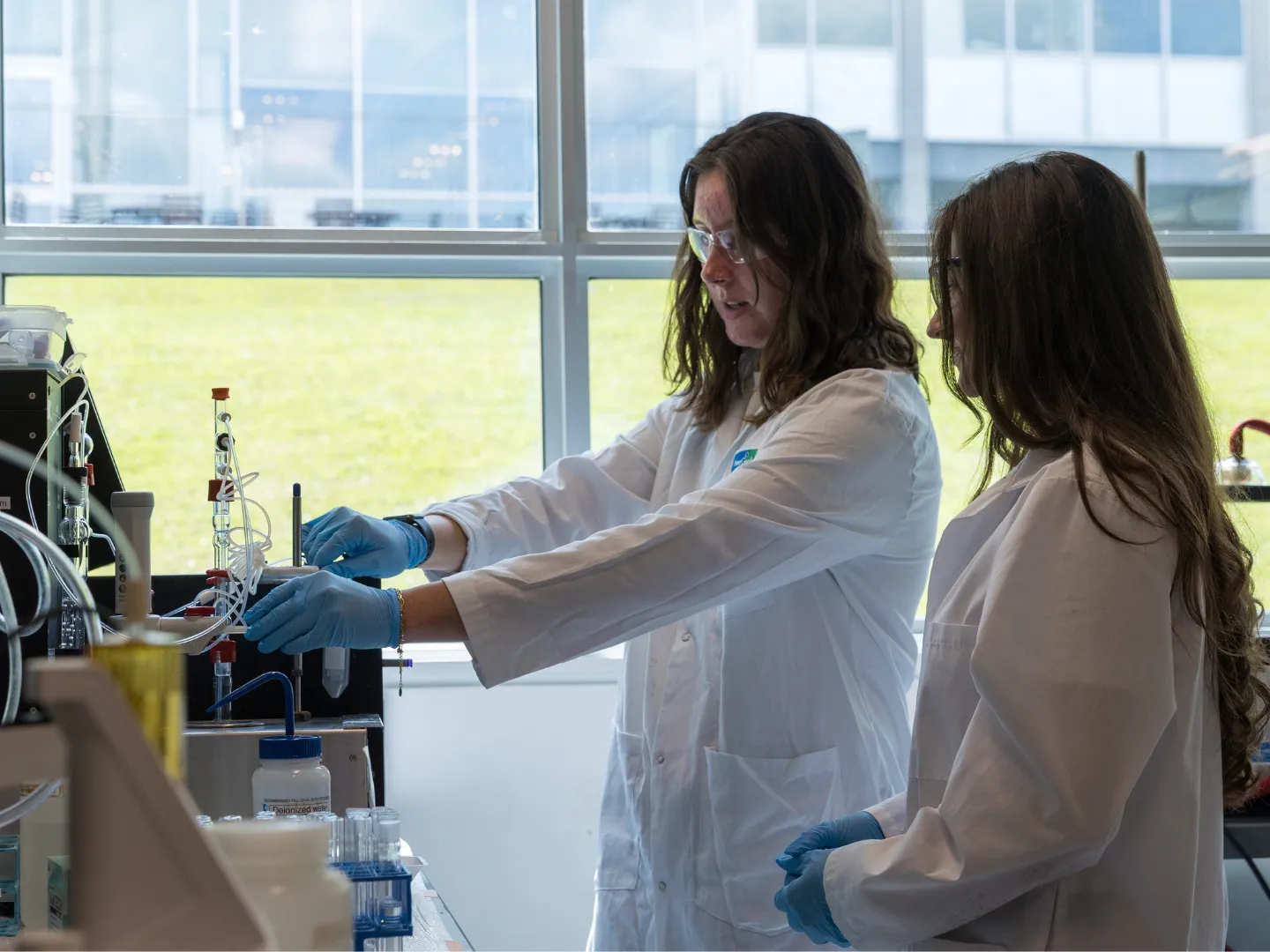
Featuring hands-on training utilizing cutting-edge instrumentation in state-of-the-art research facilities like Trent’s Water Quality Centre, this program combines advanced chemical analysis with environmental science to investigate and solve real-world environmental challenges.
Explore how chemicals form, move through, and interact with the environment, and investigate the effects of contaminants on ecosystems. Bridging chemistry and environmental science, this program gives students the opportunity to develop technical skills in chemical analysis and modern analytical techniques while tackling issues such as pollution, toxicology, pest control, and climate change. You will graduate with high demand scientific and practical expertise in environmental monitoring, research, consulting, and related fields.
- Gain hands-on experience with advanced analytical tools in state-of-the-art facilities such as the Trent Water Quality Centre, home to one of Canada’s leading mass spectrometry systems.
- Conduct undergraduate research on today’s most pressing environmental challenges such as emerging contaminants, greenhouse gas emissions and carbon sequestration alongside faculty in Chemistry and the Trent School of the Environment.
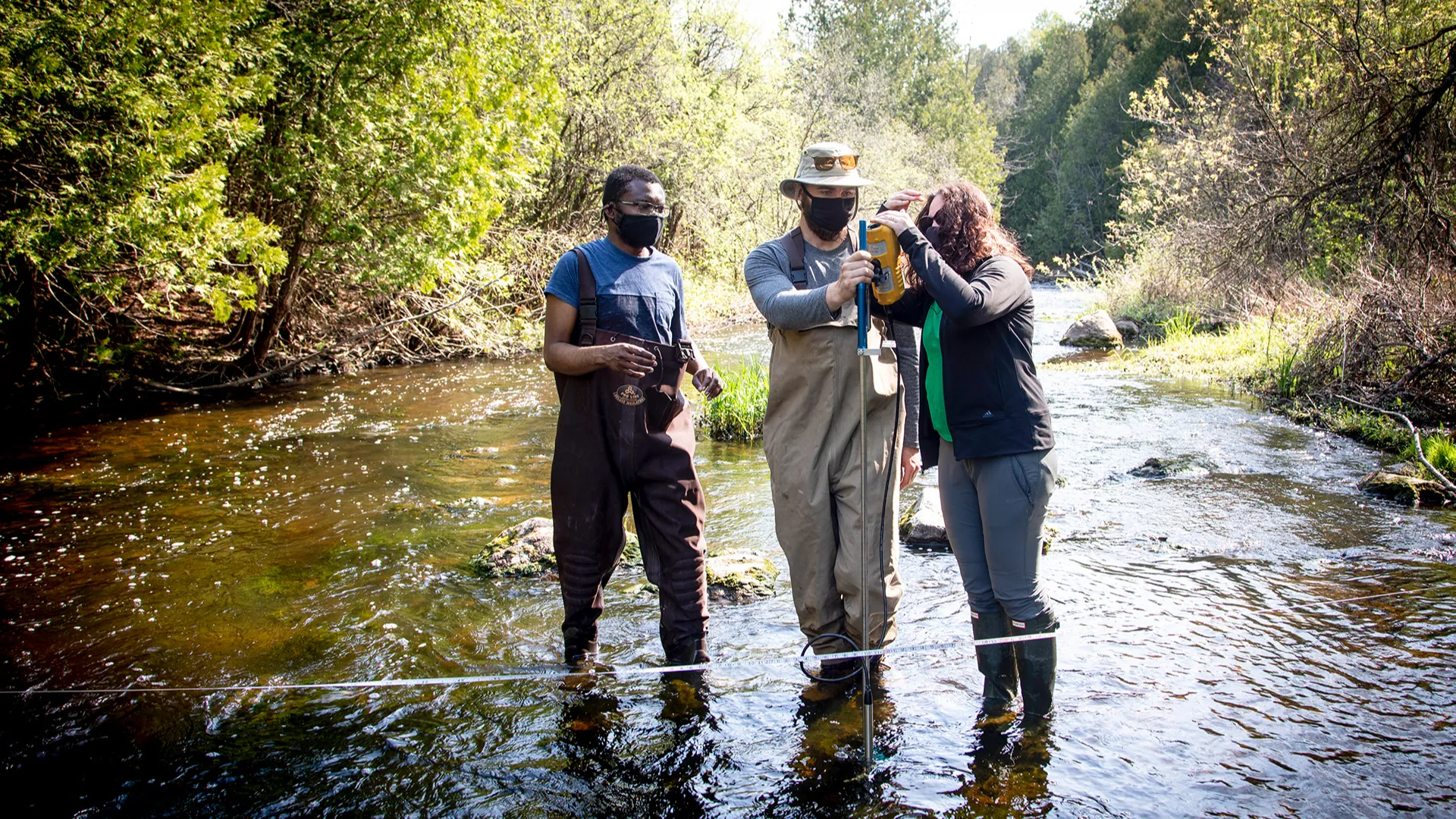
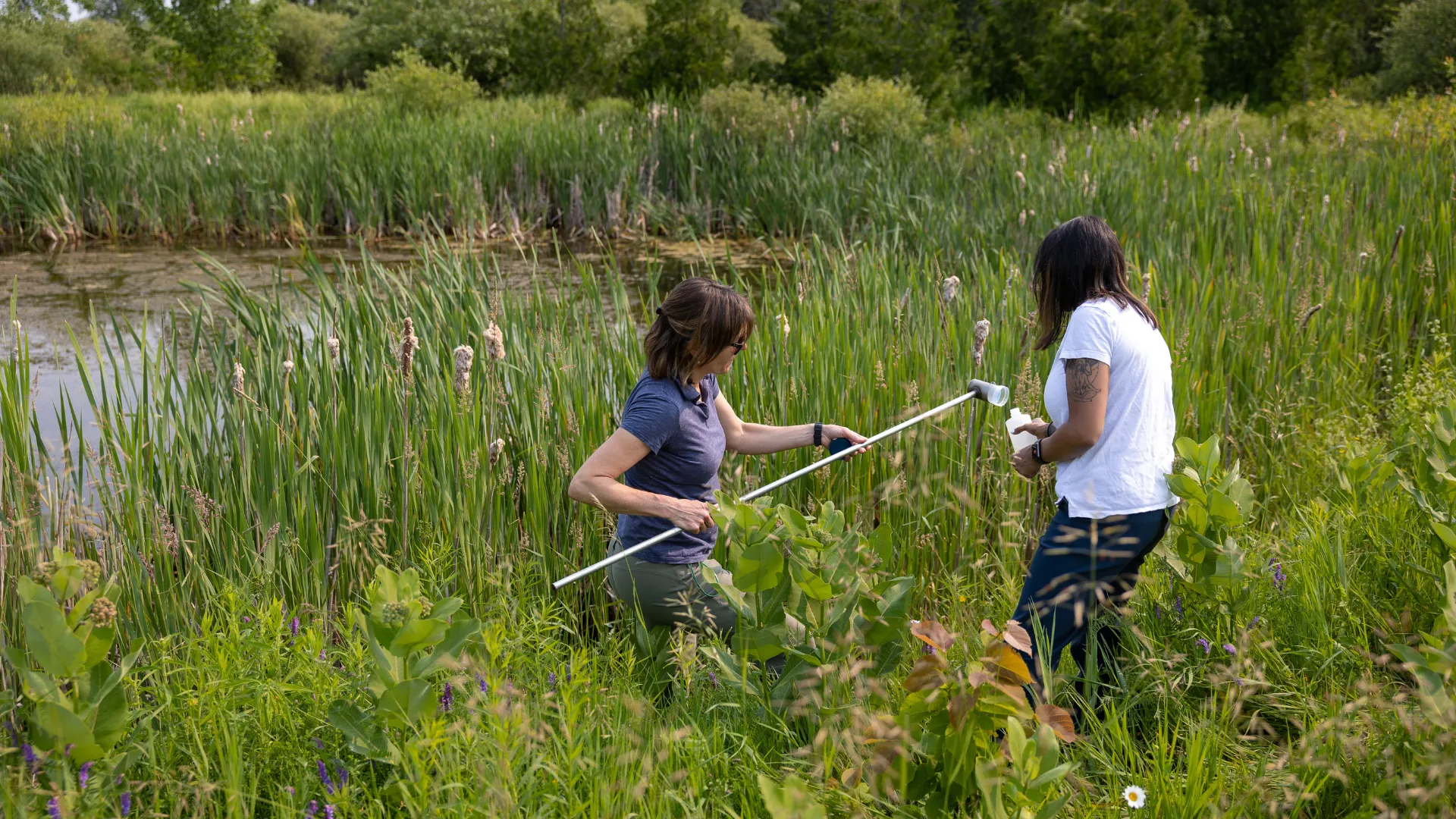
- Take your learning into the field through Trent’s 11 on-campus nature areas, connecting laboratory analysis with real environmental systems.
- Build professional experience through work placements with environmental organizations and businesses, applying your expertise to real-world challenges.
Accelerated Masters
Fast-track your education, by earning your M.Sc. in Environmental & Life Sciences in only 12-20 months of graduating from your Honours B.Sc.
Program Possibilites
Add an Option to your Environmental Chemistry degree to explore an additional area of interest
-
Climate Communication
Leveraging Trent’s academic and research strengths in arts-based and environmental education, the Option in Climate Communication blends courses across disciplines to teach you a new storytelling approach that examines how to better understand media's effect on audiences’ morals, values, and behaviours. Equipped with this knowledge, this new offering at Trent University aims to use more effective climate change communications and environmental storytelling to foster a more sustainable and equitable world where our collective well-being is at the heart.
-
Circumpolar Studies
One of only a few programs of its kind in the world, the Circumpolar Studies option offers you a unique opportunity to broaden your knowledge and understanding of the lands, peoples, and critical issues of the Arctic. The Circumpolar Studies Option is open to all undergraduate students at Trent.
-
Planning
Ideal for future urban planners, this career-focused option will challenge you to develop and design healthy, sustainable and efficient urban communities. With plenty of hands-on intensive field work, you’ll acquire advanced knowledge about urban planning and position yourself as an excellent candidate for grad school.
Career experience while you learn
Every Environmental Chemistry student has a guaranteed route to paid, credited experience before they graduate.
Paid Co-op Available
- Put your skills and knowledge to work in a paid co-op stream, launching fall 2027. You’ll graduate with a distinct career advantage – building valuable connections, gaining hands-on work experience all as part of your Trent degree.
Research Opportunities
- Conduct fourth-year Honours thesis using advanced instrumentation in the Water Quality Centre, diving into contemporary topics including emerging contaminants, greenhouse gas emissions, and carbon sequestration.
- Previous student research has included microplastic pollution and developing methods to detect antidepressants in freshwater mussels.
Field Schools and Hands-On Courses
- Gain hands-on experience both in the field and laboratory, learning to design investigations of environmental problems and apply chemical-analysis techniques to real environmental samples.
- Examine ozone chemistry, global climate chemistry, aquatic chemistry, water pollution and treatment, soil formation and solid-waste chemistry in hands-on courses
Study Abroad
- Take your Trent education global. Spend a semester or year studying at one of Trent’s 50+ international partner universities, participate in a summer field course, or gain international experience through a placement or internship.
- With opportunities in more than 35 countries, you can broaden your academic perspective, experience new cultures, and build skills that prepare you for a global career.
Placements
- Gain practical work experience through placements with environmental agencies or businesses
Internships
- Work with an environmental business or organization on a paid internship, building career-ready skills, making industry connections, and exploring potential career paths.
- One Trent intern developed methods to extract and detect antidepressants from freshwater mussels as part of a Great Lakes Basin monitoring program, combining field/laboratory research with contaminant and pharmaceutical-toxicology analysis.

Career Paths
- Environmental Assessment Analyst
- Environmental Auditor
- Water Treatment Chemist
- Environmental Consultant
- Policy Advisor
Admissions
Whether you're graduating from an Ontario high school, looking to study in Canada, or training for a second career, Trent has clear pathways for students to apply and be admitted to study at either of our campuses.
Requirements
If you are coming straight from high school in Ontario or are a recent grad, the general admission requirements are:
- Ontario Secondary School Diploma (OSSD)
- A minimum of six Grade 12 4U or 4M courses, including program-specific prerequisites
- ENG4U with a minimum of 60%
| Admission Requirements | Recommended Admission Requirements | Estimated Admission Average | Co-op Admission Average |
|---|---|---|---|
| ENG4U, SCH4U, and MHF4U or MCV4U | 70-75% | 80-85% |
Requirements
Students from across Canada can use their grades from their home province to apply to Trent.
Requirements
International students from outside Canada can apply based on the curriculum of their home country.
Requirements
Mature students can apply to Trent based on previous education and professional or volunteer experience.
Requirements
With many transfer agreements and flexible pathway options, Trent University makes it easy for students to make the most of the credits you have already earned.
Tuition Estimate
Estimate your tuition, ancillary fees, and potential entrance scholarships based on your program, residency status, and academic average.
Tuition
Base Tuition Fee
$6,240.85
Ancillary Fees
Ancillary Fees (non-tuition costs supporting student services, such as athletics, campus safety, college fees, etc.)
$2,122.22
Total:
$ 8,363.07
* The tuition details and scholarships listed are for domestic students only. International applicants should contact the financial aid office directly for equivalent guidance.
Scholarships
If you’re a top scholar with an average of 80% or higher, you qualify to automatically receive an entrance scholarship to Trent. Scholars with 95% or higher? You earn free first-year tuition – no application required.
| Entrance Average | Maximum Scholarship Potential | Details |
|---|---|---|
| 95%+ | $18,241 | $6,241 first year Full Tuition + $4,000 x 3 years |
| 90-94.9% | $12,000 | $3,000 x 4 years |
| 85-89.9% | $8,000 | $2,000 x 4 years |
| 80-84.9% | $6,000 | $1,500 x 4 years |
* Available to Domestic students only. Based on 2026/27 tuition for a general arts and science program
Explore additional funding for domestic and international students