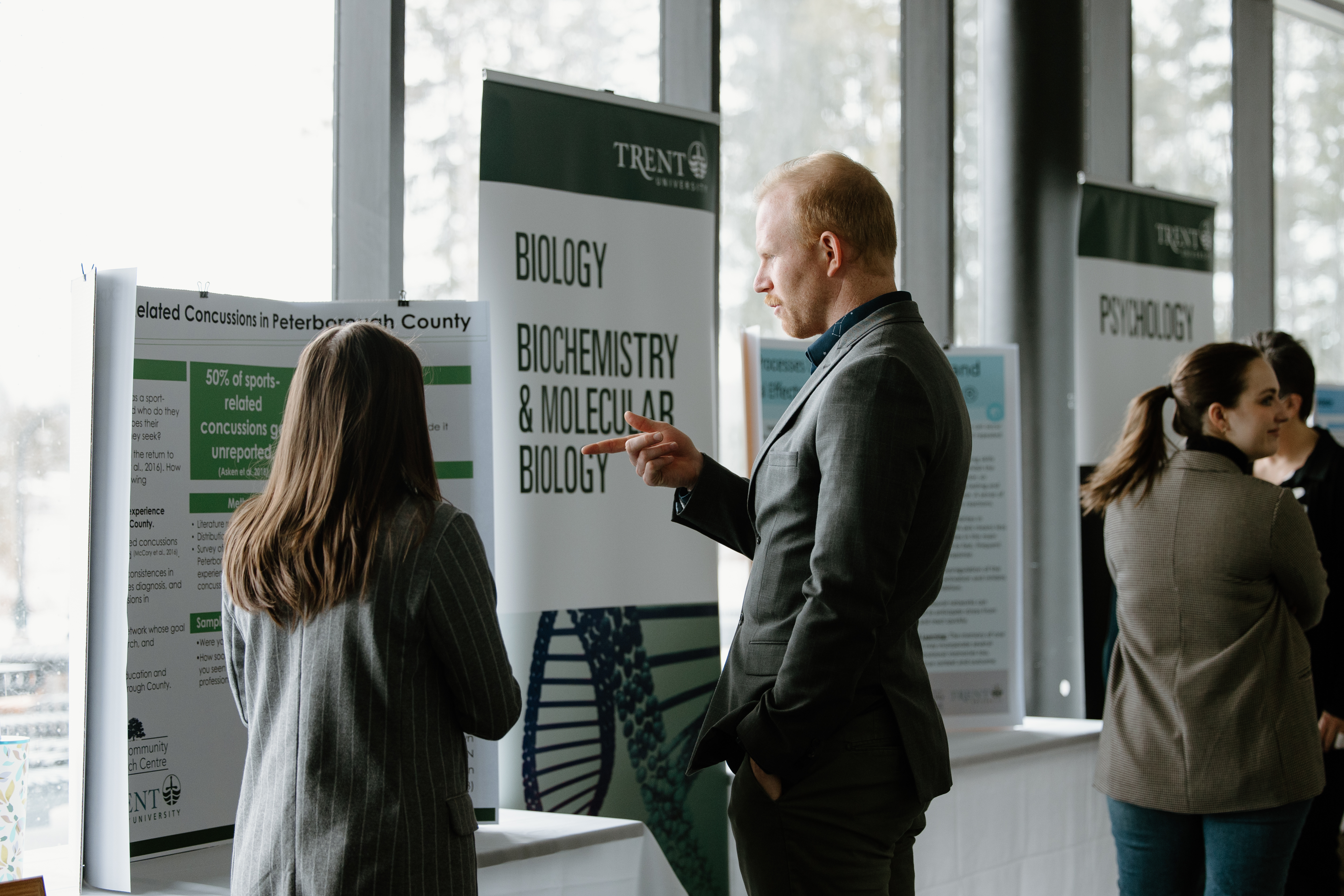
Students are currently conducting community based research projects for the 2026-2027 Academic Year. These projects in-progress span across a diverse range of programs and provides students with valuable real-world learning experiences while contributing to meaningful solutions for local organizations.
- Applied Modelling & Quantitative Methods
- Business Administration
- Biology
- Criminology
- Environmental & Resource Science
- Forensic Science
- Global Development Studies
- History
- Indigenous Studies
- Political Studies
- Psychology
- Sociology
Applied Modelling & Quantitative Methods
#6640: Client Mapping for Immigrants and Refugees in NCC's Catchment Area

The students undertaking this project will help to create two catchment area maps (one public-facing and one for internal uses), identifying the distribution of NCC's clients throughout the region. These maps will help NCC better understand the needs of their clients, and the barriers that their clients may be facing, in order to improve service provision and better advocate for clients.
Student Researcher(s): Dimitry Mishchenko, Ibrahim Yousufuddin, Mohammed Muzammil
Faculty Supervisor: Mikhail Genkin
Sustainable Development Goal(s):
Business Administration
#6492: Why Aren’t Younger Audiences Showing Up? Understanding Barriers to Live Performance Attendance in Peterborough

Through this project, we aim to better understand the barriers that prevent Peterborough residents ages 18 to 50 from attending live performances at Showplace. Previous internal research has identified lack of awareness as one such barrier. One goal of this project is to learn where and how people across this age demographic receive their information about live entertainment and events in Peterborough. The project aims to better understand the findings to ensure this audience is being engaged effectively.
Student Researcher(s): Abigayle Grodzinski
Faculty Supervisor: Saeid Kermani
Sustainable Development Goal(s):
#6597: Training & Employment Pathways Inventory (TEPI)
This project will develop an inventory of employment, education, and skills training programs available and accessible to job seekers in Northumberland, Peterborough, Kawartha Lakes, and Haliburton. Through an environmental scan, students will identify and document past and current workforce development initiatives, including program goals, target populations, best practices, supports offered, and outcomes. The research will examine resources from organizations and initiatives such as Elevate Plus, Muskoka-Kawarthas Employment Services, Skills Development Fund Ontario, and Workforce Development Board. The goal is to create a practical resource to help job seekers understand what supports, training opportunities, and pathways to employment are available to them and to help community organizations understand the breadth and depth of education and training programs to help inform future program development that may be able to build on past successful projects.
Student Researcher: Alyssa Mulvey
Faculty Supervisor: Christine Brown
Sustainable Development Goal(s):
#6621: Understanding Durham’s Nonprofit Landscape
This project will examine the current state of the nonprofit sector in Durham Region by combining findings from the Ontario Nonprofit Network’s (ONN) annual sector-wide survey with local data and insights. Through interviews with nonprofit leaders and staff, the project will capture the experiences, challenges, successes, and needs of organizations across the region. The goal is to develop a clearer understanding of Durham’s nonprofit space and identify opportunities to strengthen the sector’s capacity, sustainability, and impact.
Student Researcher: Grace Amun
Faculty Supervisor: Saeid Kermani
Sustainable Development Goal(s):

Biology
#6312: Understanding the Neuroscience and Biology Behind Neural Network Therapy® (NNT) as a Therapeutic Modality
The purpose of this project is to determine the connection between the neurobiology impacted by Neural Network Therapy® (NNT) and sustained improvements in mental health and well-being. The science of practical exercises compared to traditional talk therapy increases the longevity of emotional health.
Student Researcher(s): Shannon Miller
Faculty Supervisor: David Beresford
Sustainable Development Goal(s):
#6524: Bridging the Diagnostic Divide: Veterinarian Insights on Equine Health Needs and Metaboly’s Role

This project will center on the perspectives of veterinarians, exploring the current challenges they observe in equine health, diagnostics, and daily care. Through targeted interviews and consultations, it will identify the key health, environmental, and management issues that veterinarians believe remain underserved due to limited diagnostic capabilities. The project will also examine how veterinarians perceive Metaboly’s non-invasive services as potential solutions to existing gaps in equine care. Finally, it will gather insights on what messaging and value propositions would most effectively communicate Metaboly’s benefits to veterinary professionals.
Student Researcher(s): Olivia Onafrychuk
Faculty Supervisor: Kirk Hillsley
Sustainable Development Goal(s):

#6629: Data Analysis to Assess Disturbance on Adjacent Habitats

The goal of this project is to determine how habitats adjacent to disturbed areas have evolved in comparison to areas that have recovered more. The park has a long and extensive logging history that took place over more than a century. This project will look at disturbed areas within the park, comparing a recently disturbed area with an area that has been allowed more time to recover, and assessing the impacts of that disturbance on adjacent habitats, especially where it relates to species composition and diversity. How the recovery process has changed, been impacted, or evolved will be studied. The project will work with data collected from various habitat inventories, including flora, fauna and bird surveys, as well as historical documents that track when and where logging occurred in the park. The project aims to gain a better understanding on how logging has impacted ecosystems.
Student Researcher(s): Aruja Kulkarni
Faculty Supervisor: David Beresford
Sustainable Development Goal(s):
Criminology
#6638: Community Attitudes on IPV/GBV in Peterborough City & County (Part 2)
To address recommendation 24 from the Renfrew Coroners Inquest: Complete a yearly annual review of public attitudes through public opinion research, and revise & strengthen public education material based on these reviews, feedback from communities and experts, international best practices, and recommendations from the Domestic Violence Death Review Committee and other IPV experts. This survey would be limited to members of the communities of Peterborough City and County. Demographics using standardized questions and location of residence (inside or outside the city/county boundary) will be collected. The survey would aim to identify gaps, needs and priorities for public education and outreach activity as well as measure the impact and effectiveness of education and outreach activity. This work will improve the impact and effectiveness of PDAN's projects, provide local data on attitudes and awareness that will be useful to all PDAN member organizations and ultimately support PDAN's goal of ending gender-based violence in our community.
Student Researcher(s): Charlotte Fowle
Faculty Supervisor: Stephanie Ehret
Sustainable Development Goal(s):

Environmental & Resource Science
#6280: Brook Trout Restoration in Baxter Creek at Zion Line
Brook Trout (Savelinus fontinalis) abundance at the Zion Line reach of Baxter Creek is depressed compared with other reaches in the watershed. The primary goal of this project is to restore native Brook Trout populations in the Zion Line reach of Baxter Creek. Early stages of this project will analyze available data from this reach and compare/contrast with accepted research on similar habitats - biological data includes fish community and aquatic invertebrates, and physical data includes morphological habitat measurements. If the early work supports the pursuit of habitat restoration, next steps would include the design of instream and riparian restoration methods. Once a final plan is approved and permitted by necessary agencies, work onsite could be completed by Trout Unlimited members and volunteers, and students engaged in this project.
Student Researcher(s): Brendan Joyce
Sustainable Development Goal(s):
#6452: Nature-Based Carbon Solutions in Freshwater Wetlands: A Literature Review of Blue Carbon
This research project will broaden our current understanding of “blue carbon” in freshwater wetlands- including methods for estimating carbon fluxes and co-benefits such as biodiversity support. The primary task for the student(s) undertaking this project will be to conduct an in-depth literature review of recent academic research and guidance on how these systems store or reduce greenhouse gases and how those benefits are quantified. Moreover, you will examine how the findings may steer future landscape-management choices at Trent, while gaining meaningful experience in environmental research and policy.
Student Researcher(s): Thadshagini Gengasuthan
Sustainable Development Goal(s):
#6462: Baseline Monitoring of Vegetation Communities and Grassland Birds at the Wesleyville Lands

This annual field project focuses on gathering long-term baseline data on the vegetation communities and bird species of the grassland areas of the Wesleyville Lands, primarily owned by Cameco Corporation. Students will conduct standardized vegetation and bird surveys each summer to help evaluate ecological change over time and inform future restoration efforts. Using a combination of fixed-point and random sampling across 20 vegetation plots, the fixed points, data collection methods, and plot sizes will ensure reliable year-to-year comparison, with GPS points recorded for fixed sites to maintain accuracy. Students will also complete fixed-point grassland bird surveys to monitor species' presence, including species at risk. At each point, they will take directional photographs and document all birds detected by sight or sound. These combined datasets will help assess how vegetation structure influences grassland bird use and guide habitat enhancement planning. Overall, this annual monitoring program will create a valuable long-term dataset to support collaborative conservation and restoration within the Wesleyville grasslands.
Student Researcher(s): Charlie Benoit
Sustainable Development Goal(s):
#6486: Evaluating the Effects of Goldfish on Oshawa Second Marsh

Oshawa Second Marsh (OSM) is a severely impacted coastal wetland on the north shore of Lake Ontario. OSM has a long history of management and restoration activity. Most recently, a fish grate was installed on the water level control structure thereby excluding invasive Common Carp. This grate was vandalized and Common Carp were reintroduced to the marsh. This provided an opportunity to empirically evaluate the effects of Common Carp on the ecosystem. Seven abiotic and vegetation variables changed significantly and community health index scores decreased. Another invasive species, Goldfish have always had access to the marsh and dominate the fish community today. This project aims to better understand their impacts on the wetland and fish community. Monitoring has highlighted ecosystem decline and investigating Goldfish’s role in this decline will help inform future management decisions. The successful student would perform a statistical analysis on the long-term monitoring data and compile a report of their findings.
Student Researcher(s): Morgan Kelsey
Faculty Supervisor: Tom Whillans
Sustainable Development Goal(s):
#6611: “ELECTRIFY PETERBOROUGH” How to Increase Renewable Energy Generation and Reduce Energy Consumption in Peterborough, the Electric City
Building on the century-old image of “Peterborough, the Electric City”, this project will take what has been learned about the potential for renewable energy - and national and provincial plans, policies and funding support - and apply that to Peterborough.
Sustainable Development Goal(s):
#6644: High-Speed Rail Impacts on Communities and Emissions

The federal government has proposed constructing a high-speed rail connection between Toronto and Quebec City, highlighting the benefits in terms of efficiency, reduction in traffic congestion and GHG emissions, construction jobs, and modernizing Canada’s transportation system. Opposition to the plan has come from area residents, organizations, and some elected officials who are concerned about loss of farmland, biodiversity, road access, and the effects on source water, emergency services, and recreational areas. This project would take a news journalist approach: looking at the public consultation process and available research on the impact of high-speed rail on GHG emissions in terms of taking vehicles off the road vs. environmental impacts of building the rail line.
Student Researcher(s): Grace Boyle
Faculty Supervisor: Stephen Hill
Sustainable Development Goal(s):
#6648: Swifting through Kawartha Lakes: Understanding how to Conserve Chimney Swift Populations in the City of Kawartha Lakes

Chimney Swifts are a species at risk that rely on uncapped brick, stone, or concrete chimneys. This project will focus on Chimney Swift conservation by identifying active roosting sites, assessing habitat characteristics, and categorizing threats to these sites. This research will provide Bird Friendly Kawartha Lakes with valuable information to conserve chimney swift populations in the City of Kawartha Lakes.
Student Researcher(s): Brittany Zeus
Faculty Supervisor: Maggie MacPherson
Sustainable Development Goal(s):
#6671: Evaluating Onsite Wastewater Design Standards for Ontario's Future
Ontario is facing growing pressure to support housing development, manage limited aggregate resources, and make more efficient use of land while continuing to protect public health and the environment. This project will investigate and compare onsite sewage system design standards used in Ontario and other jurisdictions, examining the data, assumptions, and regulatory frameworks that influence system sizing and land requirements. Students will compile and analyze design methodologies from multiple jurisdictions to identify key similarities, differences, and knowledge gaps, helping to determine how Ontario's approach compares with broader industry practices. The findings will provide a foundation for future phases of research evaluating the impacts of different design standards and comparing them against real-world wastewater flow data. Ultimately, the project aims to support evidence-based improvements to Ontario's onsite sewage system design requirements and inform future policy and infrastructure planning decisions.
Student Researcher(s): Liam Swann, Louis Wong
Faculty Supervisor: Eric Sagar
Sustainable Development Goal(s):
Forensic Science
#6493: Health and Wellbeing in the Absence of Housing

This project explores how homelessness affects physical and mental health, drawing on the lived experiences of individuals served by Doors of Compassion. By centering personal stories, the project aims to humanize homelessness while also examining how the broader community understands its health impacts. Students will speak with patrons, service providers, and local businesses to better understand perceptions, common misconceptions, and gaps in support related to homelessness and health. The goal is to produce practical insights that can be used to improve services, inform training, and strengthen education efforts.
Student Researcher: Hope Berthiaume
Faculty Supervisor: Mira Kapetanovic
Sustainable Development Goal(s):
#6557: Building Capacity to Respond to Honour-Based Violence

This project focuses on developing a practical, culturally responsive training module for police officers, victim services, and victim witness professionals to better identify and respond to Honour-Based Violence (HBV). Drawing on existing research, draft indicators, and community-informed insights, the module will cover early warning signs, survivor-centered response strategies, and the dynamics that shape why women may remain in abusive situations. The project will also assess current gaps in knowledge and practice to ensure the training reflects real-world needs. The goal is to strengthen frontline capacity to recognize HBV and respond in ways that prioritize safety, trust, and cultural sensitivity.
Student Researcher: Vivianne Cheong Yi Lin
Faculty Supervisor: Mira Kapetanovic
Sustainable Development Goal(s):
#6607: Understanding Prevention-Based Approaches in Child and Youth Services
Rebound Child and Youth Services (RCYS) delivers programs that aim to prevent the long-term effects of mental health, homelessness, food insecurity, and substance use. Through a literature review and interviews, this project will explore what prevention looks like in practice and identify meaningful indicators that can help RCYS understand the preventive impact of their programs. The findings will be used to assess the current preventative impact across all programs and strengthen programming and improve how RCYS measures and communicates their impact.
Student Researcher: Chloe Shaw
Faculty Supervisor: Mira Kapetanovic
Sustainable Development Goal(s):

#6608: Applying an Evaluation Framework to Rebound Child and Youth Services' Programs
This project will develop and apply a standardized program evaluation framework that assesses how well programs align with Rebound Child and Youth Services’ strategic priorities, wellness-focused approach, equity goals, and prevention objectives. The framework will be used to review existing programs and identify opportunities for improvement, redesign, growth, or discontinuation. The findings will support future planning, resource allocation, and decision-making for the 2028–2029 budget cycle.
Student Researcher: Autumn Ball
Faculty Supervisor: Mira Kapetanovic
Sustainable Development Goal(s):
#6609: Deterring Sexual Crimes Part 2 - Developing an Educational Resource

This project will build on previous community-based research project (#6402) related to the prevention of sexual offending by developing an evidence-based educational module focused on awareness, early intervention, and access to support. The student will use existing research findings and conduct additional interviews and surveys with service providers to better understand how organizations collaborate to support individuals at risk of committing sexual offences and how resources can be effectively shared. The project will also explore the role of stigma in preventing individuals from seeking help. The goal is to create a practical educational resource that supports prevention efforts, increases awareness of available services, and strengthens collaboration among community organizations.
Student Researcher: Patricia Paskins
Faculty Supervisor: Mira Kapetanovic
Sustainable Development Goal(s):
#6642: Exploring Sustainable Housing and Support Models for Older Adults Experiencing Homelessness in Peterborough

This project will explore how aging in place can be supported for older adults experiencing homelessness or housing instability. The research will examine existing models of supportive housing and aging-in-place approaches to identify what has worked well in other communities and how these approaches could be adapted locally. This will include the legal, policy, and service requirements needed to create sustainable pathways for older adults to remain safely housed while maintaining dignity, independence, and connection to community.
Student Researcher: Haley House
Faculty Supervisor: Mira Kapetanovic
Sustainable Development Goal(s):
#6647: Building Safer Communities: Evaluating the Impact of Canada's Circles of Support and Accountability Program
This research project seeks to evaluate the effectiveness of Canada's Circles of Support and Accountability (CoSA) program by examining its impact on recidivism rates and community safety. This project will assess whether the program contributes to lower rates of reoffending and more successful community reintegration. The project will also explore the underlying principles and practices that make CoSA effective, including its emphasis on accountability, social support, and community involvement. Ultimately, the research aims to demonstrate how CoSA fosters positive outcomes for participants while enhancing public safety and providing evidence for its role as an effective crime prevention and reintegration strategy.
Student Researcher: Grace Obot
Faculty Supervisor: Mira Kapetanovic
Sustainable Development Goal(s):
Global Development Studies
#6497: Positive Outcomes of Community Programming for Individuals with Disabilities

This project aims to explore the positive outcomes associated with intentionally bringing together people with and without disabilities to form lasting friendships and a supportive community. The goal is to identify the benefits our programs provide, including opportunities for social connection, skill development, and a sense of individual and community well-being. By centering participants experiences, the project highlights what is working well within inclusive community spaces. The findings will help inform future programming to better support inclusion and meaningful participation.
Student Researcher(s): Kennedy Steeves, Kathryn Lou
Faculty Supervisor: Paul Shaffer
Sustainable Development Goal(s):
History
#6445: Remembering British Home Children in Manvers Township (FA26)
Between the 1860s and 1930s, more than 100,000 children from Britain were sent to Canada by charitable organizations such as Barnardo’s, Fegan Homes, and the Middlemore Homes. These children—often orphans or from poor families—were promised a better life overseas. This research aims to uncover the history of British Home Children in Manvers Township, where over 100 children are believed to have been placed. Researchers will be tasked with describing the broader home children scheme in Canada. Through access to archival records of census, ship logs, and home records Research and verify the names and lives of Home Children placed in Manvers Township, in the City of Kawartha Lakes.
Student Researcher(s): Danielle Lindegger
Faculty Supervisor: Jennine Hurl-Eamon
Sustainable Development Goal(s):
Indigenous Studies
#6559: Developing a Culturally Informed Exit Protocol for Women Experiencing Honour-Based Violence in Canada
This project examines how Honour-Based Violence (HBV) affects the health and well-being of South Asian women across the GTA and Canada. It focuses on the challenges women face when trying to leave abusive situations, particularly the risks tied to family and community expectations around honour. The project will explore how police, victim services, and community organizations currently respond, and whether clear, coordinated exit protocols exist. By centering community voices, the goal is to identify gaps and develop a safer, more culturally informed protocol to support women leaving HBV.
Student Researcher: Tiana Lee
Faculty Supervisor: Heather Shpuniarsky
Sustainable Development Goal(s):
Political Studies
#6490: Enhancing Access to Justice Through Integrated and Collaborative Community Services in the Kawartha Lakes
Together for Justice is an initiative by the Kawartha Community Foundation, in partnership with the Law Foundation of Ontario and the Community Foundations of Canada, aimed at strengthening justice-related supports for individuals facing intersecting barriers. Through a case study of Community Conversations facilitated by the Kawartha Community Foundation and examining collaborative approaches and referral practices, this project will provide evidence-based insights and recommendations to enhance the integration, coordination, and delivery of services to individuals experiencing complex social, economic, and systemic challenges.
Student Researcher(s): Aby Wilson
Faculty Supervisor: Devin Penner
Sustainable Development Goal(s):
Psychology
#6456: Navigating the Ontario Public Education System when ADHD, Executive Functioning Impairments, and Common Co-morbidities are Present
Students with executive functioning impairments, often associated with ADHD, autism, and Fetal Alcohol Spectrum Disorders (FASD), face a higher likelihood of being suspended, expelled, or excluded from the classroom. These students are less likely to graduate from high school or attend post-secondary education, and they are at a greater risk of living in poverty. Additionally, they are more likely to suffer from physical and mental health issues, experience addiction, be incarcerated, be involved in car accidents, and have a shorter lifespan. The goal of this project is to determine whether students' access to accommodations and their educational outcomes improve when their caregivers have a better understanding of the special education system, the Ontario Human Rights Code, and advocacy skills.
Student Researcher(s): Shaffun Inayat
Faculty Supervisor: James Parker
Sustainable Development Goal(s):
Sociology
#6483: An Evaluation of Waitlist Needs and Service Opportunities at Thrive Support Services
Thrive Housing and Support is proposing a project to understand the characteristics and needs of individuals waiting for Thrive’s support services. The project will analyze waitlist data to identify the demographics, presenting needs, and risk factors of people awaiting services, and will examine the system pressures reflected in the waitlist population, including aging caregivers, alternate level of care (ALC) in hospital, opportunities for long-term care diversion, and risks of homelessness. In addition, the project will identify evidence-based service approaches, including social recreation and other interim or low-intensity supports that are most likely to improve outcomes for individuals while they wait for services. Findings will be used to inform service planning, funding proposals, and support advocacy.
Student Researcher(s): Andriana Semeniuc
Faculty Supervisor: Greg Yerashotis
Sustainable Development Goal(s):
#6610: Family Supports for Incarcerated Individuals
Families of incarcerated individuals often face significant emotional, financial, and practical challenges while trying to navigate correctional systems and access support services. This project will examine the barriers families encounter, including communication difficulties with correctional institutions, policies, and stigma. Through interviews, surveys, and policy analysis, the research will identify gaps in current supports and highlight effective practices. The findings will be used to develop an accessible, educational resource that will help families find information, understand institutional processes, and connect with relevant services.
Student Researcher(s): Christina Vosters
Faculty Supervisor: Elizabeth Torrens
Sustainable Development Goal(s):
#6673: Youth Justice in Rural Communities
This project will examine youth justice in rural communities, with a particular focus on youth crime, youth gang recruitment, and gaps within the youth justice system. Recent findings have identified youth crime as a growing concern, including both violent and non-violent offences, while there are also concerns that young people are increasingly being recruited by organized crime groups to commit offences in rural communities. Through a review of existing literature and policies, this project will explore the factors that may make rural youth vulnerable to gang recruitment and whether current youth justice responses adequately address these challenges. The goal is to identify gaps and opportunities for prevention, early intervention, diversion, and stronger community-based supports for young people.
Faculty Supervisor: Sonia D'Angelo
Sustainable Development Goal(s):