

Where the ‘Wilde’ Things Are: A Sojourn through the Maritimes -- Anhiti Patnaik
In the fall of 1882, the celebrated Anglo-Irish writer and dramatist Oscar Wilde visited North America to lecture on what he called the ‘decorative arts.’ It may be considered the world’s first public relations tour for a radical aesthetic movement. Aestheticism, or l’art pour l’art, had a somewhat tenuous presence in Irish and British culture, causing Wilde to seek more open and accepting shores. What he found in America and Canada was precisely the sort of intellectual curiosity and fame he had so craved on the Continent. Travelling long and light, Wilde delivered 140 lectures in 260 days in a variety of cities and public institutions from California to Nova Scotia, Texas to Quebec. The best account of this journey may be found in Kevin O’Brien’s Oscar Wilde in Canada: An Apostle for the Arts (1982), as well as the more recent Roy Morris Jr.’s Declaring his Genius: Oscar Wilde in North America (2013). During the course of my research on Wilde, I was surprised to see how underrated this connection between Canada and Victorian culture is. There is a strong tendency within the canon to segregate writers and movements based on their geographic points of origin instead of focusing on the points of dissemination. I found it odd that I had spent over three years researching in Canada without ever being told that Wilde had visited Ottawa, Montréal, and even the Maritimes.
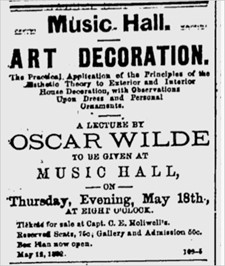
The Quebec Daily Telegraph, May 16th 1882
The manner with which Wilde was received in the Maritimes varied from the fascination and approval of like-minded aristocrats and artists to the coldness and bemusement of a middle-class ‘philistine’ audience that was mainly interested in getting this queer man a haircut! Meanwhile, The Punch Magazine in London promoted Wilde by turning him into a caricature of the Aesthetic Movement. His lecture tour became one of the most iconic cultural events of the nineteenth century and he was the only prominent writer to be photographed for its promotion. Wilde enjoyed attention, good and bad, and willingly offered himself up to the altar of the visual and written media. Anything he wore, ate, or declared during his travels became front-page news, and he might well be the first celebrity writer of the modern age. Upon docking at American immigration in New York on 3rd January 1882, he famously said, “I have nothing to declare except my genius.” When faced with the façade of the magnificent Niagara Falls in February, he said “Niagara falls is the first great disappointment in American married life.” He was quipping of course on how it was such a popular honeymoon destination then, even as it is now. I do think, however, that the anti-climax may have had something to do with it being the heart of winter. Having myself seen the Falls in its autumnal glory as well as in a frigid and forbidding avatar in February, I can certainly imagine how Wilde would have interpreted its icy transformation to be a symbol for heteronormative marriage!
Another rhetorical gem from Wilde’s tour was, “I never travel without my diary. One should always have something sensational to read in the train.” When I boarded the train to Halifax at the Via Rail station at Sainte-Foy on 24th June, I did not have a diary but I did carry my laptop. There is no dearth of “sensational” or scandalous material in my Evernote logs. It pleased me to recall that Wilde was exactly my age—twenty-eight—when he got on the Intercolonial Railway. After he had lectured at the Music Hall on rue-Saint Louis in Quebec City, he dined at the still extant Garrison Club. Its charming garden restaurant was my first stop for lunch and I had the house red with rabbit stew. Later that night on the train, I realized that this was the first time I was travelling to write as I normally travel to get away from writing. Retrospectively, I must admit not a lot of serious writing happened on what proved to be the greatest adventure. Instead, all I have are photographs and short notes detailing the specific ‘placeness’ of a place and my emotions of being there. Over a period of two weeks, I saw Halifax, Lunenberg and Mahone Bay, Cavendish, Charlottetown, and St. John’s Newfoundland. For once, I did not have to be anxious about expenses and could really steep myself into the local culture and topography. And for that I must thank the donors, Canadian Studies, and Jeannine Crowe for helping me organize my trip.
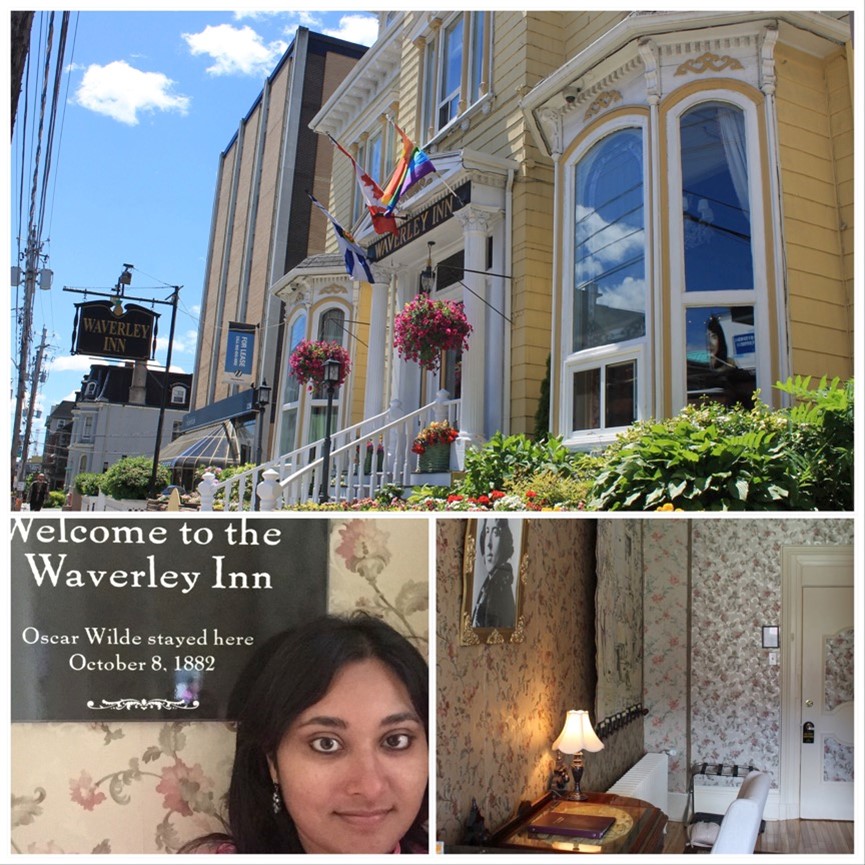
Right in the heart of downtown on Barrington St, Halifax’s Waverley Inn opened in 1876 and has since seen many famous guests including Wilde, John Doull and Thomas Fyshe of the Bank of Nova Scotia, George Vanderbilt, and the premier George H. Murray. The proprietors were kind enough to let me take some photographs of Wilde’s room. There was a leather-bound collection of Wilde’s Collected Works for guests to peruse, and portraits of Queen Victoria and the royal family. The pride flag fluttering at the entrance was a nice tribute to Wilde’s legacy in gay literature and culture.
I also spent some time at the Maritime Museum of the Atlantic and the Museum of Immigration at Pier 21. Angelica Harris, author of the upcoming book Titanic—The Brothers Peracchio: Two Boys and a Dream, gave a special lecture on her family’s connection to the tragedy. It was extremely poignant but laced with the irony and objectivity requisite for a book that is part-history part-memoir.
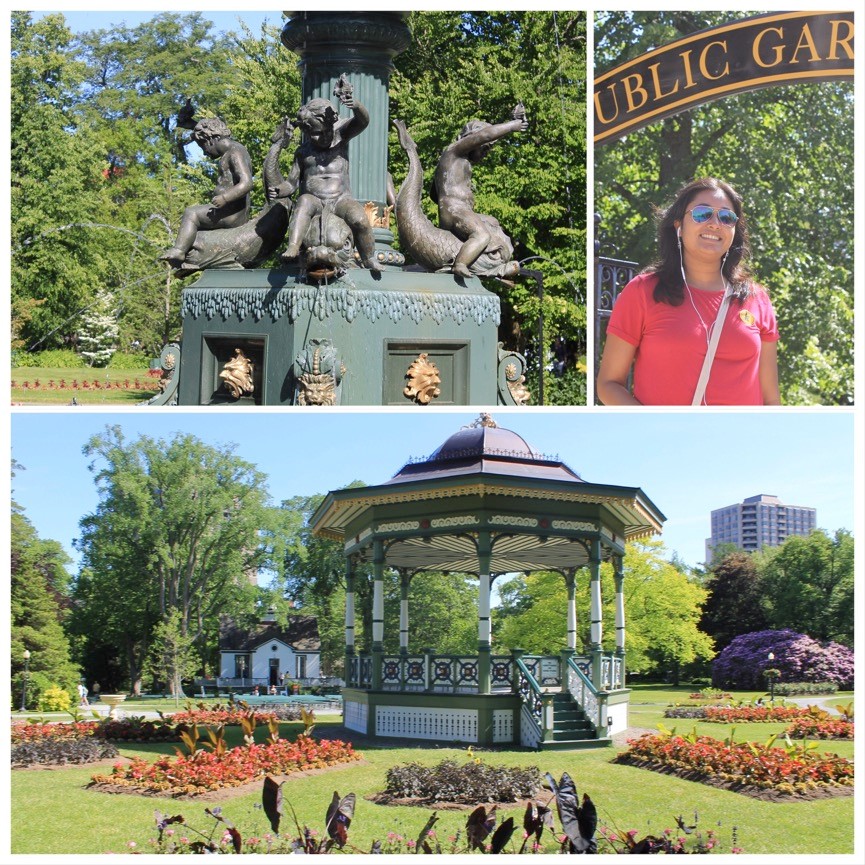
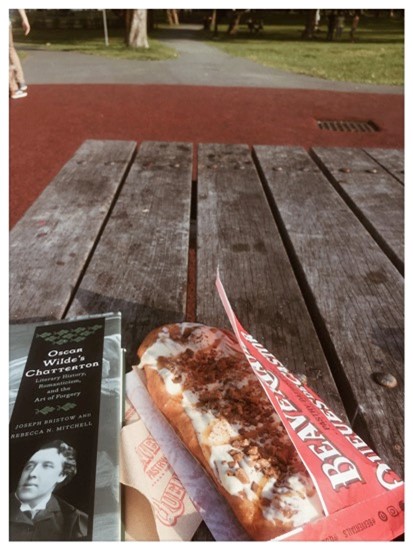
Most of the next day, I read at the Halifax Public Gardens, which has retained its architectural and horticultural integrity since 1874. Besides the Victorian gazebo and Jubilee Fountain, there were many interesting signs about its history. I was happy to read that many of the trees that had been originally planted in 1890 were still thriving. I didn’t have tea and cucumber sandwiches handy, but it felt enormously satisfying to grab a hot crispy beavertail!
At the Art Gallery Nova Scotia, I checked out the Maud Lewis exhibit and particularly enjoyed the pochoir fashion prints of the fin-de-siècle artist George Barbier.
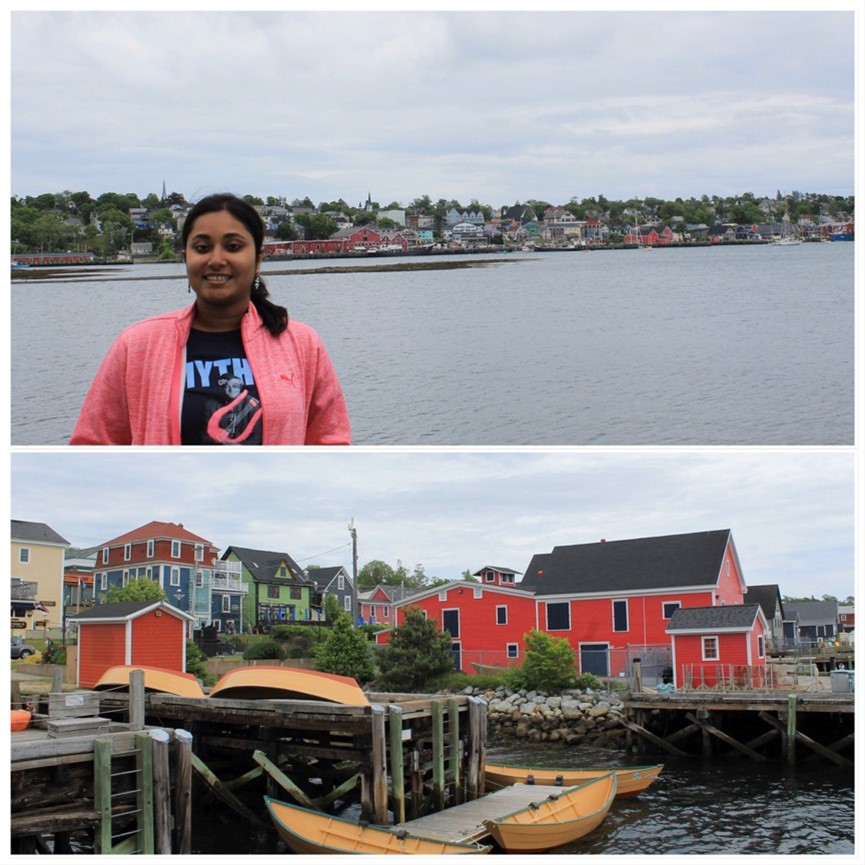
I had heard that Lunenburg was an excellent weekend stop from Halifax, especially for window-shopping and the finest fish and chips on the coast. The Old Town was designated a UNESCO World Heritage Site in 1995. I took the Murphy’s bus tour and was dropped off at the pier. It is lined with galleries and boutique stores, many of which sell Victorian antiques, vintage clothes, and jewellery. I was sorely tempted to buy a floral brooch from the 1820s resembling Aubrey Beardsley’s patterns for The Yellow Book. I settled instead on a more affordable Sarah Bernhardt hand mirror. I loved walking through the residential streets to take pictures of the nineteenth-century homes with their iconic ‘Lunenburg bump’ and biblical iconography.
Attached below is a picture of the Academy of Music Performance that offers regularly scheduled performances by its students – another excellent reason to escape the city for some culture.
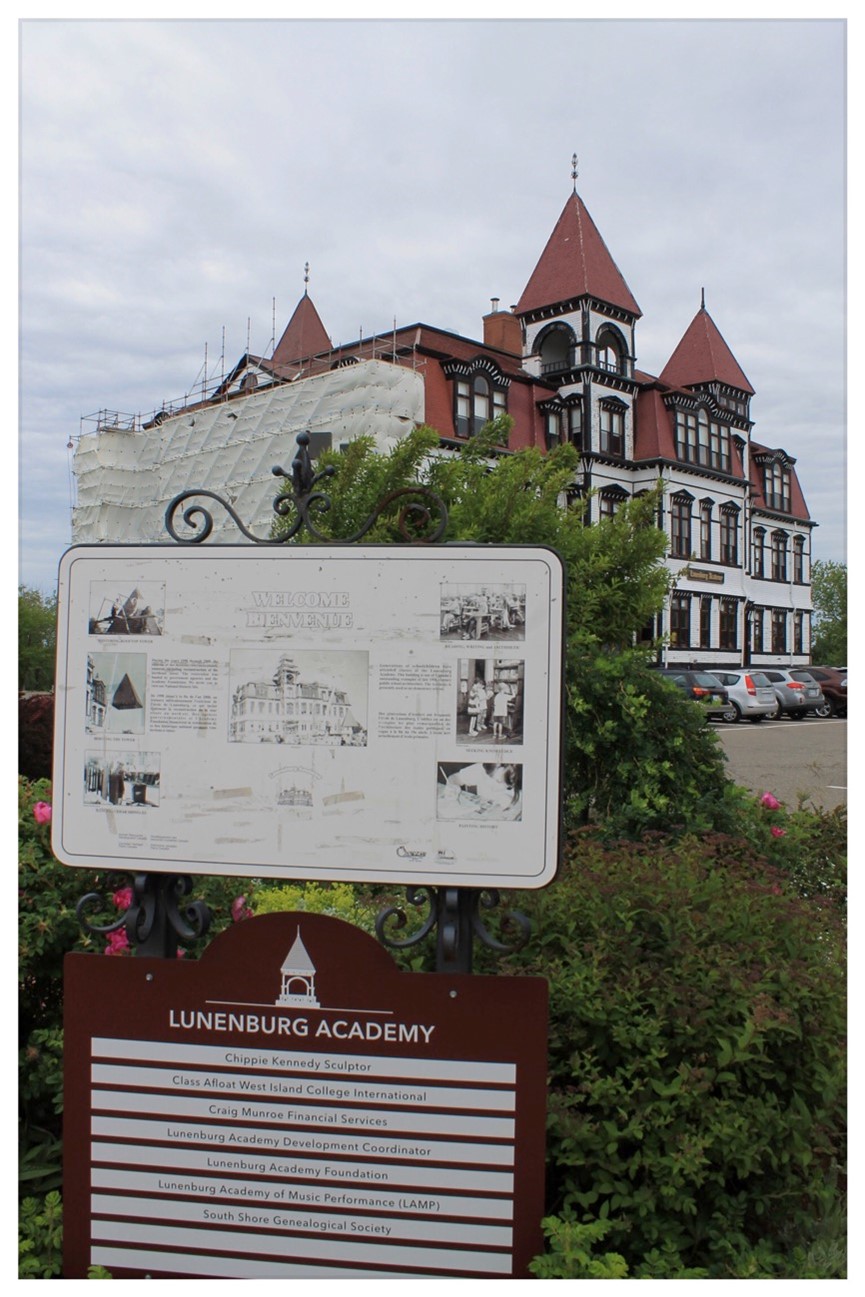
Academy of Music Performance, Lunenburg
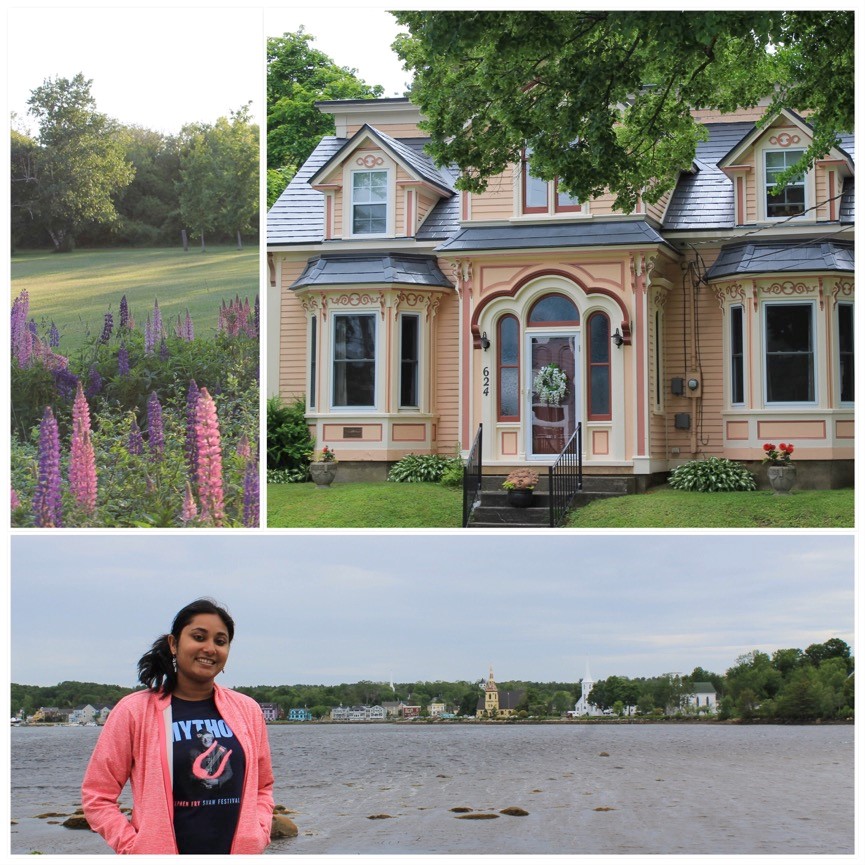
My next stop was Mahone Bay, a chic little town famous for the three Anglican, Evangelical Lutheran, and United churches built consecutively on its harbour. The area has a complex colonial history; having originally been in the Mi’kmaw district of Sipekni’katik but from 1605 onwards, included in the region renamed by the French settlers as ‘Acadia.’ Here too, there are elegant boutique stores and period homes that have maintained their heritage status. At Haskapa, I tried some gin and chutney made from the very trendy haskap berry. I also had a scoop of the dark chocolate salted caramel at Get the Scoop, the adjacent ice cream parlour. I wanted to check out the merch at Amos Pewter and buy souvenirs at the Northern Sun Gallery and Gifts but unfortunately, the tour operator only gave us an hour to wander through town. Ideally, one can spend an entire day making leisurely rounds of the many interesting shops and buildings here.
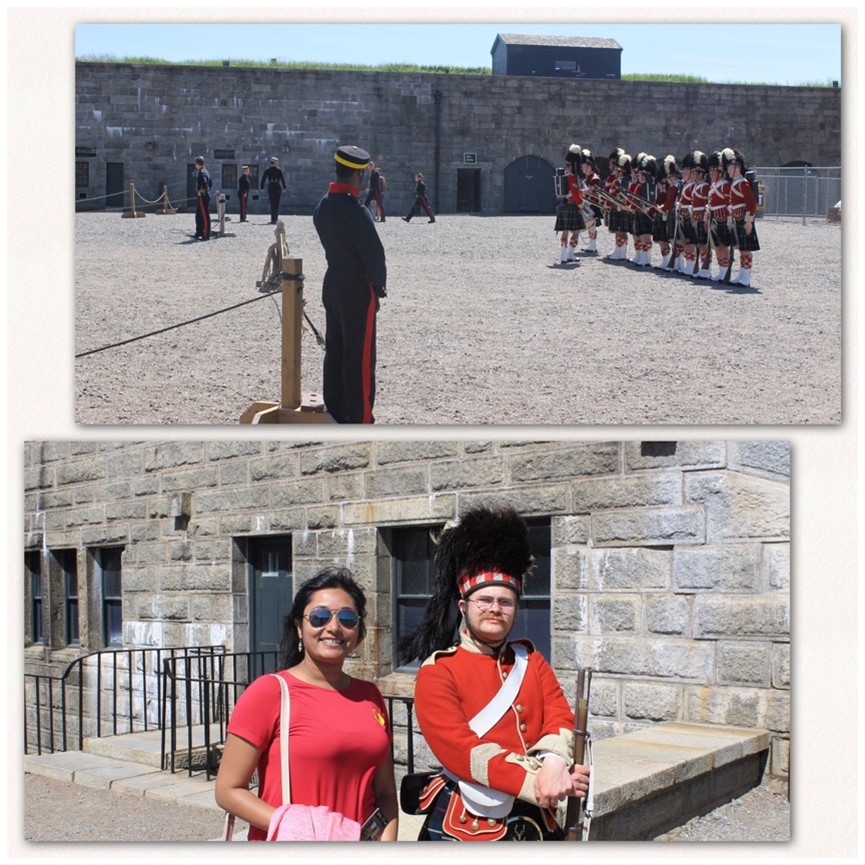
Atop the prominent hill at the Halifax Commons rests another vestige of a bygone era—the Halifax Citadel. Parks Canada has restored it to its mid-Victorian structure and conducts hourly tours of its barracks and ramparts. The animators are dressed in period costume, mostly sporting the uniform of the 78th Highlanders, but also as nurses, soldier wives, royal guards, and bagpipe players. I arrived when the 21-gun salute was being re-enacted. All I could think of was how bizarrely different this martial display of Victorian masculinity was from Wilde’s effeminate circle of poets and artists with their cravats and peacock feathers! Our tour guide, in a bid to appear as authentic as possible, recounted how he and his fellow officers bonded over a game where the man with the most pieces of rock, gravel, and shrapnel sticking to his knee (from the gun salute) was the winner.
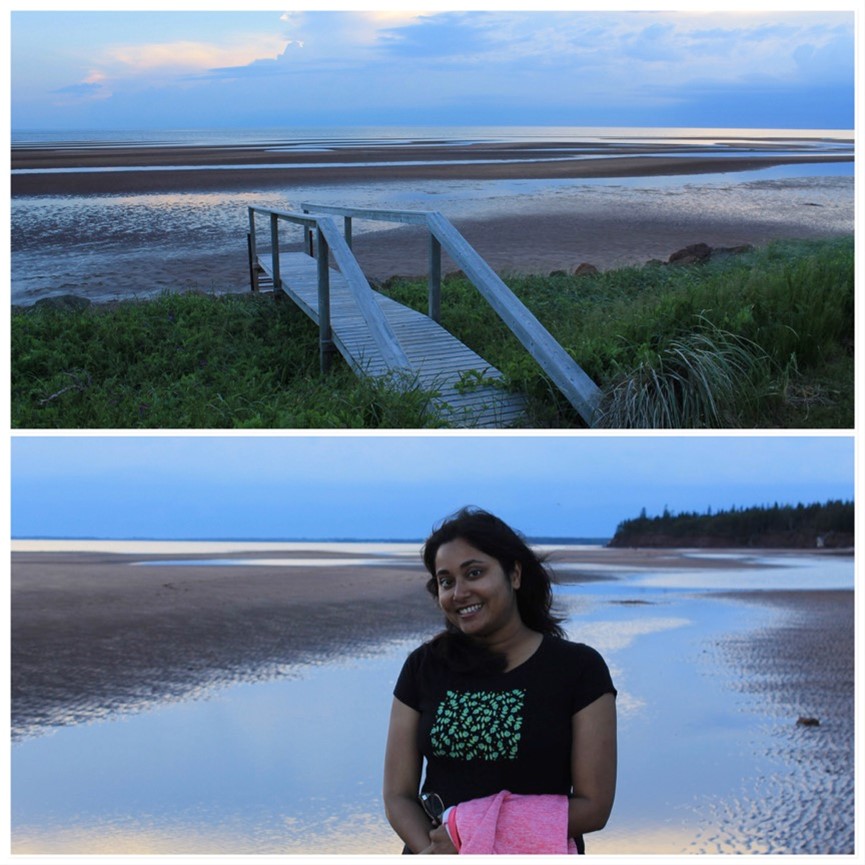
I was still to experience the sublime natural beauty of the East, as I had seen in pictures of bays, lighthouses, and eroded beaches. This was made possible thanks to my friend Jane Affleck, who is in my cohort at Trent and was kind enough to host me at her family cottage at Bedeque on Prince Edward Island. The cottage is a place of refuge for so many sparrows, robins and finches that rely every day on Jane’s care and affection! After four days of frenetic travel, I was glad to cool my heels there and witness sunsets to last a lifetime. She took me for a long walk at Salutation Cove at low tide, where we dipped our feet and dug up small crabs. It was unseasonably warm and balmy on the island that weekend, so the beach was very comfortable. I took a photograph of the lighthouse there (attached below) which is one of my favourite shots of the trip.
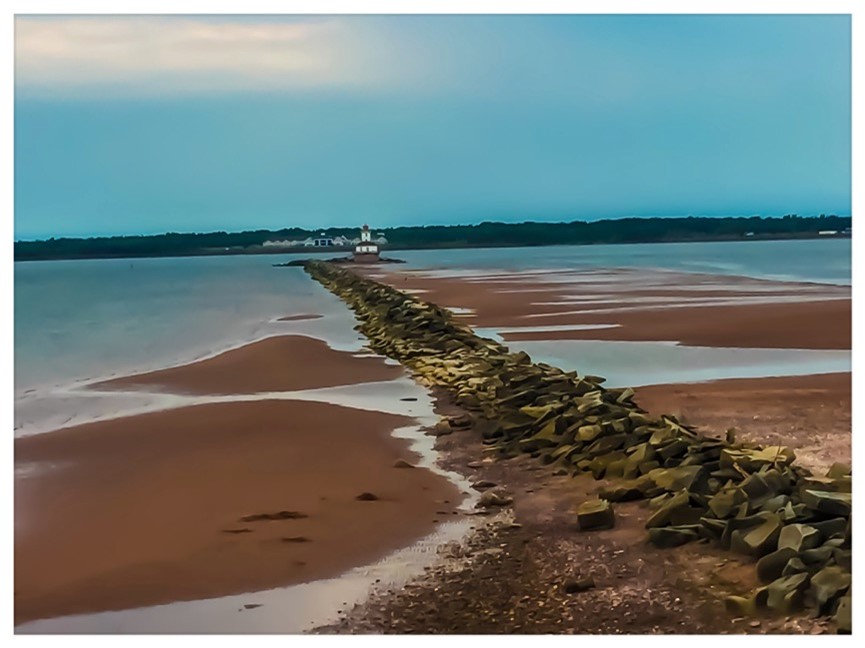
Lighthouse, Salutation Cove
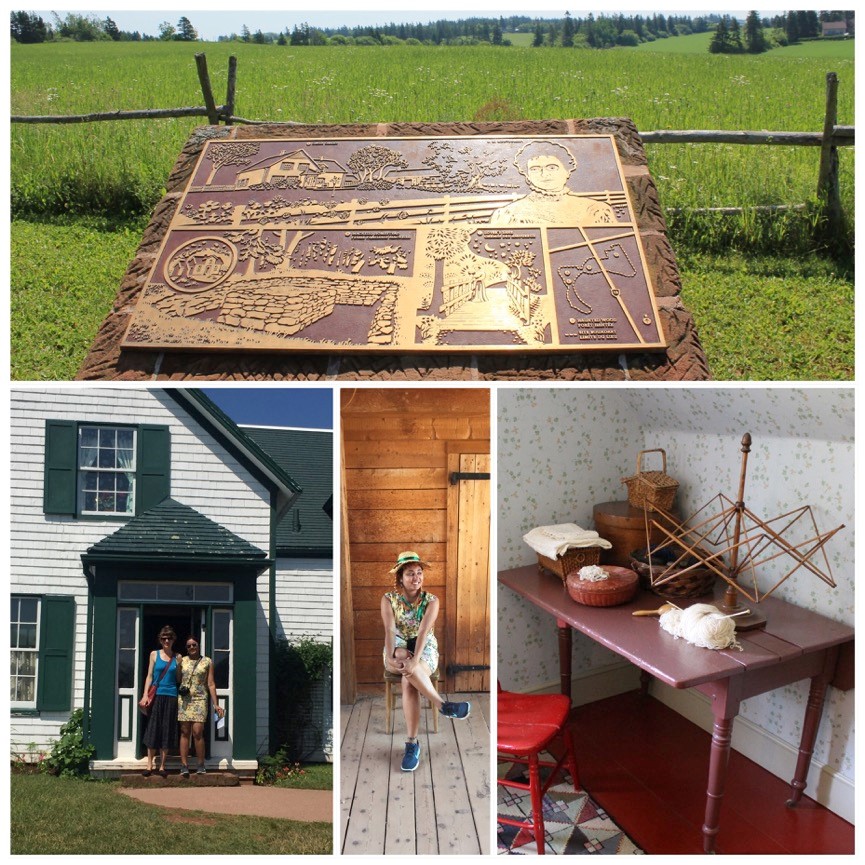
Of course, no trip to the island is complete without a visit to Cavendish where Lucy M. Montgomery was born and buried. This is where most of her Anne series is based, the best-known being the novel Anne of Green Gables that was published in 1908. Along with Jane Eyre and Alice’s Adventures in Wonderland, this is one of the most representative texts of the Victorian female-centric bildungsroman. I have always thought that Anne resembled the precocious, petulant, and poetic children in Wilde’s fairy tales and short stories. Jane and I visited the house that Montgomery had modelled Green Gables Cottage on, and I took pictures of the loom, spinning jenny, stove, washing jugs, footstools and other artefacts of the rural Victorian hearth. It saddened me to see that most of the visitors and their children were not familiar with the novel itself. Green Gables Cottage and Montgomery’s burial place have become fetishized as chief attractions, whereas being there was for me more of a spiritual and nostalgic experience. Even as Anne used her imagination to escape the confined provincial life on the island, I would imagine walking through the Haunted Woods and running on Cavendish beach when I read the book as a child. The landscape seemed so exotic and remote to me, growing up in the heart of bustling New Delhi. It was a deeply thrilling and humbling experience to finally be there!
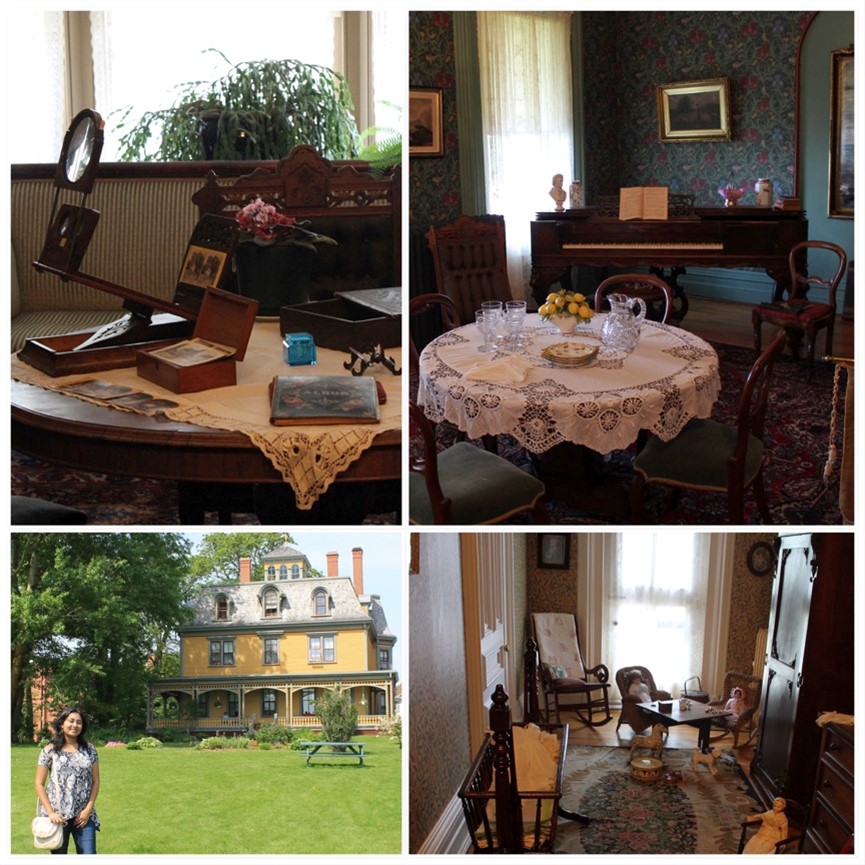
I discovered more Victoriana at the Beaconsfield Historic House at Charlottetown, which offered me free admission on Canada Day. Built in 1877 for James and Edith Peake, it is one of the most enduring symbols of Victorian culture in Canada. I was drawn most to the toys and artefacts in the nursery that looked so much like Cyril and Vyvyan’s room at Wilde’s home in Tite Street, where he would sometimes read to them his fairy tales.
After a lobster and chowder lunch at the vibrant Victoria Row, I headed to the Confederation Centre of the Arts that featured Kent Monkman’s Shame and Prejudice: A Story of Resilience series. I was extremely moved by his representation of Canada’s history of settler colonialism. The paintings dealing with the physical and symbolic violence of the residential schools and forced acculturation were the most hard-hitting. I was not at all surprised to see that the otherwise critically acclaimed exhibit had very low attendance on Canada Day, but to me it seemed like the right place to be.
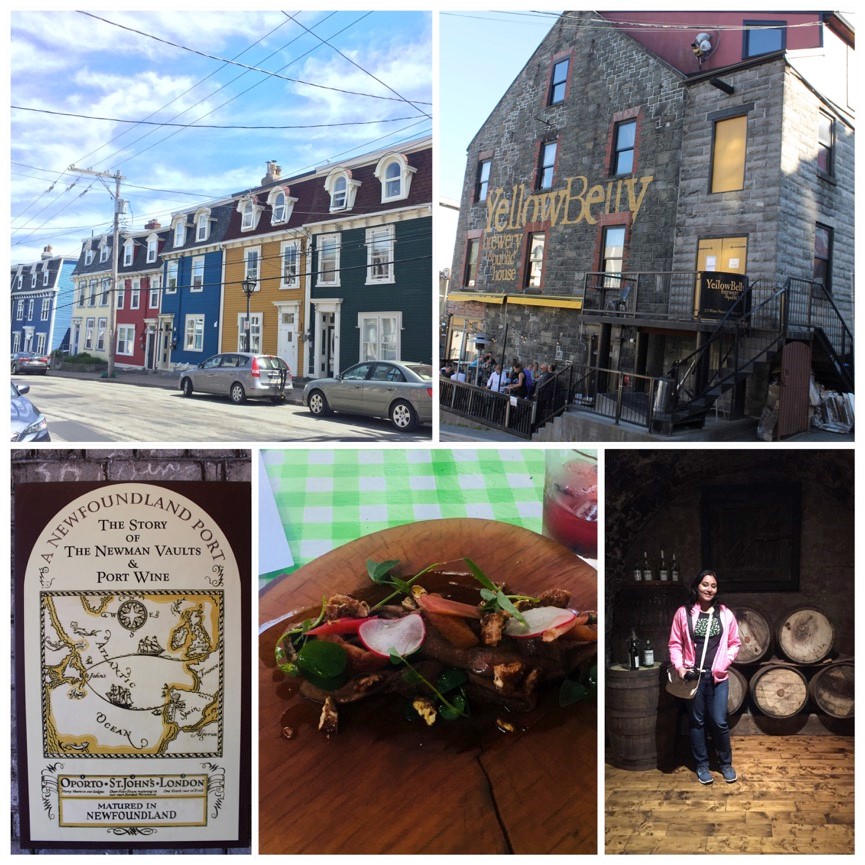
From Halifax I flew to St. John’s, Newfoundland and spent four days there. Being that far east on the continent was definitely a surreal experience, as if I had left ‘home’ once again. Dominated mostly by the seaport and fishing villages like Quidi Vidi and Petty Harbour, St. John’s looked like land that frenetic civilization had forgotten. But I ended up drinking very sophisticated port at The Newman Vaults, and ate a lavish dinner of moose heart with candied walnuts in a peach and rhubarb compote at The Chinched Bistro. It turned out to be one of the most contemporary and happening downtown spaces I had ever experienced. Between taking pictures of the colourful houses (some more than three hundred years old!), retreating from the cacophony of the boats, admiring David Blackwood’s paintings displayed at the Emma Butler Gallery, and finally, getting ‘screeched in’ and ‘kissing a cod’ at the Yellowbelly Brewery, I had a busy first day.
Newfoundland has a predominantly Irish heritage and the local dialect in some parts has deep Celtic roots. I can imagine Wilde not wanting to venture further than Charlottetown on his lecture tour. He fashioned himself quite the English dandy and had so assiduously avoided returning to Dublin, that I think Newfoundland’s Irish diaspora would have left him deeply discomfited!
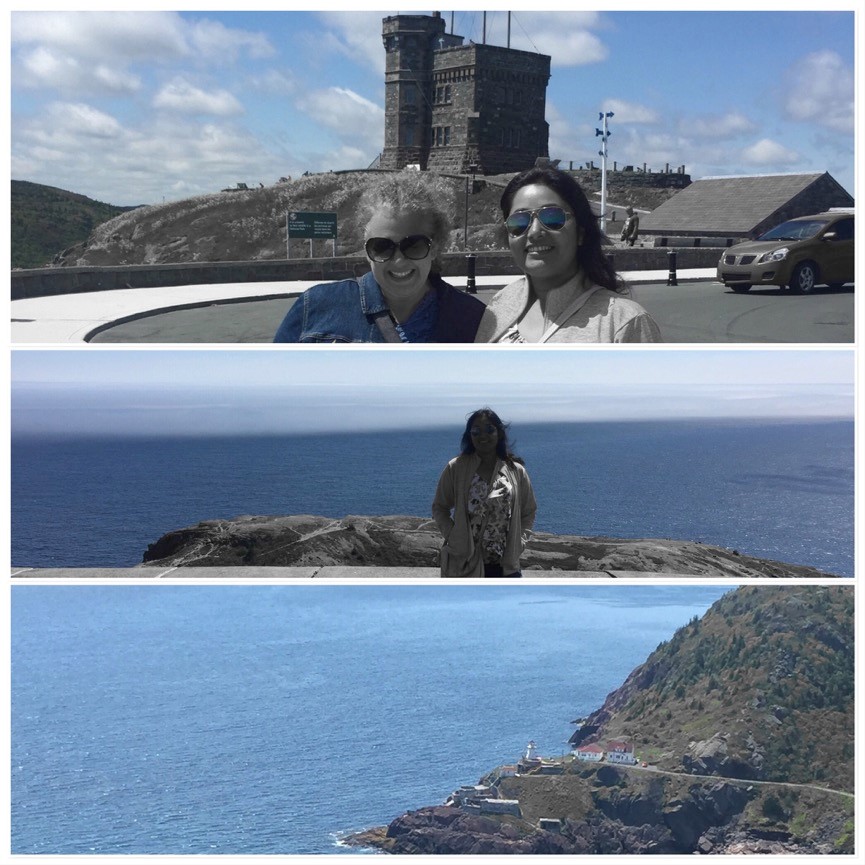
The next day, I met Jennifer Dyer, the Head of the Department at Gender and Cultural Studies at Memorial University. I had edited one of her essays for an anthology last year and it was wonderful to meet her in person. We had breakfast at Bagel Café and headed up to the viewing point at Signal Hill. One gets a wonderful panorama of St John’s from there, as well as of lighthouses and Cape Spear in the distance. There were no icebergs in the water as it was quite late in the summer, but the air was purer than I have ever felt. The military outpost there was apparently the first to receive a transatlantic wireless signal in 1901, and played a crucial role during the Wars.
Jennifer drove me to Cape Spear the following day – the easternmost point of North America – and the fishing village of Petty Harbour. The full expanse of the sea before us was staggering, and we even saw the hump of a minke whale rise and fall. The lighthouse was built in 1836 and is the oldest functioning lighthouse of the province. Sadly, it was closed to public that day. Here too, there is a fort-like structure with a coastal defence battery from the Second World War.
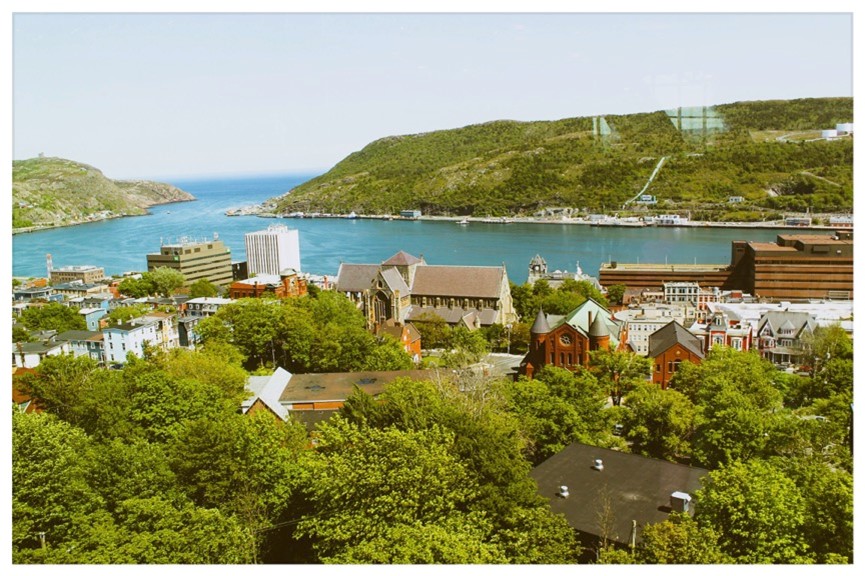
View of St. John’s from The Rooms Museum and Archives
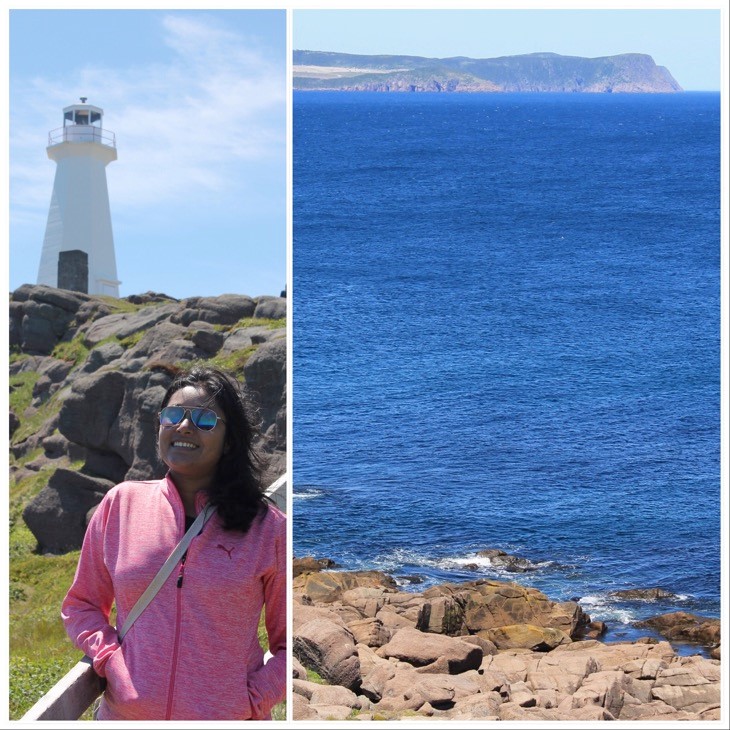
Cape Spear
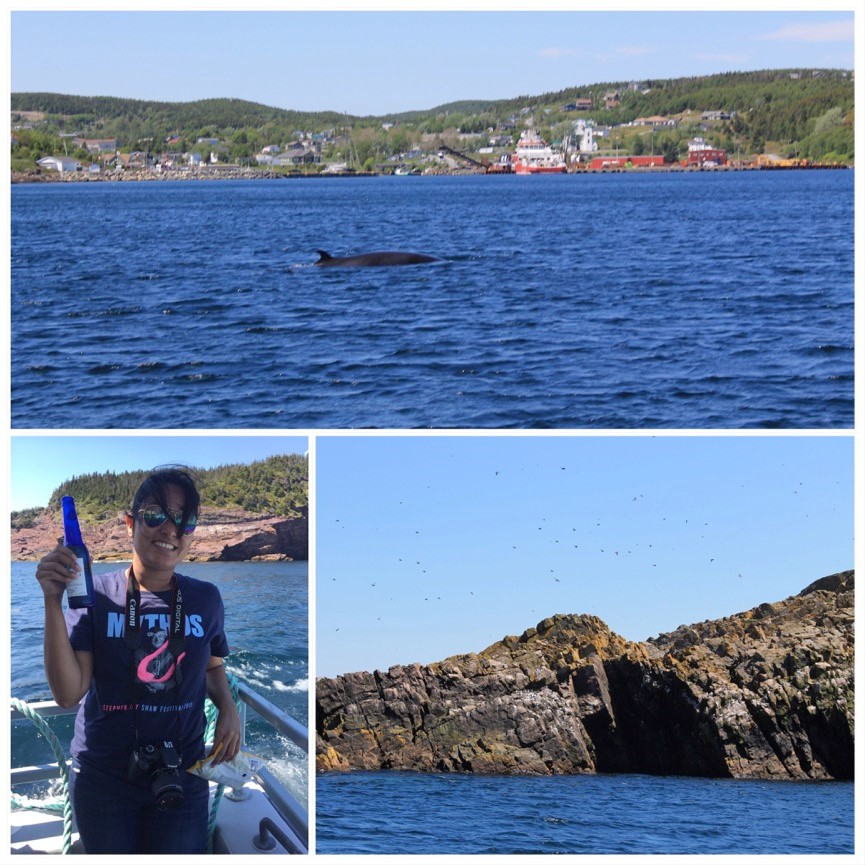
My final stop on The Rock was Bay Bulls and Witless Bay, from where I embarked on the O’Brien’s Tour of whale and puffin watching. Just as we pulled out of the bay, we saw two minke whale calves frolicking in the sun. They dove in and out so close to the boat – even as we had barely left the mainland – that it impressed upon me how amazingly deep the water must be. The captain let us dawdle a bit since the whales were already in sight. In an hour, we reached the Witless Bay Islands Reserve that houses thousands of gulls and puffins. I had never seen a puffin before, and certainly not one being caught by a gull the very moment it had captured a fish in its beak! That looked like a Big Mac to me!
I had some scrumptious cod bites at Chez’s Fish and Chips that night, picked up a bottle of Newfoundland’s finest screech rum, and came home disheartened that my Wildean adventure had come to an end.
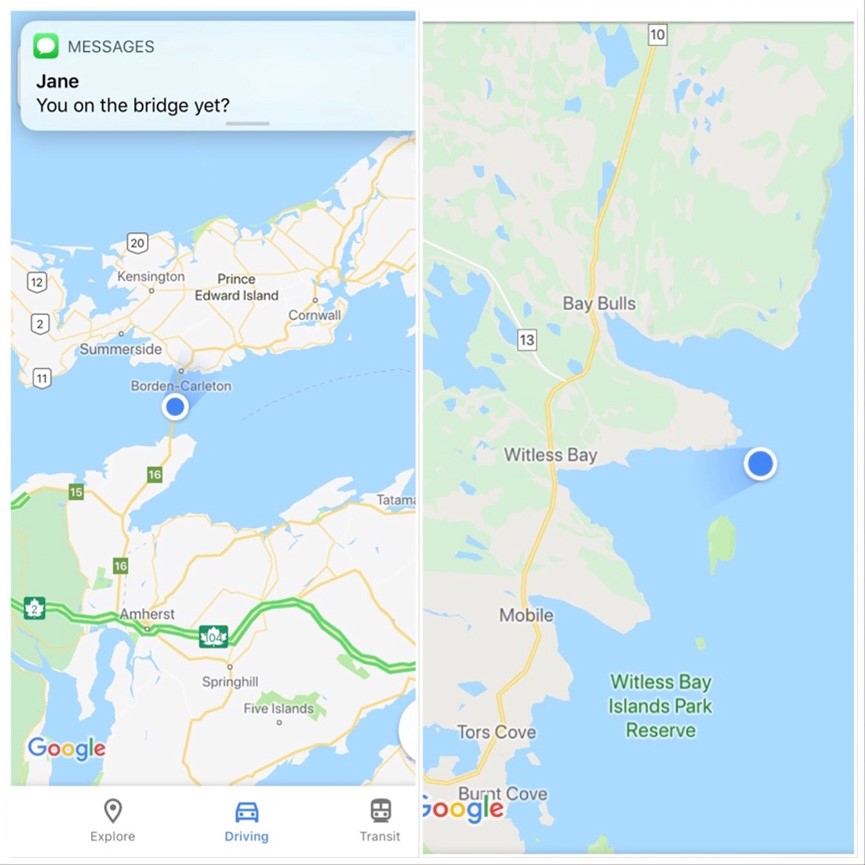
Two screenshots of my Google Maps location; first on the bridge between Nova Scotia and Prince Edward Island, second at Witless Bay. I’ve seen the blue but never imagined that I would someday actually be in it!
Anhiti Patnaik, Ph.D. Cultural Studies, 2018