
Trent's Forensic Science degree goes beyond a single scientific discipline, bringing together biology, chemistry, anthropology, and law to provide a broader understanding of forensics investigation. The result is a versatile education that opens doors to specialized areas of study across the forensic sciences.
- Direct-entry professional degree focused exclusively on forensic science.
- Specialized courses in Crime Scene Investigation, Wildlife DNA Forensics, Microbial Forensics and Forensic Toxicology.
- 4,100-square-foot Forensics Crime Scene Facility, the first facility of its kind on a Canadian university campus, featuring.
Study in one of Canada's leading forensic science programs, investigating evidence in Trent’s on-campus Crime Scene Facility, and learning alongside leading forensic experts.
Gain valuable career experience while earning academic credit.
Requirements
If you are coming straight from high school in Ontario or are a recent grad, the general admission requirements are:
- Ontario Secondary School Diploma (OSSD)
- A minimum of six Grade 12 4U or 4M courses, including program-specific prerequisites
- ENG4U with a minimum of 60%
| Admission Requirements | Recommended Admission Requirements | Estimated Admission Average | Co-op Admission Average |
|---|---|---|---|
| ENG4U, SBI4U, SCH4U, and MHF4U or MCV4U | SPH4U | 75-80% |
Requirements
Students from across Canada can use their grades from their home province to apply to Trent.
Requirements
International students from outside Canada can apply based on the curriculum of their home country.
Requirements
Mature students can apply to Trent based on previous education and professional or volunteer experience.
Requirements
With many transfer agreements and flexible pathway options, Trent University makes it easy for students to make the most of the credits you have already earned.
Whether you're graduating from an Ontario high school, looking to study in Canada, or training for a second career, Trent has clear pathways for students to apply and be admitted to study at either of our campuses.
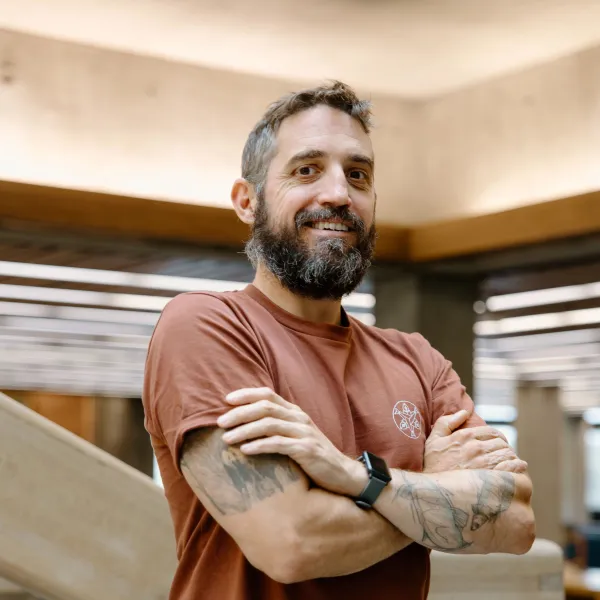
I know firsthand the value students get out of their degree in our Forensics programs. The experience we offer stands out for many reasons, but if I had to pick one it would be the breadth of what we cover within Forensic Science also more broad critical thinking skills that are vital to bring into today’s workforce. Students here really get to go after their interests and explore them in practical settings. Every year I see how that interdisciplinary and experiential learning is what helps our graduates land jobs.
- Complete an independent forensic research project or faculty-supervised honours thesis in your upper years.
- Benefit from direct access to leading experts in forensics and law, including the Natural Resources DNA Profiling and Forensics Centre and the Ontario Ministry of Natural Resources, right here on campus
- Conduct research in your undergrad – explore environmental forensics in Dr. Mary-Claire Buell’s TRACE Lab, genomic and forensic research in Dr. Aaron Shafer’s Wildlife and Applied Genomics Lab, or forensic chemistry/toxicology research through the Martic Lab.
- Train in Trent's Forensics Crime Scene Facility, where adaptable crime scenes, on-site laboratories, vehicle investigation space, and outdoor learning environments support practical forensic training.
- Process simulated crime scenes and learn evidence collection, documentation, and reporting techniques in Introduction to Crime Scene Investigation.
- Participate in hands-on remains recovery and death scene investigation exercises.
- Learn advanced forensic documentation techniques using laser scanning, image-based modelling, UAVs, and virtual reality technologies
- Take your Trent education global. Spend a semester or year studying at one of Trent’s 50+ international partner universities, participate in a summer field course, or gain international experience through a placement or internship.
- With opportunities in more than 35 countries, you can broaden your academic perspective, experience new cultures, and build skills that prepare you for a global career.
- Complete a third-year placement in a forensic discipline aligned with your interests.
- Past placements have included the Canada Border Services Agency, RCMP, Health Canada, and Canadian Food Inspection Agency.
- Pursue internships with organizations including the RCMP, Toronto Police Forensic Identification Services, the Centre of Forensic Sciences, and the National DNA Data Bank.