
Dr. Chris Metcalfe Invited to Discuss Pros and Cons of Nanotechnology
The environmental uncertainties around emerging nanotechnologies brought experts from across Canada together on October 15
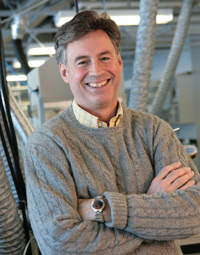 The environmental uncertainties around emerging nanotechnologies brought experts from across Canada together on October 15 for a special panel discussion in Toronto that included Environmental and Resource Studies (ERS) professor Dr. Chris Metcalfe of Trent University.
This panel discussion, entitled “Nanotechnology: No Small Matter”, gathered experts to discuss the possibility of nanomaterials finding their way into our food, our water, our bodies, and our environment. Panel organizers believe that government regulation has not kept pace with this emerging technology, leaving huge public interest questions about its safety, benefits and desirability unanswered. This event was co-sponsored by the Canadian Institute for Environmental Law and Policy (CIELP) and the Canadian Environmental Law Association (CELA).
Nanotechnology promises to save lives by treating disease, and improve the environment by sequestering carbon dioxide and building a better electric car battery. There are hundreds of nanoproducts in use today, from sunscreen to medicines to solar panels. Nanotechnology is revolutionizing the world not unlike the computer and nuclear atom before it.
Professor Metcalfe, who is also the director of the Institute for Watershed Science at Trent, is closely studying the impact of nanomaterials on aquatic organisms.
“Nanomaterials are so tiny that they can pass through cell membranes,” explained Prof. Metcalfe. “They are increasingly being used by industries in commercial products, and as a result, it is likely that they are being discharged into the environment.”
Prof. Metcalfe’s three-year research program is evaluating how algae, invertebrates, amphibians and fish respond to nanomaterials; invisible particles that are similar in size to bacteria measuring just one to ten billionths of a meter wide. The goal of this research is to develop methods for assessing the ecological risks of nanomaterials that will guide industry as applications develop.
This research is being conducted by Prof. Metcalfe and Prof. Maggie Xenopoulos from Trent University, as well as colleagues at the University of Ottawa and the University of Alberta, with the cooperation of the National Institute for Nanotechnology based in Edmonton, Alberta. The study is being supported by the Natural Sciences and Engineering Research Council through its Strategic Grants program, with matching funds from Environment Canada.
“In Canada, there are currently no specific assessment procedures for evaluating the potential ecological risks of new nanomaterials introduced into the Canadian market,” explained Prof. Metcalfe. “Considering the varied chemical, physical and toxicological properties of nanomaterials, there is a need to develop protocols for risk assessment of these materials.” Prof. Metcalfe noted that various jurisdictions, including the Organization for Economic Cooperation and Development (OECD) have called for integrated risk assessment procedures for nanomaterials.
To learn more about the research of Prof. Metcalfe and Prof. Maggie Xenopoulos, please visit their websites.