
Undergraduate
Indigenous Studies
-
- Bachelor of Arts (B.A.)
-
- Peterborough
-
- Paid Co-op Available
-
- Fall & Winter & Summer
- Indigenous Studies & Canadian Studies

At a glance:
- Degree Bachelor of Arts (B.A.)
- Campus Peterborough
- Work Experience Paid Co-op Available
- Program is Offered Fall & Winter & Summer
- Study Options Part time/Full time
- OUAC Codes RIN - Peterborough RIC - Peterborough co-op
- Apply Now Stay in Touch
The Trent Advantage
Study Indigenous histories, cultures, knowledges, and contemporary realities at the first university in Canada (and only second in North America) to establish a department dedicated to Indigenous Studies.
Build a deeper understanding of Indigenous experiences in Canada and worldwide through an interdisciplinary curriculum grounded in both Indigenous and Western knowledge systems. At Trent’s renowned Chanie Wenjack School for Indigenous Studies, you’ll learn from Indigenous faculty, Elders, Knowledge Keepers, and scholars while examining the historical and contemporary issues shaping relationships between Indigenous and non-Indigenous peoples.
- Shape your degree around your interests, choosing from a wide range of courses in areas such as politics, law, culture, and the land.
- Take learning beyond the classroom through language learning, cultural events, community engagement, and learning on the land.
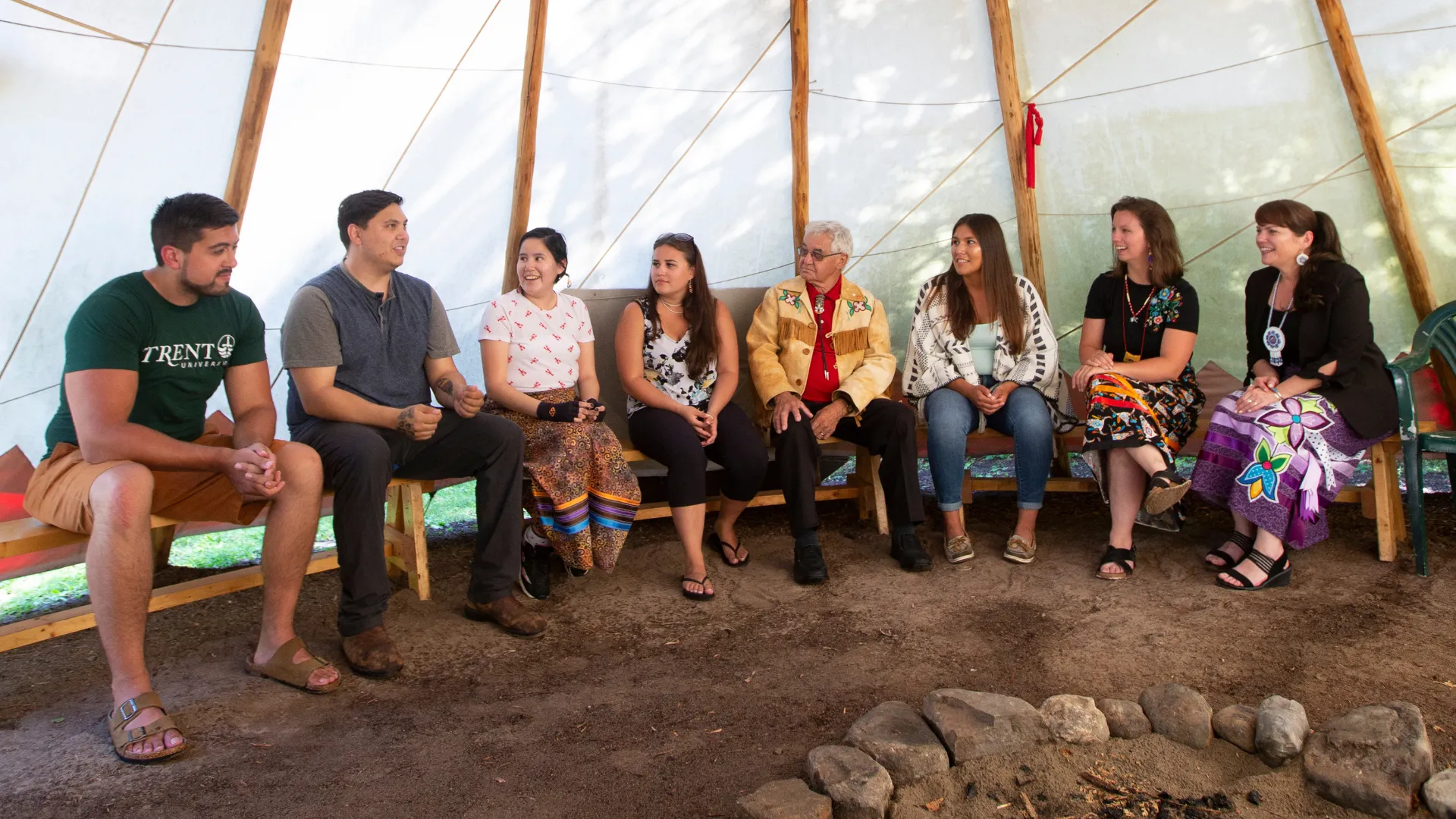
- Immerse yourself in Indigenous spaces on campus, including Nozhem: First Peoples Performance Space, tipi and traditional areas, oral history lab, and gathering space
- Connect with Indigenous knowledge, culture and community through annual campus events such as the Traditional Peoples & Elders Gathering, Indigenous Fringe Festival, Pine Tree Talks and Indigenous Women’s Symposium.
Program Possibilites
Specialize your studies in Indigenous Studies with a focus on a specific field within your degree
-
Applied Indigenous Knowledge
The first of its kind in Canada, this unique specialization introduces students to the practical applications of Indigenous Knowledge. Work alongside Indigenous Elders through land-based learning to develop compassion for the land and each other, and work collaboratively with people across cultures.
-
Indigenous Performance
Take to the stage or an important backstage role, with this new specialization in Indigenous theatre. Through experiential courses in Indigenous dance, storytelling, theatre, and music, you’ll develop an understanding of the significance of oral histories and the intergenerational transmission of knowledge.
-
Nishinaabemowin
Learn one of the oldest and historically significant Native American languages in North America. This intensive specialization teaches students about the language and culture of the Anishinaabe nation, helping you develop your fluency and literacy of Nishinaabemowin through workshops, songs, chants, and dances.
Add an Option to your Indigenous Studies degree to explore an additional area of interest
-
Indigenous Reconciliation & Resurgence
Over the last few decades, the resurgence of Indigenous peoples has largely animated the Canadian national project of reconciliation. In this option, you will acquire the knowledge and skills necessary to effectively contribute to this nationwide conversation.
-
Circumpolar Studies
One of only a few programs of its kind in the world, the Circumpolar Studies option offers you a unique opportunity to broaden your knowledge and understanding of the lands, peoples, and critical issues of the Arctic. The Circumpolar Studies Option is open to all undergraduate students at Trent.
-
Theatre Studies
Do you have a love for theatre and the performing arts? Combining areas of study from Ancient Greek and Roman Studies, Cultural Studies, English Literature, Indigenous Studies and Modern Languages and Literatures, this multi-departmental emphasis offers you the opportunity to choose credits from a very diverse selection of courses, all rooted in the history of, theory and performance in theatre.
Career experience while you learn
Every Indigenous Studies student has a guaranteed route to paid, credited experience before they graduate.
Paid Co-op Available
- Graduate with paid work experience completing three 12–16-week work terms in the summer of years two and three, and the fall of year four, all as part of your four-year degree.
- Work with local businesses, government agencies, community organizations, or Indigenous groups.
Research Opportunities
- Complete community-based research for course credit, working with local organizations on research, planning and community development projects.
- Complete a fourth-year Honours Thesis, pursuing an independent research project with faculty supervision.
- Gain applied research experience through in-course projects. For example, Foundations of Reconciliation students worked on a project with the Ontario Heritage Trust.
Field Schools and Hands-On Courses
- Develop Nishnaabemowin language skills through speaking, writing, storytelling, workshops, songs, chants and dances that connect language with cultural learning.
- Take part in land-based learning in Wiikwemkoong Unceded Territory on Manitoulin Island, learning on the land with community Elders and Knowledge Keepers through Indigenous teachings and practices.
Study Abroad
- Take your Trent education global. Spend a semester or year studying at one of Trent’s 50+ international partner universities, participate in a summer field course, or gain international experience through a placement or internship.
- With opportunities in more than 35 countries, you can broaden your academic perspective, experience new cultures, and build skills that prepare you for a global career.
Placements
- Gain placement experience in museums, libraries and heritage organizations, with opportunities in Indigenous history research, programming and heritage interpretation.
- Pursue field-based placements at Trent, including opportunities with Campus Planning & Development that involve the University’s Nature Areas.
Internships
- Gain professional workplace experience by working within a business or organization on a paid internship, building career-ready skills, making industry connections, and exploring potential career paths. Indigenous Studies Students have secured internships w with leading organizations such as CBC and the United Nations.
Career Paths
- Lawyer
- Teacher
- Medical Professional
- Social Work
- Treaties Negotiator
In Their Own Words
The lessons I've learned at Trent, both in and out of the classroom, will guide me in helping my students see the importance of truth, reconciliation, and respect for Indigenous knowledge.
Angela Bell

Admissions
Whether you're graduating from an Ontario high school, looking to study in Canada, or training for a second career, Trent has clear pathways for students to apply and be admitted to study at either of our campuses.
Requirements
If you are coming straight from high school in Ontario or are a recent grad, the general admission requirements are:
- Ontario Secondary School Diploma (OSSD)
- A minimum of six Grade 12 4U or 4M courses, including program-specific prerequisites
- ENG4U with a minimum of 60%
| Admission Requirements | Recommended Admission Requirements | Estimated Admission Average | Co-op Admission Average |
|---|---|---|---|
| ENG4U | 70-75% | 80-85% |
Requirements
Students from across Canada can use their grades from their home province to apply to Trent.
Requirements
International students from outside Canada can apply based on the curriculum of their home country.
Requirements
Mature students can apply to Trent based on previous education and professional or volunteer experience.
Requirements
With many transfer agreements and flexible pathway options, Trent University makes it easy for students to make the most of the credits you have already earned.
Tuition Estimate
Estimate your tuition, ancillary fees, and potential entrance scholarships based on your program, residency status, and academic average.
Tuition
Base Tuition Fee
$6,240.85
Ancillary Fees
Ancillary Fees (non-tuition costs supporting student services, such as athletics, campus safety, college fees, etc.)
$2,122.22
Total:
$ 8,363.07
* The tuition details and scholarships listed are for domestic students only. International applicants should contact the financial aid office directly for equivalent guidance.
Scholarships
If you’re a top scholar with an average of 80% or higher, you qualify to automatically receive an entrance scholarship to Trent. Scholars with 95% or higher? You earn free first-year tuition – no application required.
| Entrance Average | Maximum Scholarship Potential | Details |
|---|---|---|
| 95%+ | $18,241 | $6,241 first year Full Tuition + $4,000 x 3 years |
| 90-94.9% | $12,000 | $3,000 x 4 years |
| 85-89.9% | $8,000 | $2,000 x 4 years |
| 80-84.9% | $6,000 | $1,500 x 4 years |
* Available to Domestic students only. Based on 2026/27 tuition for a general arts and science program
Explore additional funding for domestic and international students
- The James Edward Munro Awards
- K. E. Kidd Memorial Prize
- Edna Manitowabi Prize
- David Newhouse Award
- Dr. Ben Chan/Julie Schindeler Indigenous Languages Prize
- Patricia & David Morton Indigenous Studies Undergraduate Award
- Sarah D. Patterson Award for Aboriginal Language Studies
- TD Green Undergraduate Scholarships
- TD Green Undergraduate Awards
- John Wadland Award