
This specialization is focused on understanding the human condition through both a biological and cultural lens in order to better understand why people look and behave the way they do. Biological Anthropology features a strong laboratory component and diverse courses to give you specific skills in the study of human osteology as well as a broad understanding of topics such as disease, nutrition and evolution.
Courses
Students who have fulfilled the requirements for a single- or joint-major Bachelor of Arts or a Bachelor of Science degree in Anthropology may graduate with a Specialization in Biological anthropology if they have successfully completed the following 4.0 credits:
- 2.0 ANTH credit consisting of:
- ANTH 2410H: Biological Anthropology: Darwin, Death, and Disease (Sc)
- ANTH-BIOL-FRSC 3404H: Human Osteology (Sc)
- ANTH-FRSC 3405H: Forensic Anthropology (Sc)
- ANTH 4430H: Advanced Skeletal Biology (Sc)
- 2.0 ANTH credits from:
- ANTH 2450H: Plagues and People (Sc)
- ANTH 2470H: Primate Behaviour (Sc)
- ANTH 3160H: Peoples of Pacific Oceania
- ANTH 3260H: Culture and Mortality
- ANTH 3333H: Ecological Anthropology (Sc)
- ANTH-BIOL 3460H: Biocultural Explorations of the Human Life Course (Sc)
- ANTH 3540H: Mortuary Archaeology (Sc)
- ANTH 4260H: Advanced Topics in Culture and Mortality
- ANTH 4420H: Palaeopathology (Sc)
- ANTH 4440H: Nutritional Anthropology (Sc)
- ANTH-GDST-INDG 4770H: Anthropology of Colonialism
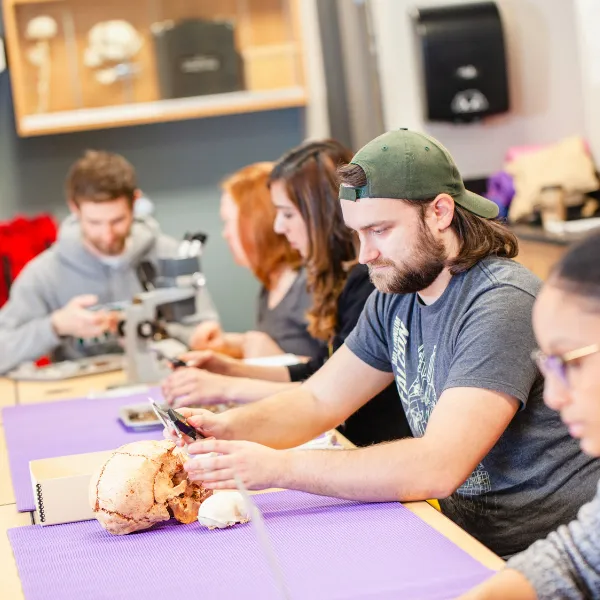
What does it mean to be human? Hint: it’s a lot more complicated than you think. Unlock the secrets of human evolution, adaptation, and biological processes.