
This specialization gives students in Geography and Environmental & Resource Science/Studies the opportunity to explore your major through the lens of climate change, considering the science, policy, and human implications and connections.
In the Climate Change Science & Policy specialization, you will gain first-hand experience developing climate solutions through research and internship opportunities.
Courses
Students who have fulfilled the requirements for a single- or joint-major Bachelor of Arts degree in Environmental & Resource Studies, Bachelor of Science degree in Environmental & Resource Science, Bachelor of Arts or Science in Geography may graduate with a Specialization in Climate Change Science and Policy if they have successfully completed the following 4.0 credits:
- 2.0 ERSC/T credits consisting of:
- ERSC-CLIM 1050H: Introduction to Climate Change Science and Policy
- ERSC-GEOG 2180H: Apocalypse Now
- ERSC 2300H: Energy Science and Technology
- ERST-GEOG 4140: Climate and Energy Policy
- 0.5 GEOG credit consisting of:
- GEOG 2460H: The Global Climate System
- 0.5 GEOG credit from:
- GEOG 3440H: Microclimatology
- GEOG-CLIM-ERSC 3470H (3410H): Climate Change and its Impacts
- 1.0 credit in addition to the above from:
- BIOL-ERSC 4330H: Global Change of Aquatic Ecosystems
- ECON-ERSC 3810H: Environmental Economics
- ERST-POST 2100H: Environmental Science and Politics
- ERSC 3551H: Pollution Ecology
- ERSC-PSYC 3710H: Environmental Health
- ERST-GDST-POST-SAFS 4610H: Global Environmental Policy
- GEOG 3440H: Microclimatology
- GEOG-CLIM-ERSC 3470H (3410H): Climate Change and its Impacts
Program Coordinator
- Stephen Hill, associate professor and associate director, Trent School of the Environment
- Brendan Hickie, associate professor, Trent School of the Environment
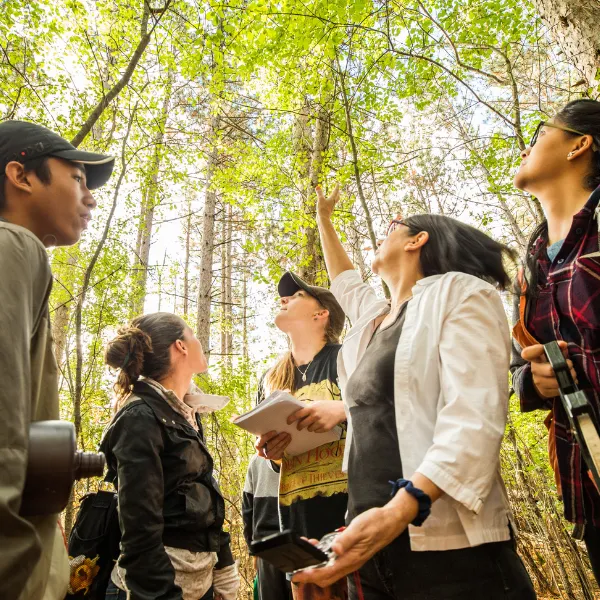
Dive into the challenges and solutions for climate change—environmental, economic, political, social—and build a strong foundation of knowledge and skills that equip graduates for the growing number of climate-related careers.