
Graduate
Anthropology
-
- Master of Arts (M.A.)
- Master of Science (M.Sc.)
-
- Peterborough
-
- Fall
At a glance:
- Degree Master of Arts (M.A.) Master of Science (M.Sc.)
- Campus Peterborough
- Program is Offered Fall
- Study Options Part time/Full time
- Length Thesis: 24 months
- Guaranteed Funding Yes (for eligible students)
- Applications Open September 11
- Application Deadline Early Consideration: January 1 Fall intake: February 1
- Deposit Required No
- Graduate Studies Contact anthrograd@trentu.ca
- Apply Now Stay in Touch
The Trent Advantage
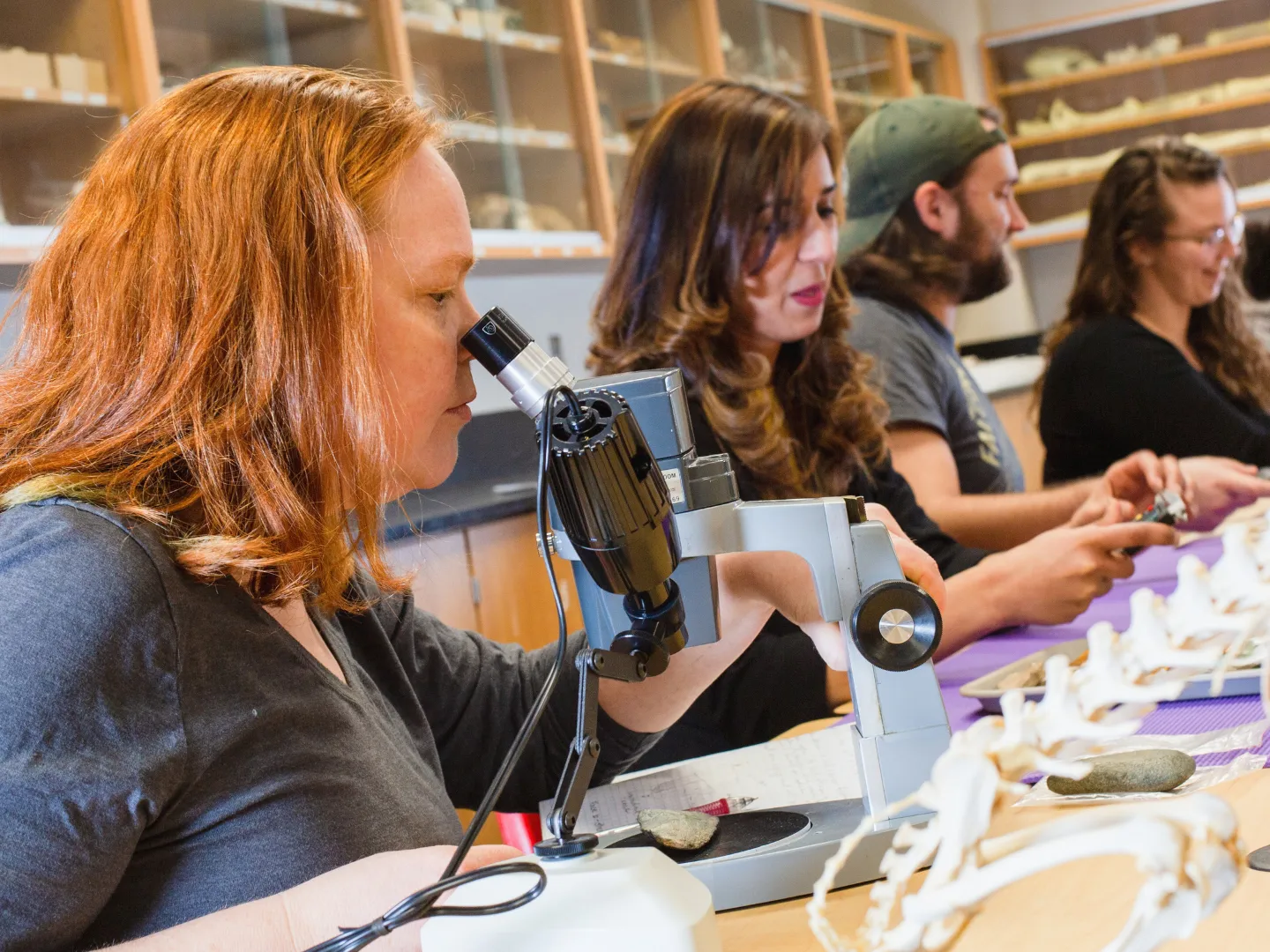
Break new ground in anthropology through close faculty mentorship, advanced laboratory training, and hands-on fieldwork while exploring the deep connections between culture, biology, and the environment.
Be a part of cutting-edge anthropological research and learn to challenge ideas and methods for understanding past and present human societies. Trent’s research-based Anthropology master’s programs combine critical thinking, experiential learning, and strong foundations in theory and research design. Work closely with globally recognized faculty to develop a thesis exploring specialized areas including archaeology, underwater archaeology, zooarchaeology, medical anthropology, bioarchaeology, and linguistic ethnography.
- Learn through close mentorship from leading researchers and gain guidance in research design, data collection and analysis, and interpretation of cultural and biological data.
- Gain intensive, hands-on research training in field and laboratory methods, including the use of specialized archaeological research laboratories.
- Prepare for Ph.D. studies or careers in higher education, field and laboratory research, cultural heritage tourism, or heritage management.
World Class Facilities
Archaeological Research Labs
Conduct original research in Trent’s specialized archaeological research laboratories, using advanced isotopic, biomolecular, and geochemical techniques to prepare and analyze archaeological samples.
Accelerated Master’s
An accelerated Master’s option is available for eligible Trent University undergraduate students. If you are currently studying at Trent and are interested, please visit the program department website for more details and information on how to apply.
Program Types
-
Thesis: M.A. or M.Sc.
This two-year research program combines coursework with independent research. Working with their supervisor, students choose a research topic, develop and investigate a research question, present colloquia, and write a thesis on this research.
Research Areas
Areas of academic research focus and faculty expertise
M.A. Program
- North American archaeology, European and Southwest Asian prehistory, the archaeology of the ancient Greek and Roman worlds
- Landscape and environmental archaeology, lithic technology, material culture studies, zooarchaeology, isotope biogeochemistry, bioarchaeology and mortuary practices
- Archaeological method and theory, public archaeology, anthropology of art, ethnographic studies
M.Sc. Program
- Stable isotope analysis
- Biological anthropology and bioarchaeology
- Zooarchaeology
- Microscopy
- Geographic Information Systems (GIS)
Career Paths
In Their Own Words
Trent was a fantastic university to attend for my master's degree. It prepared me well for my future career in academia and archaeology by providing me with critical professional skills, such as communication, grant writing, project development, and academic writing. The program was rigorous and asked a lot from the students in the best of ways. It pushed me to think critically about the research I was producing while building on the foundations of those who came before me.
Arianne Boileau
Anthropology M.A. Alum

Faculty Spotlight
Meet some of Trent's world-class professors and researchers.
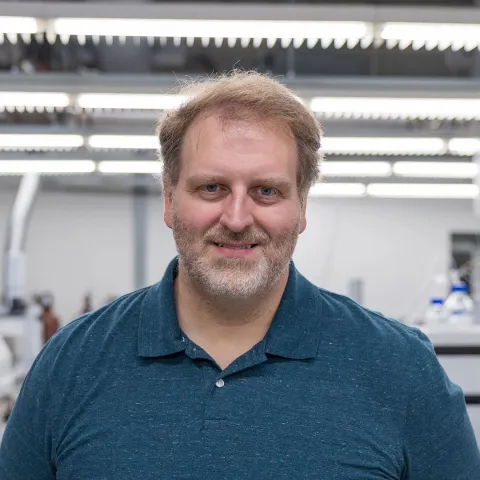
Dr. Paul Szpak
Canada Research Chair in Environmental Archaeology, Director Anthropology Graduate Program; Director Trent Water Quality Centre; Professor, Department of Anthropology
Dr. Paul Szpak is an archaeological scientist specializing in the use of stable isotope analysis to study ancient and modern ecosystems. As Canada Research Chair, his research focuses on archaeological science, stable isotopes, palaeoecology, environmental archaeology, human-environment interactions, bone chemistry, palaeodiet, domestication and animal husbandry.
Dr. Laure Dubreuil
Associate Professor, Department of Anthropology
Dr. Laura Dubreuil’s geographic focus of archaeological research is Southwest Asia and Europe. She is particularly interested in material culture analysis, especially ground stone tool technology of the Paleolithic, Mesolithic, and Neolithic periods. Her work also focused on use-wear studies, and experimental archaeology. She is currently involved in several research projects in Israel (SSHRC), Jordania, Greece, Portugal and Italy.
Admissions
Trent has clear pathways for graduate students to apply and be admitted to study for their master's or doctorate at either of our campuses. Please review admission requirements for your program before applying.
Eligibility Requirements
- B.A. or B.Sc. honours degree (a four-year undergraduate bachelor's degree) in Anthropology or a related field
- Minimum B+ (77%) or equivalent in the last two years of full-time study, or last ten full academic credits
- A foundation in appropriate research methodology
Eligibility Requirements
- B.A. or B.Sc. honours degree (a four-year undergraduate bachelor's degree) in Anthropology or a related field
- Minimum B+ (77% Ontario Equivalent) in the last two years of full-time study, or last ten full academic credits
- A foundation in appropriate research methodology
- Proof of English Proficiency: All international applicants must provide proof of an adequate level of English proficiency regardless of their citizenship status or country of origin. Please visit our International Applicant Resource page for details on English Language Proficiency requirements.
- A GRE test score is not required for admission into this program
All applicants, domestic and international, must submit the following documents to complete their application:
- Transcripts: Unofficial copies of all post-secondary transcripts
- 2 letters of reference: Academic references are required. Reference forms will be emailed to the referees that you have appointed on OUAC
- Plan of Study/Personal Statement: 1-2 pages outlining your objectives in a graduate program. Any specific research interests, relevant experiences, and/or career aspirations can be included
- Writing Sample: A sample of your writing of about 20 pages or less. The preferred submission format is PDF. Good choices for writing samples include: an undergraduate essay, lab report, research report, journal article, a chapter from a masters thesis, or a published article
- Detailed Resume or Curriculum Vitae
- Proof of Citizenship (ie. copy of passport or birth certificate)
- Supervisor: A potential supervisor must be chosen as an admission requirement for this program. Please list your supervisor on your OUAC application and discuss this in your plan of study. Please visit the program's Faculty and Research page for a listing of faculty and areas of research. Applicants are responsible for reaching out to a faculty member
For more information on submitting transcripts, re-sending reference links and other application questions, please visit our How to Apply page and review Step 4, as well as review our Frequently Asked Questions (FAQ).
Tuition Estimate
Estimate your tuition, ancillary fees, and potential entrance scholarships based on your program, residency status, and academic average.
Total:
$ 0.00
* The tuition details and scholarships listed are for domestic students only.
Learn more about tuition cost and potential awards.Financial Matters
Eligible full-time students are offered minimum funding packages during their funded period of $18,000 annually. This includes a Graduate Teaching Assistantship employment offer valued at approximately $13,000 annually. Specific funding details are included in individual admission letters.
Students are supported in competing for external awards during their studies, such as the Ontario Graduate Scholarship. A full list of external awards is available on our Scholarships and Awards page.