overview
overview

Environmental Impacts and Solutions.
Sustainable Use of Natural Resources.

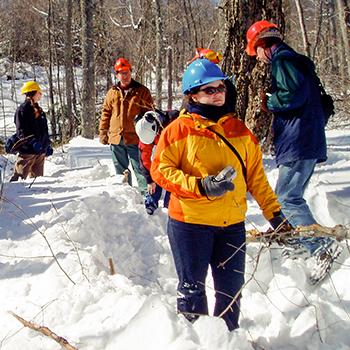
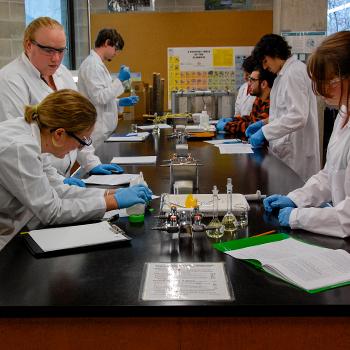
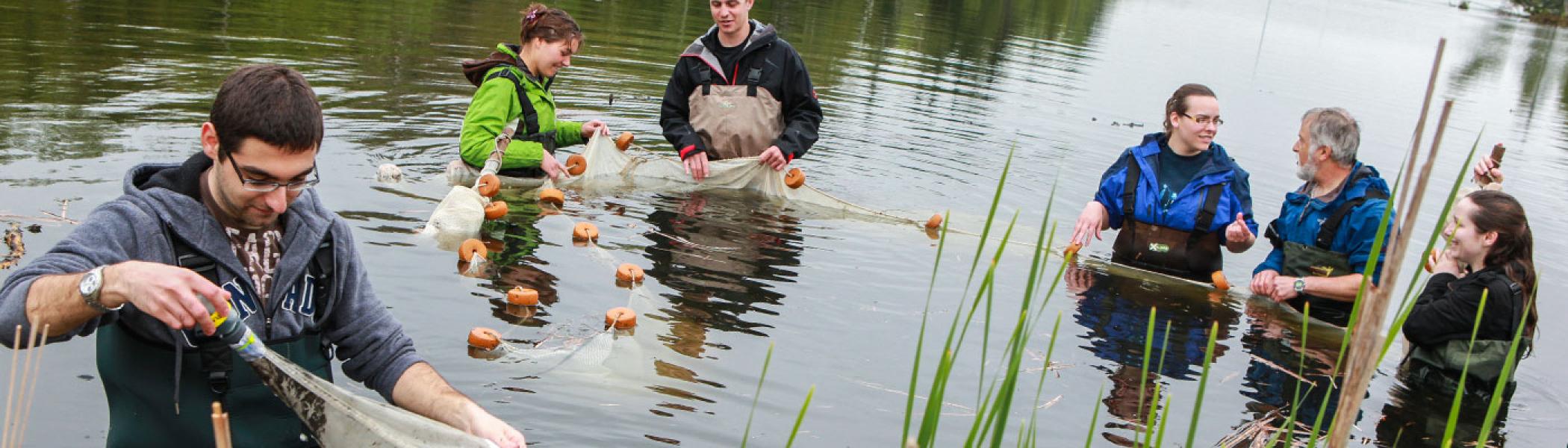
These are the key themes of the Environmental and Resource Studies/Science program at Trent University. In order to address them, people require skills, knowledge of management options, and experience applying them. You will get that at Trent. Whether the issue is water pollution, climate change, revegetation of industrial sites, environmental law and policy, modeling health effects of toxins, the challenge of global forces, community-level natural resource stewardship, or renewable energy alternatives, the ERS Program and affiliated departments offer superb expertise and hands-on experience. We will prepare you for your environmental career.

The Environmental and Resource Studies Program offers several degree options, including a B.Sc., a B.A., and the recently developed Bachelor of Environmental Science/Studies, which bridges science and studies. We are pleased to announce that the ERS B.Sc. degree is the first university environmental science program to be accredited by the Canadian Environmental Accreditation Commission (CEAC) and Environmental Careers Organization (ECO) Canada. This accreditation demonstrates to students, parents, educators and industry that ERS's B.Sc. Degree meets a national standard of quality. (Read Trent University's news release.) (Read about ECO Canada's Accreditation Program.) (Visit ECO Canada's web site.)

Not sure what kind of environmental work is out there? View An Introduction to Environmental Careers (pdf) by the Environmental Careers Organization (ECO) Canada to find out more about environmental work in Canada.

The Environmental and Resource Studies (ERS) Program and Trent

When the Environmental and Resource Studies/Science (ERS) Program began at Trent in 1974 it was one of the first environmental programs at a Canadian university. It was started because it was realized that complex environmental problems could not be solved effectively within conventional academic departments. Instead, an interdisciplinary approach was needed. The university as a whole supported the creation of ERS and has continued to showcase that support through investment in state-of-the-art analytical facilities, top expertise for teaching and research, the cultivation of sound working relationships with communities, the Ministry of Natural Resources and other governmental agencies, and through its stewardship of the magnificent natural assets of its beautiful1400 acre campus and nearby 260 acre ecological centre.

Learn About Our First Year Course

ERSC 1000Y, our first year course, serves many purposes, including an exploration of many different environmental problems and solutions, and preparing our students for upper year courses. View our video on YouTube to get a student's perspective on the first year course, as well as the perspective of the course coordinator.

Graduate of the ERS Program?

Tell us what you are doing now!

ERS Program Desktop Wallpaper

A selection of images that show off Trent campus, for your computer...

Below: a panorama of Trent showing the Otonabee River, the footbridge over the river, and the west bank (including the Environmental Sciences Centre). Click on the image to see a larger version.