
















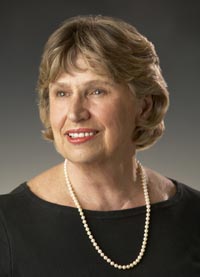
Trent University alumna Shelagh D. Grant, adjunct professor in Canadian Studies and research associate of the Frost Centre, won the Lela Common Award from the Canadian Authors Association on Sunday, July 24, 2011, for her book, Polar Imperative: A History of Arctic Sovereignty in North America, published by Douglas & McIntyre.
A copy of the book now sits in the parliamentary library in Ottawa, where it was added to the collection in February, upon being nominated for the 2011 Shaughnessy Cohen Prize for Political Writing. The book also won the prestigious $15,000 Lionel Gelber Prize in February, 2011, and the $10,000 J.W. Dafoe Book Prize for Canadian History in April.
“My success in historical research and writing would not have been possible without the opportunities provided by Trent University and the support and encouragement of so many colleagues. This is an honour that should be shared by Trent University,” said Ms. Grant.
Shelagh Grant taught at Trent on a sessional basis for 18 years and is currently a member of the adjunct faculty for the Canadian Studies program and a research associate of the Frost Centre for Canadian Studies and Indigenous Studies.
The Book
Polar Imperative: A History of Arctic Sovereignty in North America examines the historical sovereignty claims of many countries over North America’s Polar Regions. According to Ms. Grant, “Changes in climate, technology and resources all put pressure on existing claims to sovereignty and control over the Arctic waters. As the ice melts away, international attention is drawn to potential development of the area's newly accessible resources, such as oil, gas, iron ore, and gold."
Ms. Grant’s objective behind writing the book is to have as many Canadians as possible understand the underlying history of our Arctic sovereignty issues, thus facilitating support for some tough decisions any government in power will be required to make over the next few years.
Tough Decisions for Canada
Canada needs to maintain control over its Arctic Waters, not just by military means but through significant investment in infrastructure. Deep sea ports, inspection facilities, coast guard / patrol boats, search and rescue operations and oil spill clean-up will require ongoing upgrading and expansion, “so we can protect the environment and the people who live there,” said Ms. Grant.
“Having sovereign rights over an area also involves responsibility for the people who live there. Canada must be prepared to protect the environment and food sources from contamination and to ensure the sustainability of the economy.”
The Author
Known for her scholarship on the Canadian Arctic, Ms. Grant is a leading historian, distinguished archival researcher, author and mentor. A graduate of the Master’s program in History at Trent in 1982, she has contributed to Trent’s outstanding reputation in Canadian Studies through numerous scholarly articles and books such as the award-winning Arctic Justice: On Trial for Murder, Pond Inlet – 1923.
The Trent Experience
“Trent’s interdisciplinary community made me appreciate the importance of context and comparative aspects of any issue,” added Ms. Grant. “Polar Imperative is a comparative piece that looks at the tentative weaknesses, strengths and potential minefields concerning the Arctic sovereignty of three areas: Alaska, Greenland and Arctic Canada. By comparing the evolution of Arctic sovereignty in three locations, one gets a better idea of why some countries retain control and why others abandon or lose control.”
The Prizes
The CAA Lela Common Award for Canadian History grants a silver medal and $2,000 to an author of an historical non-fiction book on a Canadian topic. The prize was established by the Canadian Authors Association in 1997 through a bequest from the estate of Lela Florence Common, a member of the Hamilton branch who had a life-long interest in history.
The Lionel Gelber Prize is presented annually by the Lionel Gelber Foundation in partnership with the Munk School of Global Affairs at the University of Toronto and Foreign Policy magazine. The prize goes to the world’s best non-fiction book in English that seeks to deepen public debate on significant global issues.
As the winner of the Lionel Gelber Prize, Ms. Grant delivered the annual Lionel Gelber Lecture on Tuesday, March 29 at a public award ceremony at the Munk School of Global Affairs in Toronto and appeared at an event in Washington, D.C. hosted by Foreign Policy magazine.
The J.W. Dafoe Book Prize was formally awarded at the J.W. Dafoe Foundation’s annual general meeting on May 26 in Winnipeg. The Prize memorializes John Wesley Dafoe, one of the most significant Canadian editors of the 20th century. In his tenure at the Manitoba Free Press, later renamed the Winnipeg Free Press, from 1901-1944, Dafoe was known for his advocacy of western development, free trade, national independence, and the Commonwealth.
Posted on Wednesday, July 27, 2011.